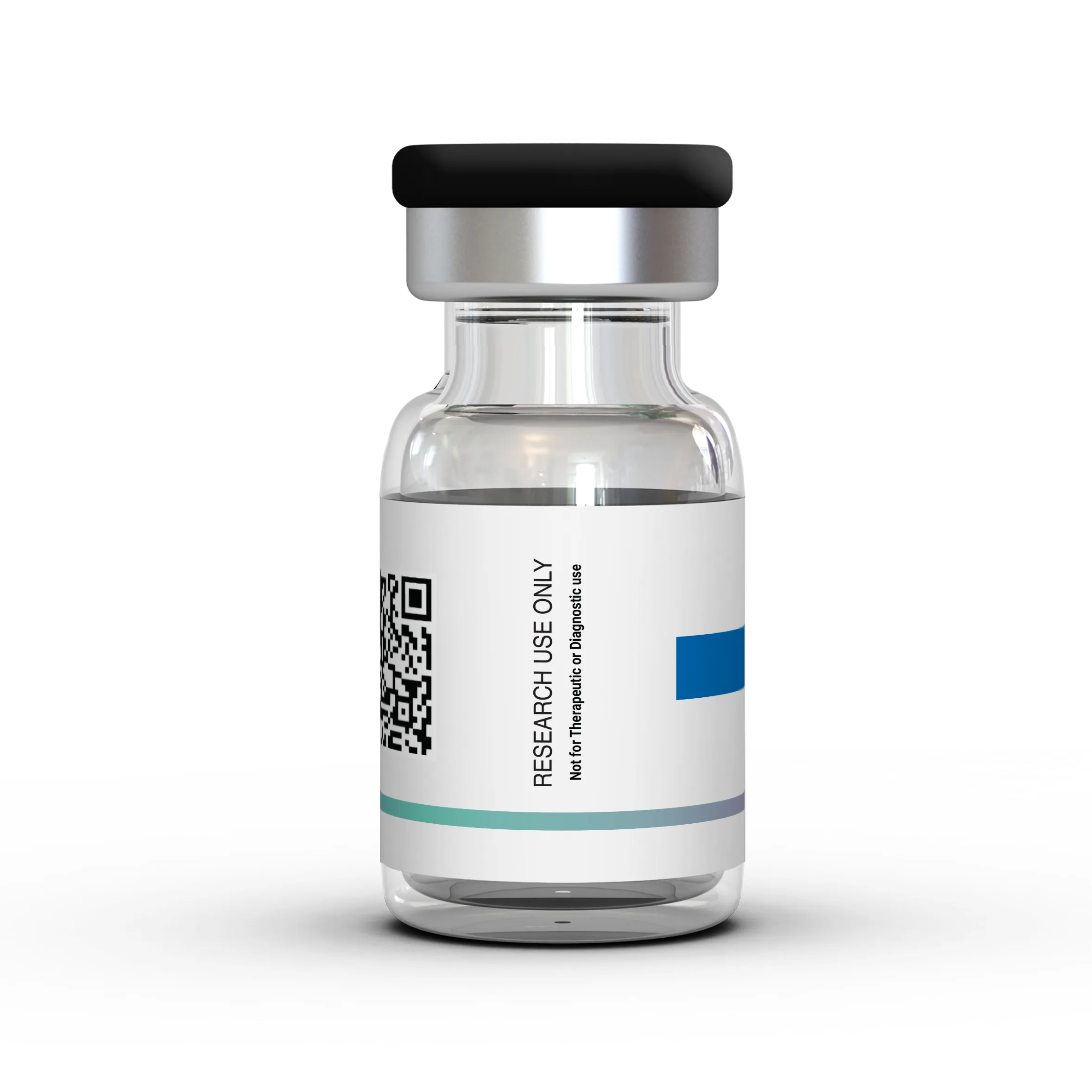
Vesugen Technical Overview
Vesugen is one of the shortest members of the Khavinson peptide bioregulator series, a family of two-residue to four-residue sequences assembled largely from lysine, glutamic acid, aspartic acid, alanine, and glycine. Its three residues carry one basic side chain and two acidic side chains, which gives the molecule a high charge density and ready water solubility.
Research associated with KED centers on vascular endothelial cell cultures, transcript and protein expression profiling, and cell culture models of aging. Laboratory reports place it alongside the AEDG and EDR short peptides as a sequence studied for modeled interactions with promoter-region DNA.
Compound Specifications
| Property |
Value |
| CAS Number |
204271-66-9 |
| PubChem CID |
87571363 |
| ChEBI ID |
CHEBI:159909 |
| Molecular Formula |
C₁₅H₂₆N₄O₈ |
| Molecular Weight |
390.39 g/mol |
| Monoisotopic Mass |
390.17506 Da |
| Amino Acid Sequence |
H-Lys-Glu-Asp-OH (one-letter: KED) |
| Sequence Length |
3 residues |
| IUPAC Name |
(2S)-2-[[(2S)-4-carboxy-2-[[(2S)-2,6-diaminohexanoyl]amino]butanoyl]amino]butanedioic acid |
| InChIKey |
LLSUNJYOSCOOEB-GUBZILKMSA-N |
| Canonical SMILES |
C(CCN)CC@@HN |
| Synonyms |
Vesugen, KED, Lys-Glu-Asp, L-lysyl-L-glutamyl-L-aspartic acid, lysyl-glutamyl-aspartic acid |
| Source |
Synthetic |
| Purity |
≥99% (HPLC) |
| Appearance |
Lyophilized white powder |
| Solubility |
Soluble in water |
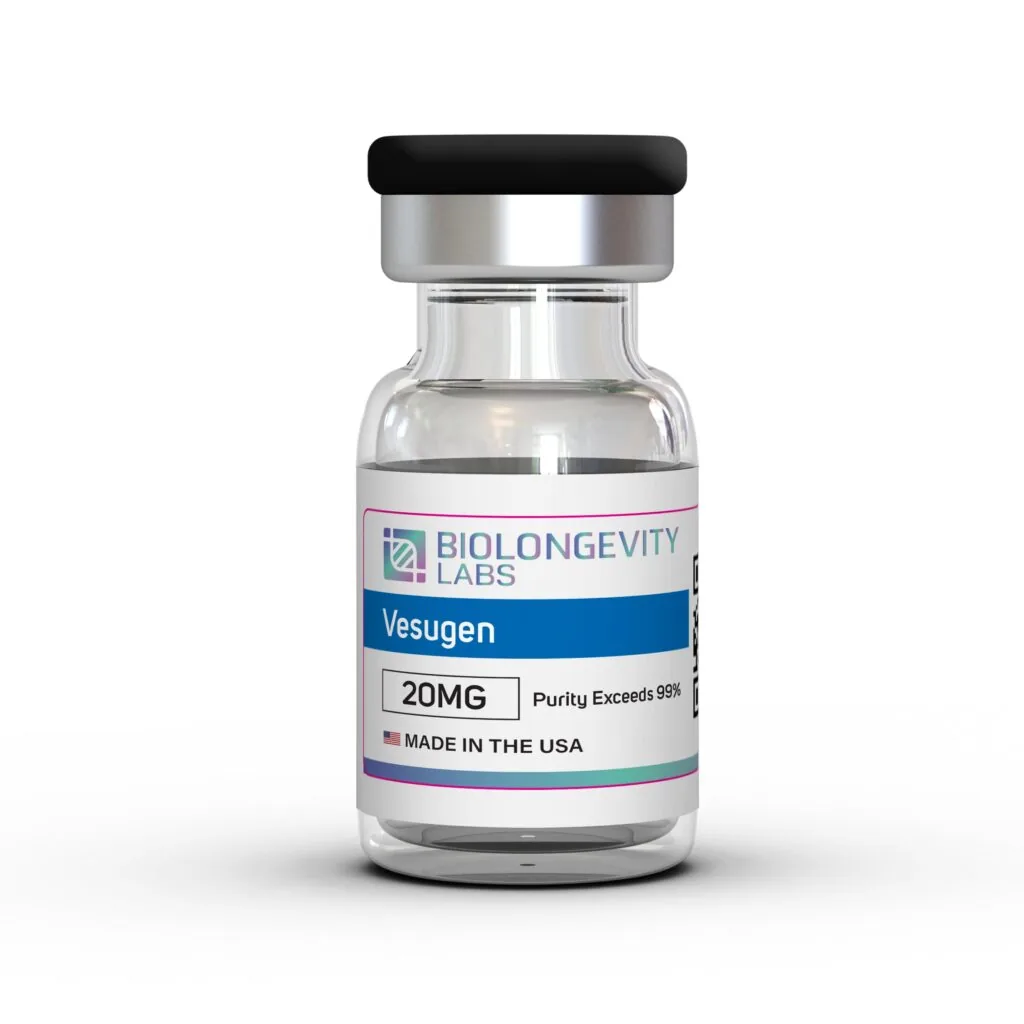
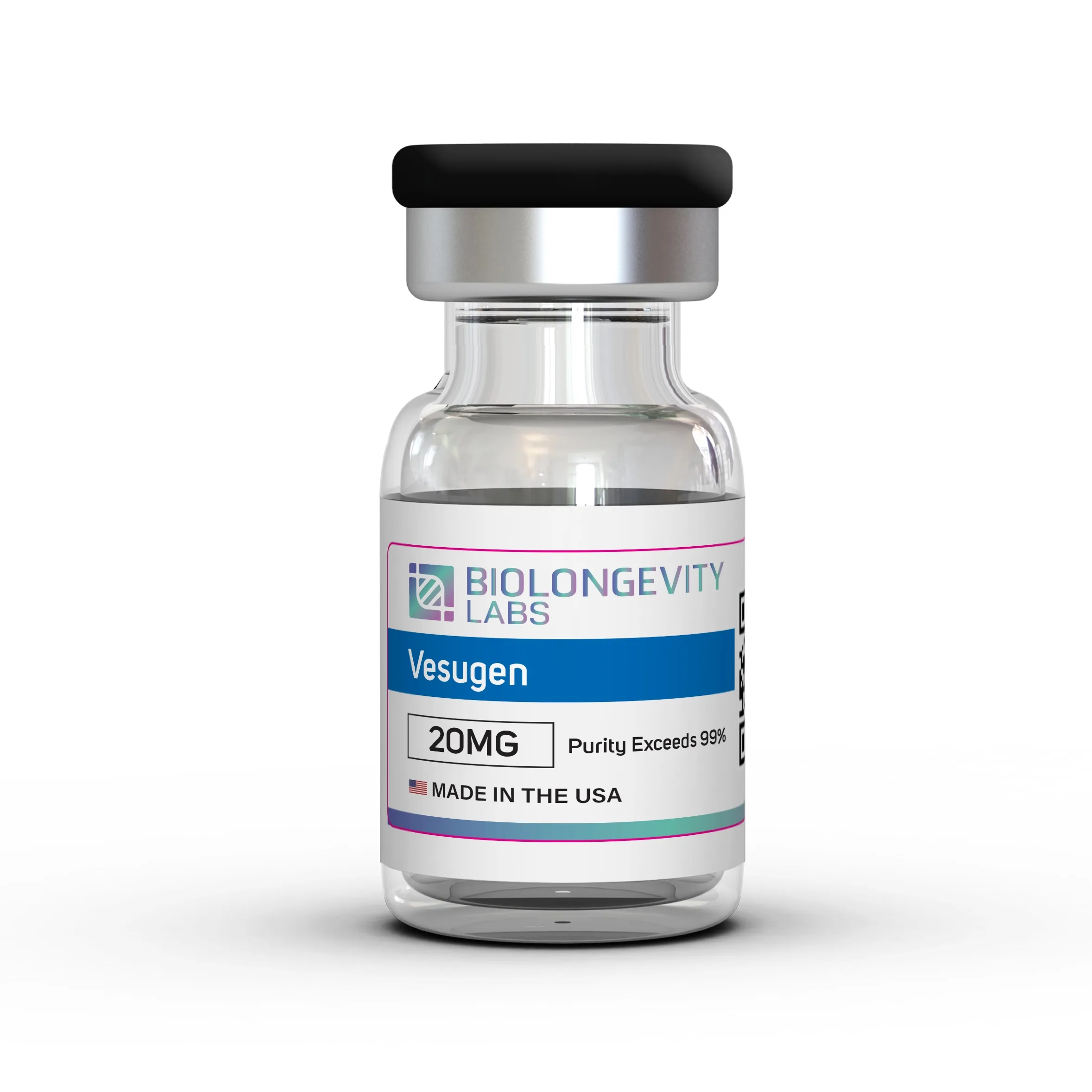
| Vial Size |
20 mg |
| Storage |
-20°C, protect from light |
Storage and Handling
- Store the lyophilized compound at -20°C, protected from light.
- After reconstitution with bacteriostatic water, store at 2°C to 8°C and use promptly.
- Avoid repeated freeze-thaw cycles, which degrade short peptides in solution.
- Maintain aseptic handling to preserve compound integrity.
Lyophilized Format
This compound ships in lyophilized (freeze-dried) form. Freeze-drying supports long-term storage stability and preserves compound integrity. No fillers are added.
Research Use Disclaimer
Vesugen 20mg is supplied for research use only. It is not a drug, food, cosmetic, or dietary supplement and has not been evaluated by the FDA. By purchasing, the buyer confirms the compound will be used solely for in vitro research.
Frequently Asked Questions
What Is Vesugen?
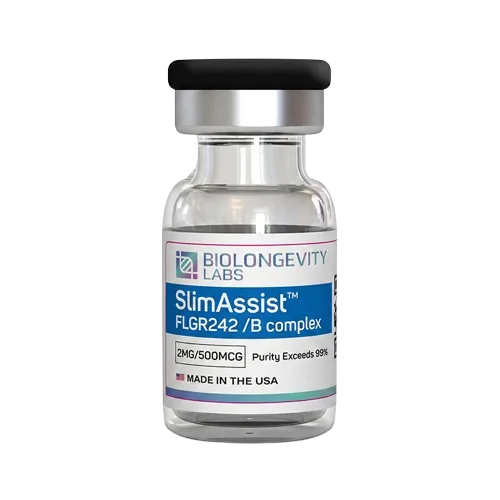
Vesugen 20mg is a synthetic tripeptide with the sequence Lys-Glu-Asp, supplied as a lyophilized powder in a 20 mg glass vial for laboratory research. It is one of the short peptide bioregulators characterized in the Khavinson research literature, where it appears under the abbreviation KED.
What Is the Molecular Weight of Vesugen?
Vesugen has a molecular weight of 390.39 g/mol and the molecular formula C₁₅H₂₆N₄O₈. Its monoisotopic mass is 390.17506 Da, recorded under PubChem CID 87571363.
What Is the Amino Acid Sequence of Vesugen?
Vesugen has the three-residue sequence H-Lys-Glu-Asp-OH, written KED in one-letter notation. That sequence, not the product name, is the term indexed by PubMed and the chemical structure databases.
How Should Vesugen Be Stored?
Vesugen should be stored lyophilized at -20°C and protected from light. Once reconstituted, hold it at 2°C to 8°C, use it promptly, and avoid repeated freeze-thaw cycles.
How Is the Purity of Vesugen Verified?
Vesugen purity is verified at 99% or higher through independent third-party laboratory analysis using liquid chromatography with mass spectrometry. Every vial from BioLongevity Labs ships with a batch-specific certificate of analysis tied to that lot.
Vesugen Research Areas
Vascular endothelial cell cultures are the research setting most often associated with KED. In cultures derived from young and old animals, the tripeptide was studied against expression of the proliferation-associated protein Ki-67, and molecular docking placed the peptide in contact with a core promoter region of the MKI67 gene [1]. A separate in vitro study comparing baseline endothelium against endothelium from vascular wall remodeling models reported changes in endothelin-1 expression, connexin-mediated cell-to-cell contacts, and sirtuin-1 levels under KED exposure [2].
A review of signaling molecules that define the senescence-associated secretory phenotype in cardiovascular system cells lists the KED tripeptide among the peptide regulators acting on that molecule pool, alongside AEDR and several polypeptide regulators [3]. The molecules surveyed include the p16, p19, p21, p38, and p53 anti-proliferative proteins, a set of cytokines, matrix metalloproteinases, adhesion molecules, and sirtuins.
Expression profiling extends the picture beyond vascular models. In mesenchymal stem cell cultures aged by serial passage and by stationary culture, nanomolar KED was associated with changes in IGF1, FOXO1, TNKS2, and NF-κB transcript levels, with the direction of the TNKS2 change differing between the two aging models [4].
The second research thread runs through neuronal cell culture work, where the same tripeptide appears in models of neuronal differentiation and cell aging.
Neuronal Differentiation and Cell Senescence Models
In a transdifferentiation model that converts dermal fibroblasts from elderly donors into induced cortical neurons, KED was associated with increased dendritic arborization, raising both the number of primary processes and total dendrite length, while leaving mitochondrial and lysosomal activity and p16 protein levels unchanged [5]. A follow-up study applying KED at the end of a fetal mesenchymal stem cell transdifferentiation protocol reported a 15% reduction in p21 expression and a 1.51-fold to 2.4-fold reduction in beta-galactosidase activity, with no measured change in TUj-1 or LaminB1 [6].
In a transgenic murine model, KED and EDR were associated with preserved dendritic spine density, and molecular modeling of the peptides against double-stranded DNA identified candidate binding sites in gene promoter regions [7]. A review of the same peptide covers its association with expression of cell aging and apoptosis genes (p16, p21), neuronal differentiation genes (NES, GAP43), and the SUMO, APOE, and IGF1 genes [8].
| Research Area |
In Vitro Application |
| Vascular endothelial biology |
Endothelial cell culture assays tracking proliferation markers and cell-to-cell junction proteins |
| Cellular senescence |
Marker panels measuring p16, p21, and beta-galactosidase activity in aged cell cultures |
| Gene expression regulation |
Transcript profiling of IGF1, FOXO1, TNKS2, and NF-κB in mesenchymal stem cell aging models |
| Neuronal differentiation |
Transdifferentiation protocols scoring dendritic branching and process length in induced cortical neurons |
| Peptide-DNA interaction modeling |
Molecular docking of the tripeptide against promoter-region sequences in silico |
References
- Khavinson VK, Tarnovskaia SI, Lin’kova NS, Guton EO, Elashkina EV (2014). [Epigenetic aspects of peptidergic regulation of vascular endothelial cell proliferation during aging]. Advances in Gerontology, 27(1), 108-114. https://pubmed.ncbi.nlm.nih.gov/25051766/
- Kozlov KL, Bolotov II, Linkova NS, Drobintseva AO, Khavinson VKh, Dyakonov MM, Kozina LS (2016). [Molecular aspects of vasoprotective peptide KED activity during atherosclerosis and restenosis]. Advances in Gerontology, 29(4), 646-650. https://pubmed.ncbi.nlm.nih.gov/28539025/
- Khavinson V, Linkova N, Dyatlova A, Kantemirova R, Kozlov K (2022). Senescence-Associated Secretory Phenotype of Cardiovascular System Cells and Inflammaging: Perspectives of Peptide Regulation. Cells, 12(1), 106. https://pmc.ncbi.nlm.nih.gov/articles/PMC9818427/
- Ashapkin V, Khavinson V, Shilovsky G, Linkova N, Vanuyshin B (2020). Gene expression in human mesenchymal stem cell aging cultures: modulation by short peptides. Molecular Biology Reports, 47(6), 4323-4329. https://doi.org/10.1007/s11033-020-05506-3
- Kraskovskaya N, Linkova N, Sakhenberg E, Krieger D, Polyakova V, Medvedev D, Krasichkov A, Khotin M, Ryzhak G (2024). Short Peptides Protect Fibroblast-Derived Induced Neurons from Age-Related Changes. International Journal of Molecular Sciences, 25(21), 11363. https://pmc.ncbi.nlm.nih.gov/articles/PMC11546785/
- Sakhenberg E, Linkova N, Kraskovskaya N, Krieger D, Polyakova V, Medvedev D, Krasichkov A, Khotin M, Ryzhak G (2025). The Influence of Short Peptides on Cell Senescence and Neuronal Differentiation. Current Issues in Molecular Biology, 47(9), 739. https://pmc.ncbi.nlm.nih.gov/articles/PMC12468822/
- Khavinson V, Ilina A, Kraskovskaya N, Linkova N, Kolchina N, Mironova E, Erofeev A, Petukhov M (2021). Neuroprotective Effects of Tripeptides-Epigenetic Regulators in Mouse Model of Alzheimer’s Disease. Pharmaceuticals, 14(6), 515. https://pmc.ncbi.nlm.nih.gov/articles/PMC8227791/
- Khavinson VK, Lin’kova NS, Umnov RS (2021). Peptide KED: Molecular-Genetic Aspects of Neurogenesis Regulation in Alzheimer’s Disease. Bulletin of Experimental Biology and Medicine, 171(2), 190-193. https://doi.org/10.1007/s10517-021-05192-6
Certificate of Analysis (COA) for Every Batch
A Certificate of Analysis (COA) is a document that verifies a compound’s identity, purity, and batch quality through independent laboratory testing. Every compound from BioLongevity Labs ships with a COA tied to its specific batch, so researchers can confirm exactly what they received before it enters a protocol.
Each COA reports results from third-party laboratory analysis, including:
- Ultra-high-performance liquid chromatography with mass spectrometry (UHPLC-MS) for purity, typically confirmed at 99% or higher
- Mass identification for molecular confirmation and content quantitation
- Endotoxin quantitation by Limulus amebocyte lysate (LAL) assay where applicable
- Visual and physical characterization of the finished material
How to verify a COA independently
Every certificate can be checked against the issuing laboratory’s own records, not just the copy hosted here. Verification does not depend on BioLongevity Labs.
- MDx BioAnalytical Laboratory certificates carry a QC tracking number and a search code. Newer certificates also carry a QR code. Scan the code, or enter the search code at mdxbiolabs.com, to pull the official record.
- BioRegen reports of analysis carry a Report ID and a Validation Key. Scan the QR code on the certificate to open the official record, or reference both identifiers when contacting the laboratory at the address printed on the report.
- SafeCert Labs certificates, which appear on a number of earlier batches, carry a COA number and the signature of the reporting chemist. Reference that number when requesting confirmation from the laboratory directly.
Batches are frequently tested by both laboratories independently. When two certificates exist for the same lot, each one resolves at its own issuing laboratory, which lets a researcher confirm the same material twice through two unrelated sources.
COAs are sourced from independent certified labs rather than in-house testing alone, giving researchers a verifiable record of molecular integrity for each batch. All compounds are supplied for research use only.
Review the COAs for this batch below, or browse the full COA library.
Vesugen (12207)

Endotoxin Vesugen

Vesugen (11371)

Vesugen (251537)

Vesugen (251537E)

Vesugen (251448)

×