Product Description
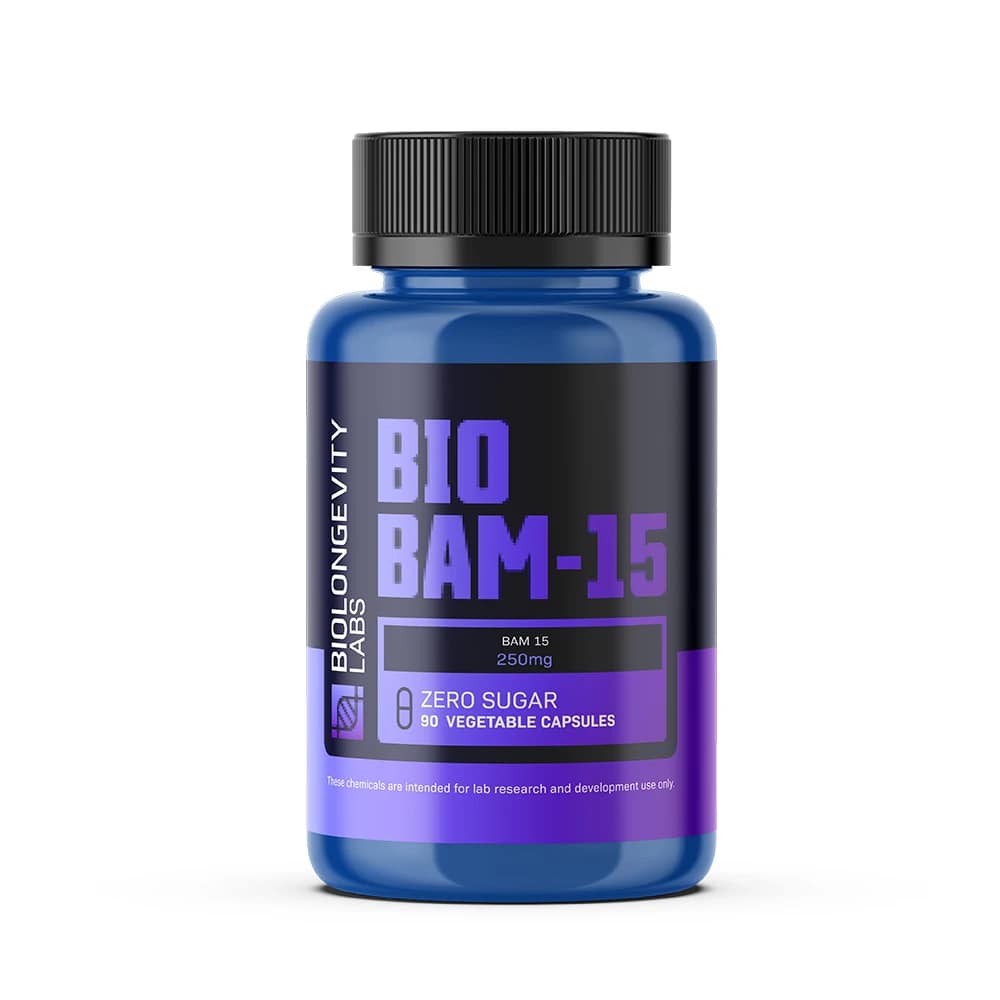
BioBAM-15 contains BAM15, a small-molecule mitochondrial protonophore used as a research tool to uncouple oxidative phosphorylation. It ferries protons across the inner mitochondrial membrane, dissipating membrane potential (Δψm) and weakening the proton motive force that normally drives ATP synthase.
BAM15 was discovered in screens explicitly looking for uncouplers with fewer confounds. Compared with FCCP at similar uncoupling potency, BAM15 was reported to avoid plasma membrane depolarization, show lower cytotoxicity, and stimulate respiration across a broader effective concentration range, which can make titrations and mechanistic readouts less “knife-edge.”
That profile is why BAM15 shows up in mitochondrial function experiments as an alternative to classical uncouplers, especially when investigators want to separate mitochondrial uncoupling from off-target electrophysiology at the cell surface.
Specifications
| Property |
Value |
| CAS No. |
210302-17-3 |
| Molecular Formula |
C16H10F2N6O |
| Molecular Weight |
340.29 |
| Synonyms |
BAM-15; BAM 15 |
| Pathway |
AMPK/ACC; AMPK/PGC-1α/TFAM; AMPK/NF-κB/NLRP3 |
| Format |
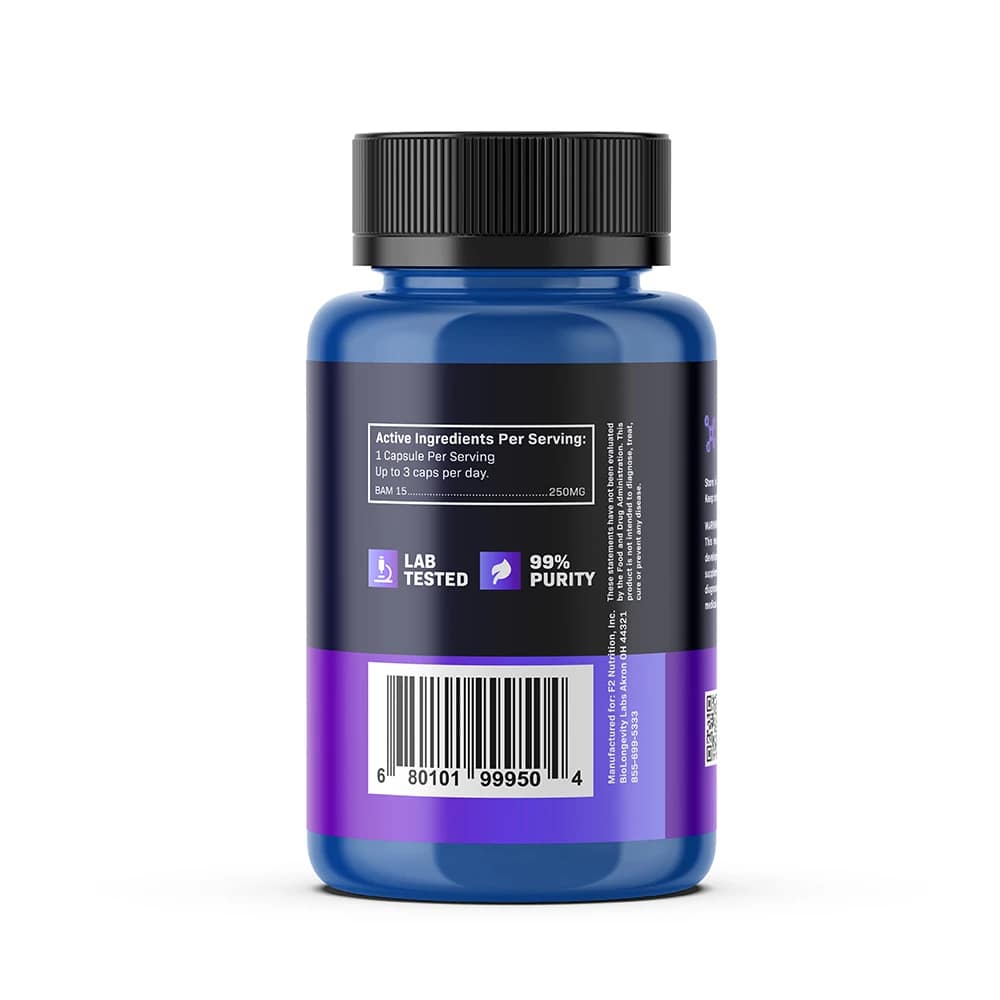
Capsules (250mg per capsule) |
Research Overview
BAM15 (N5,N6-bis(2-fluorophenyl)-oxadiazolo[3,4-b]pyrazine-5,6-diamine) is a synthetic mitochondrial uncoupler first identified in 2014 through bioenergetic screening, with a growing body of preclinical research spanning metabolic, immunological, oncological, and neurological domains.[1]
Mechanism of Action
BAM15 functions as a protonophore, directly increasing inner mitochondrial membrane permeability to protons. This dissipates the electrochemical gradient that drives ATP synthase, accelerating electron transport chain (ETC) activity and substrate oxidation.
A key distinction from classical uncouplers like DNP and FCCP: BAM15 selectively depolarizes the mitochondrial membrane without affecting plasma membrane potential. In vitro comparisons showed no caspase 3/7 activation by BAM15 up to 40 μM, while DNP and FCCP triggered caspase activity at 5 μM and 10 μM respectively.[2]
AMPK Signaling
The drop in ATP caused by uncoupling activates AMP-activated protein kinase (AMPK) at threonine 172, triggering downstream metabolic programs. These include GLUT4 translocation for glucose uptake, ACC phosphorylation to accelerate fatty acid β-oxidation, and PGC-1α activation to support mitochondrial biogenesis.[2]
AMPK also inhibits NF-κB nuclear translocation by blocking IκBα degradation, suppressing NLRP3 inflammasome priming. shRNA-mediated AMPK knockdown abolished these effects, confirming AMPK as a central downstream mediator.
Mitochondrial Quality Control
BAM15 initiates mitophagy via PINK1-ubiquitin and LC3II activation, selectively clearing damaged mitochondria. It also promotes expression of fusion protein Mfn2 while reducing fission proteins, shifting mitochondrial dynamics toward a more connected network.[1]
Metabolic Research
In vitro studies in C2C12 myotubes showed enhanced mitochondrial respiratory kinetics and increased nutrient uptake following BAM15 exposure. Isotopic tracer studies confirmed increased glucose uptake and palmitate oxidation.
In diet-induced obese mouse models, BAM15 drove a shift toward fat oxidation and increased total energy expenditure, with whole-transcriptome sequencing identifying 937 differentially regulated transcripts — including pathways related to insulin signaling and AMPK/AKT/GLUT4 activation. Hepatic lipogenesis genes were markedly suppressed, with Srebf1 downregulated 490-fold and Scd1 898-fold in adipose tissue.[2]
Hepatic Lipid Research
BAM15 exhibits high hepatic uptake via first-pass portal clearance, driving substrate oxidation and reducing lipid accumulation. In preclinical models, hepatic steatosis was reduced by approximately 75%, with trichrome staining confirming no fibrotic development.[2]
A 2026 study found BAM15 demonstrated higher proton-uncoupling binding capacity than DNP and FCCP, while also promoting mitochondrial fusion, fission, autophagy, and TCA cycle activity in liver tissue.[3]
Sepsis and Renal Research
In cecal ligation and puncture (CLP) sepsis models, BAM15 substantially improved 7-day survival and kidney function, with reductions in proximal tubule cell vacuolization across cortex and outer medulla regions.[4]
BAM15 disrupts a key mtDNA damage feedback loop: by accelerating ETC electron transfer, it reduces mitochondrial superoxide production, decreasing mtDNA release — a potential companion biomarker for research monitoring. It also activates PGC-1α through AMPK and SIRT1, supporting mitochondrial biogenesis during sepsis models.
Cardiovascular Research
In western-diet-fed ApoE⁻/⁻ mouse models, BAM15 suppressed atherosclerotic plaque formation and reduced serum ALT, AST, and hepatic lipid levels. RNA-seq analysis identified IL1A, SRC, and CSF3 as key molecular targets, confirmed by molecular docking and western blot.[5]
BAM15 also potently activates AMPK in vascular smooth muscle cells and inhibits artery constriction, suggesting relevance to vascular tone research. In endothelial cell models under hyperglycemic conditions, BAM15 reduced ROS and supported mitochondrial function.[6]
Oncology Research
BAM15-induced mitochondrial depolarization restrains ATP-linked oxidative phosphorylation in cancer cell models, increasing superoxide and caspase-3/7 activity. Preclinical models include breast cancer, melanoma, AML, and non-small cell lung cancer, where it demonstrated concentration-dependent inhibition of proliferation and G2 cell cycle arrest.[7]
In tumor immunology research, low-dose intratumoral BAM15 reshaped the tumor metabolome and enhanced CD8⁺ T cell tumor-killing activity. BAM15 also synergized with retinoic acid to drive neuroblastoma differentiation, triggering a metabolic shift from the pentose phosphate pathway to oxidative phosphorylation.[8][9]
Neurodegeneration Research
In Caenorhabditis elegans, BAM15 reduced mechanosensory neuronal defects during aging and extended mean lifespan in both wild-type and ucp-4 mutant strains. Functional assays confirmed maintained touch responses and short-term associative memory in BAM15-treated aged nematodes.[10]
In CLP sepsis mouse models, BAM15 attenuated sepsis encephalopathy by reducing mitochondrial damage and suppressing neuronal miR370-3p upregulation.
Signaling Pathway Summary
| Pathway |
Mechanism |
Research Context |
| AMPK/ACC |
ATP depletion → AMPK pT172 → ACC pS79 → ↑fatty acid oxidation, ↓lipogenesis |
Obesity, glycemia, hepatic lipids |
| AMPK/PGC-1α/TFAM |
↑mitochondrial biogenesis, ↑mtDNA maintenance |
Sepsis-AKI, sarcopenic obesity |
| AMPK/NF-κB/NLRP3 |
↓IκBα degradation → blocks NF-κB → ↓NLRP3 inflammasome |
Cardiovascular, NAFLD, sepsis |
| mitoROS/JAK/STAT3 |
Biphasic: low-concentration activation (Tyr705), high-concentration inhibition (Ser727) |
Cardioprotection |
| AMPK/AKT/AS160/GLUT4 |
↑glucose uptake, insulin-independent and insulin-dependent |
Glycemic control |
| PINK1/LC3II |
Enhanced mitophagy and mitochondrial quality control |
Sarcopenic obesity, general |
| mtROS/mtDNA cycle |
↓electron dwell time → ↓superoxide → ↓mtDNA release → breaks feedback loop |
Sepsis-AKI |
| IL1A/SRC/CSF3 |
Multi-target inhibition of atherosclerosis progression |
Atherosclerosis |
BAM15 is for research use only.
References
- Xiong G, Zhang K, Ma Y, Song Y, Zhang W, Qi T, et al. BAM15 as a mitochondrial uncoupler: a promising therapeutic agent for diverse diseases. Frontiers Media SA; 2023. https://doi.org/10.3389/fendo.2023.1252141
- Axelrod CL, King WT, Davuluri G, Noland RC, Hall J, Hull M, et al. BAM15-mediated mitochondrial uncoupling protects against obesity and improves glycemic control. Springer Science and Business Media LLC; 2020. https://doi.org/10.15252/emmm.202012088
- Liu Z, Wang W, Wang S, Lv R, Li C, Sun C. Mitochondrial uncoupler BAM15 ameliorates liver lipid metabolism disorders by activating the AMPK pathway. Wiley; 2026. https://doi.org/10.1111/febs.70400
- Tsuji N, Tsuji T, Yamashita T, Hayase N, Hu X, Yuen PST, et al. BAM15 treats mouse sepsis and kidney injury, linking mortality, mitochondrial DNA, tubule damage, and neutrophils. American Society for Clinical Investigation; 2023. https://doi.org/10.1172/jci152401
- Ma M, Zhong J, Tai Y, Xu S, Pei Z, Wang X. Combining RNA-seq, molecular docking and experimental verification to explore the mechanism of BAM15 as a potential drug for atherosclerosis. Springer Science and Business Media LLC; 2025. https://doi.org/10.1038/s41598-025-98209-3
- Tai Y, Li L, Peng X, Zhu J, Mao X, Qin N, et al. Mitochondrial uncoupler BAM15 inhibits artery constriction and potently activates AMPK in vascular smooth muscle cells. Elsevier BV; 2018. https://doi.org/10.1016/j.apsb.2018.07.010
- Zhang M yin, Wang YN, Zhou YF, Wang SC, Mai SJ, Wang HY. Abstract 4687: Primary study on the anticancer role of BAM15 in lung cancer cells. American Association for Cancer Research (AACR); 2024. https://doi.org/10.1158/1538-7445.am2024-4687
- Jiang X, Fan Z, Zhang Z, Zeng F, Sun T, Li Y, et al. Tumor metabolome remolded by low dose mitochondrial uncoupler elicites robust CD8+ T cell response. Springer Science and Business Media LLC; 2025. https://doi.org/10.1038/s41420-025-02584-9
- Ye J, Jiang H, Tiche S, He C, Liu J, Bian F, et al. Restoring Mitochondrial Quantity and Quality to Reverse Warburg Effect and Drive Tumor Differentiation. Springer Science and Business Media LLC; 2024. https://doi.org/10.21203/rs.3.rs-5494402/v1
- Cho I, Song HO, Ji HE, Yang S, Cho JH. BAM15 Relieves Neurodegeneration in Aged Caenorhabditis elegans and Extends Lifespan. MDPI AG; 2022. https://doi.org/10.3390/metabo12111129
Certificate of Analysis (COA) for Every Batch
A Certificate of Analysis (COA) is a document that verifies a compound’s identity, purity, and batch quality through independent laboratory testing. Every compound from BioLongevity Labs ships with a COA tied to its specific batch, so researchers can confirm exactly what they received before it enters a protocol.
Each COA reports results from third-party laboratory analysis, including:
- High-performance liquid chromatography (HPLC) for purity, typically confirmed at 99% or higher
- Liquid chromatography mass spectrometry (LC-MS) for molecular identity and mass confirmation
- Sterility and endotoxin screening where applicable
- Chemical contaminant and residual solvent checks
COAs are sourced from independent certified labs rather than in-house testing alone, giving researchers a verifiable record of molecular integrity for each batch. All compounds are supplied for research use only.
Review the COAs for this batch below, or browse the full COA library.
No COAs available for this product.