

Research quality starts with source quality. When your experiments depend on peptide purity and molecular integrity, choosing the right supplier becomes a critical decision point.
The research peptide market has expanded rapidly, but not all suppliers meet the same standards. Understanding what separates reputable peptide companies from questionable ones protects your research timeline, budget, and results.
Key Points
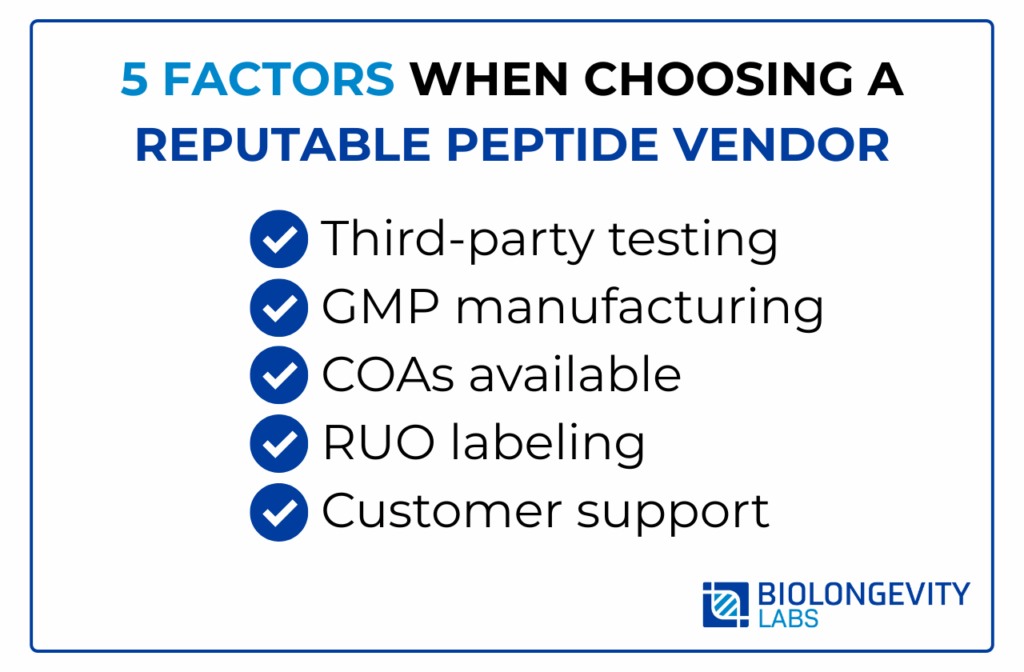
- Third-party verification from certified labs confirms purity and molecular weight
- USA GMP manufacturing provides consistent quality standards and regulatory oversight
- COAs should be available before purchase—review actual test results, not just pass/fail
- Research-grade peptides require 99%+ purity for experimental reproducibility
Why Source Matters for Research Peptides Suppliers
Peptide quality directly affects experimental reproducibility. A single batch with undisclosed impurities or incorrect molecular weight can invalidate months of work.
Research-grade peptides require rigorous verification protocols. These aren’t consumer products—they’re precision tools for in vitro studies where purity levels below 99% can introduce unacceptable variables.
Third-Party Testing: The Non-Negotiable Standard
Reputable peptide vendors provide independent verification from certified laboratories. Look for companies offering Certificates of Analysis (COAs) before you purchase, not after.
The gold standard involves multiple testing methods:
- HPLC (High-Performance Liquid Chromatography) confirms purity percentages
- LC-MS (Liquid Chromatography-Mass Spectrometry) verifies exact molecular weight
- Sterility testing ensures contamination-free products
- Endotoxin screening checks for bacterial byproducts
Self-reported testing creates conflicts of interest. Third-party verification from separate certified labs provides objective quality confirmation.
Reputable suppliers like BioLongevity Labs use multiple independent labs for each batch. This redundancy catches discrepancies and provides additional confidence in analytical results.
USA GMP Manufacturing: Why Geography Matters
Good Manufacturing Practice (GMP) standards vary by country. USA-based facilities operate under FDA oversight, providing consistent quality frameworks for research-grade compounds.
Domestic peptide manufacturing also means:
- Shorter shipping times that preserve peptide stability
- Better chain of custody documentation
- Easier communication for technical questions
- Simplified customs procedures for research institutions
For laboratories requiring comprehensive import documentation, USA suppliers can provide the regulatory paperwork needed for international orders.
Documentation Standards for Research Applications
Professional research suppliers provide complete analytical dossiers with every order. This should include:
- Batch-specific COAs with test dates and methods
- MSDS (Material Safety Data Sheets) for handling protocols
- Reconstitution guidelines with stability data
- Storage recommendations backed by stability testing
These documents aren’t optional extras—they’re needed for protocol documentation, lab safety compliance, and research records.
Review every COA carefully before ordering. The certificate should show actual test results, not just pass/fail checkmarks. Look for the testing lab’s name, accreditation status, and contact information.
Red Flags in Peptide Sourcing
Avoid peptide suppliers who:
- Won’t provide COAs until after purchase
- Claim testing without naming the certifying laboratory
- Offer prices far below market rates (often indicates lower purity or bulk fillers)
- Provide vague manufacturing location details
- Make therapeutic or medical benefit claims (research peptides are for in vitro use only)
Legitimate suppliers clearly state “research use only” and avoid suggesting human consumption. This compliance stance protects both the supplier and research institutions.
Purity Guarantees When Buying Peptides Online
Research-grade peptides should consistently test at 99% or higher purity. Lower percentages may work for some applications, but introduce unknown variables into your protocols.
Ask suppliers how they handle purification and batches that don’t meet specifications. Reputable companies retest or reject substandard batches rather than selling them at discounted prices.
Some suppliers advertise “>98% purity” as their standard. While acceptable for certain applications, this wider tolerance range means you might receive anything from 98.1% to 99.9% purity—a significant variance for sensitive research protocols.
Storage and Stability Considerations
Proper storage begins at the manufacturing facility, not your lab. Ask about cold-chain shipping for temperature-sensitive peptides.
Lyophilized (freeze-dried) peptides remain stable for 3-5 years at -20°C when properly manufactured and stored. Reconstituted peptides have shorter stability windows and require sterile handling.
Reputable suppliers provide specific stability data for their products. Generic storage guidelines aren’t sufficient for research planning.
Customer Support for Research Teams
Technical questions arise during research. Your peptide supplier should offer knowledgeable support that understands laboratory applications.
Look for:
- Response times under 48 hours for technical inquiries
- Staff who can discuss analytical methods and testing protocols
- Willingness to provide additional documentation when needed
- Clear policies on handling shipping issues or quality concerns
Research schedules don’t accommodate long supplier delays. Same-day shipping and reliable logistics matter when you’re working against grant deadlines or publication timelines.
Selecting the Best Peptide Vendor
- Start by requesting COAs for peptides you’re considering. Compare purity levels, testing methods, and certification details across suppliers.
- Verify USA manufacturing claims by asking for facility location and GMP certification details. Legitimate suppliers provide this information readily.
- Check that all products carry clear “research use only” (RUO) labeling. This compliance indicates the supplier understands regulatory requirements.
- For international researchers, confirm the supplier provides customs documentation and research-only declarations for your region.
Research-Grade Peptides You Can Verify
BioLongevity Labs offers 150+ research peptides with extensive third-party verification. Every batch includes COAs from three separate certified laboratories, manufactured in USA GMP facilities with guaranteed 99%+ purity.
Our analytical documentation is available before purchase. Review test results, verify our methods, and see the quality standards that support your research.
All products are strictly for research use only—not for human consumption.
Ready to verify quality for yourself? Visit our peptide catalog to review COAs and analytical data for research-grade compounds.