

Scientifically reviewed by
Dr. Ky H. Le, MD

The information presented in this article is for educational and research purposes only, intended for laboratory professionals, researchers and collaborators. This content does not constitute medical or clinical advice.
KPV (Lys-Pro-Val) is a small tripeptide sequence derived from α-melanocyte-stimulating hormone (α-MSH), recognized for its relevance in studies of inflammation and epithelial barrier function. This C-terminal fragment maintains several bioactive characteristics of the parent hormone, while its smaller size and enhanced ability to enter cells make it a practical choice for laboratory investigations.
Researchers in fields such as inflammatory signaling, epithelial transport, and host defense often select KPV as a compact molecular probe. Its interactions with NF-κB signaling pathways, efficient passage through cellular membranes using specific transporters, and engagement with nuclear import processes support its use in a range of in vitro experiments.
Key Highlights
- KPV functions as a PepT1-transported tripeptide that accumulates in cell nuclei and modulates inflammatory signaling cascades
- The peptide stabilizes IκBα and blocks p65RelA nuclear translocation, reducing NF-κB-dependent gene expression in epithelial models
- Research demonstrates KPV’s capacity to regulate chemokine secretion, metalloproteinase activity, and barrier function across multiple tissue types
- Quality verification requires HPLC purity testing above 99% with LC-MS confirmation of molecular identity
What is KPV Peptide?
KPV makes up amino acid residues 11 through 13 of α-MSH, forming the hormone’s C-terminal tripeptide. While α-MSH mainly signals through melanocortinreceptors — thanks to its HFRW core sequence — KPV takes a different route.
Instead of relying on these receptors, KPV acts through receptor-independent mechanisms. Interestingly, these pathways still reproduce many of the anti-inflammatory effects seen with α-MSH[1].
Structural Origin and Minimal Active Sequence
When researchers compare full-length α-MSH to its shorter fragments, they consistently find that KPV represents the minimal sequence necessary for maintaining key biological properties. If a peptide lacks this specific tripeptide motif, it quickly loses much of its anti-inflammatory and antimicrobial activity in experimental models[2].
Let’s take a closer look at the sequence itself: lysine, proline, and valine. This combination brings together both charged and hydrophobic features. Because of this amphipathic nature, KPV can interact with cell membranes and is readily recognized by transporters.
Relationship to Melanocortin Biology
Classical melanocortin signaling involves cAMP elevation through G-protein coupled receptors. KPV diverges from this model, producing biological effects in cells where cAMP pathways are pharmacologically inhibited[3].
Calcium signaling represents one alternative pathway. In keratinocyte models, KPV triggers rapid intracellular Ca²⁺ transients independent of cAMP, suggesting multiple signaling modes for this peptide fragment.
Related Product: Buy KPV peptide for laboratory research use.
Cellular Transport and Uptake Mechanisms
KPV is small enough to move into cells through certain transport systems that larger proteins cannot use. This helps explain where and how KPV’s biological activity works.
PepT1-Mediated Entry in Intestinal Models
The proton-coupled oligopeptide transporter PepT1 (SLC15A1) serves as a primary entry route for KPV in intestinal epithelium. This transporter normally handles dietary di- and tripeptides, moving them from the gut lumen into epithelial cells.
Studies using PepT1 inhibitors or genetic knockdown demonstrate reduced KPV uptake and diminished downstream effects on inflammatory signaling. Competitive substrates for PepT1 similarly block KPV’s intracellular accumulation[4].
PepT1 expression increases during inflammation in colonic epithelium. This upregulation potentially enhances KPV transport precisely when anti-inflammatory signaling would be most relevant to barrier maintenance.
Nuclear Accumulation Patterns
Time-course imaging in human bronchial epithelial cells reveals that KPV shifts from cytoplasmic to nuclear localization within hours of cellular uptake. Immunofluorescence studies using histidine-tagged KPV show peptide fluorescence concentrated in nuclei[5].
This nuclear accumulation coincides temporally with suppression of NF-κB activation. The spatial relationship suggests direct nuclear-proximal mechanisms rather than purely cytoplasmic effects.
Importin-α3 Interactions
Nuclear import of NF-κB subunits requires importin proteins that recognize nuclear localization sequences. Competition assays indicate KPV interferes with p65RelA binding to importin-α3, specifically at the armadillo repeat domain that recognizes the p65 NLS[5].
This molecular interaction provides a mechanism linking KPV’s nuclear presence to its effects on NF-κB signaling. By occupying importin binding sites, the peptide blocks p65 nuclear entry.
NF-κB Pathway and Inflammation Modulation
NF-κB controls how cells produce inflammatory proteins. KPV can influence this pathway at different steps, which explains many of its effects seen in studies with epithelial cells.
IκBα Stabilization
In unstimulated cells, IκBα sequesters NF-κB dimers in the cytoplasm. Pro-inflammatory stimuli trigger IκBα phosphorylation and degradation, releasing NF-κB for nuclear translocation.
KPV treatment increases total IκBα levels following TNF-α stimulation without changing the phosphorylated-to-total IκBα ratio. This pattern suggests reduced IκBα degradation rather than blocked IKK kinase activity, preserving cytosolic NF-κB sequestration through a post-phosphorylation mechanism[5].
p65RelA Nuclear Translocation Blockade
Live-cell imaging using fluorescently tagged p65RelA demonstrates KPV’s capacity to prevent nuclear import. Cells pretreated with KPV maintain low nuclear-to-cytoplasmic p65 ratios even after TNF-α exposure, whereas control cells show rapid nuclear accumulation[5].
This transport blockade operates at the importin level, consistent with the binding competition data. Nuclear p65 levels determine transcriptional output, making this a high-leverage control point.
Downstream Transcriptional Effects
Multiple readouts confirm reduced NF-κB transcriptional activity following KPV treatment[3]:
- NF-κB-driven luciferase reporters show concentration-dependent inhibition in keratinocyte and bronchial epithelial lines
- IL-8 and eotaxin secretion decreases in airway epithelium under inflammatory challenge
- Matrix metalloproteinase-9 activity returns toward baseline levels in stimulated cells
- Pro-inflammatory cytokine expression diminishes in intestinal models
These outcomes reflect the pathway’s role in inflammatory mediator production across tissue types.
Tissue-Specific Research Applications
KPV’s effects vary somewhat across epithelial lineages, reflecting differences in transporter expression, inflammatory signaling architecture, and baseline NF-κB activity.
Intestinal Epithelial Models
Intestinal research systems emphasize PepT1-dependent mechanisms. Experiments in Caco-2 cells and primary intestinal epithelium link PepT1 expression levels to KPV’s anti-inflammatory potency[4].
Barrier function studies report preservation of tight junction integrity under inflammatory stress. Changes in transepithelial electrical resistance and permeability markers suggest maintained barrier competence.
Co-culture systems incorporating immune cells show reduced pro-inflammatory cytokine secretion from both epithelial and immune compartments, indicating effects on multiple cell populations[6].
Airway and Respiratory Studies
Human bronchial epithelial cell research provides detailed mechanistic insights. Studies in these systems characterize[5]:
- Chemokine regulation: IL-8 and eotaxin secretion decreases following KPV treatment
- Metalloproteinase control: MMP-9 gelatinolytic activity returns to baseline under inflammatory conditions
- Cell cycle protection: TNF-α-induced growth inhibition reverses without baseline proliferation changes
- mTORC1 activation: Growth signaling pathways show disinhibition under inflammatory stress
These findings position KPV as a protective agent for epithelial proliferation and matrix remodeling control.
Keratinocyte and Skin Research
Cutaneous models reveal calcium signaling pathways distinct from cAMP-dependent mechanisms. KPV induces rapid Ca²⁺ transients in keratinocytes even when adenosine receptor agonists block cAMP elevation[3].
NF-κB reporter assays and DNA-binding studies confirm transcriptional suppression similar to other epithelial types. The combination of calcium signaling and NF-κB modulation suggests multiple concurrent pathways in skin[3].
Antimicrobial and Host Defense Properties
Beyond anti-inflammatory signaling, KPV retains antimicrobial activities that position it within the host defense peptide family.
Direct Antimicrobial Activity
α-MSH demonstrates activity against Candida albicans, Cryptococcusneoformans, and Staphylococcus aureus, including methicillin-resistant strains. Fragment studies identify the KPV sequence as required for antistaphylococcaleffects. Peptides lacking this motif lose antimicrobial potency[2].
Extended fragments incorporating KPV show direct antimicrobial and antifungal actions in plate assays. Effects appear linked to membrane perturbations and alterations in microbial intracellular signaling.
Structure-Activity Relationships
Chemical modifications probe the sequence requirements for antimicrobial function. Glycoalkylation or acetylation of the lysine residue abolishes antimicrobial activity in some test conditions, highlighting the importance of native charge distribution[7].
These structure-activity data suggest membrane or interface-sensitive mechanisms typical of antimicrobial peptides. Small chemical changes disrupt the amphipathic balance required for microbicidal effects.
Third-Party Tested, USA-Made, 99% Purity
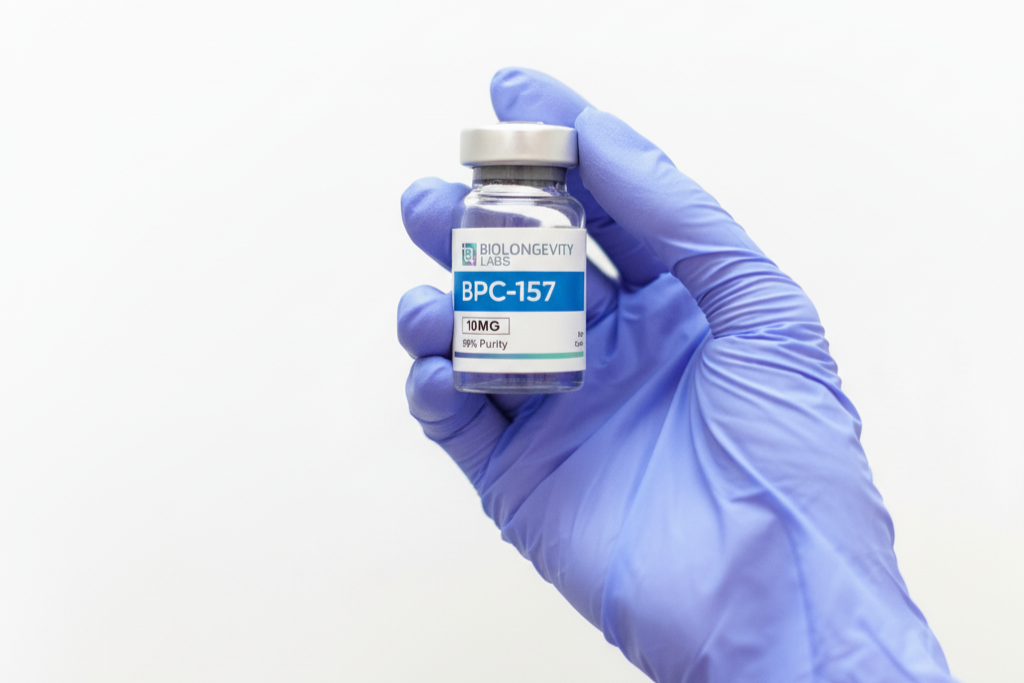
Lyophilized peptides for laboratory applications. 99% purity, 100% USA-Made.
Quality Standards for KPV Research
Reliable mechanistic studies require well-characterized peptide preparations with verified identity and purity.
Purity Verification Requirements
High-purity KPV minimizes confounding variables from contaminants or degradation products. Research-grade preparations should meet:
- ≥99% purity by HPLC analysis
- Confirmed molecular weight by mass spectrometry
- Low endotoxin levels for cell culture applications
- Sterility verification for in vitro work
Third-party testing from independent laboratories provides additional confidence in analytical results.
Analytical Testing Protocols
Standard quality control includes:
| Analysis Type | Purpose | Acceptance Criteria |
|---|---|---|
| HPLC | Purity quantification | Single peak ≥99% |
| LC-MS | Molecular identity | Expected m/z ± 0.5 Da |
| Endotoxin testing | Pyrogenicity control | <1 EU/mg |
| Sterility | Microbial contamination | No growth |
Certificates of analysis documenting these tests should accompany research-grade materials.
Potential In Vitro Research Applications
| Research Area | Model Systems | Mechanistic Focus |
|---|---|---|
| Inflammatory signaling | Epithelial cell lines, primary cultures | NF-κB pathway modulation, cytokine expression |
| Barrier function | Transwell systems, organoids | Tight junction integrity, permeability |
| Transport biology | PepT1-expressing cells | Oligopeptide transporter kinetics |
| Nuclear import | Live-cell imaging, biochemical fractionation | Importin-cargo interactions |
| Antimicrobial mechanisms | Bacterial/fungal cultures | Membrane interactions, MIC determination |
| Cell signaling | Calcium imaging, phospho-proteomics | Non-cAMP melanocortin pathways |
Research-Grade KPV from BioLongevity Labs
BioLongevity Labs offers KPV peptide manufactured in USA GMP facilities with third-party testing verification. Each batch includes certificates of analysis from three independent laboratories, documenting HPLC purity, LC-MS confirmation, and contaminant screening.
Our research peptidesinclude comprehensive analytical documentation to support laboratory protocols requiring well-characterized reagents. Same-day processing for orders placed before 12pm PT keeps research timelines on track.
All BioLongevity products are intended strictly for in vitro research use by qualified laboratories and are not for human consumption.
Scientific Reviewer
This research article has been scientifically reviewed and fact-checked by Dr. Ky H. Le, MD. Dr. Le earned his medical degree from St. George’s University School of Medicine and completed his residency training at Memorial Hermann Southwest Hospital. Board-certified in family medicine with experience in hospital medicine, he brings over two decades of clinical experience to reviewing research content and ensuring scientific accuracy.
About BioLongevity Labs
BioLongevity Labs supplies USA-made research peptides for in vitro laboratory applications. All compounds undergo independent third-party testing to verify purity and composition, with full certificates of analysis available for researchers requiring documentation. Browse our complete peptide catalog to find research-grade peptides for your laboratory needs.
References
- Brzoska T, Luger TA, Maaser C, Abels C, Böhm M. α-Melanocyte-Stimulating Hormone and Related Tripeptides: Biochemistry, Antiinflammatory and Protective Effects in Vitro and in Vivo, and Future Perspectives for the Treatment of Immune-Mediated Inflammatory Diseases. The Endocrine Society; 2008. https://doi.org/10.1210/er.2007-0027
- Singh M, Mukhopadhyay K. Alpha-Melanocyte Stimulating Hormone: An Emerging Anti-Inflammatory Antimicrobial Peptide. Wiley; 2014. https://doi.org/10.1155/2014/874610
- Elliott R, Szabo M, Wagner M, Kemp E, Macneil S, Haycock J. Alpha-melanocyte-stimulating hormone, MSH 11-13 KPV and adrenocorticotropic hormone signalling in human keratinocyte cells. Journal of Investigative Dermatology. 2004;122(4):1010–9.
- Dalmasso G, Charrier–Hisamuddin L, Thu Nguyen HT, Yan Y, Sitaraman S, Merlin D. PepT1-Mediated Tripeptide KPV Uptake Reduces Intestinal Inflammation. Elsevier BV; 2008. https://doi.org/10.1053/j.gastro.2007.10.026
- Land S. Inhibition of cellular and systemic inflammation cues in human bronchial epithelial cells by melanocortin-related peptides: mechanism of KPV action and a role for MC3R agonists. International Journal of Physiology, Pathophysiology and Pharmacology. 2012;4(2):59–73.
- Zheng X, Zhu Y, Zhao Z, Chu Y, Yang W. The role of amino acid metabolism in inflammatory bowel disease and other inflammatory diseases. Frontiers Media SA; 2023. https://doi.org/10.3389/fimmu.2023.1284133
- Songok AC, Panta P, Doerrler WT, Macnaughtan MA, Taylor CM. Structural modification of the tripeptide KPV by reductive “glycoalkylation” of the lysine residue. Public Library of Science (PLoS); 2018. https://doi.org/10.1371/journal.pone.0199686
