
Scientifically reviewed by
Dr. Ky H. Le, MD

The information presented in this article is for educational and research purposes only, intended for laboratory professionals, researchers and collaborators. This content does not constitute medical or clinical advice.
Cerluten is a distinct complex of peptide bioregulators derived from cerebral cortex tissue. Unlike synthetic peptides that typically work through receptor-mediated signaling, these brain-specific compounds interact directly with cellular DNA to regulate gene expression and protein synthesis.
The effects of Cerluten have been studied both in the laboratory and in clinical trials. In the former, data on neuronal differentiation, anti-oxidant effects, and prevention of synaptic loss are observed, and in the latter, objective measurements of brain function are quantified.
Key Highlights
- Cerluten peptide complex A-5 binds directly to DNA promoter regions to modulate gene transcription without traditional receptor signaling
- Clinical trials in 48 patients showed statistically significant improvements in cognitive performance, processing speed, and EEG patterns
- Laboratory research demonstrates upregulation of antioxidant enzymes (SOD2, GPX1, catalase) and neurogenesis markers (nestin, GAP43, β-tubulin III)
- Human studies reported no adverse effects or contraindications across multiple neurological conditions
What is Cerluten Peptide Bioregulator?
Cerluten belongs to a category of peptide bioregulators extracted from young animal brain tissue, specifically cerebral cortex from animals under 12 months of age. The extraction process yields low-molecular-weight peptides (up to 10,000 Da) that naturally regulate neuronal metabolism and function.
This peptide complex shows tissue-specific activity concentrated on neurons and glial cells. The compounds can cross the blood-brain barrier when administered peripherally, enabling targeted central nervous system (CNS) effects without broad systemic activity[1].
How Bioregulators Differ from Standard Peptides
The defining characteristic of bioregulators is their mechanism of action. Standard synthetic peptides typically bind to cell surface receptors to trigger signaling cascades.
Bioregulators instead penetrate cellular and nuclear membranes to interact directly with DNA and chromatin structures. This allows them to modulate transcriptional activity through complementary binding to gene promoter regions[1].
Brain-derived bioregulators show high selectivity for binding sites within genes associated with neuronal function. Molecular modeling studies reveal preferential interaction with DNA sequences regulating metabolism, antioxidant defense, and cellular maintenance[2].
Third-Party Tested, USA-Made, 99% Purity
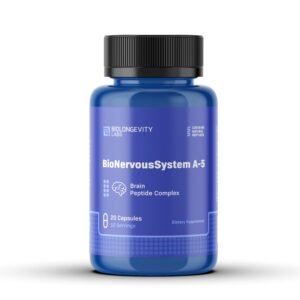
Discover BioNervousSystem A-5 featuring Cerluten peptide complex.
Molecular Mechanisms of Action
Gene Regulation Through DNA Interaction
Cerluten peptides bind specific DNA sequences in gene promoter regions through sequence-specific recognition. Short peptides demonstrate particular affinity for regions containing charged nucleotides[1].
The mechanism involves interaction with both double-stranded DNA and histone proteins (H1, H2B, H3, H4). This binding alters chromatin accessibility and increases transcription of target genes.
Epigenetic modulation occurs at concentrations ranging from 2-200 ng/mL, demonstrating high potency relative to traditional signaling peptides[1].
Protein Synthesis and Cellular Metabolism
Brain peptide bioregulators upregulate genes encoding proteins needed for neuronal structure and function. Studies document increased expression of neurogenesis markers including nestin, GAP43, β-tubulin III, and doublecortin in response to related short peptides[3].
These effects translate to increased synthesis of proteins supporting neuronal differentiation, synaptic plasticity, and cellular repair processes. The peptides also modulate expression of neurotrophic factors (NGF, BDNF) and their receptors[1].
Metabolic regulation occurs through modulation of genes involved in mitochondrial function. This includes components of the electron transport chain and ATP synthesis machinery.
Tissue-Specific Activity
The preferential activity on CNS cell populations reflects the peptides’ derivation from cerebral cortex. Brain-derived peptides concentrate regulatory effects on neurons and glial cells rather than producing systemic effects.
This tissue specificity enables targeted modulation of neuronal gene expression patterns. The compounds regulate metabolic processes characteristic of brain tissue without affecting other organ systems.
Neuroprotective Research Findings

Oxidative Stress and Antioxidant Response
Brain peptide bioregulators regulate expression of antioxidant enzymes through multiple pathways. Research shows upregulation of superoxide dismutase (SOD2), glutathione peroxidase (GPX1), and catalase[4].
By modulating peroxidase oxidation processes in brain cortex, the peptides reduce lipid peroxidation and protein oxidation. Studies document decreased levels of oxidative stress markers including malondialdehyde and 4-hydroxy-2-nonenal in treated tissues[5].
The compounds also regulate genes encoding proteins involved in mitochondrial quality control. This reduces oxidative stress at the primary site of reactive oxygen species generation.
Neurogenesis and Neuronal Differentiation
Short peptides structurally related to Cerluten components promote neuronal differentiation from stem cell populations. These bioregulators activate expression of genes needed for neuronal phenotype acquisition, including transcription factors and structural proteins[3].
Studies demonstrate that peptides KE, AED, KED, and AEDG enhance expression of GAP43 (growth-associated protein 43), a marker of axonal growth and synaptic plasticity. Nestin expression, indicating neural stem cell activation, also increases following peptide treatment[6].
The peptides facilitate dendritic arborization. This includes increased numbers of primary dendrites and total dendritic length in cultured neurons, supporting improved neuronal connectivity[7].
Synaptic Function and Plasticity
Neuroprotective peptides preserve dendritic spine density in neurodegeneration models. EDR and KED peptides prevent dendritic spine loss in neuronal cultures exposed to amyloid-β toxicity[2].
These compounds regulate expression of genes encoding proteins needed for synaptic structure and function. This includes postsynaptic density proteins and synaptic adhesion molecules.
By maintaining dendritic spine morphology, the bioregulators support synaptic plasticity processes involved in learning and memory formation.
Apoptosis Prevention
Brain peptides reduce apoptotic signaling through multiple pathways. They downregulate expression of pro-apoptotic factors including caspase-3 and p53 while maintaining anti-apoptotic protein expression[1].
In models of cerebral ischemia and neurodegenerative disease, related peptides normalize expression of stress-activated kinases (SAPK/JNK, pERK1/2) that mediate neuronal death pathways[8].
This anti-apoptotic activity contributes to neuronal survival under conditions of metabolic stress, excitotoxicity, and oxidative damage.
Clinical Evidence in Central Nervous System Studies
Cognitive Performance Data
Clinical trials of Cerluten in 48 patients with CNS disorders demonstrated measurable improvements in cognitive function. The study population included individuals with traumatic brain injury, post-stroke sequelae, vascular encephalopathy, and cognitive decline.
Objective assessment using correction tasks provided quantitative performance data:
| Metric | Pre-Treatment | Post-Treatment | Control Group |
|---|---|---|---|
| Symbols Viewed | 1143.7 ± 75.4 | 1682.6 ± 62.8 | 1573.8 ± 67.5 |
| Errors Made | 18.12 ± 0.93 | 8.67 ± 0.96 | Not specified |
These results indicate enhanced processing speed and accuracy. Analysis of performance curves revealed reduced variability in task completion and gradual decline patterns characteristic of improved attention stability.
Memory and attention improvements showed parallel changes. Memory disturbance complaints decreased from 54.5% to 28.5% of patients compared to 45.2% in controls. Absent-mindedness decreased from 48.7% to 14.6%, a threefold improvement versus conventional therapy.
Neurophysiological Changes
Electroencephalographic (EEG) assessment revealed substantial improvements in brain bioelectric activity. Patients showed progression from pathological EEG patterns (Types III, IV, V) toward normalized patterns.
Type III EEG, characterized by low-amplitude irregular activity, improved in 7 of 11 patients. Type IV patterns showing excessive rhythm regularity normalized in 6 of 10 cases. Type V EEG with irregular slow activity and paroxysmal discharges improved in 7 of 15 patients.
Alpha index measurements quantified dominant rhythm strength:
- Pre-treatment Cerluten group: 34.0 ± 4.1
- Post-treatment Cerluten group: 47.9 ± 3.7
- Pre-treatment control group: 33.6 ± 3.7
- Post-treatment control group: 41.3 ± 4.2
This represents a 41% improvement in the peptide group versus 23% in controls. The peptides enhanced alpha rhythm modulation, restored zonal EEG differences, and decreased irritative processes.
Symptom Improvements Across Conditions
Treatment produced reductions across multiple symptom domains:
- Headache: decreased from 76.6% to 34.1% (versus 47.2% in controls)
- Sleep disturbances: 54.9% to 24.3% (versus 34.0%)
- Emotional instability: 75.8% to 21.4% (versus 43.0%)
- Rapid fatigability: 72.0% to 32.4% (versus 53.2%)
Patients with traumatic brain injury and stroke showed moderate regression of focal neurological symptoms. Improvements included speech function in motor and sensory aphasia cases and decreased muscular spasticity.
Overall clinical assessment showed good results in 64.6% of Cerluten-treated patients compared to 27.0% in controls. Satisfactory results occurred in 22.9% versus 40.5%, while unsatisfactory outcomes occurred in only 12.5% versus 32.5%. These differences reached statistical significance (p<0.05).
Safety Profile and Laboratory Use
Clinical trials reported no adverse effects, complications, or drug dependence associated with Cerluten administration. No contraindications for use were identified during clinical evaluation.
The peptides showed compatibility with all conventional neurological treatments. This included vascular medications, nootropics, vitamins, anticonvulsants, and symptomatic therapies.
Natural derivation from animal tissues and low molecular weight contribute to high biocompatibility. The tissue-specific action limits off-target effects in non-CNS tissues.
Research Considerations
For laboratory applications, Cerluten provides a research model for studying gene-level regulation of neuronal function. The direct DNA interaction mechanism offers distinct experimental advantages over receptor-mediated peptides.
Researchers examining neuroprotection, neurogenesis, or cognitive function may find value in protocols incorporating these bioregulators. The clinical trial data provides baseline parameters for designing in vitro and ex vivo studies.
All bioregulator products from BioLongevity Labs are manufactured in USA GMP facilities with third-party testing verification.
Scientific Reviewer
This research article has been scientifically reviewed and fact-checked by Dr. Ky H. Le, MD. Dr. Le earned his medical degree from St. George’s University School of Medicine and completed his residency training at Memorial Hermann Southwest Hospital. Board-certified in family medicine with experience in hospital medicine, he brings over two decades of clinical experience to reviewing research content and ensuring scientific accuracy.
References
- Khavinson VK, Popovich IG, Linkova NS, Mironova ES, Ilina AR. Peptide Regulation of Gene Expression: A Systematic Review. MDPI AG; 2021. https://doi.org/10.3390/molecules26227053
- Khavinson V, Linkova N, Kozhevnikova E, Trofimova S. EDR Peptide: Possible Mechanism of Gene Expression and Protein Synthesis Regulation Involved in the Pathogenesis of Alzheimer’s Disease. MDPI AG; 2020. https://doi.org/10.3390/molecules26010159
- Caputi S, Trubiani O, Sinjari B, Trofimova S, Diomede F, Linkova N, et al. Effect of short peptides on neuronal differentiation of stem cells. SAGE Publications; 2019. https://doi.org/10.1177/2058738419828613
- Franzoni F, Scarfò G, Guidotti S, Fusi J, Asomov M, Pruneti C. Oxidative Stress and Cognitive Decline: The Neuroprotective Role of Natural Antioxidants. Frontiers Media SA; 2021. https://doi.org/10.3389/fnins.2021.729757
- Kraskovskaya N, Linkova N, Sakhenberg E, Krieger D, Polyakova V, Medvedev D, et al. Short Peptides Protect Fibroblast-Derived Induced Neurons from Age-Related Changes. MDPI AG; 2024. https://doi.org/10.3390/ijms252111363
- Khavinson V, Diomede F, Mironova E, Linkova N, Trofimova S, Trubiani O, et al. AEDG Peptide (Epitalon) Stimulates Gene Expression and Protein Synthesis during Neurogenesis: Possible Epigenetic Mechanism. MDPI AG; 2020. https://doi.org/10.3390/molecules25030609
- Khavinson V, Ilina A, Kraskovskaya N, Linkova N, Kolchina N, Mironova E, et al. Neuroprotective Effects of Tripeptides—Epigenetic Regulators in Mouse Model of Alzheimer’s Disease. MDPI AG; 2021. https://doi.org/10.3390/ph14060515
- Li Y, Jin T, Liu N, Wang J, Qin Z, Yin S, et al. A short peptide exerts neuroprotective effects on cerebral ischemia–reperfusion injury by reducing inflammation via the miR-6328/IKKβ/NF-κB axis. Springer Science and Business Media LLC; 2023. https://doi.org/10.1186/s12974-023-02739-4