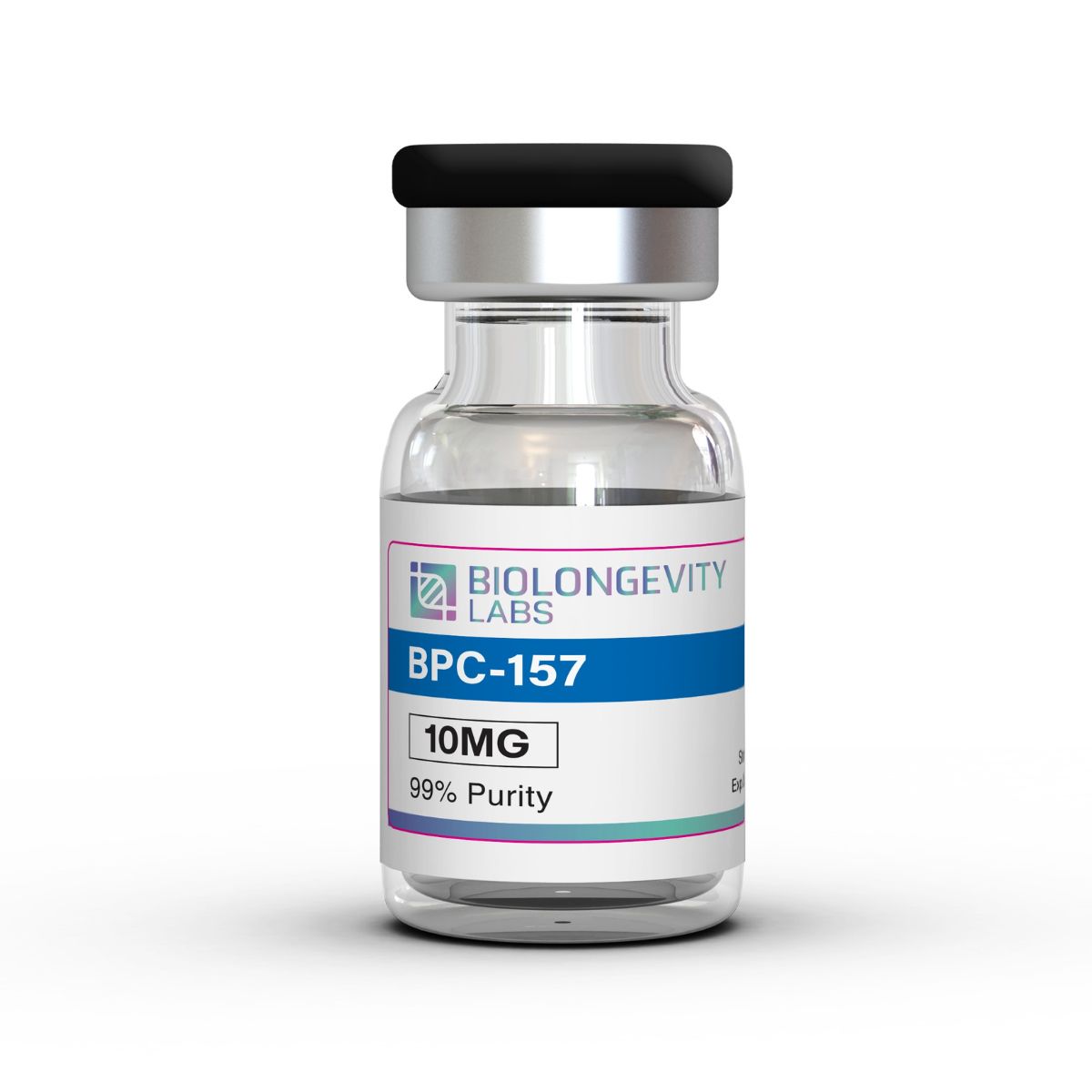
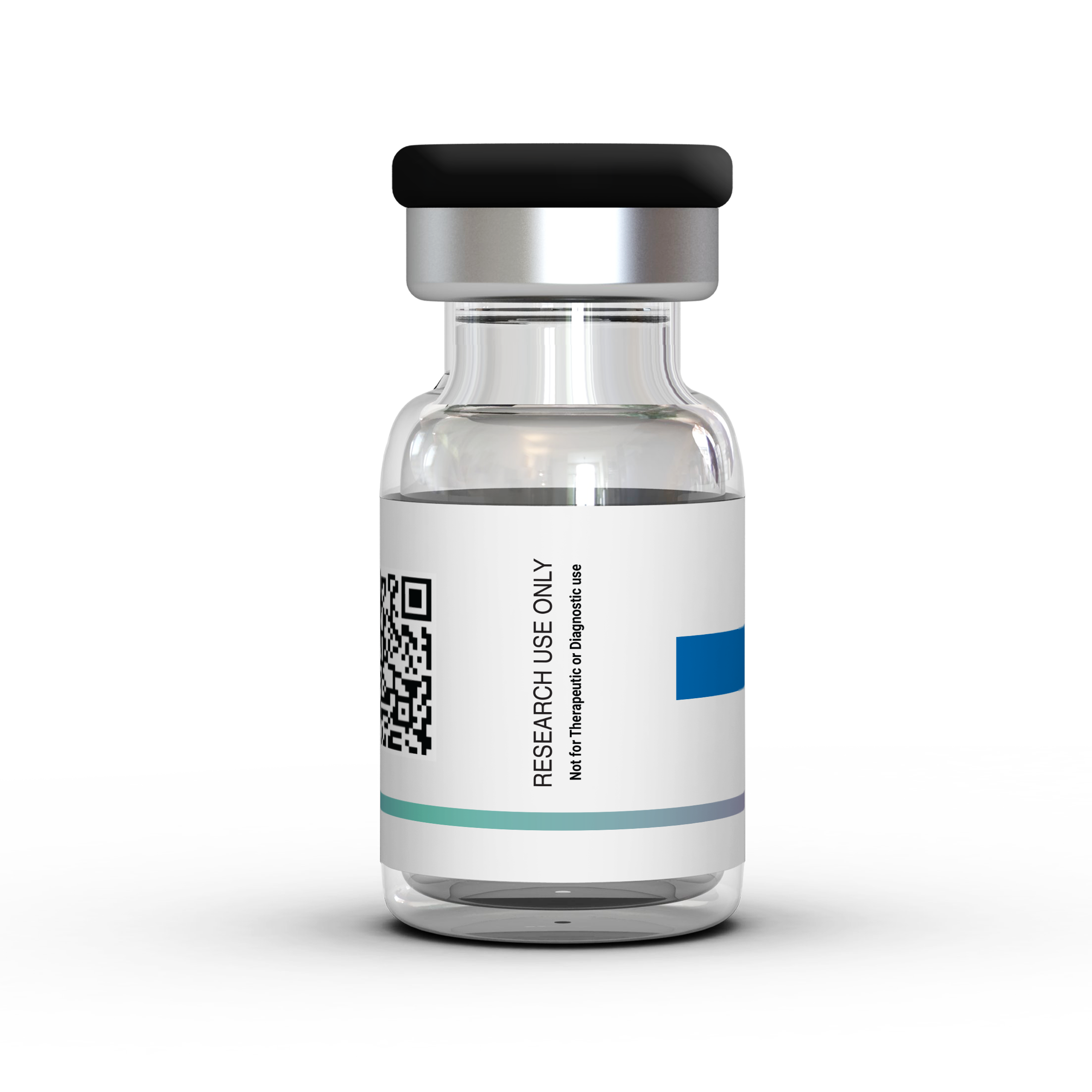
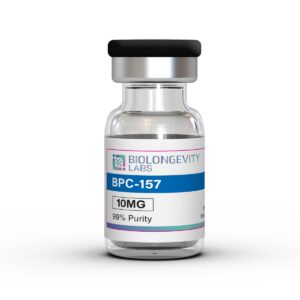
BPC-157 Product Description
BPC-157 is a linear, unmodified 15-residue peptide with an unusually proline-rich core. Three consecutive proline residues at positions 3 through 5, plus two more at positions 8 and 11, give the molecule a constrained backbone and account for its reported resistance to enzymatic degradation in acidic media.
That stability profile is the main reason it appears so frequently in preclinical literature. Most research peptides of comparable length are studied only in tightly controlled buffer systems; BPC-157 has been characterized across a wider range of experimental conditions, which has produced a correspondingly large body of published mechanistic work.
While not naturally occurring as an isolated fragment, its parent protein contributes to gastrointestinal protection and repair. The peptide exhibits multifaceted mechanisms, including tissue repair promotion via activation of growth hormone receptors and pathways like JAK2, which enhance collagen synthesis and fibroblast activity.
Compound Information
| Property |
Value |
| Synonyms |
Body Protection Compound 157; Gastric Pentadecapeptide BPC 157; Bepecin; PL 14736 |
| CAS Number |
137525-51-0 |
| PubChem CID |
9941957 |
| Molecular Formula |
C₆₂H₉₈N₁₆O₂₂ |
| Molecular Weight |
1419.56 g/mol |
| Amino Acid Sequence |
GEPPPGKPADDAGLV (Gly-Glu-Pro-Pro-Pro-Gly-Lys-Pro-Ala-Asp-Asp-Ala-Gly-Leu-Val) |
| Sequence Length |
15 residues |
| Source |
Synthetic |
| InChIKey |
HEEWEZGQMLZMFE-RKGINYAYSA-N |
| Purity |
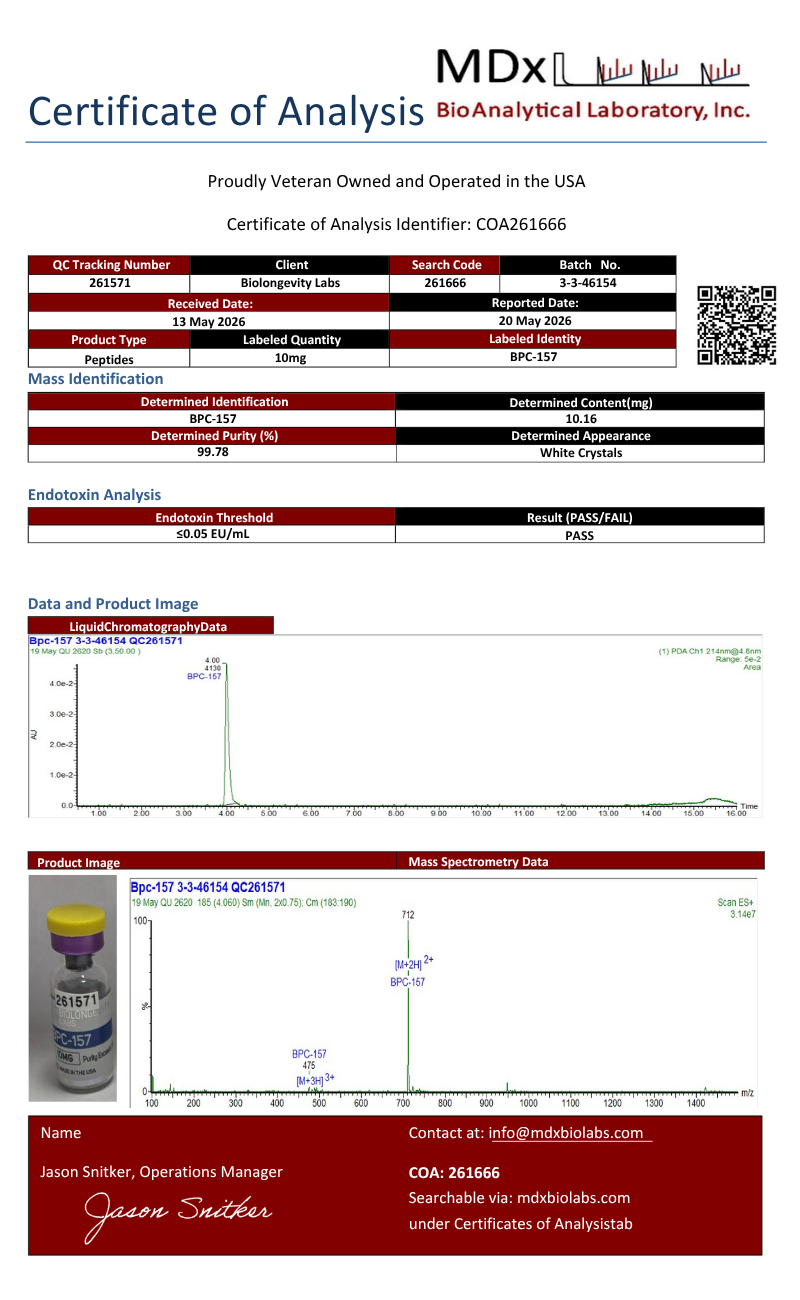
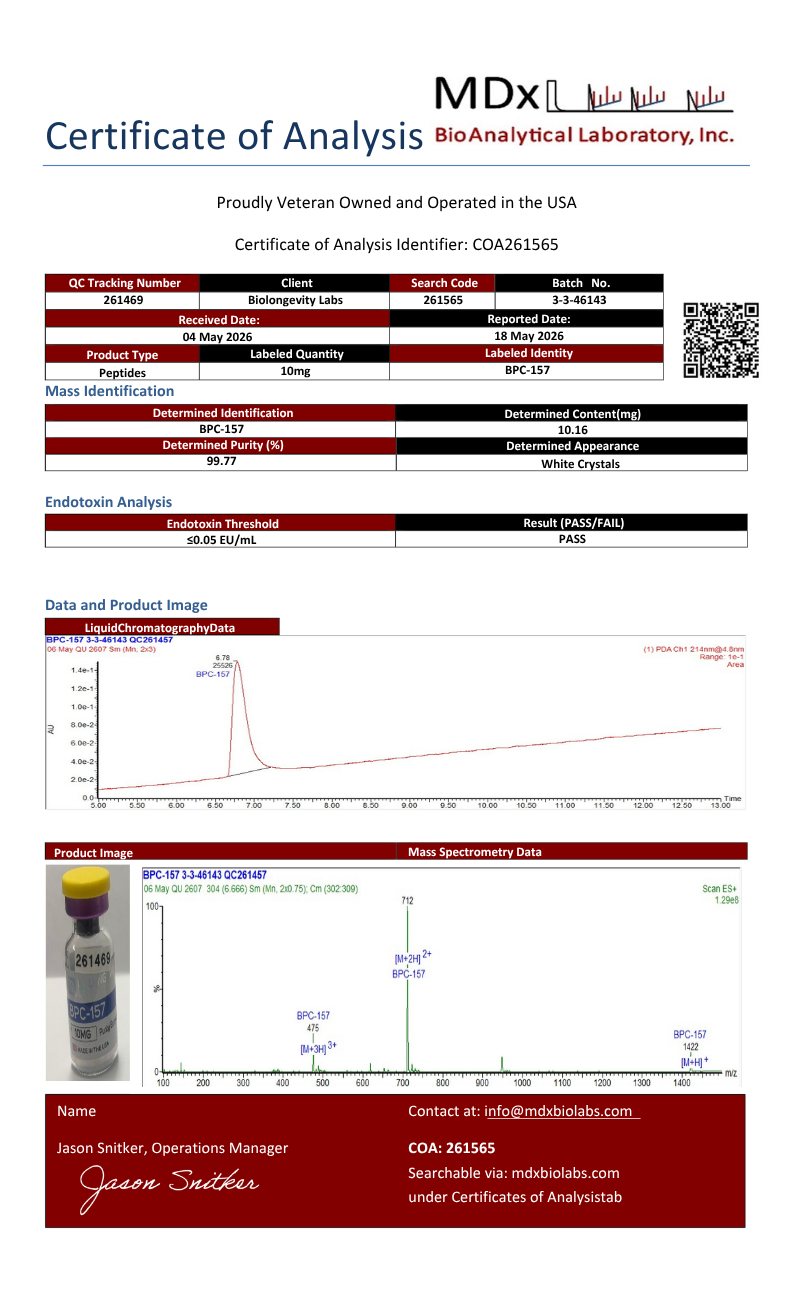
≥99% (HPLC) |
| Appearance |
Lyophilized white powder |
| Solubility |
Soluble in water; soluble in DMSO |
| Storage |
-20°C, protect from light |
BPC-157 Peptide Structure
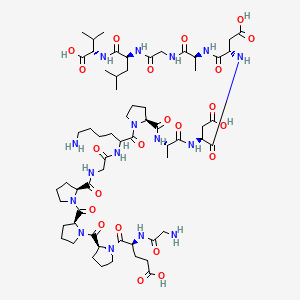
Source: PubChem
Storage and Handling
- Store the lyophilized compound at -20°C, sealed and protected from light.
- After reconstitution, store at 2°C to 8°C and use promptly.
- Allow the vial to reach room temperature before opening to limit moisture uptake.
- Maintain aseptic handling to preserve compound integrity.
Lyophilized Format
This compound ships in lyophilized (freeze-dried) form. Freeze-drying supports long-term storage stability and preserves compound integrity. No fillers are added.
BPC-157 Research
The most closely characterized mechanism for BPC-157 is its interaction with the nitric oxide system. In isolated rat aorta preparations, the peptide produced concentration-dependent vasodilation that was endothelium-dependent and abolished by L-NAME, and co-immunoprecipitation work traced the response to phosphorylation of Src, caveolin-1, and endothelial nitric oxide synthase, with reduced binding between caveolin-1 and eNOS [1]. A broader review of the peptide’s relationship to the nitric oxide system describes its competing interactions with both L-arginine and L-arginine analogues across a range of experimental models [2].
A second well-documented line of work concerns growth factor receptor expression. cDNA microarray analysis of rat Achilles tendon fibroblasts identified the growth hormone receptor as one of the most abundantly up-regulated genes following exposure to the peptide, with concentration- and time-dependent increases confirmed at both mRNA and protein level, and downstream Janus kinase 2 activation observed on subsequent growth hormone stimulation [3]. Related work in the same cell system reported changes in tendon outgrowth, cell survival, and cell migration in culture [4].
Angiogenic signaling is the third major thread. Published reviews position the peptide alongside standard angiogenic growth factors and summarize the vascular observations recorded across models of tendon, ligament, muscle, and bone repair [5], with a dedicated review covering its relationship to blood vessel formation specifically [6]. Wider syntheses cover the full published record in tissue-repair research models [7] and in striated, smooth, and cardiac muscle preparations [8].
A 2025 systematic review examined the peptide from a musculoskeletal research perspective, screening 544 articles published between 1993 and 2024 and including 36 studies, of which 35 were preclinical [9]. The authors noted that the compound lacks FDA approval and that the published record remains overwhelmingly preclinical.
The Proline-Rich Core and Analytical Handling
The GEPPPGKPADDAGLV sequence carries five proline residues, which restricts backbone rotation and is the structural basis for the peptide’s reported stability in acidic conditions [7]. That same rigidity affects chromatographic behavior, so laboratories verifying identity by HPLC should expect retention characteristics distinct from comparable-length linear peptides. Reviewing our guide to reading a peptide COA before analysis is worthwhile.
| Research Area |
In Vitro Application |
| Nitric oxide signaling |
Src, caveolin-1, and eNOS phosphorylation assays in endothelial preparations |
| Growth factor receptor expression |
Growth hormone receptor and JAK2 pathway profiling in tendon fibroblast culture |
| Angiogenesis |
Endothelial tube formation and vascular marker expression assays |
| Cell migration and survival |
Fibroblast outgrowth and migration assays in tissue-repair research models |
| Peptide stability |
Analytical characterization of proline-rich sequences under varied pH conditions |
References
- Hsieh MJ, Lee CH, Chueh HY, Chang GJ, Huang HY, Lin Y, Pang JS. (2020). Modulatory effects of BPC 157 on vasomotor tone and the activation of Src-Caveolin-1-endothelial nitric oxide synthase pathway. Scientific Reports. https://pmc.ncbi.nlm.nih.gov/articles/PMC7555539/
- Sikiric P, Seiwerth S, Rucman R, et al. (2014). Stable gastric pentadecapeptide BPC 157-NO-system relation. Current Pharmaceutical Design. https://doi.org/10.2174/13816128113190990411
- Chang CH, Tsai WC, Hsu YH, Pang JS. (2014). Pentadecapeptide BPC 157 enhances the growth hormone receptor expression in tendon fibroblasts. Molecules. https://pmc.ncbi.nlm.nih.gov/articles/PMC6271067/
- Chang CH, Tsai WC, Lin MS, Hsu YH, Pang JS. (2011). The promoting effect of pentadecapeptide BPC 157 on tendon healing involves tendon outgrowth, cell survival, and cell migration. Journal of Applied Physiology. https://doi.org/10.1152/japplphysiol.00945.2010
- Seiwerth S, Rucman R, Turkovic B, et al. (2018). BPC 157 and Standard Angiogenic Growth Factors. Gastrointestinal Tract Healing, Lessons from Tendon, Ligament, Muscle and Bone Healing. Current Pharmaceutical Design. https://doi.org/10.2174/1381612824666180712110447
- Seiwerth S, Brcic L, Vuletic LB, et al. (2014). BPC 157 and blood vessels. Current Pharmaceutical Design. https://doi.org/10.2174/13816128113199990421
- Seiwerth S, Milavic M, Vukojevic J, et al. (2021). Stable Gastric Pentadecapeptide BPC 157 and Wound Healing. Frontiers in Pharmacology. https://doi.org/10.3389/fphar.2021.627533
- Staresinic M, Japjec M, Vranes H, et al. (2022). Stable Gastric Pentadecapeptide BPC 157 and Striated, Smooth, and Heart Muscle. Biomedicines. https://doi.org/10.3390/biomedicines10123221
- Vasireddi N, Hahamyan H, Salata MJ, Karns M, Calcei JG, Voos JE, Apostolakos JM. (2025). Emerging Use of BPC-157 in Orthopaedic Sports Medicine: A Systematic Review. HSS Journal. https://pmc.ncbi.nlm.nih.gov/articles/PMC12313605/