FOXO4-DRI Technical Overview
FOXO4-DRI, also known as Proxofim, is a cell-penetrating peptide. Its sequence combines a region derived from the FOXO4 forkhead domain with a cationic cell-permeability segment.
The retro-inverso design reverses the sequence order and uses D-amino acids in place of L-amino acids. This layout keeps the side-chain orientation of the parent sequence while resisting cleavage by common proteases in laboratory systems.
FOXO4-DRI was first described in 2017 as a tool for studying how senescent cells resist apoptosis [1]. It is now used as a reference compound in senescence research, alongside structural work on the p53 transactivation domain [2].
Compound Specifications
| Property | Value |
|---|---|
| CAS Number | 2460055-10-9 |
| PubChem CID | 167312269 |
| Molecular Formula | C₂₂₈H₃₈₈N₈₆O₆₄ |
| Molecular Weight | 5358.1 g/mol |
| Monoisotopic Mass | 5356.98 Da |
| Synonyms | Proxofim, FOXO4-D-Retro-Inverso, FOXO 4-DRI, D-Retro Inverso Forkhead box protein O4 |
| Amino Acid Sequence (One-Letter) | LTLRKEPASEIAQSILEAYSQNGWANRRSGGKRPPPRRRQRRKKRG (all D-amino acids) |
| Sequence Length | 46 residues |
| Source | Synthetic (solid-phase peptide synthesis) |
| InChIKey | WVZCDZFJLXBWHG-XXZPGMBKSA-N |
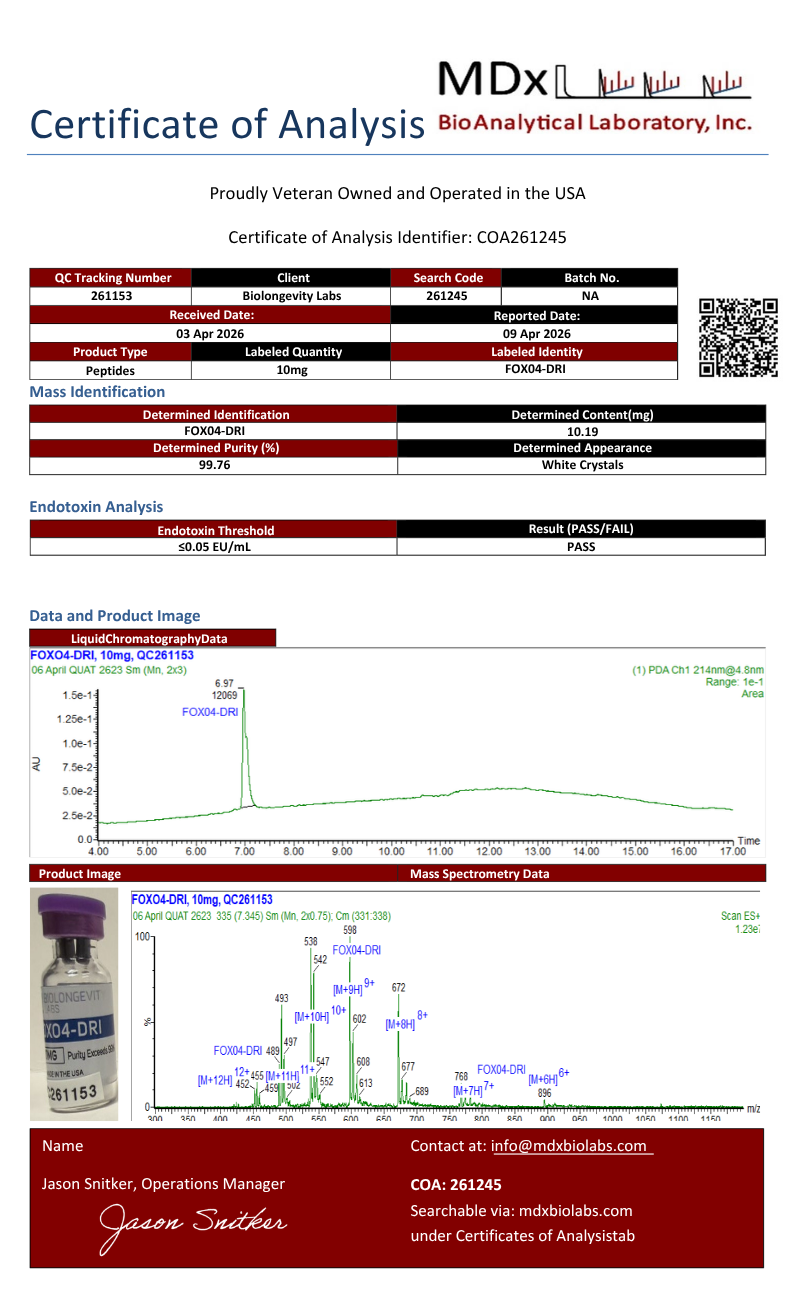
| Purity | ≥99% (HPLC) |
| Appearance | Lyophilized white powder |
| Solubility | Soluble in water |
| Storage | -20°C, sealed and protected from moisture |
Storage and Handling
- Store the lyophilized compound at -20°C in a sealed, desiccated vial.
- After reconstitution, store at 2–8°C and use promptly. Long-term storage in solution is not advised.
- Maintain aseptic handling to preserve compound integrity.
Lyophilized Format
This compound ships in lyophilized (freeze-dried) form. Freeze-drying supports long-term storage stability and preserves compound integrity. No fillers are added.
Research Use Disclaimer
FOXO4-DRI is supplied for research use only. It is not a drug, food, cosmetic, or dietary supplement and has not been evaluated by the FDA. By purchasing, the buyer confirms the compound will be used solely for in vitro research.
Frequently Asked Questions
What Is FOXO4-DRI Peptide Used for in Research?
FOXO4-DRI peptide is used in cellular senescence research to study how senescent cells avoid apoptosis. Laboratories use it to disrupt the FOXO4–p53 interaction and observe p53 nuclear exclusion and apoptosis signaling in senescent cell cultures.
What Is the Difference Between FOXO4 and FOXO4-DRI?
FOXO4 is a native forkhead transcription factor that binds p53 in the nucleus of senescent cells. FOXO4-DRI is a synthetic 46-residue D-retro-inverso peptide, partly derived from FOXO4, that competes for that p53 binding site.
What Is the CAS Number and Molecular Weight of FOXO4-DRI?
FOXO4-DRI has CAS Number 2460055-10-9 and PubChem CID 167312269. Its molecular formula is C₂₂₈H₃₈₈N₈₆O₆₄, with a molecular weight of 5358.1 g/mol.
How Is FOXO4-DRI Supplied and Stored?
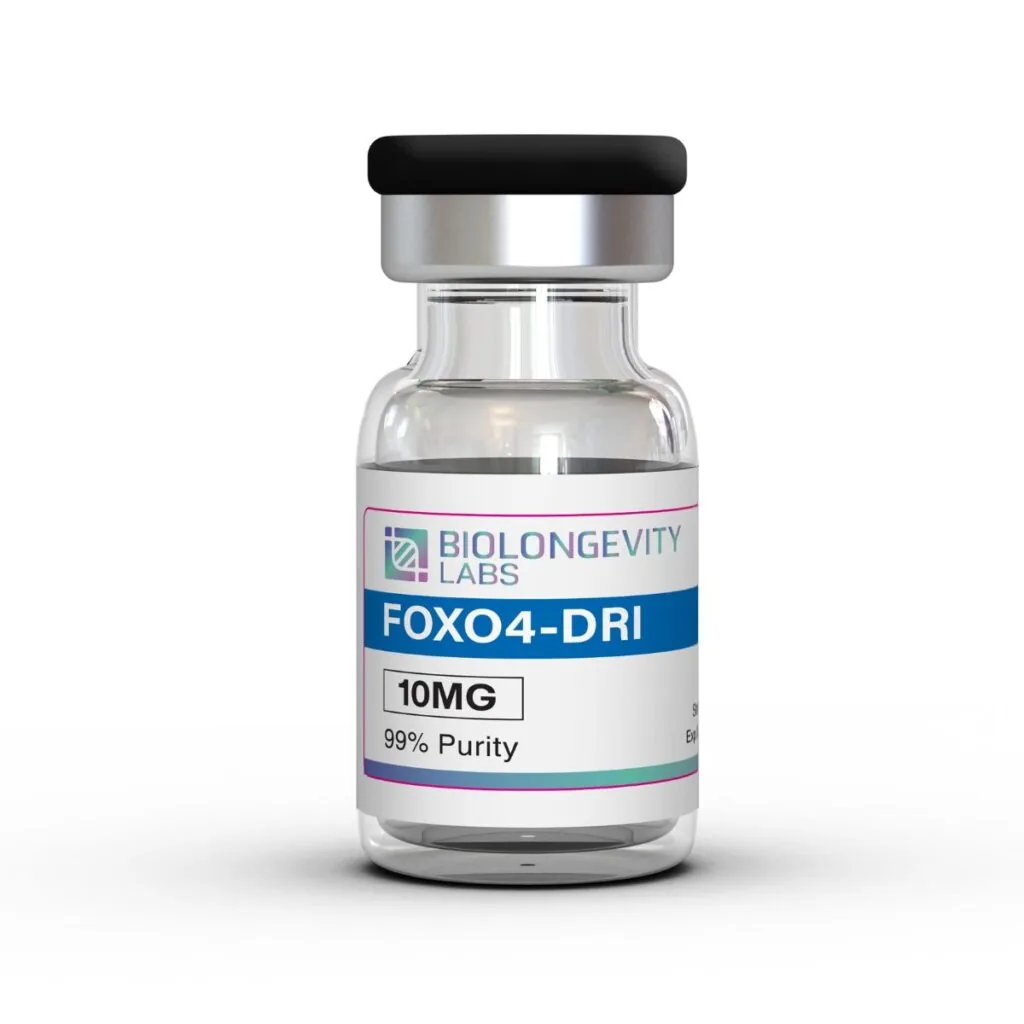
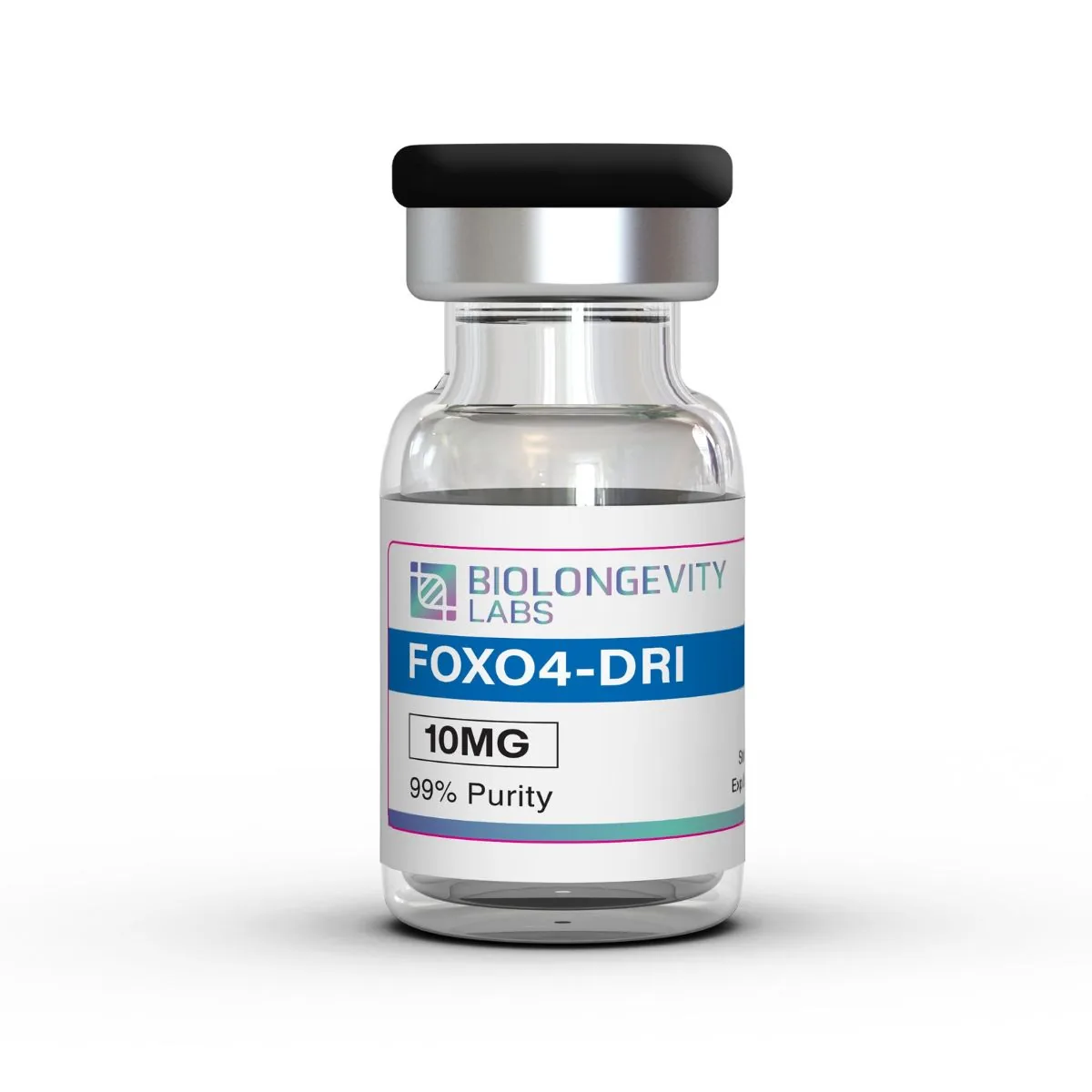
FOXO4-DRI is supplied as a lyophilized white powder in a 10mg vial with no added fillers. The lyophilized compound is stored at -20°C, and reconstituted solutions are kept at 2–8°C and used promptly.
How Is the Purity of FOXO4-DRI Verified?
Each FOXO4-DRI batch is tested by an independent third-party laboratory to ≥99% purity. The Certificates of Analysis are published online, so researchers can review them before ordering.