Original price was: $69.97.$69.97Current price is: $69.97.$27.99
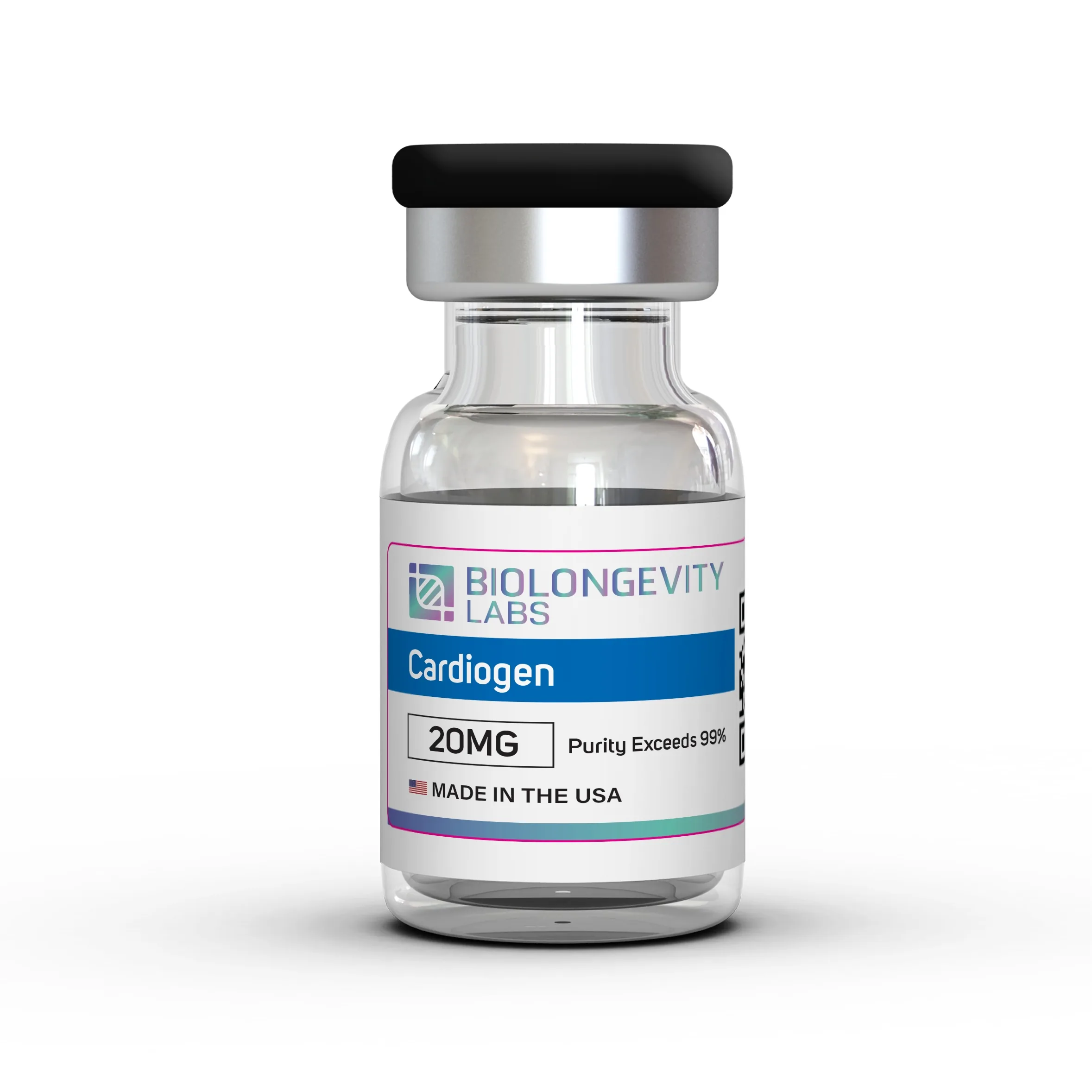
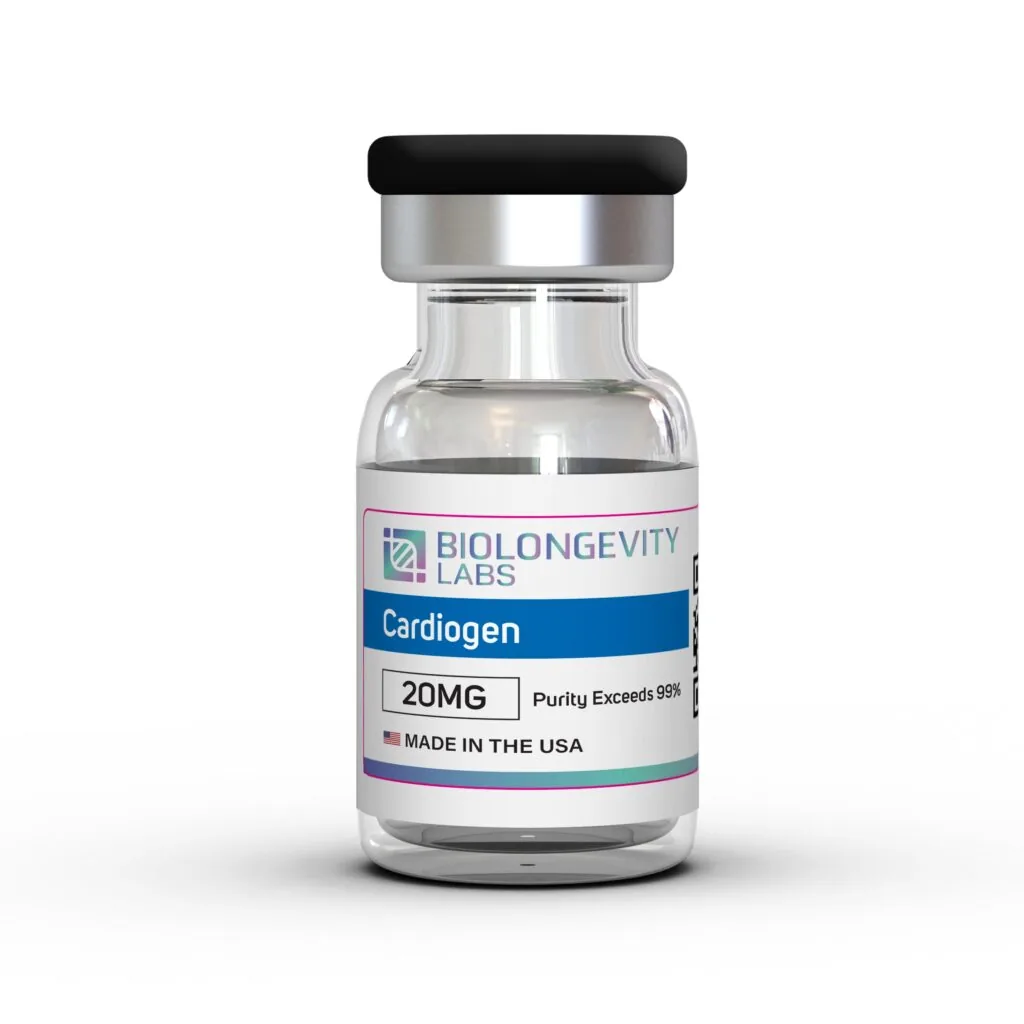
Cardiogen peptide is a synthetic tetrapeptide bioregulator with the sequence H-Ala-Glu-Asp-Arg-OH (AEDR), produced through controlled peptide synthesis. BioLongevity Labs supplies Cardiogen 20mg as a lyophilized white powder in a sealed research vial, with a Certificate of Analysis for each batch. The compound is characterized in laboratory studies of cytoskeletal and nuclear matrix protein expression in cultured fibroblasts. It is also examined in organotypic myocardial tissue culture models from young and aged rats.
≥99% Purity
Third-Party Tested
COA Available
U.S. Manufactured
Quantity
Out of stock
Notify me when in stock
Third-Party Verified Quality
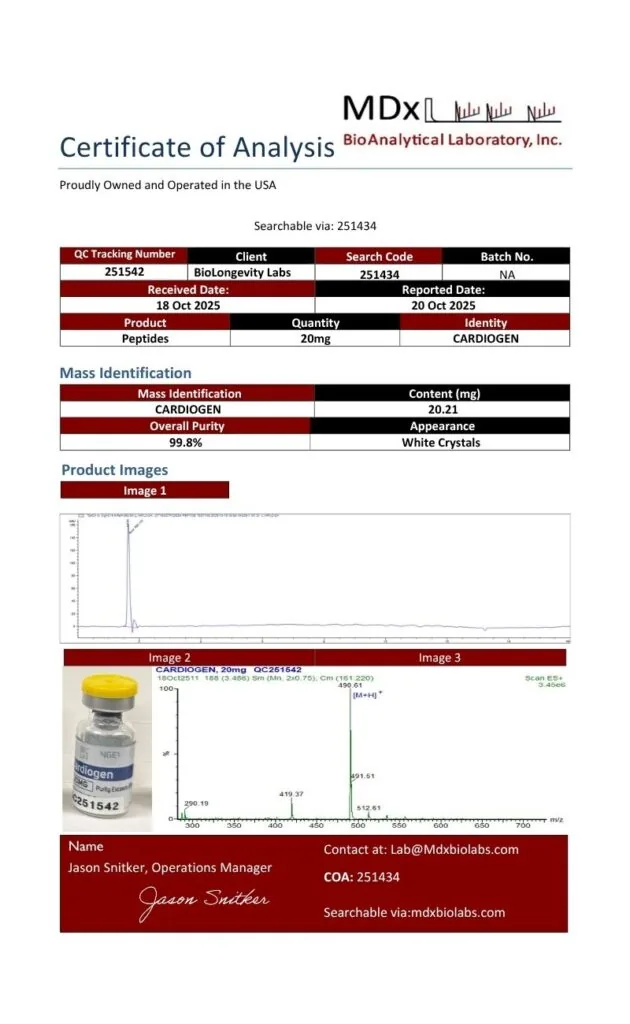
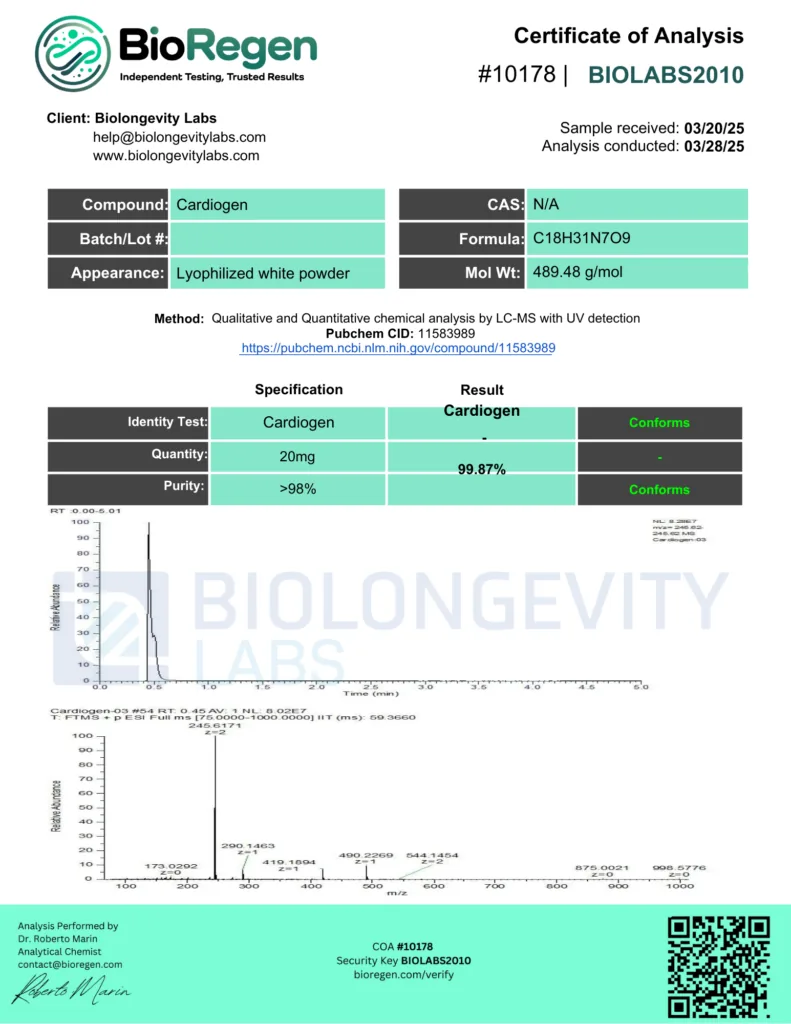
≥99% purity verified through independent UHPLC-MS testing. Certificates of Analysis are available before purchase.
COAs available before purchase
U.S.-manufactured research-grade
Same-business-day U.S. dispatch for in-stock orders placed before 12 PM PT
Secure Checkout · Free shipping on orders over $400
Cardiogen belongs to the family of short regulatory peptides first described by the St. Petersburg Institute of Bioregulation and Gerontology. As a Cardiogen bioregulator, it is one of the most compact members of that family, built from only four amino acid residues.
The AEDR peptide carries two acidic residues (glutamic acid and aspartic acid) between an N-terminal alanine and a C-terminal arginine. Its molecular formula is C18H31N7O9, with a molecular weight of 489.5 g/mol.
Laboratory research on Cardiogen centers on gene expression, structural protein synthesis, and cell proliferation markers in fibroblast and myocardial tissue culture models. It is also used in comparative work alongside other short bioregulator peptides.
Store the lyophilized compound at -20°C, protected from light and moisture.
After reconstitution, store at 2–8°C and use promptly.
Allow the vial to reach room temperature before opening, and avoid repeated freeze and thaw cycles.
Maintain aseptic handling to preserve compound integrity.
Lyophilized Format
This compound ships in lyophilized (freeze-dried) form. Freeze-drying supports long-term storage stability and preserves compound integrity. No fillers are added.
Research Use Disclaimer
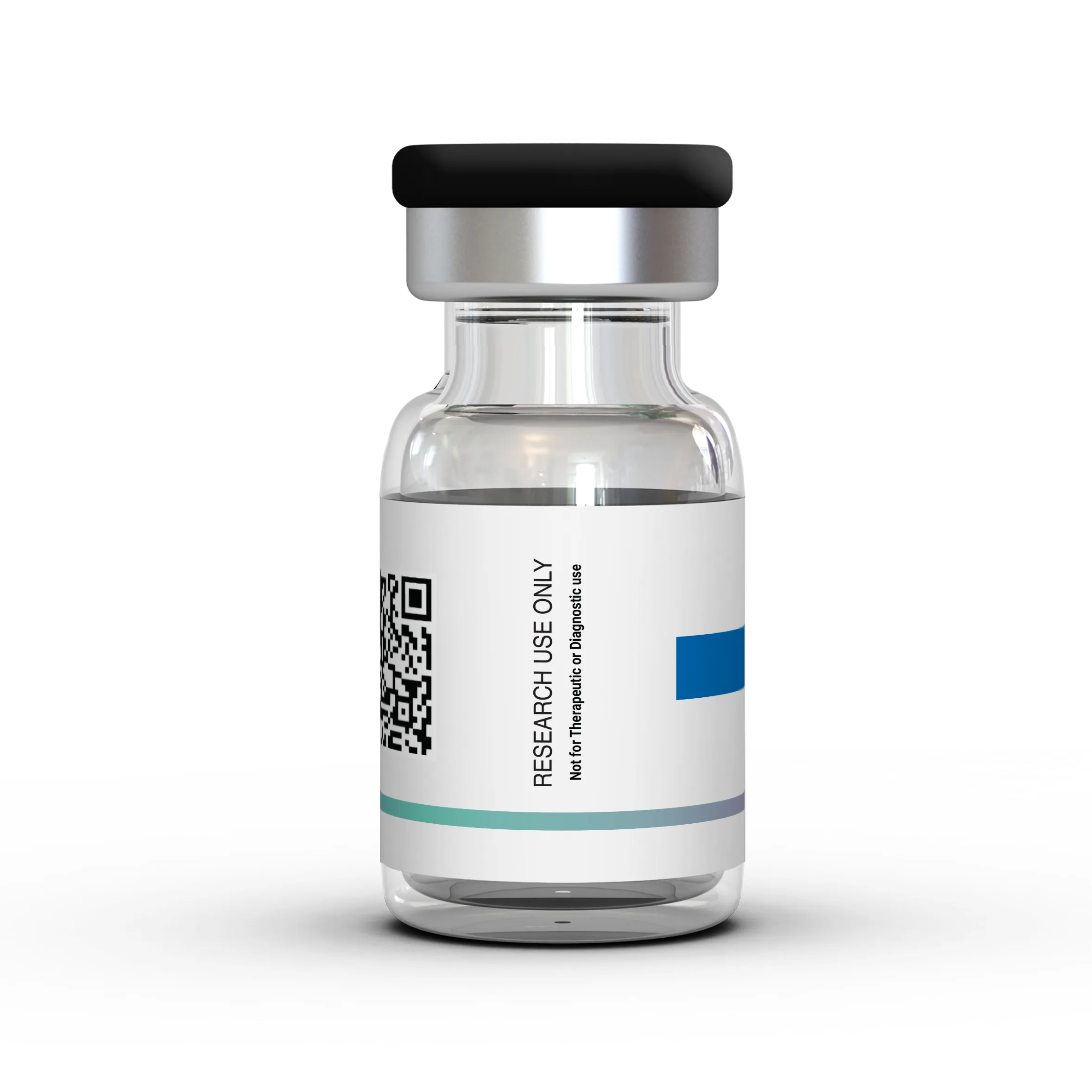
Cardiogen is supplied for research use only. It is not a drug, food, cosmetic, or dietary supplement and has not been evaluated by the FDA. By purchasing, the buyer confirms the compound will be used solely for in vitro research.
Frequently Asked Questions
What Is Cardiogen Peptide?
Cardiogen peptide is a synthetic tetrapeptide bioregulator with the sequence H-Ala-Glu-Asp-Arg-OH, also called AEDR. It has a molecular formula of C18H31N7O9 and a molecular weight of 489.5 g/mol.
What Is the CAS Number of Cardiogen?
The CAS number of Cardiogen is 857267-11-9, and its PubChem CID is 11583989. Its InChIKey is QXQARLZWUIQZPX-NAKRPEOUSA-N.
What Is Cardiogen Studied For in Laboratory Research?
Cardiogen is studied in laboratory models of cytoskeletal and nuclear matrix protein expression, mainly in cultured fibroblasts. It is also examined for cell proliferation and p53 expression markers in organotypic myocardial tissue cultures.
How Is Cardiogen 20mg Supplied and Stored?
Cardiogen 20mg is supplied as a lyophilized white powder in a sealed vial, with no fillers added. Store the lyophilized compound at -20°C, protected from light, and keep reconstituted material at 2–8°C.
How Is the Purity of Cardiogen Verified?
Each batch of Cardiogen is tested by an independent third-party laboratory to a ≥99% purity specification. The Certificate of Analysis for each batch is published so researchers can review it before ordering.
Research Overview
In cultured mouse embryonic fibroblasts, the AEDR tetrapeptide increased expression of the cytoskeletal proteins actin, tubulin, and vimentin by 2 to 5 times [1]. The same study recorded a 2 to 3 times increase in the nuclear matrix proteins lamin A and lamin C [1].
In organotypic myocardial explant cultures from 3-month and 24-month-old rats, Cardiogen at 10⁻¹² M stimulated cell proliferation in both age groups [2]. In the same model, 7 of 20 individual amino acids were active in young tissue but only 2 in aged tissue, and immunohistochemistry showed lower p53 protein expression with Cardiogen [2].
Earlier explant work at 0.05 ng/mL compared Cardiogen with three other bioregulator peptides, each in its matching tissue culture, and recorded a stimulating effect on heart explants relative to controls [3].
Beyond tissue culture, Cardiogen has been included in studies of fibroblast aging, chromatin binding, and peptide transport.
Fibroblast Aging and Chromatin Studies
In prostate fibroblast cultures aged to the seventh passage, Cardiogen increased expression of the differentiation signaling factors CXCL12 and ghrelin, whose synthesis declines in senescent cultures [4].
Fluorescence studies found that AEDR binds the N-terminal regions of wheat histones H1, H2B, H3, and H4, a site-specific interaction proposed as an epigenetic regulation mechanism [5].
Transport and Senescence Research
Molecular docking placed AEDR among the highest-scoring ligands for the LAT1, LAT2, and PEPT1 transporters out of 26 biologically active short peptides studied [6].
A 2022 review lists the AEDR tetrapeptide among peptides that regulate the synthesis of senescence-associated secretory phenotype (SASP) molecules in cardiovascular system cell models [7].
Research Area
In Vitro Application
Cytoskeletal Protein Expression
Actin, tubulin, and vimentin expression assays in cultured fibroblasts
Nuclear Matrix Research
Lamin A and lamin C expression analysis
Organotypic Tissue Culture
Proliferation and p53 marker studies in myocardial explants
Fibroblast Aging Models
Differentiation signaling factors in passaged fibroblast cultures
Chromatin Interaction
Peptide binding to histone N-terminal regions
Membrane Transport Modeling
Docking studies with LAT1, LAT2, and PEPT1 transporters
References
Khavinson VKh, Lin’kova NS, Polyakova VO, et al. (2012). Tetrapeptide H-Ala-Glu-Asp-Arg-OH stimulates expression of cytoskeletal and nuclear matrix proteins. Bulletin of Experimental Biology and Medicine. https://doi.org/10.1007/s10517-012-1766-9
Chalisova NI, Lesniak VV, Balykina NA, et al. (2009). The effect of the amino acids and cardiogen on the development of myocard tissue culture from young and old rats. Advances in Gerontology. https://pubmed.ncbi.nlm.nih.gov/20210190/
Zakutskiĭ AN, Chalisova NI, Ryzhak GA, et al. (2006). The tissue-specific effect of synthetic peptides-biologic regulators in organotypic tissues culture in young and old rats. Advances in Gerontology. https://pubmed.ncbi.nlm.nih.gov/17152728/
Kheĭfets OV, Poliakova VO, Kvetnoĭ IM. (2010). Peptidergic regulation of the expression of signal factors of fibroblast differentiation in the human prostate gland in cell aging. Advances in Gerontology. https://pubmed.ncbi.nlm.nih.gov/20586252/
Fedoreyeva LI, Smirnova TA, Kolomijtseva GYa, Khavinson VKh, Vanyushin BF. (2013). Interaction of short peptides with FITC-labeled wheat histones and their complexes with deoxyribooligonucleotides. Biochemistry (Moscow). https://doi.org/10.1134/S0006297913020053
Khavinson VK, Linkova NS, Rudskoy AI, Petukhov MG. (2023). Feasibility of Transport of 26 Biologically Active Ultrashort Peptides via LAT and PEPT Family Transporters. Biomolecules. https://pmc.ncbi.nlm.nih.gov/articles/PMC10046148/
Khavinson V, Linkova N, Dyatlova A, Kantemirova R, Kozlov K. (2022). Senescence-Associated Secretory Phenotype of Cardiovascular System Cells and Inflammaging: Perspectives of Peptide Regulation. Cells. https://pmc.ncbi.nlm.nih.gov/articles/PMC9818427/
A Certificate of Analysis (COA) is a document that verifies a compound’s identity, purity and quality through independent laboratory testing. Every compound from BioLongevity Labs is third-party tested, and its COA is published here, so researchers can review the testing record before a compound enters a protocol.
Each COA reports results from third-party laboratory analysis, including:
Ultra-high-performance liquid chromatography with mass spectrometry (UHPLC-MS) for purity, measured against a 98% or 99% specification depending on the compound
Mass identification for molecular confirmation and content quantitation
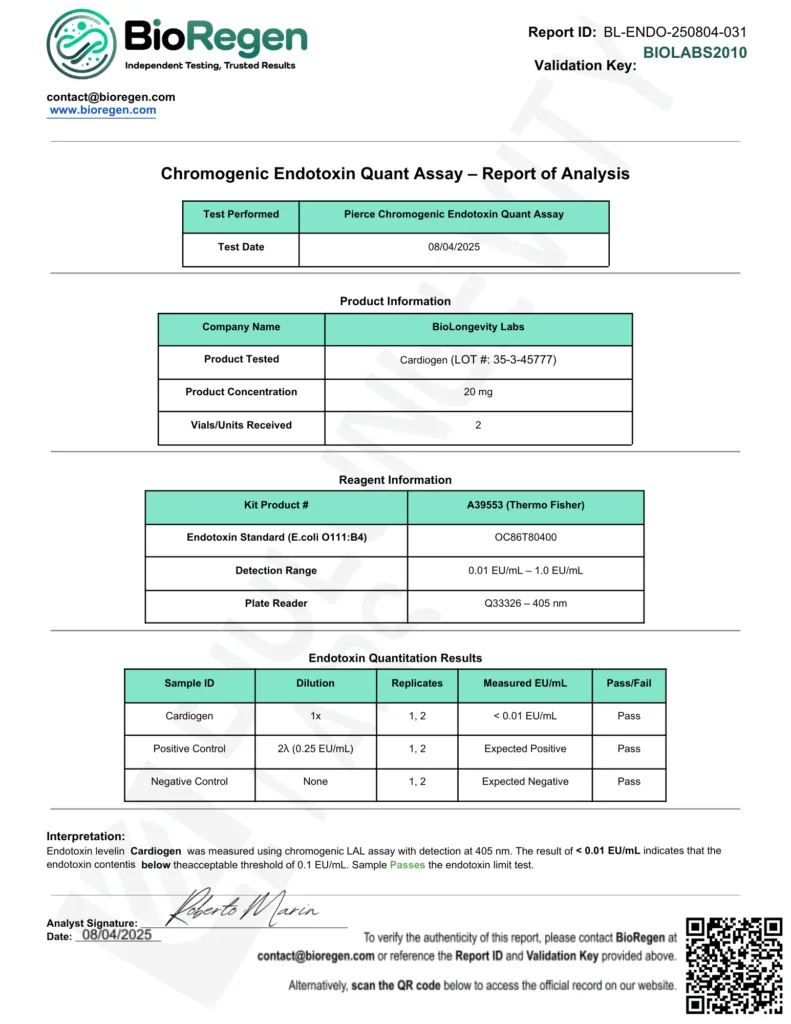
Endotoxin testing by Limulus amebocyte lysate (LAL) or recombinant Factor C (rFC) assay, depending on the laboratory
Visual and physical characterization of the finished material
How to Verify a COA Independently
You can check every certificate against the issuing laboratory’s own records, not just the copy hosted here. Verification does not depend on BioLongevity Labs.
AV Analytics certificates carry a search code. Scan the QR code on the certificate to open the laboratory’s verification page, or enter the search code at avanalytical.com/coa-search to pull the official record.
BioRegen reports of analysis carry a Report ID and a Validation Key. Scan the QR code on the certificate to open the official record, or quote both identifiers when you contact the laboratory at the address printed on the report.
SafeCert Labs issued a number of earlier certificates. Each one carries a COA number and the signature of the reporting chemist. Quote that number when you ask the laboratory to confirm it.
Older certificates from other laboratories list their own verification details on the document.
When a batch is sent to more than one laboratory, each certificate resolves at its own issuing laboratory. A researcher can then check the results against two unrelated sources.
These COAs come from independent certified laboratories, not in-house testing. That gives researchers a verifiable record of molecular integrity for each compound. All compounds are supplied for research use only.
Scientifically reviewed by Dr. Ky H. Le, MD. Dr. Le is a board-certified family medicine physician with over 20 years of clinical experience. Dr. Le validates the scientific accuracy of all technical content and research citations.
Disclaimer: For Research Purposes Only
This content is provided strictly for research purposes and does not constitute an endorsement or recommendation for the non-laboratory application or improper handling of peptides designed for research. The information, including discussions about specific peptides and their researched benefits, is presented for informational purposes only and must not be construed as health, clinical, or legal guidance, nor an encouragement for non-research use. Peptides described here are solely for use in structured scientific study by authorized individuals. We advise consulting with research experts, medical practitioners, or legal counsel prior to any decisions about obtaining or utilizing these peptides. The expectation of responsible, ethical utilization of this information for legitimate investigative and scholarly objectives is paramount. This notice is dynamic and governs all provided content on research peptides.
Cardiogen (20mg)
Please select a variation
Original price was: $69.97.$69.97Current price is: $69.97.$27.99