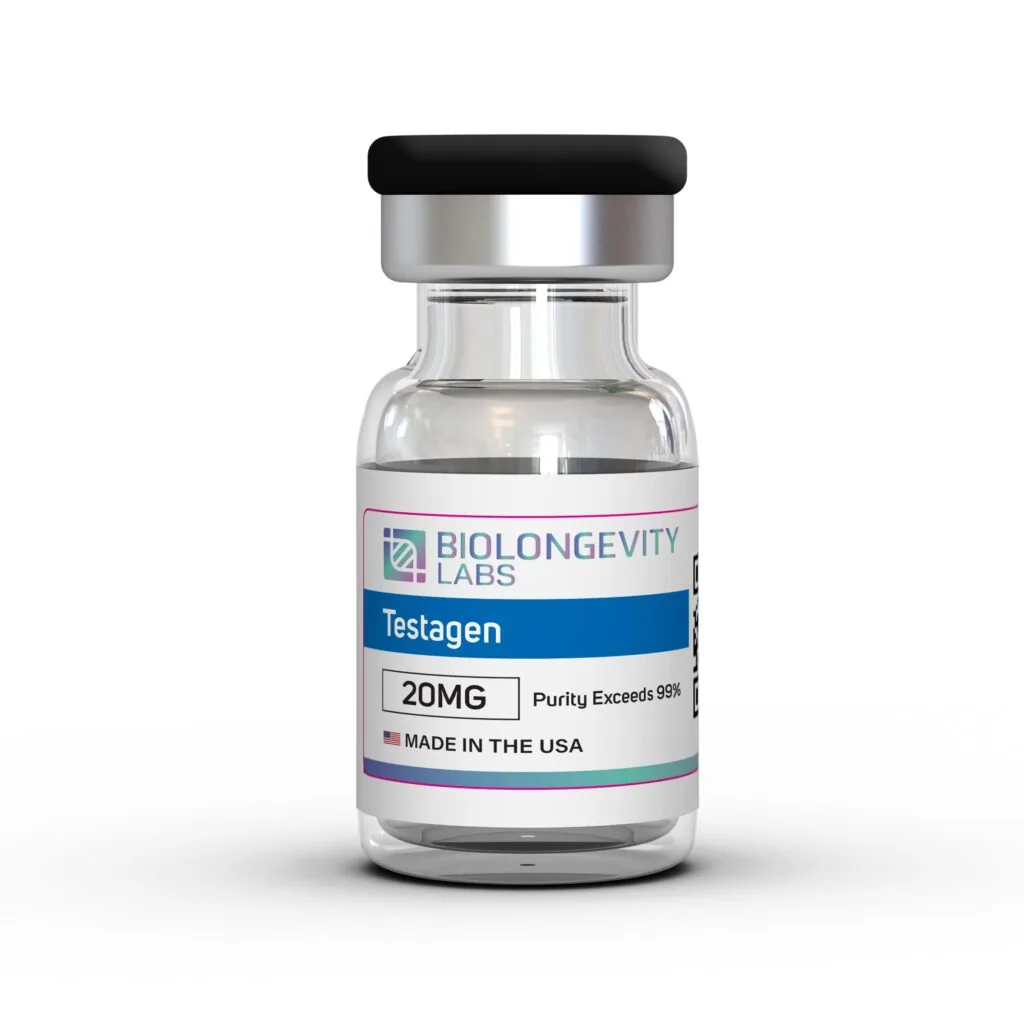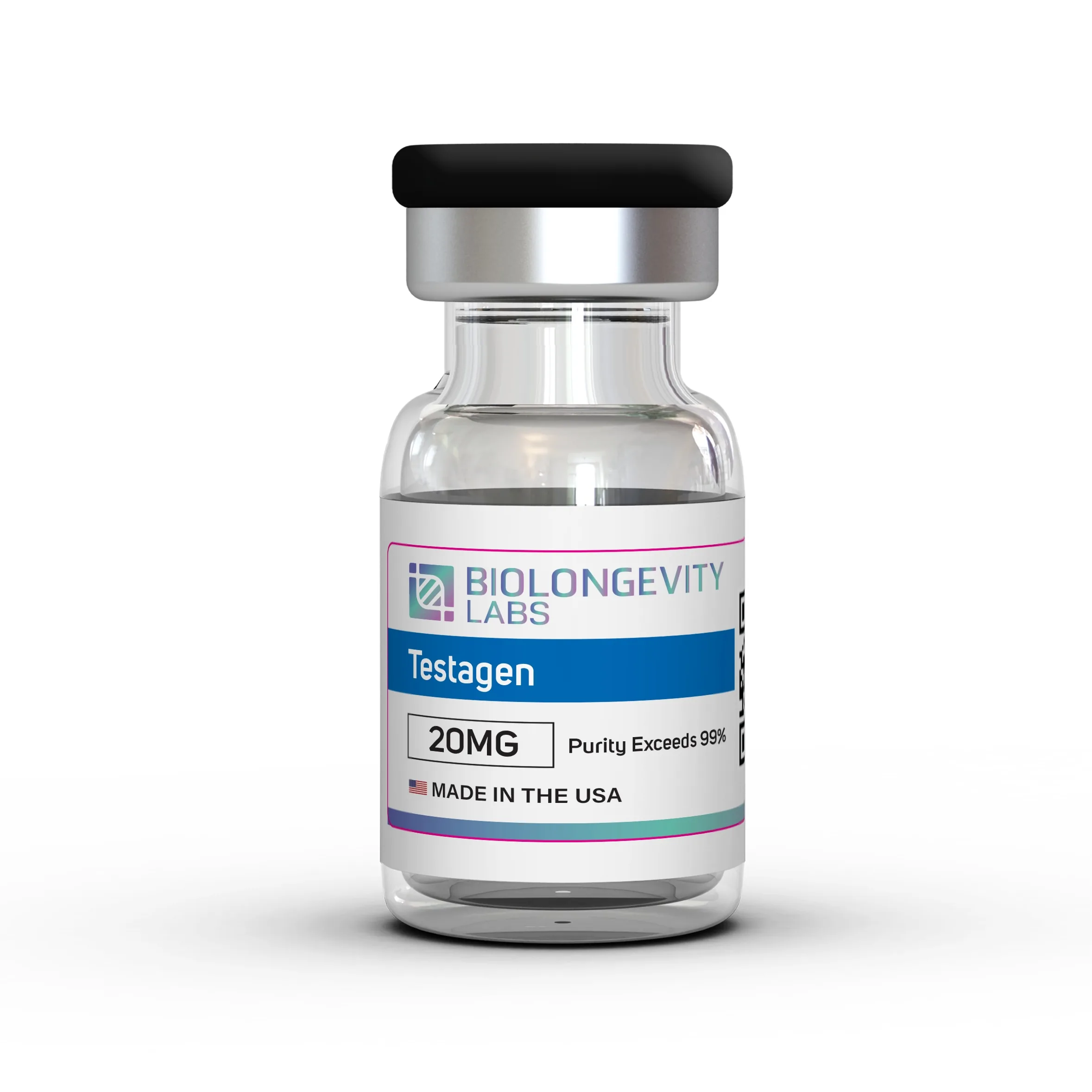
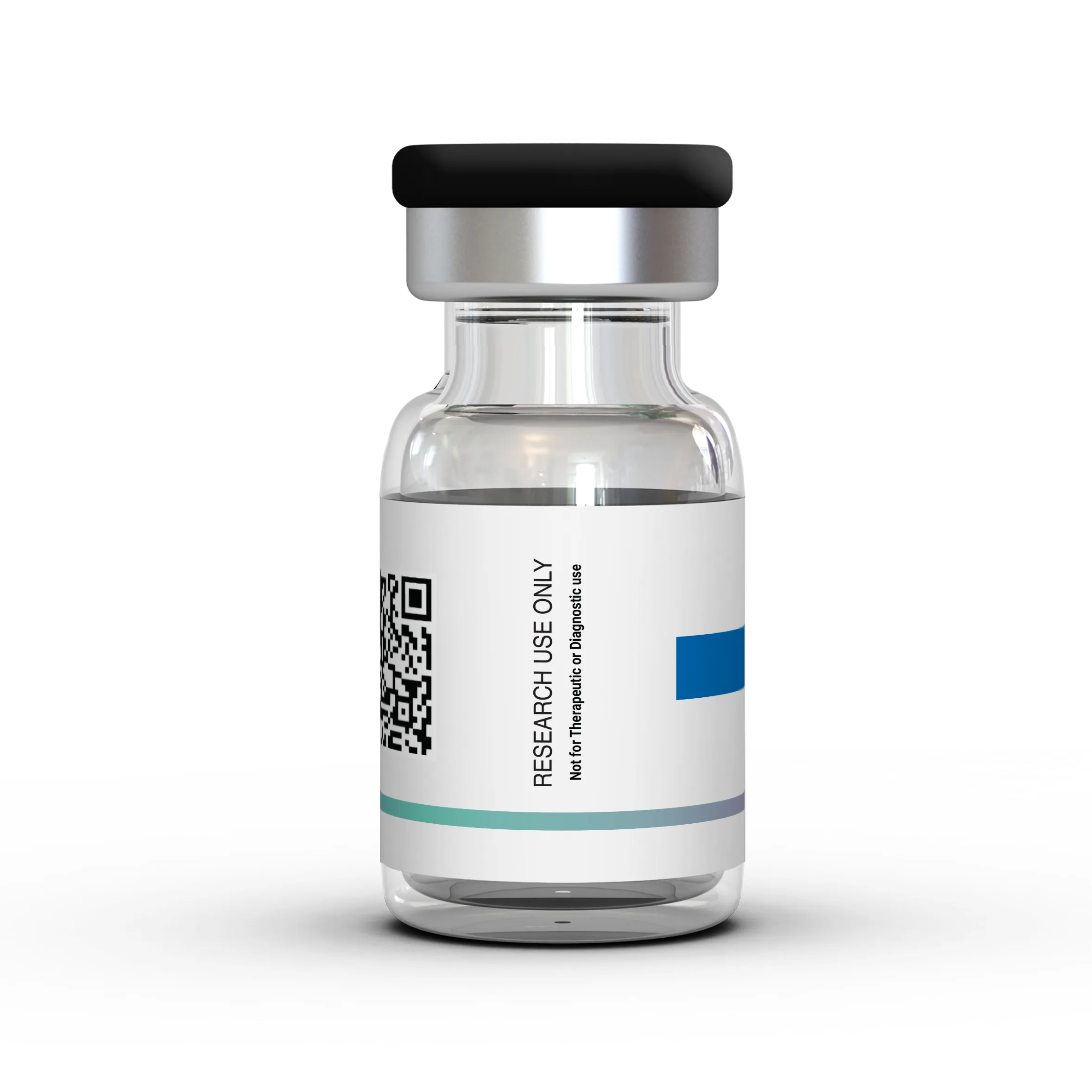

Testagen Technical Overview
Testagen carries the molecular formula C₁₇H₂₉N₅O₉ and a molecular weight of 447.44 g/mol, and is indexed in PubChem as CID 123863700 under the title H-Lys-Glu-Asp-Gly-OH. Its four residues place it among the shortest peptides in the bioregulator literature, which is part of why it is used as a model compound in transport and binding work.
The Khavinson short peptide family was assembled from amino acid analysis of tissue-derived peptide complexes, with each sequence named after the tissue extract it was patterned on. Testagen corresponds to the anterior pituitary series and is studied alongside its structural neighbors Epitalon (Ala-Glu-Asp-Gly) and Pinealon (Glu-Asp-Arg), which differ from it by one residue.
Research interest in the sequence spans several laboratory disciplines. It appears in molecular modeling of amino acid and peptide transporters, in fluorescence work on peptide binding to labeled oligonucleotides, in cell culture studies of differentiation gene expression, and in surface chemistry as a candidate adsorption layer on metal substrates.
Compound Specifications
| Property | Value |
|---|---|
| Compound Name | Testagen |
| Compound Class | Synthetic tetrapeptide (short peptide bioregulator) |
| Peptide Sequence (Three-Letter) | H-Lys-Glu-Asp-Gly-OH |
| Peptide Sequence (One-Letter) | KEDG |
| Sequence Length | 4 residues |
| CAS Number | 1026993-38-3 |
| PubChem CID | 123863700 |
| Molecular Formula | C₁₇H₂₉N₅O₉ |
| Molecular Weight | 447.44 g/mol |
| Monoisotopic Mass | 447.1965 Da |
| InChIKey | HKEYFJLTNCUNAD-DCAQKATOSA-N |
| Canonical SMILES | C(CCN)CC(C(=O)NC(CCC(=O)O)C(=O)NC(CC(=O)O)C(=O)NCC(=O)O)N |
| Isomeric SMILES | C(CCN)CC@@HN |
| IUPAC Name | (4S)-5-[[(2S)-3-carboxy-1-(carboxymethylamino)-1-oxopropan-2-yl]amino]-4-[[(2S)-2,6-diaminohexanoyl]amino]-5-oxopentanoic acid |
| Synonyms | KEDG, KEDG peptide, H-Lys-Glu-Asp-Gly-OH, Lys-Glu-Asp-Gly tetrapeptide |
| Source | Synthetic, solid-phase peptide synthesis |
| Purity | ≥99% (HPLC) |
| Appearance | Lyophilized white powder |
| Solubility | Soluble in water |
| Storage | -20°C, protect from light |
| Vial Size | 20mg |
Storage and Handling
- Store the lyophilized compound at -20°C in the sealed vial, protected from light and moisture.
- After reconstitution, store at 2°C to 8°C and use promptly. Avoid repeated freeze-thaw cycles.
- Maintain aseptic handling throughout reconstitution and aliquoting to preserve compound integrity.
- Allow the vial to reach room temperature before opening so condensation does not settle on the powder.
Lyophilized Format
This compound ships in lyophilized (freeze-dried) form. Freeze-drying supports long-term storage stability and preserves compound integrity. No fillers are added.
Research Use Disclaimer
Testagen is supplied for research use only. It is not a drug, food, cosmetic, or dietary supplement and has not been evaluated by the FDA. By purchasing, the buyer confirms the compound will be used solely for in vitro research.
Frequently Asked Questions
What Is Testagen?
Testagen is a synthetic tetrapeptide with the sequence Lys-Glu-Asp-Gly, one of the short peptide bioregulators described in the Khavinson literature. It is supplied as a research compound and is indexed in PubChem as CID 123863700.
What Is the Molecular Weight of Testagen?
Testagen has a molecular weight of 447.44 g/mol and a molecular formula of C₁₇H₂₉N₅O₉. Its monoisotopic mass of 447.1965 Da is the value used for LC-MS identity confirmation.
How Is Testagen Stored?
Testagen is stored at -20°C as a lyophilized powder in its sealed vial, protected from light. Once reconstituted, laboratories hold it at 2°C to 8°C and avoid repeated freeze-thaw cycles.
How Is the Purity of Testagen Verified?
Purity is confirmed by HPLC at ≥99%, with identity checked by mass spectrometry against the compound’s monoisotopic mass. Each lot of Testagen ships with a third-party certificate of analysis reporting both results.
What Research Areas Is Testagen Studied In?
Testagen appears in laboratory research on peptide transport across cell membranes, sequence-selective binding to DNA and deoxyribooligonucleotides, differentiation gene expression in cultured cells, and adsorption behavior at metal surfaces.