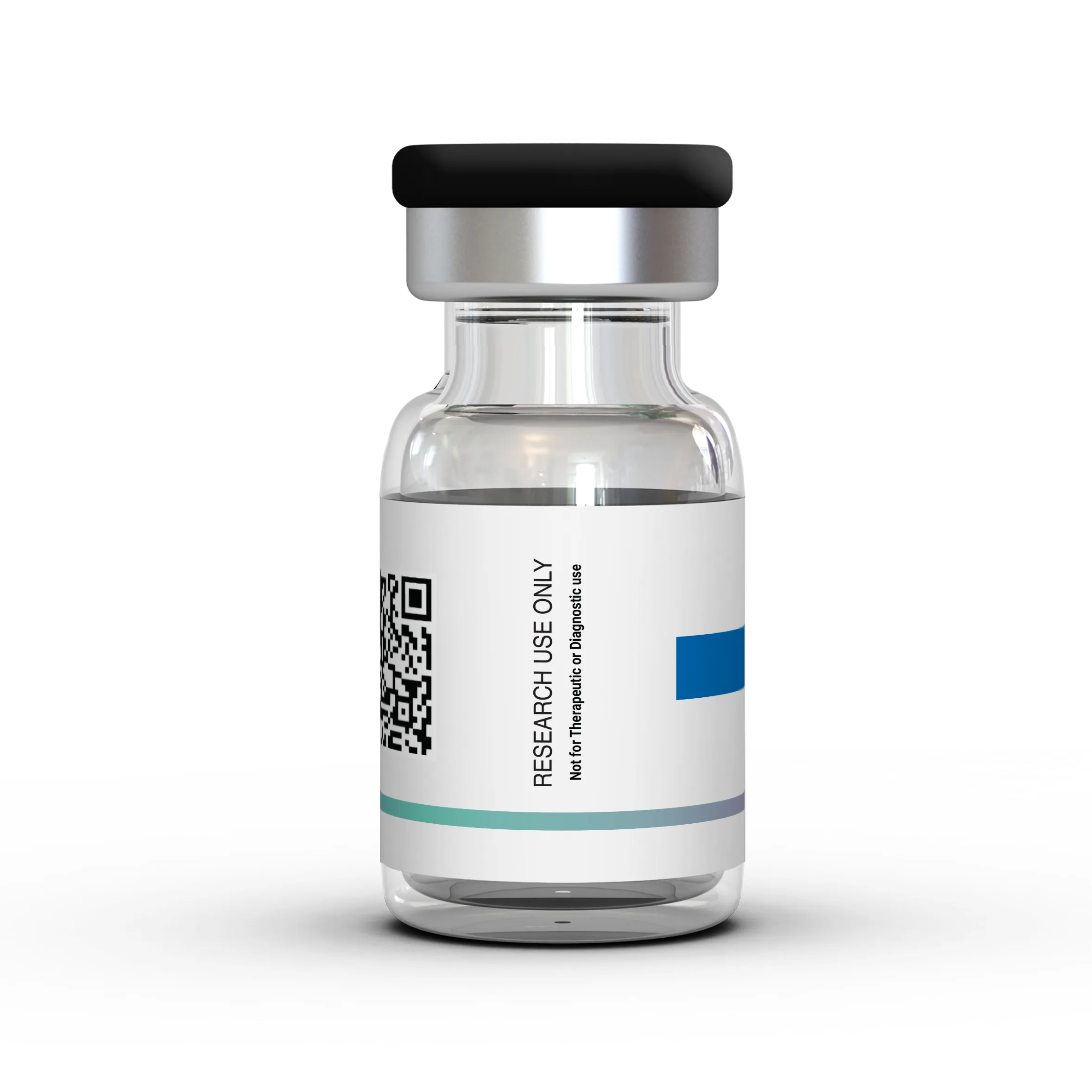
Sale!

Pancragen (20mg)

Pancragen is a synthetic tetrapeptide bioregulator of the defined sequence Lys-Glu-Asp-Trp (KEDW), produced through controlled solid-phase peptide synthesis. It is supplied as a lyophilized powder in a 20mg vial, with no fillers or excipients added. The compound belongs to the Khavinson family of short peptide bioregulators, a group characterized in laboratory work on peptide-DNA interaction and tissue-specific gene expression. Pancragen is studied in pancreatic cell culture models examining differentiation-factor expression and glucose-metabolism signaling pathways.

Original price was: $94.97.Current price is: $94.97. $47.49

Availability: In stock

- +

Don't forget your BAC Water

Glass vial of Biolongevity Labs Reconstitution Solution, 30ml, containing deionized pure water and .9% benzyl alcohol, made in the USA.
Reconstitution Solution (30ml) (BAC Water)
$19.97
Buy in bulk and save (not applicable with other sales)
SKU PAN-20MG Categories , ,

Pancragen Product Description

Pancragen is a four-residue peptide built from lysine, glutamic acid, aspartic acid, and tryptophan. Its low molecular weight and charge distribution place it in the class of short regulatory peptides that have been examined for nuclear localization and direct interaction with chromatin.

The compound is one of several tissue-designated short peptides developed at the Saint Petersburg Institute of Bioregulation and Gerontology. Within that series, KEDW is the sequence associated with pancreatic tissue research models, while related sequences such as AEDL and AEDG are associated with other tissue types.

Laboratory interest in Pancragen centers on two research threads. The first is its interaction with DNA and histone proteins at defined nucleotide motifs. The second is the pattern of differentiation-marker expression observed in cultured pancreatic cells exposed to the peptide.

Compound Specifications

Property Value
PubChem CID 68452877
Molecular Formula C₂₆H₃₆N₆O₉
Molecular Weight 576.60 g/mol
Monoisotopic Mass 576.25438 Da
Amino Acid Sequence H-Lys-Glu-Asp-Trp-OH (KEDW)
Sequence Length 4 residues
IUPAC Name (4S)-5-[[(2S)-3-carboxy-1-[[(1S)-1-carboxy-2-(1H-indol-3-yl)ethyl]amino]-1-oxopropan-2-yl]amino]-4-[[(2S)-2,6-diaminohexanoyl]amino]-5-oxopentanoic acid
InChIKey PIGJHNNSOMRLST-LEAZDLGRSA-N
Canonical SMILES C1=CC=C2C(=C1)C(=CN2)CC(C(=O)O)NC(=O)C(CC(=O)O)NC(=O)C(CCC(=O)O)NC(=O)C(CCCCN)N
Source Synthetic
Related Amide Form H-Lys-Glu-Asp-Trp-NH₂ (PubChem CID 68451868, C₂₆H₃₇N₇O₈, 575.6 g/mol)
Purity ≥99% (HPLC)
Appearance Lyophilized white powder
Solubility Soluble in water; sterile bacteriostatic water is commonly used for reconstitution
Storage -20°C, protect from light

Storage and Handling

  • Store the lyophilized compound at -20°C, protected from light and moisture.
  • After reconstitution, store at 2°C to 8°C and use promptly; for extended holding, aliquot and store at -20°C to limit freeze-thaw cycles.
  • Allow the sealed vial to equilibrate to room temperature before opening to reduce condensation on the powder.
  • Maintain aseptic handling throughout to preserve compound integrity.

Lyophilized Format

This compound ships in lyophilized (freeze-dried) form. Freeze-drying supports long-term storage stability and preserves compound integrity. No fillers are added.
Pancragen Research

Molecular modeling work on short peptides places KEDW among sequences that bind DNA at defined nucleotide motifs. Docking studies assign KEDW and AED to the acct binding site, with binding specificity tracking the primary sequence of both the peptide and the target oligonucleotide [1].

Follow-up molecular mechanics work examined how the tetrapeptide approaches the DNA duplex. The analysis reported interaction with both the minor and the major groove, with major-groove contact showing greater sequence dependence and GGCAG identified as a putative binding site [2].

A separate line of work looked at peptide binding to histone proteins. Using fluorescence quenching with FITC-labeled wheat histones, KEDW was among the short peptides observed to bind at N-terminal histone regions, with binding modulated by the presence and methylation state of associated oligonucleotides [3]. This chromatin-level interaction is one of the proposed routes by which short peptide bioregulators are thought to reach gene expression.

The pancreatic-tissue research thread runs through cell culture models rather than modeling alone.

Differentiation-Marker Expression in Pancreatic Cell Cultures

In cultured pancreatic cells, expression of differentiation markers was reported to decline across passage number. Exposure to the KEDW tetrapeptide was associated with increased expression of acinar markers Pdx1 and Ptf1a and islet markers Pdx1, Pax6, Pax4, Foxa2, and Nkx2.2 in both early-passage and late-passage cultures [4].

Tissue specificity is a recurring observation in this series. In parallel cultures, KEDW was associated with changes in CXCL12 and Hoxa3 expression in pancreatic cells, while the AEDL sequence acted on bronchial epithelial cells and KED on fibroblasts, with each peptide showing its effect in its designated tissue culture rather than across all three [5].

Promoter Methylation and Epigenetic Framing

Work on DNA methylation examined whether promoter state accompanies these expression changes. Methylation patterns at the PDX1, PAX6, and NGN3 promoter regions shifted across culture age in correlation with expression level, and KEDW was associated with changes in methylation at the FOXA2 promoter region [6]. Other promoters in the same panel, including PAX4, showed expression changes without a matching methylation shift, indicating more than one mechanism is in play.

Reviews of the short peptide series place KEDW alongside AEDL as sequences associated with directed differentiation toward pancreatic and lung cell lineages respectively [7]. More recent work in tissue engineering has included KEDW in surveys of short peptides examined for their capacity to influence stem cell fate toward pancreatic lineages in scaffold and matrix contexts [8].

Research Area In Vitro Application
Peptide-DNA interaction Docking and molecular mechanics studies of sequence-specific binding at defined nucleotide motifs
Chromatin and histone binding Fluorescence-based assays of peptide association with histone N-terminal regions
Pancreatic cell differentiation Expression profiling of Pdx1, Pax4, Pax6, Foxa2, and Nkx2.2 in cultured pancreatic cells
Epigenetic regulation Promoter methylation analysis across culture passage number
Cellular aging models Comparison of marker expression between early-passage and late-passage cultures
Stem cell fate research Short peptide screening in scaffold and matrix systems for lineage direction

References

  1. Khavinson VK, Lin’kova NS, Tarnovskaya SI (2016). Short Peptides Regulate Gene Expression. Bulletin of Experimental Biology and Medicine, 162(2), 288-292. https://doi.org/10.1007/s10517-016-3596-7
  2. Tarnovskaya SI, Yakutseni PP, Khavinson VK (2014). Study of interactions between DNA and tetrapeptides using methods of molecular mechanics. Bulletin of Experimental Biology and Medicine, 156(5), 689-693. https://doi.org/10.1007/s10517-014-2426-z
  3. Fedoreyeva LI, Smirnova TA, Kolomijtseva GY, Khavinson VK, Vanyushin BF (2013). Interaction of short peptides with FITC-labeled wheat histones and their complexes with deoxyribooligonucleotides. Biochemistry (Moscow), 78(2), 166-175. https://doi.org/10.1134/S0006297913020053
  4. Khavinson VK, Durnova AO, Polyakova VO, Tolibova GH, Linkova NS, Kvetnoy IM, Kvetnaia TV, Tarnovskaya SI (2013). Effects of pancragen on the differentiation of pancreatic cells during their ageing. Bulletin of Experimental Biology and Medicine, 154(4), 501-504. https://doi.org/10.1007/s10517-013-1987-6
  5. Khavinson VK, Linkova NS, Polyakova VO, Kheifets OV, Tarnovskaya SI, Kvetnoy IM (2012). Peptides tissue-specifically stimulate cell differentiation during their aging. Bulletin of Experimental Biology and Medicine, 153(1), 148-151. https://doi.org/10.1007/s10517-012-1664-1
  6. Ashapkin VV, Linkova NS, Khavinson VK, Vanyushin BF (2015). Epigenetic mechanisms of peptidergic regulation of gene expression during aging of human cells. Biochemistry (Moscow), 80(3), 310-322. https://doi.org/10.1134/S0006297915030062
  7. Khavinson V, Linkova N, Diatlova A, Trofimova S (2020). Peptide Regulation of Cell Differentiation. Stem Cell Reviews and Reports, 16(1), 118-125. https://doi.org/10.1007/s12015-019-09938-8
  8. Vishwanath R, Biswas A, Modi U, Gupta S, Bhatia D, Solanki R (2025). Programmable short peptides for modulating stem cell fate in tissue engineering and regenerative medicine. Journal of Materials Chemistry B, 13(8), 2573-2591. https://doi.org/10.1039/d4tb02102a

Certificate of Analysis (COA) for Every Batch

A Certificate of Analysis (COA) is a document that verifies a compound’s identity, purity, and batch quality through independent laboratory testing. Every compound from BioLongevity Labs ships with a COA tied to its specific batch, so researchers can confirm exactly what they received before it enters a protocol.

Each COA reports results from third-party laboratory analysis, including:

  • Ultra-high-performance liquid chromatography with mass spectrometry (UHPLC-MS) for purity, typically confirmed at 99% or higher
  • Mass identification for molecular confirmation and content quantitation
  • Endotoxin quantitation by Limulus amebocyte lysate (LAL) assay where applicable
  • Visual and physical characterization of the finished material

How to verify a COA independently

Every certificate can be checked against the issuing laboratory’s own records, not just the copy hosted here. Verification does not depend on BioLongevity Labs.

  • MDx BioAnalytical Laboratory certificates carry a QC tracking number and a search code. Newer certificates also carry a QR code. Scan the code, or enter the search code at mdxbiolabs.com, to pull the official record.
  • BioRegen reports of analysis carry a Report ID and a Validation Key. Scan the QR code on the certificate to open the official record, or reference both identifiers when contacting the laboratory at the address printed on the report.
  • SafeCert Labs certificates, which appear on a number of earlier batches, carry a COA number and the signature of the reporting chemist. Reference that number when requesting confirmation from the laboratory directly.

Batches are frequently tested by both laboratories independently. When two certificates exist for the same lot, each one resolves at its own issuing laboratory, which lets a researcher confirm the same material twice through two unrelated sources.

COAs are sourced from independent certified labs rather than in-house testing alone, giving researchers a verifiable record of molecular integrity for each batch. All compounds are supplied for research use only.

Review the COAs for this batch below, or browse the full COA library.

Endotoxin Pancragen

Endotoxin Pancragen

Pancragen 20 mg (11358)

Pancragen 20 mg (11358)

Pancragen (251519)

Pancragen (251519)

Pancragen (251519E)

Pancragen (251519E)

Browse our full peptide catalog featuring research compounds for a wide range of scientific applications:

Our Flagship Products

99%+ Purity, Third Party Tested

Independently verified by three separate certified laboratories. COAs available pre-purchase.

GMP Manufacturing Standards

Synthesized in USA-registered facilities following Good Manufacturing Practices. Full chain of custody documentation.

Best In Class Fulfillment

Same-day shipping on orders before 12 PM PT. Free standard domestic shipping on orders over $400.

Zero Fillers or Additives

Pure active compounds only. Independently verified composition for reliable in vitro studies.

Scientific Reviewer

Scientifically reviewed by Dr. Ky H. Le, MD. Dr. Le is a board-certified family medicine physician with over 20 years of clinical experience. Dr. Le validates the scientific accuracy of all technical content and research citations.

Disclaimer: For Research Purposes Only

This content is provided strictly for research purposes and does not constitute an endorsement or recommendation for the non-laboratory application or improper handling of peptides designed for research. The information, including discussions about specific peptides and their researched benefits, is presented for informational purposes only and must not be construed as health, clinical, or legal guidance, nor an encouragement for non-research use. Peptides described here are solely for use in structured scientific study by authorized individuals. We advise consulting with research experts, medical practitioners, or legal counsel prior to any decisions about obtaining or utilizing these peptides. The expectation of responsible, ethical utilization of this information for legitimate investigative and scholarly objectives is paramount. This notice is dynamic and governs all provided content on research peptides.
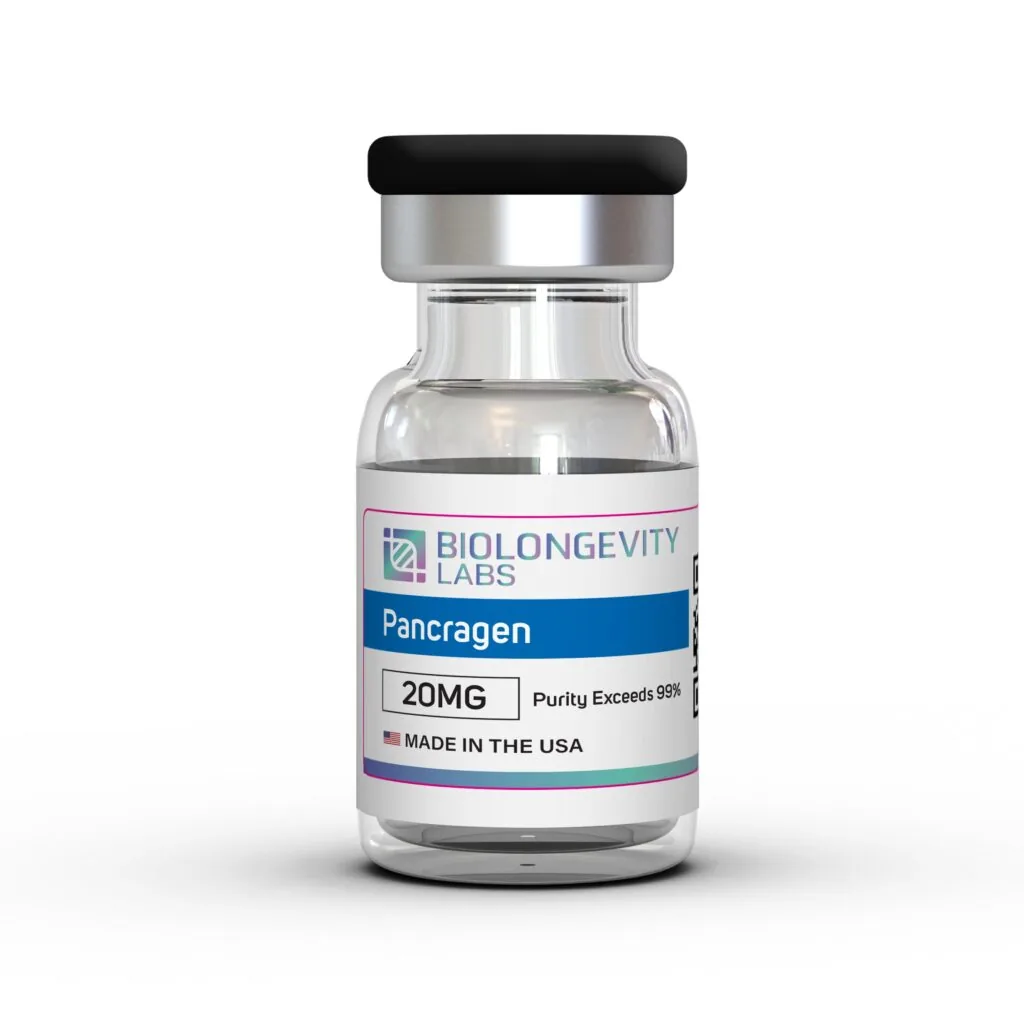
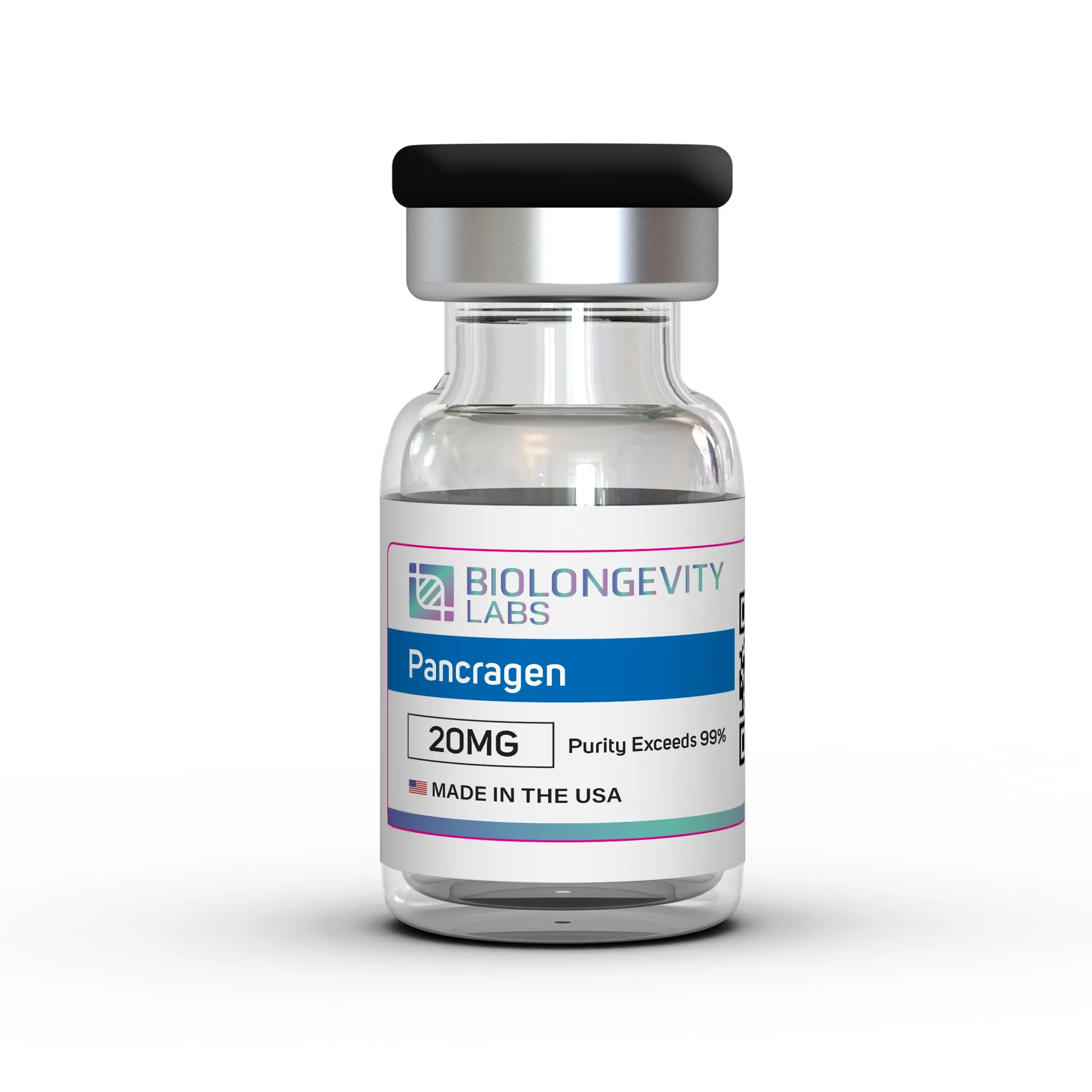
Glass vial of Biolongevity Labs Pancragen, 20MG, with purity exceeding 99%, made in the USA.Pancragen (20mg)
Original price was: $94.97.Current price is: $94.97. $47.49

Availability: In stock

- +

Don't forget your BAC Water

Glass vial of Biolongevity Labs Reconstitution Solution, 30ml, containing deionized pure water and .9% benzyl alcohol, made in the USA.
Reconstitution Solution (30ml) (BAC Water)
$19.97