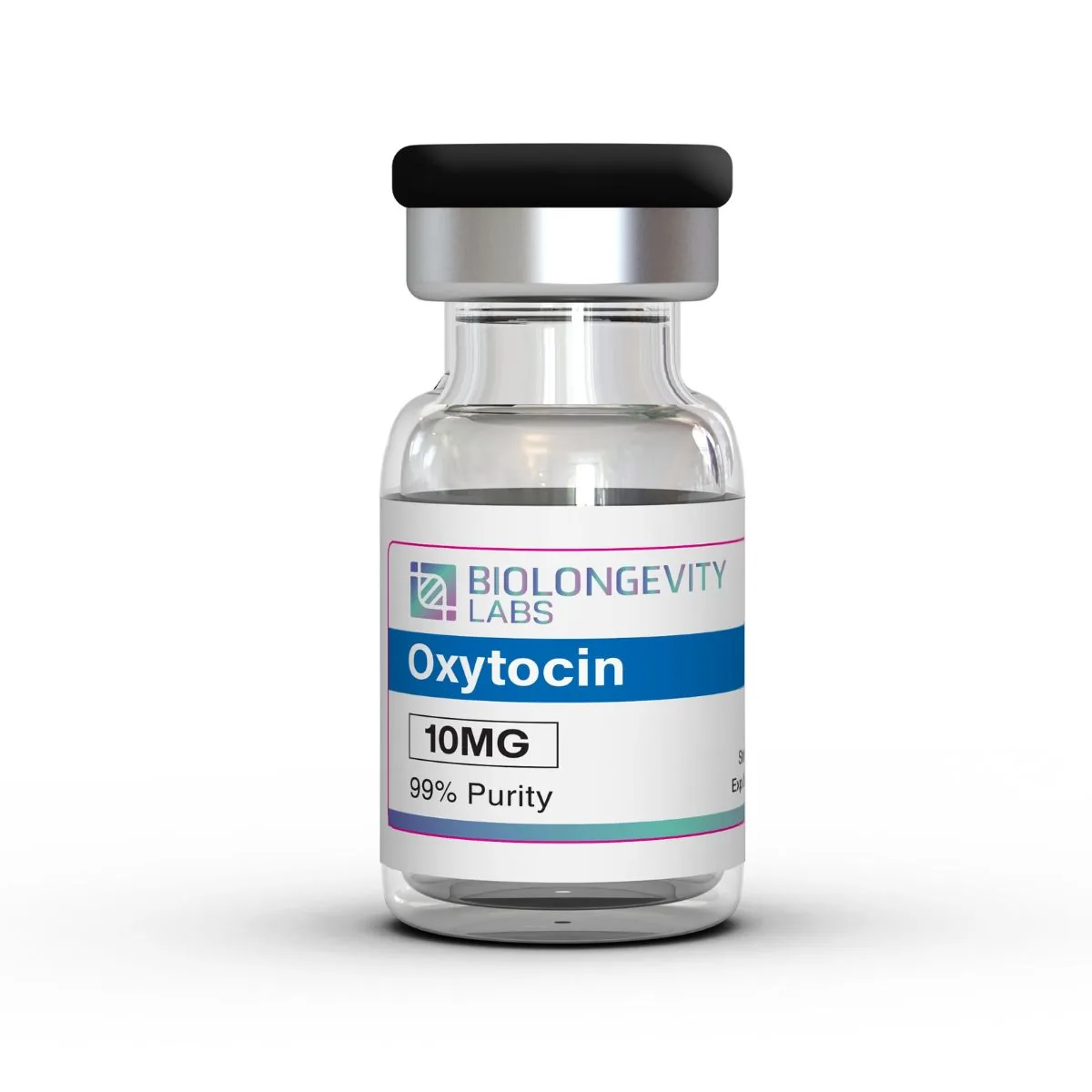
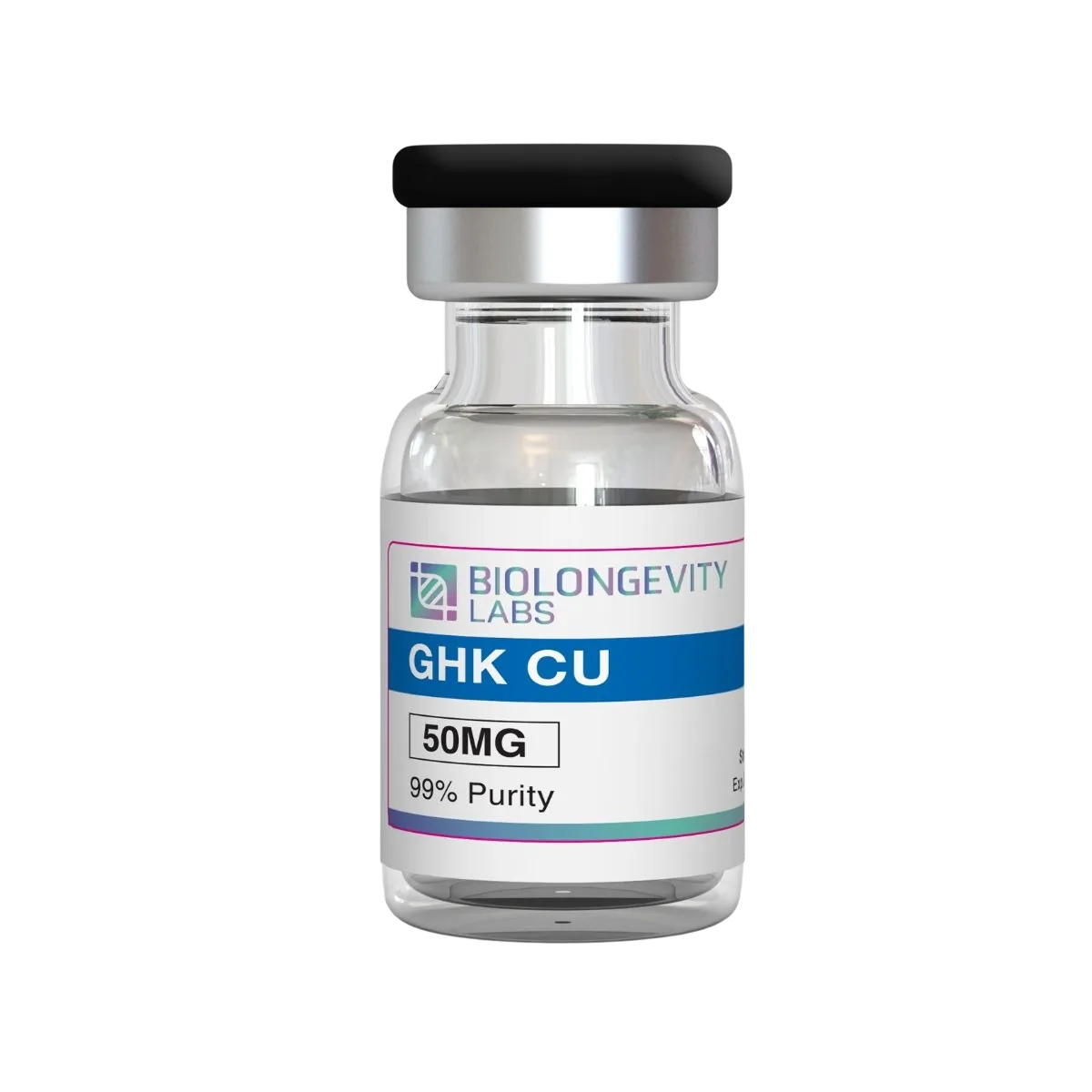
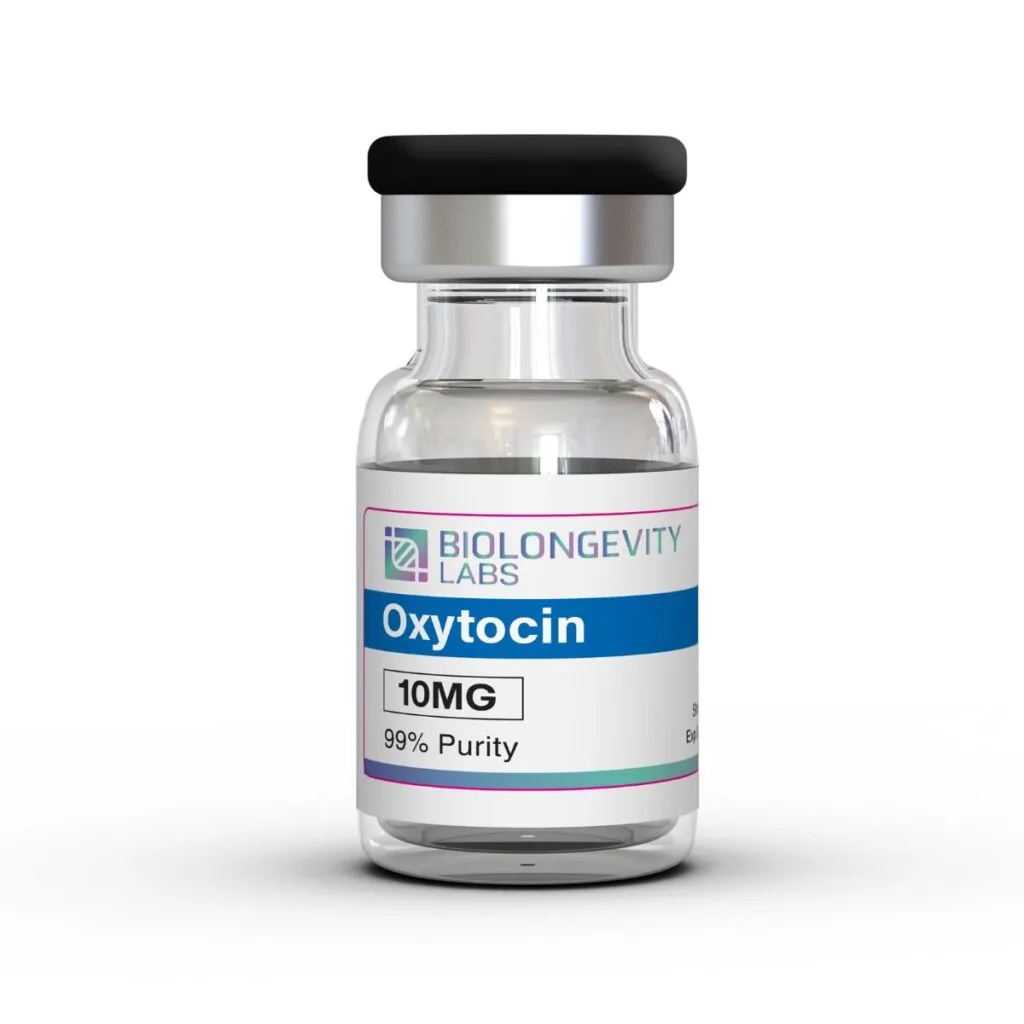
Oxytocin peptide is a synthetic cyclic nonapeptide with the sequence Cys-Tyr-Ile-Gln-Asn-Cys-Pro-Leu-Gly-NH₂, closed by a disulfide bridge between Cys1 and Cys6 and produced through controlled peptide synthesis. BioLongevity Labs supplies it as 10mg of lyophilized powder in a sealed vial, freeze-dried for stability during storage and handling. The compound is characterized in laboratory research on oxytocin receptor (OXTR) binding and G protein-coupled receptor signaling in cell-line models. It also serves as a reference peptide in receptor pharmacology assays and peptide stability studies, and is supplied for research use only.
≥99% Purity
Third-Party Tested
COA Available
U.S. Manufactured
Quantity
In stock
Third-Party Verified Quality
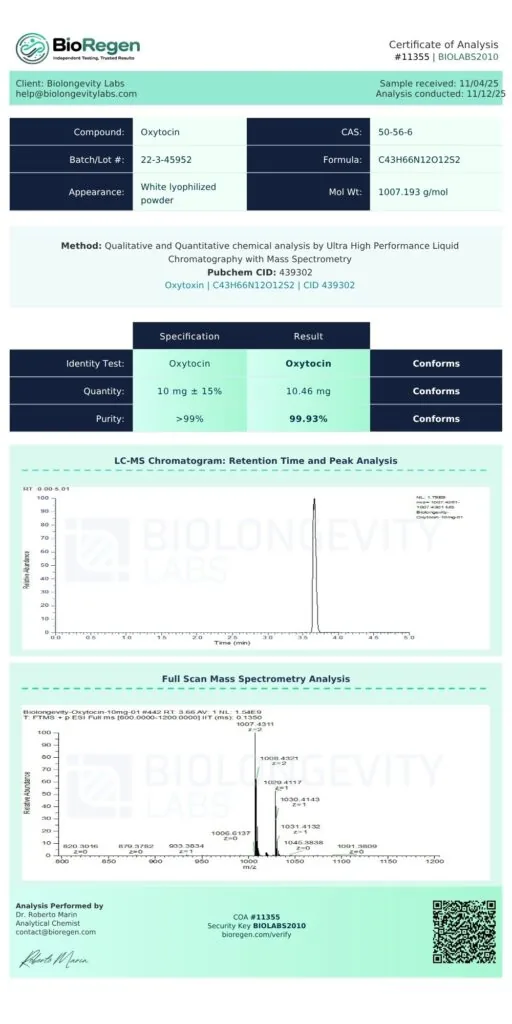
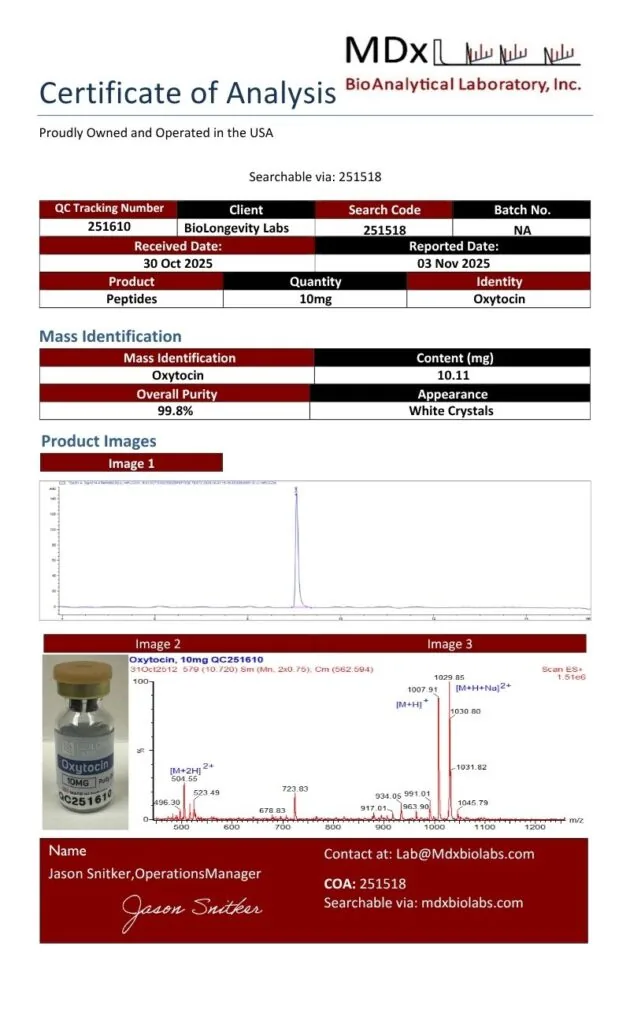
≥99% purity verified through independent UHPLC-MS testing. Certificates of Analysis are available before purchase.
COAs available before purchase
U.S.-manufactured research-grade
Same-business-day U.S. dispatch for in-stock orders placed before 12 PM PT
Secure Checkout · Free shipping on orders over $400
Oxytocin is a nine-residue neurohypophysial peptide indexed in PubChem under CID 439302 and CAS number 50-56-6. Six of its residues form a ring through the Cys1–Cys6 disulfide bond, and a three-residue tail ends in a C-terminal glycinamide.
It belongs to the oxytocin and vasopressin peptide family, which shares the same ring-and-tail layout. Oxytocin differs from arginine vasopressin only at positions 3 and 8, which is why older literature also lists it as 3-isoleucine-8-leucine vasopressin.
Laboratory work with oxytocin 10mg vials centers on receptor binding and signaling assays, structural biology of the oxytocin receptor, and formulation stability testing. Its defined sequence and single disulfide bond make it a common reference ligand in peptide GPCR research.
Store the lyophilized compound at -20°C, sealed and protected from light and moisture.
After reconstitution, store at 2–8°C and use promptly.
Avoid repeated freeze-thaw cycles of reconstituted material.
Maintain aseptic handling to preserve compound integrity.
Lyophilized Format
This compound ships in lyophilized (freeze-dried) form. Freeze-drying supports long-term storage stability and preserves compound integrity. No fillers are added.
Research Use Disclaimer
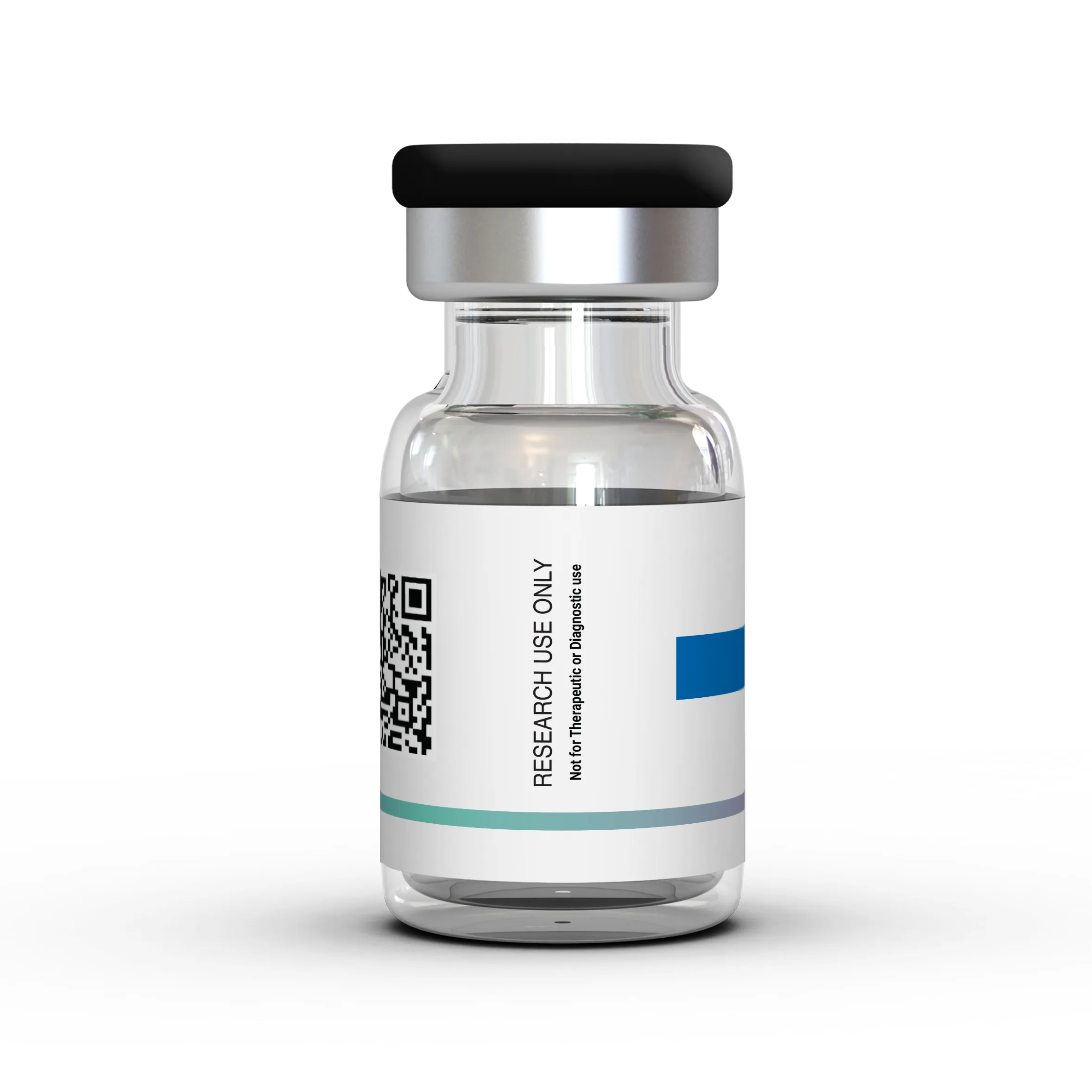
Oxytocin is supplied for research use only. It is not a drug, food, cosmetic, or dietary supplement and has not been evaluated by the FDA. By purchasing, the buyer confirms the compound will be used solely for in vitro research.
Frequently Asked Questions
What Is Oxytocin Peptide?
Oxytocin peptide is a synthetic cyclic nonapeptide, Cys-Tyr-Ile-Gln-Asn-Cys-Pro-Leu-Gly-NH2, with a disulfide bridge linking Cys1 and Cys6. BioLongevity Labs supplies it as a 10mg lyophilized powder for research use only.
What Is the CAS Number and Molecular Weight of Oxytocin?
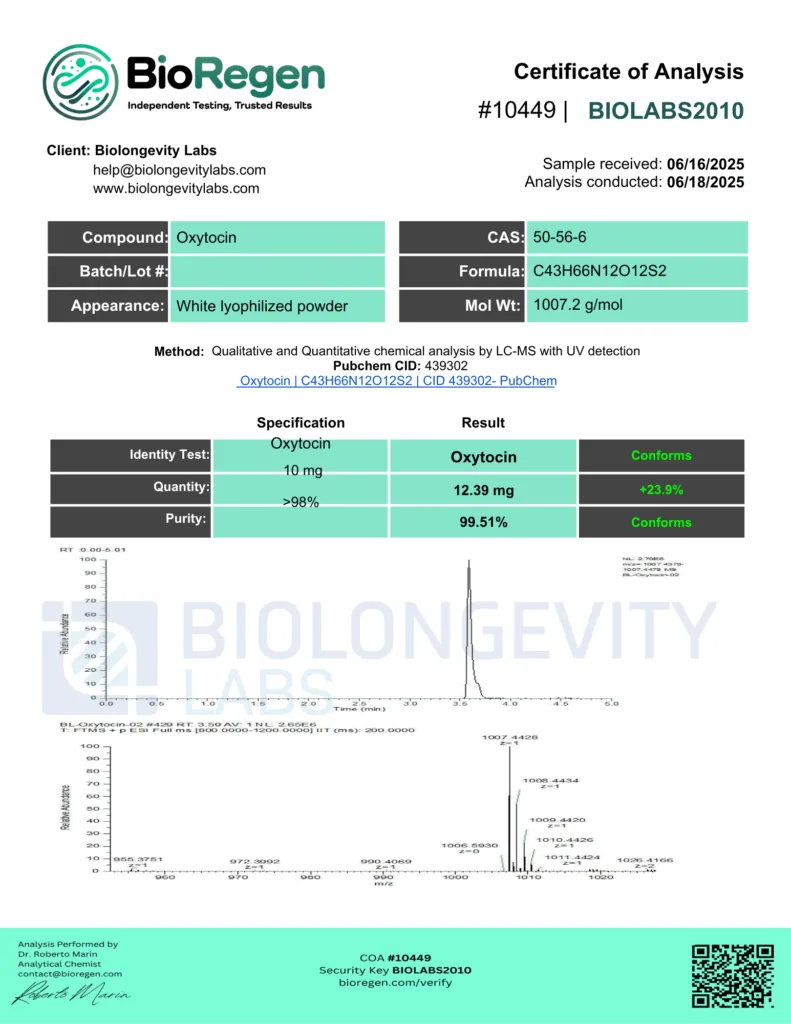
Oxytocin is listed under CAS number 50-56-6 and PubChem CID 439302. Its molecular formula is C43H66N12O12S2, with a molecular weight of 1007.2 g/mol and a monoisotopic mass of 1006.4365 Da.
What Is Oxytocin Peptide Used for in Research?
Oxytocin is used in laboratory research on oxytocin receptor (OXTR) binding, G protein coupling and downstream calcium and kinase signaling in cell-line models. It also serves as a reference compound in receptor structure work and peptide stability studies.
How Should Oxytocin 10mg Be Stored?
Oxytocin 10mg should be kept sealed at -20°C in lyophilized form, protected from light and moisture. Once reconstituted, it should be held at 2–8°C, used promptly and kept away from repeated freeze-thaw cycles.
How Is Oxytocin Purity Verified?
Oxytocin is tested by an independent third-party laboratory to a ≥99% purity specification. Certificates of Analysis are published online, so researchers can review them before purchase.
Research Overview
The oxytocin receptor (OXTR) is a class I G protein-coupled receptor that couples mainly through Gq proteins to phospholipase C-β [1]. High-affinity agonist binding at OXTR depends on both Mg²⁺ and cholesterol, which act as allosteric modulators, and the agonist-binding region maps to a different site than the antagonist-binding region [1].
Downstream of activation, OXTR can engage Gq or Gi proteins and switch on MAPK, PKC, PLC and CaMK cascades that converge on transcription factors such as CREB and MEF-2 [2]. In cell models, this signaling has been studied in relation to neurite outgrowth and cell viability [2].
Structural, pharmacology and stability studies add finer detail on how the peptide behaves at the receptor and in solution.
Receptor Structure and G Protein Selectivity
A crystal structure of OXTR bound to the non-peptide antagonist retosiban located an extrahelical cholesterol molecule between helices IV and V, plus a conserved Mg²⁺ coordination site that acts as a positive allosteric modulator of agonist binding [3]. A later cryo-EM structure of the active receptor bound to oxytocin and a mini-Gq protein showed oxytocin forming an Mg²⁺ coordination complex with the receptor and disrupting transmembrane helix 7 during activation [4].
In a bioluminescence resonance energy transfer (BRET) biosensor screen in HEK293 cells, oxytocin engaged Gq and every Gi/o subtype tested, while analogs with substitutions at key residues showed biased activation of individual G protein subtypes [5].
Peptide Stability in Solution
Accelerated degradation studies tracked intact oxytocin by RP-HPLC from pH 2.0 to 9.0 and from 40 to 80°C. Loss followed pseudo first-order kinetics, was fastest at pH 9.0 and slowest at pH 4.5, and produced deamidated species, tri- and tetrasulfide forms, and disulfide- and dityrosine-linked dimers identified by ESI-MS/MS [6].
Receptor Distribution in Rodent Models
Whole-brain 3D mapping in adult mice charted oxytocin-producing neurons across four hypothalamic domains and compared their projections with Oxtr expression, and found that Oxtr expression levels did not track projection density across the brain [7]. RNAscope in situ hybridization has also charted Oxtr mRNA at single-cell resolution across six postnatal stages in mice, covering the cortex, hippocampus, basal forebrain and amygdaloid complex [8].
Research Area
In Vitro Application
Receptor Pharmacology
Agonist binding assays at OXTR, including Mg²⁺ and cholesterol dependence
G Protein Signaling
BRET biosensor profiling of Gq and Gi/o subtype engagement in HEK293 cells
Downstream Pathways
Calcium, PLC, PKC and MAPK pathway readouts in OXTR-expressing cell lines
Structural Biology
Reference agonist for cryo-EM and crystallography of the oxytocin receptor
Peptide Stability
pH and temperature degradation profiling by RP-HPLC and mass spectrometry
Receptor Mapping
Oxtr expression mapping in rodent brain tissue sections
Waltenspühl Y, Schöppe J, Ehrenmann J, Kummer L, Plückthun A. (2020). Crystal structure of the human oxytocin receptor. Science Advances. https://doi.org/10.1126/sciadv.abb5419
Meyerowitz JG, Robertson MJ, Barros-Álvarez X, et al. (2022). The oxytocin signaling complex reveals a molecular switch for cation dependence. Nature Structural & Molecular Biology. https://doi.org/10.1038/s41594-022-00728-4
Busnelli M, Saulière A, Manning M, et al. (2012). Functional selective oxytocin-derived agonists discriminate between individual G protein family subtypes. Journal of Biological Chemistry. https://doi.org/10.1074/jbc.M111.277178
Hawe A, Poole R, Romeijn S, et al. (2009). Towards heat-stable oxytocin formulations: analysis of degradation kinetics and identification of degradation products. Pharmaceutical Research. https://doi.org/10.1007/s11095-009-9878-2
Li H, Li Y, Wang T, et al. (2025). Spatiotemporal Mapping of the Oxytocin Receptor at Single-Cell Resolution in the Postnatally Developing Mouse Brain. Neuroscience Bulletin. https://doi.org/10.1007/s12264-024-01296-x
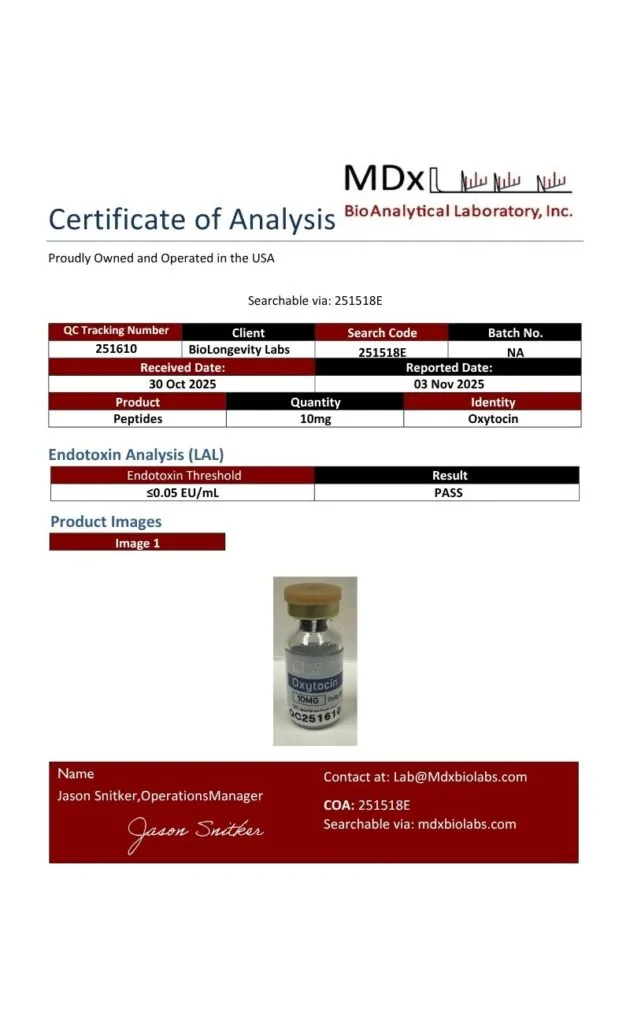
A Certificate of Analysis (COA) is a document that verifies a compound’s identity, purity and quality through independent laboratory testing. Every compound from BioLongevity Labs is third-party tested, and its COA is published here, so researchers can review the testing record before a compound enters a protocol.
Each COA reports results from third-party laboratory analysis, including:
Ultra-high-performance liquid chromatography with mass spectrometry (UHPLC-MS) for purity, measured against a 98% or 99% specification depending on the compound
Mass identification for molecular confirmation and content quantitation
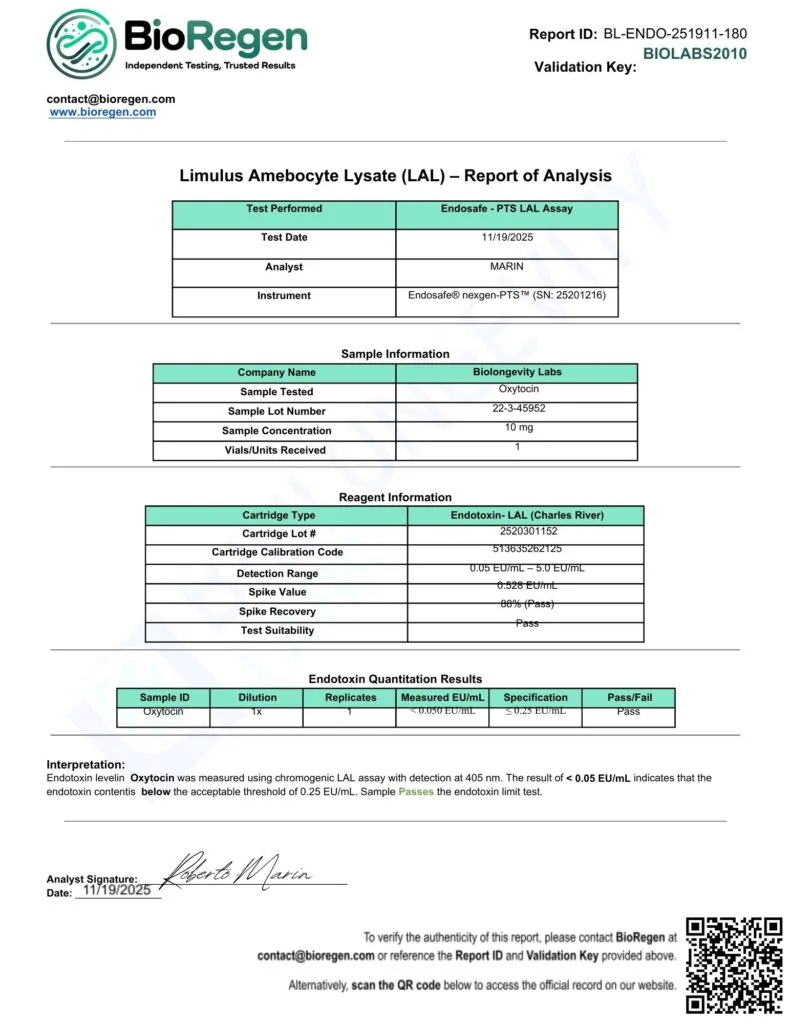
Endotoxin testing by Limulus amebocyte lysate (LAL) or recombinant Factor C (rFC) assay, depending on the laboratory
Visual and physical characterization of the finished material
How to Verify a COA Independently
You can check every certificate against the issuing laboratory’s own records, not just the copy hosted here. Verification does not depend on BioLongevity Labs.
AV Analytics certificates carry a search code. Scan the QR code on the certificate to open the laboratory’s verification page, or enter the search code at avanalytical.com/coa-search to pull the official record.
BioRegen reports of analysis carry a Report ID and a Validation Key. Scan the QR code on the certificate to open the official record, or quote both identifiers when you contact the laboratory at the address printed on the report.
SafeCert Labs issued a number of earlier certificates. Each one carries a COA number and the signature of the reporting chemist. Quote that number when you ask the laboratory to confirm it.
Older certificates from other laboratories list their own verification details on the document.
When a batch is sent to more than one laboratory, each certificate resolves at its own issuing laboratory. A researcher can then check the results against two unrelated sources.
These COAs come from independent certified laboratories, not in-house testing. That gives researchers a verifiable record of molecular integrity for each compound. All compounds are supplied for research use only.
Scientifically reviewed by Dr. Ky H. Le, MD. Dr. Le is a board-certified family medicine physician with over 20 years of clinical experience. Dr. Le validates the scientific accuracy of all technical content and research citations.
Disclaimer: For Research Purposes Only
This content is provided strictly for research purposes and does not constitute an endorsement or recommendation for the non-laboratory application or improper handling of peptides designed for research. The information, including discussions about specific peptides and their researched benefits, is presented for informational purposes only and must not be construed as health, clinical, or legal guidance, nor an encouragement for non-research use. Peptides described here are solely for use in structured scientific study by authorized individuals. We advise consulting with research experts, medical practitioners, or legal counsel prior to any decisions about obtaining or utilizing these peptides. The expectation of responsible, ethical utilization of this information for legitimate investigative and scholarly objectives is paramount. This notice is dynamic and governs all provided content on research peptides.