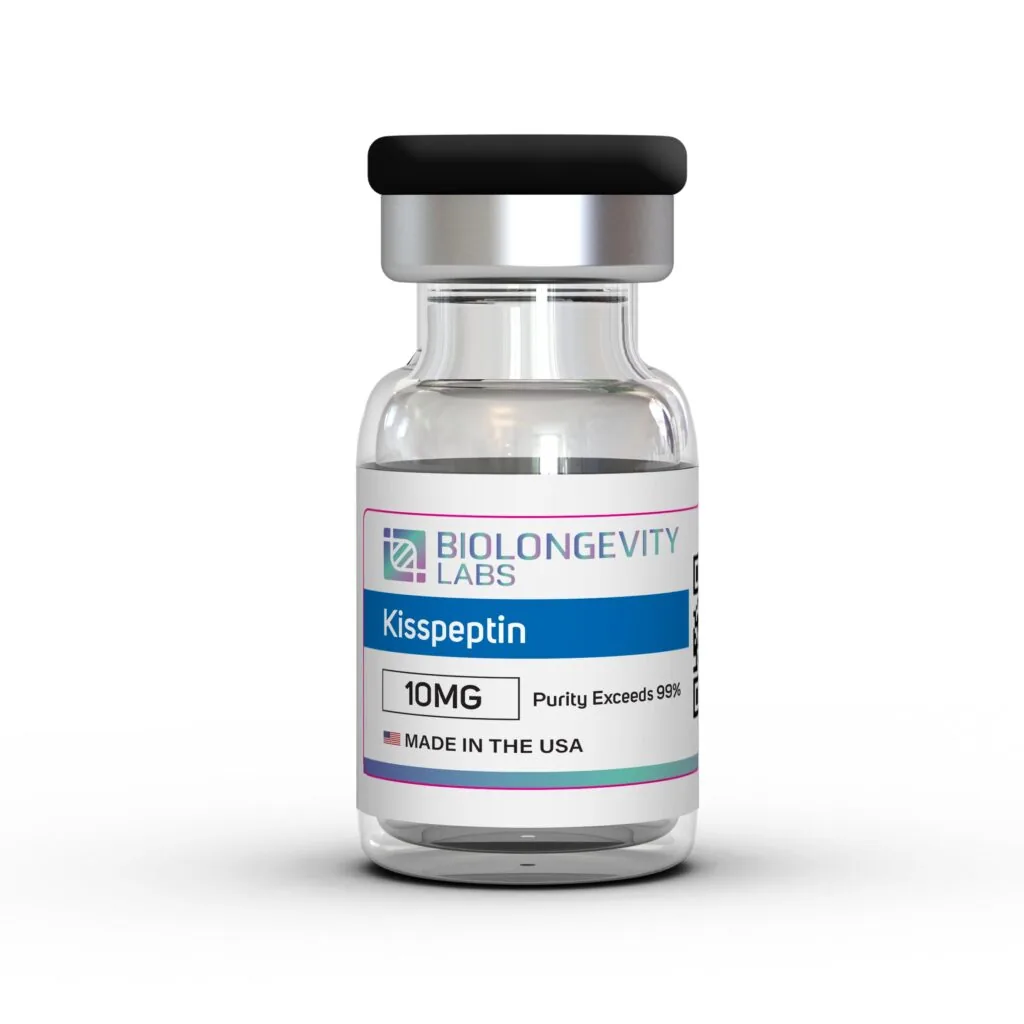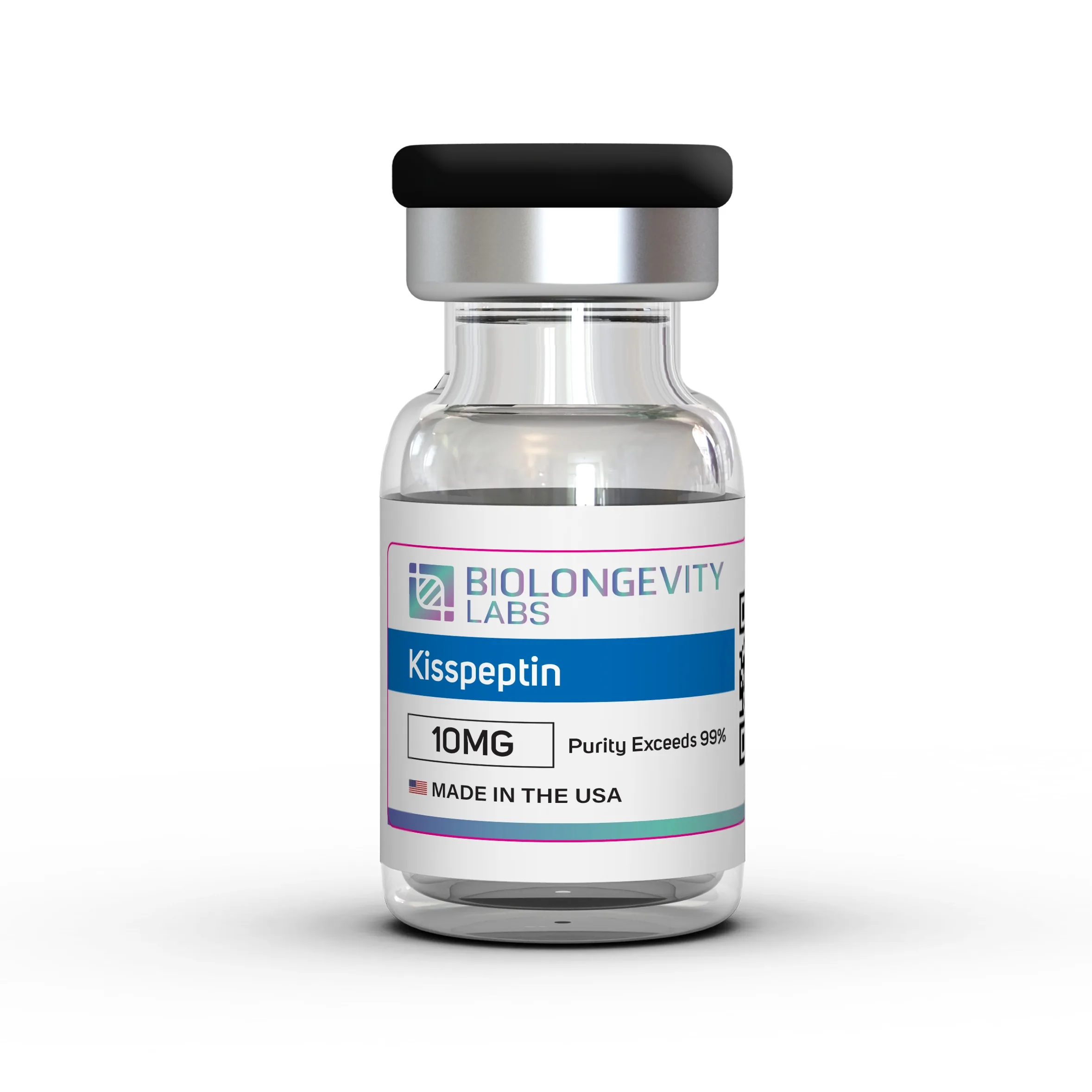
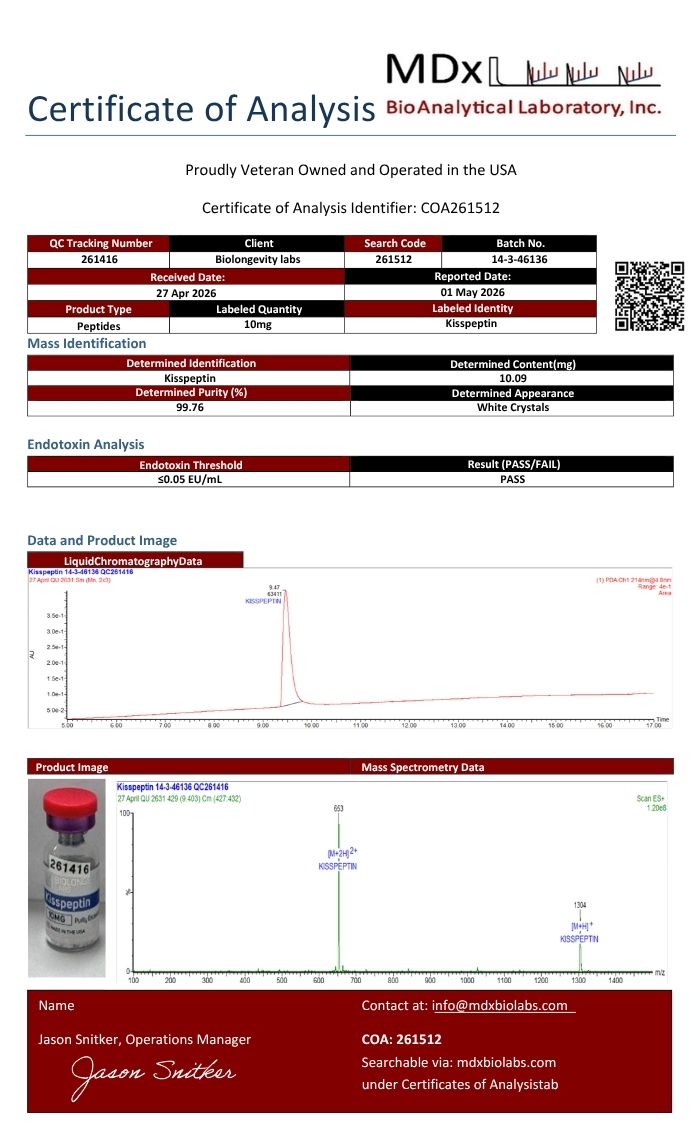
Kisspeptin-10 Product Description
Kisspeptins are a family of neuropeptides encoded by the KISS1 gene. The KISS1 gene produces a precursor protein, which is then cleaved into various active fragments, including kisspeptin-54, -14, -13, and -10.
Kisspeptin-10 (KP-10) is the shortest of these fragments, but it retains full bioactivity, meaning it can still bind to and activate its receptor. All kisspeptin peptides, including KP-10, share a common C-terminal decapeptide sequence (arginine-amidated phenylalanine, RFAmide), which is essential for their biological activity.
KP-10 is a versatile peptide with applications spanning cancer diagnostics, reproductive regulation, neuroprotection, cardiovascular regulation, and behavioral neuroscience. Its mechanisms involve both receptor-dependent and independent pathways, supporting its potential as a research and diagnostic tool across multiple fields.
Peptide Information
| Property |
Value |
| Peptide Sequence |
Tyr-Asn-Trp-Asn-Ser-Phe-Gly-Leu-Arg-Phe-NH2 |
| Molecular Formula |
C63H83N17O14 |
| Molecular Weight |
1302.5 g/mol |
| CAS Number |
374675-21-5 |
| PubChem CID |
71306396 |
| Synonyms |
Kisspeptin, Protein KISS-1, Kisspeptins, Gene KISS1 protein, KISS-1, Metastin |
Kisspeptin-10 Peptide Structure

Source: PubChem
Lyophilized Peptides:
These peptides are freeze-dried, a process that not only extends shelf life but also preserves the purity and integrity of the peptides during storage. We do not use any fillers in this process.
Product Usage:
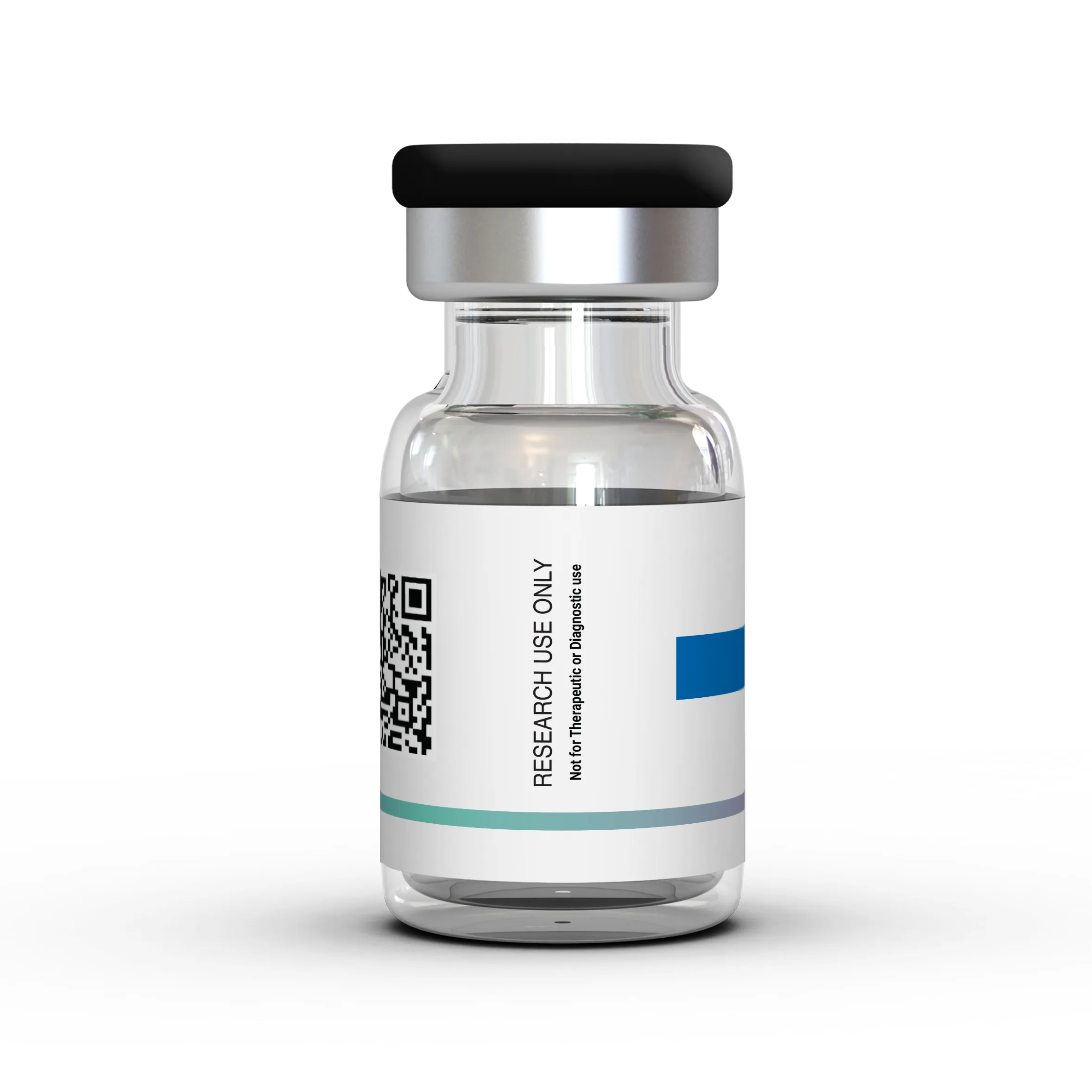
This PRODUCT IS INTENDED AS A RESEARCH CHEMICAL ONLY. This designation allows the use of research chemicals strictly for in vitro testing and laboratory experimentation only. This product should only be handled by licensed, qualified professionals. This product is not a drug, food, or cosmetic and may not be misbranded, misused or mislabeled as a drug.
Kisspeptide-10 Research
Kisspeptin-10 is a biologically active peptide fragment of the kisspeptin family, known for its role in reproductive regulation. Recent research has expanded its applications, revealing diverse effects in oncology, neuroprotection, cardiovascular health, placental biology, and behavioral neuroscience.
Oncology and Diagnostic Imaging
When labeled with gallium-68 or lutetium-177, KP-10 demonstrates potential as a pan-tumor radiopharmaceutical for cancer detection and therapy. DOTA-KP10 analogues maintain their biological activity while showing rapid blood clearance. Researchers are currently optimizing these compounds for improved stability and binding affinity, which supports continued development for oncological imaging applications[1].
KP-10 inhibits the migration of both cancer cells and placental trophoblast cells through modulation of key signaling pathways, including GSK3ฮฒ, FAK, and ERK1/2. This suggests possible roles in metastasis suppression and placental invasion regulation[2].
The KiSS-1 gene and its peptide products, including kisspeptin-10, are expressed at lower levels in metastatic melanoma compared to non-metastatic forms, suggesting a role in suppressing tumorย spread. Beyond melanoma, the KiSS-1/GPR54 system is implicated in suppressing metastasis in several other cancers, such as gastric, pancreatic, ovarian, bladder, and prostateย cancers[3].
Reproductive and Endocrine Regulation
KP-10 demonstrates potent stimulation of luteinizing hormone (LH), follicle-stimulating hormone (FSH), and testosterone secretion in both animal models and human studies. This occurs through hypothalamic GnRH release, with effects that are dose-dependent. These findings indicate KP-10’s potential relevance for understanding reproductive disorders[4].
KP-10 is a physiological inhibitor of trophoblast invasion, fine-tuning placental development and potentially impacting pregnancyย outcomes[5].
Neuroprotection and Neurological Applications
KP-10 reduces cerebral aneurysm development by inhibiting Egr-1, MMP-9, VEGF-A, and macrophage infiltration, acting through the GPR54 receptor. The KP-10/GPR54 system may be relevant for understanding brain blood vessel diseases[6].
KP-10 protects cholinergic neurons from ฮฑ-synuclein-induced toxicity and mitochondrial apoptosis, relevant to diseases like dementia with Lewy bodies. Some neuroprotective effects occur independently of the receptor GPR54, suggesting direct peptide-protein interactions[7].
Cardiovascular and Behavioral Effects
KP-10 increases myocardial collagen content via FAK activation, influencing cardiac fibrosis by promoting collagen synthesis and inhibiting matrixย metalloproteinases[8].
Animal studies show KP-10 changes impulsive behavior, compulsive actions, and reward responses. These effects involve brain chemicals like dopamine and serotonin. This suggests potential relevance for research into decision-making and compulsive disorders[9].
References
- Reeve, R., Marjanovic-Painter, B., Kleynhans, J., Driver, C., Millar, R., Ebenhan, T., Zeevaart, J., & Sathekge, M. (2025). Synthesis and characterisation of DOTAโkisspeptinโ10 as a potential galliumโ68/lutetiumโ177 panโtumour radiopharmaceutical.ย Journal of Neuroendocrinology, 37.ย https://doi.org/10.1111/jne.13487.
- Roseweir, A., Millar, R., Millar, R., Millar, R., Katz, A., & Katz, A. (2012). Kisspeptin-10 inhibits cell migration inย vitro via a receptor-GSK3 beta-FAK feedback loop in HTR8SVneo cells..ย Placenta, 33 5, 408-15 .ย https://doi.org/10.1016/j.placenta.2012.02.001.
- Song, Y., Ni, Y., Ding, L., Zhu, N., & Zhao, M. (2020). The KiSS-1/GPR54 system: Essential roles in physiological homeostasis and cancer biology.ย Genes & Diseases, 9, 28 – 40.ย https://doi.org/10.1016/j.gendis.2020.07.008.
- Smith, K., Murphy, K., Patterson, M., Thompson, E., Ghatei, M., Dhillo, W., Todd, J., & Bloom, S. (2004). Central and Peripheral Administration of Kisspeptinโ10 Stimulates the HypothalamicโPituitaryโGonadal Axis.ย Journal of Neuroendocrinology, 16.ย https://doi.org/10.1111/J.1365-2826.2004.01240.X.
- GhaffariโTabrizi, N., Molzer, S., Andreae, F., Graier, W., Hiden, U., Malli, R., Desoye, G., Hintermann, E., Zoratti, C., Wagner, O., Quaranta, V., Sharabi, A., Bilban, M., Bauer, S., & Knรถfler, M. (2004). Kisspeptin-10, a KiSS-1/metastin-derived decapeptide, is a physiological invasion inhibitor of primary human trophoblasts.ย Journal of Cell Science, 117, 1319 – 1328.ย https://doi.org/10.1242/jcs.00971.
- Liufu, X. (2025). Kisspeptin-10 Prevents the Development of Cerebral Aneurysms by Reducing the Expression of Egr-1..ย CNS neuroscience & therapeutics, 31 5, e70413 .ย https://doi.org/10.1111/cns.70413.
- Ahemad, N., Simon, C., Bhuvanendran, S., Soga, T., & Parhar, I. (2022). Kisspeptin-10 Rescues Cholinergic Differentiated SHSY-5Y Cells from ฮฑ-Synuclein-Induced Toxicity In Vitro.ย International Journal of Molecular Sciences, 23.ย https://doi.org/10.3390/ijms23095193.
- Drobnik, J., Gaลdyszyลska, M., Radwaลska, P., & Piera, L. (2023). Kisspeptin-10 increases collagen content in the myocardium by focal adhesion kinase activity.ย Scientific Reports, 13.ย https://doi.org/10.1038/s41598-023-47224-3.
- Lebedev, A., Bychkov, E., Shabanov, P., & Pyurveev, S. (2025). Pharmacological analysis of the role of kisspeptin-10 in reinforcing mechanisms.ย Research Results in Pharmacology.ย https://doi.org/10.18413/rrpharmacology.11.544.