Prostamax Technical Overview
Prostamax is a four-residue peptide built from lysine, glutamic acid, aspartic acid, and proline, written H-Lys-Glu-Asp-Pro-OH and abbreviated KEDP. Its molecular formula is C₂₀H₃₃N₅O₉ and its molecular weight is 487.5 g/mol, with the entity indexed under PubChem CID 9848296 and CAS number 473578-47-1.
The sequence pairs two acidic side chains with one basic side chain, giving the peptide a charge distribution that laboratory work has used when examining short-peptide interaction with nucleic acids. This structural feature places KEDP alongside other short bioregulator sequences such as KE, AEDG, and EDR in comparative laboratory analyses.
Research interest in Prostamax is concentrated in prostate tissue explant culture and in chromatin structure investigation, where it is applied as a defined synthetic reagent under controlled conditions. All published characterization referenced on this page comes from in vitro, cell culture, and animal tissue model systems.
Compound Specifications
| Property |
Value |
| CAS Number |
473578-47-1 |
| PubChem CID |
9848296 |
| Molecular Formula |
C₂₀H₃₃N₅O₉ |
| Molecular Weight |
487.5 g/mol |
| Monoisotopic Mass |
487.2278 Da |
| Amino Acid Sequence |
H-Lys-Glu-Asp-Pro-OH (KEDP) |
| Sequence Length |
4 residues |
| Synonyms |
Prostamax, KEDP peptide, Lys-Glu-Asp-Pro, prostate peptide bioregulator |
| InChIKey |
WUCUNGRTSFLCLI-XUXIUFHCSA-N |
| Canonical SMILES |
C1CC@HC(=O)O |
| Source |
Synthetic, solid-phase peptide synthesis |
| Purity |
≥99% (HPLC) |
| Appearance |
Lyophilized white powder |
| Solubility |
Soluble in water |
| Storage |
-20°C, protect from light |
| Vial Size |
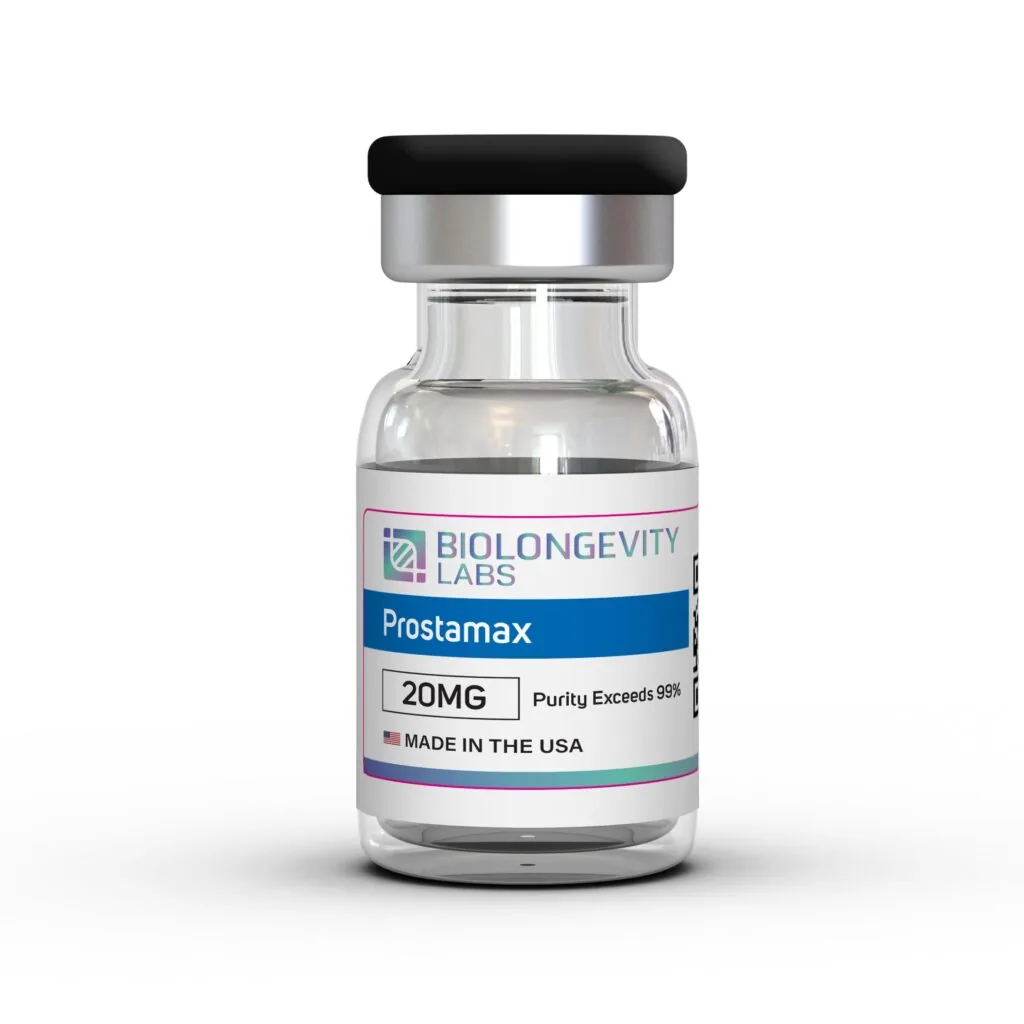
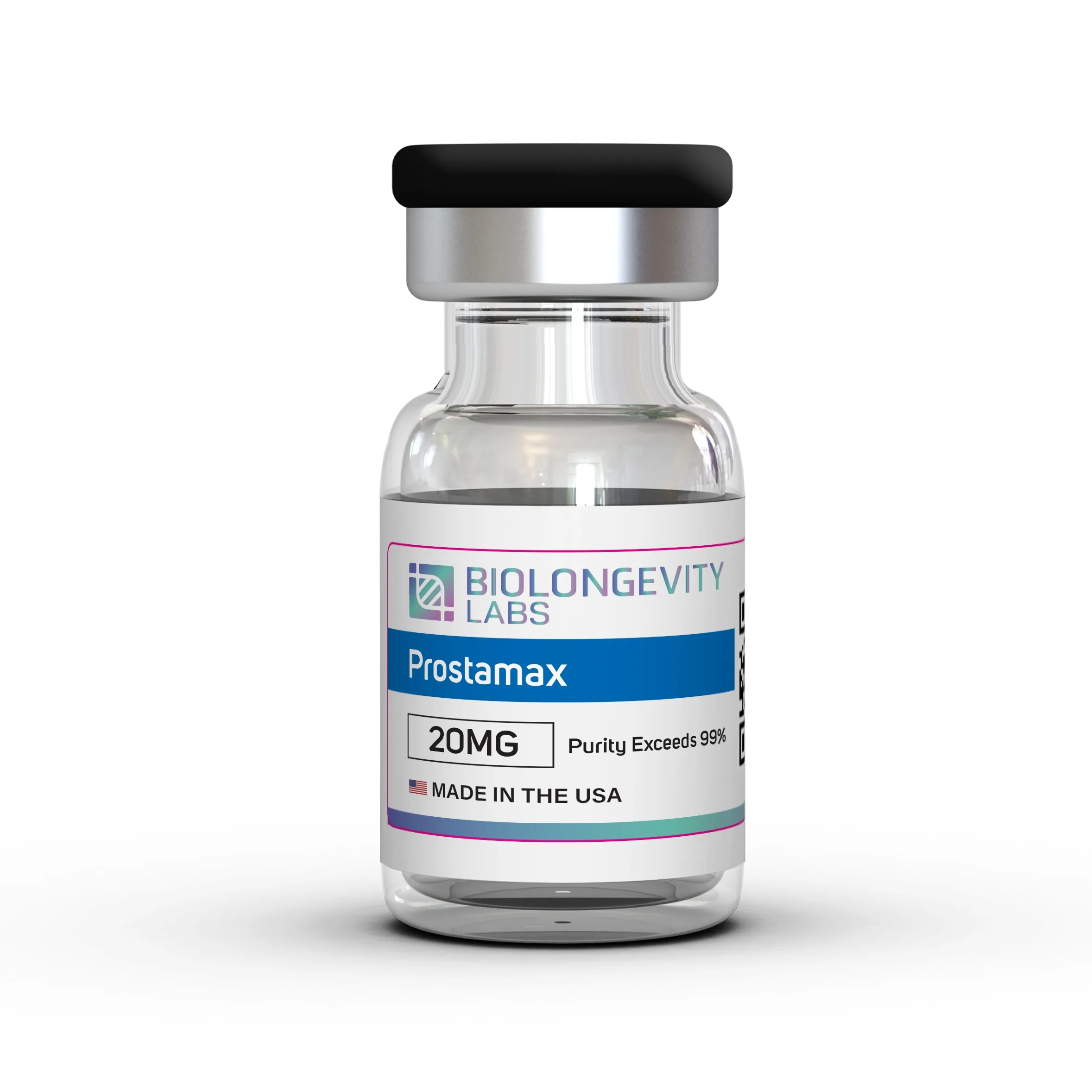
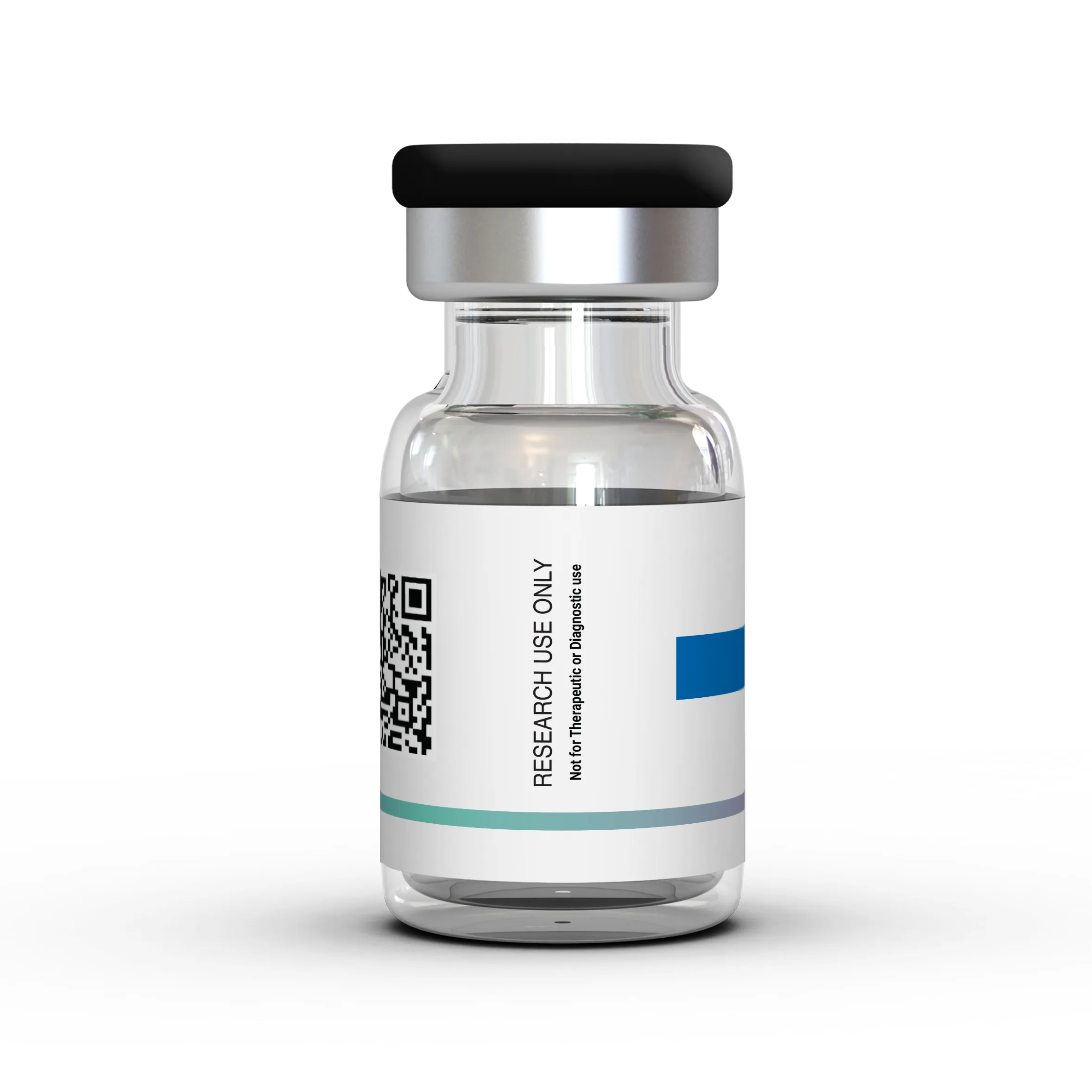
20mg |
Storage and Handling
- Store the lyophilized compound at -20°C, protected from light.
- After reconstitution, store at 2°C to 8°C and use promptly.
- Avoid repeated freeze-thaw cycles of reconstituted material.
- Maintain aseptic handling to preserve compound integrity.
Lyophilized Format
This compound ships in lyophilized (freeze-dried) form. Freeze-drying supports long-term storage stability and preserves compound integrity. No fillers are added.
Research Use Disclaimer
Prostamax 20mg is supplied for research use only. It is not a drug, food, cosmetic, or dietary supplement and has not been evaluated by the FDA. By purchasing, the buyer confirms the compound will be used solely for in vitro research.
Frequently Asked Questions
What Is Prostamax?
Prostamax is a synthetic tetrapeptide bioregulator supplied as 20mg of lyophilized powder per vial. It belongs to the Khavinson family of ultrashort peptides studied in prostate tissue explant and chromatin research models.
What Is the Amino Acid Sequence of Prostamax?
Prostamax has the four-residue sequence H-Lys-Glu-Asp-Pro-OH, commonly abbreviated KEDP. Its molecular formula is C₂₀H₃₃N₅O₉ and its molecular weight is 487.5 g/mol.
How Should Prostamax Be Stored?
Store lyophilized Prostamax at -20°C and protect the vial from light. After reconstitution, hold the solution at 2°C to 8°C, handle it aseptically, and use it promptly.
How Is Prostamax Purity Verified?
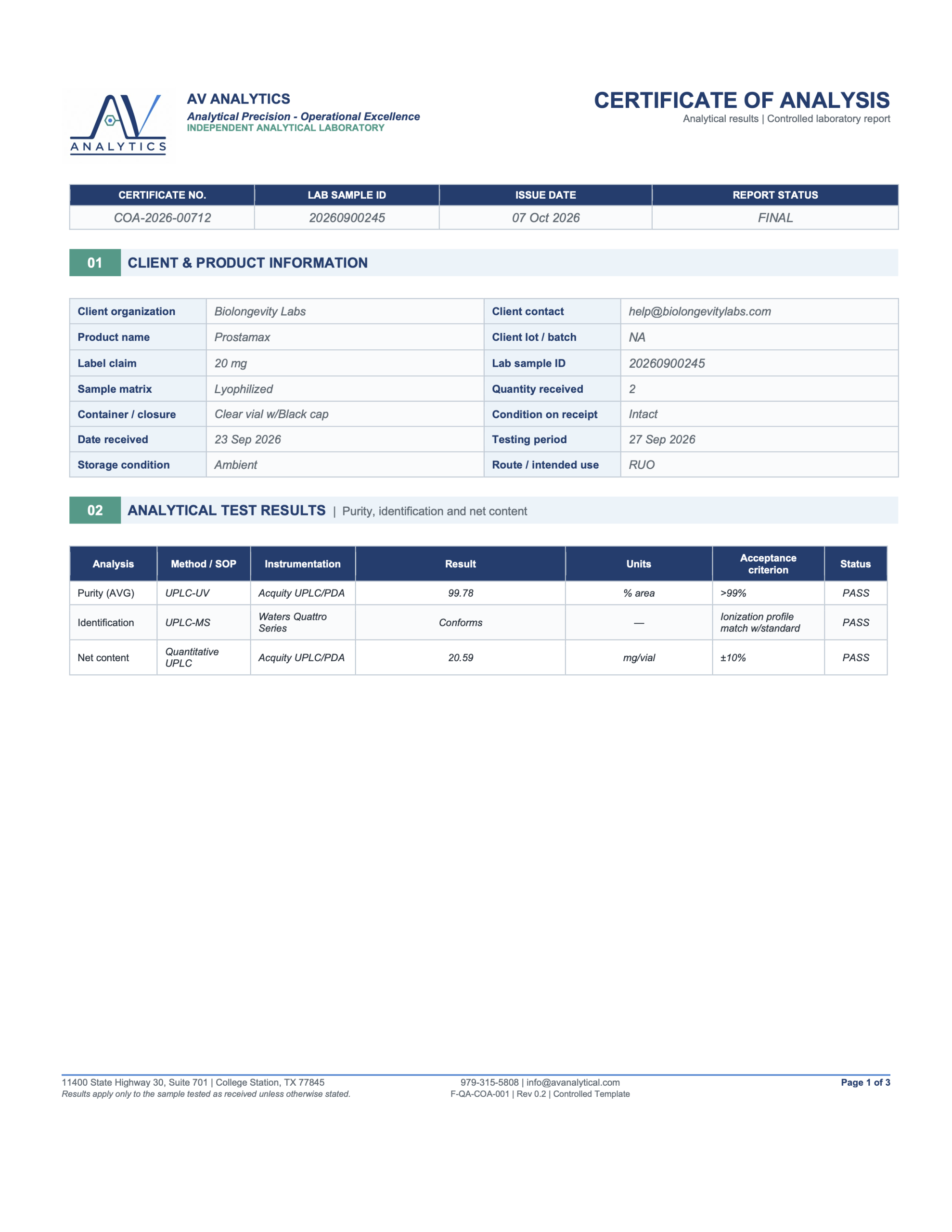
Prostamax purity is verified at ≥99% by HPLC, with identity confirmed by mass spectrometry. Each batch from BioLongevity Labs ships with independent third-party analytical documentation covering purity, mass identification, and physical characterization.
What Research Areas Is Prostamax Studied In?
Prostamax is characterized in laboratory work on prostate tissue explant culture, chromatin structure, nucleic acid interaction, and short-peptide membrane transport. Every application is in vitro or in a non-clinical tissue model.
Prostamax Research Areas
Prostamax carries alternating acidic and basic side chains, and laboratory work on short peptides of this composition has examined direct interaction with double-stranded DNA. Duplex melting-temperature measurements placed KEDP among the short sequences that shift the thermal stability of the double helix, with docking models describing glutamic acid binding in the major groove and lysine binding along the phosphodiester backbone [1].
Molecular modeling has also addressed how ultrashort peptides reach the intracellular compartment. In a docking analysis covering 26 biologically active ultrashort peptides, KEDP was among the sequences scoring highest at the ligand-binding sites of the LAT1, LAT2, and PEPT1 transporters, and the authors noted that acidic residues at the N-terminus tracked with the strongest binding scores [2]. A systematic review of peptide regulation of gene expression describes short peptides of two to seven residues reaching nuclei and nucleoli and interacting with nucleosomes, histone proteins, and both single- and double-stranded DNA [3].
Tissue-model work with Prostamax has used organotypic explant culture. In one comparison, Prostamax was applied to prostate explants from young and aged rats alongside tissue-matched peptides, with explant outgrowth scored against unexposed control explants at a peptide concentration of 0.05 ng/ml [4].
The chromatin literature groups Prostamax with other short peptide bioregulators. In cultured lymphocyte preparations from aged study populations, Prostamax was among the peptides associated with changes in ribosomal gene activity and with decondensation of densely packed chromatin fibrils [5]. A later analysis of KEDP in the same model system reported shifts in sister chromatid exchange frequency, in silver-positive nucleolar organizer region counts, and in pericentromeric heterochromatin variability on chromosomes 1 and 9 [6].
A separate line of work approached the same question with calorimetry rather than cytogenetics.
Calorimetric Work On Chromatin Structure
Differential scanning calorimetry has been used to track how the peptide alters the thermal denaturation profile of chromatin in situ. Reported measurements described a redistribution of heat between endotherms and small downward shifts in denaturation temperature, interpreted by the authors as partial relaxation of the 30-nm fiber into the 10-nm filament [7]. A related microcalorimetric study examined Prostamax alongside Cu(II) and Cd(II) ions in the same culture system, separating metal-driven condensation from peptide-driven structural change [8].
| Research Area |
In Vitro Application |
| Prostate tissue models |
Organotypic explant culture scored against control explants |
| Chromatin structure |
Differential scanning calorimetry of chromatin denaturation profiles |
| Cytogenetics |
Scoring of nucleolar organizer regions and pericentromeric heterochromatin |
| Peptide transport |
Molecular docking at LAT1, LAT2, and PEPT1 binding sites |
| Nucleic acid interaction |
DNA duplex melting-temperature measurement and binding models |
References
- Solovyev AY, Tarnovskaya SI, Chernova IA, Shataeva LK, Skorik YA. (2015). The interaction of amino acids, peptides, and proteins with DNA. International Journal of Biological Macromolecules. https://doi.org/10.1016/j.ijbiomac.2015.03.054
- Khavinson VK, Linkova NS, Rudskoy AI, Petukhov MG. (2023). Feasibility of Transport of 26 Biologically Active Ultrashort Peptides via LAT and PEPT Family Transporters. Biomolecules. https://pmc.ncbi.nlm.nih.gov/articles/PMC10046148/
- Khavinson VK, Popovich IG, Linkova NS, Mironova ES, Ilina AR. (2021). Peptide Regulation of Gene Expression: A Systematic Review. Molecules. https://pmc.ncbi.nlm.nih.gov/articles/PMC8619776/
- Zakutskii AN, Chalisova NI, Ryzhak GA, Aniskina AI, Filippov SV, Zeziulin PN. (2006). [The tissue-specific effect of synthetic peptides-biologic regulators in organotypic tissues culture in young and old rats]. Advances in Gerontology. https://pubmed.ncbi.nlm.nih.gov/17152728/
- Khavinson VKh, Lezhava TA, Malinin VV. (2004). Effects of short peptides on lymphocyte chromatin in senile subjects. Bulletin of Experimental Biology and Medicine. https://doi.org/10.1023/B:BEBM.0000024393.40560.05
- Dzhokhadze TA, Buadze TZh, Gaiozishvili MN, Baratashvili NA, Lezhava TA. (2012). [Deheterochromatinization of the chromatin in old age induced by oligopeptide bioregulator (Lys-Glu-Asp-Pro)]. Georgian Medical News. https://pubmed.ncbi.nlm.nih.gov/23221144/
- Meskhi T, Khachidze D, Barbakadze Sh, Madzhagaladze G, Gorgoshidze M, Monaselidze D, Lezhava T, Tadumadze N. (2004). [The influence of the peptide bioregulator prostamax on heterochromatin of human lymphocytes in situ]. Biofizika. https://pubmed.ncbi.nlm.nih.gov/15612551/
- Kiladze M, Gorgoshidze M, Monaselidze J, Jokhadze T, Lezhava T. (2009). Microcalorimetric study of human blood lymphocytes culture at presence of copper, cadmium and prostamax. Georgian Medical News. https://pubmed.ncbi.nlm.nih.gov/19359734/
Certificate of Analysis (COA) for Every Batch
A Certificate of Analysis (COA) is a document that verifies a compound’s identity, purity, and batch quality through independent laboratory testing. Every compound from BioLongevity Labs ships with a COA tied to its specific batch, so researchers can confirm exactly what they received before it enters a protocol.
Each COA reports results from third-party laboratory analysis, including:
- Ultra-high-performance liquid chromatography with mass spectrometry (UHPLC-MS) for purity, typically confirmed at 99% or higher
- Mass identification for molecular confirmation and content quantitation
- Endotoxin quantitation by Limulus amebocyte lysate (LAL) assay where applicable
- Visual and physical characterization of the finished material
How to verify a COA independently
Every certificate can be checked against the issuing laboratory’s own records, not just the copy hosted here. Verification does not depend on BioLongevity Labs.
- MDx BioAnalytical Laboratory certificates carry a QC tracking number and a search code. Newer certificates also carry a QR code. Scan the code, or enter the search code at mdxbiolabs.com, to pull the official record.
- BioRegen reports of analysis carry a Report ID and a Validation Key. Scan the QR code on the certificate to open the official record, or reference both identifiers when contacting the laboratory at the address printed on the report.
- SafeCert Labs certificates, which appear on a number of earlier batches, carry a COA number and the signature of the reporting chemist. Reference that number when requesting confirmation from the laboratory directly.
Batches are frequently tested by both laboratories independently. When two certificates exist for the same lot, each one resolves at its own issuing laboratory, which lets a researcher confirm the same material twice through two unrelated sources.
COAs are sourced from independent certified labs rather than in-house testing alone, giving researchers a verifiable record of molecular integrity for each batch. All compounds are supplied for research use only.
Review the COAs for this batch below, or browse the full COA library.
Prostamax (20 mg) (11236)

PROSTAMAX (251439)

×