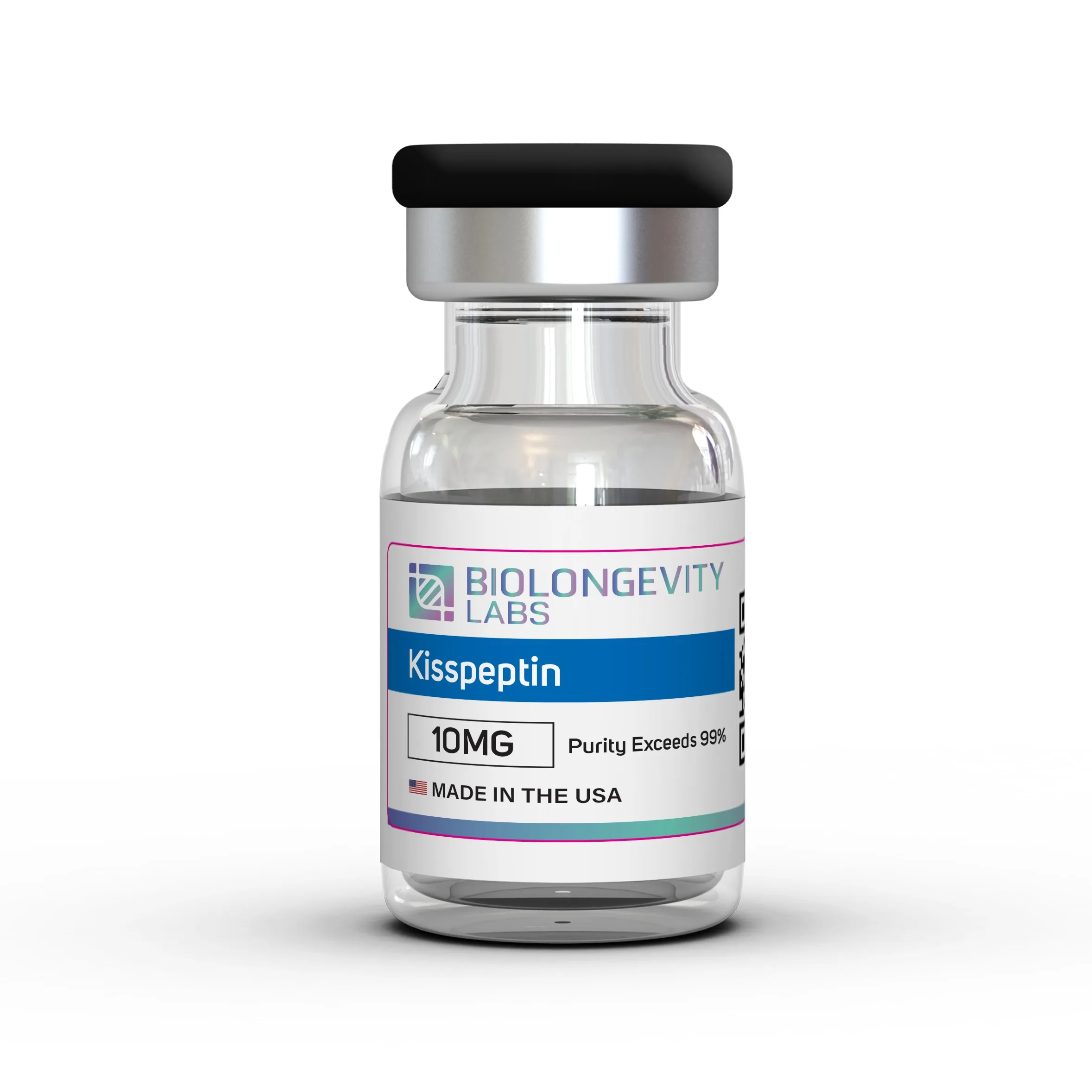
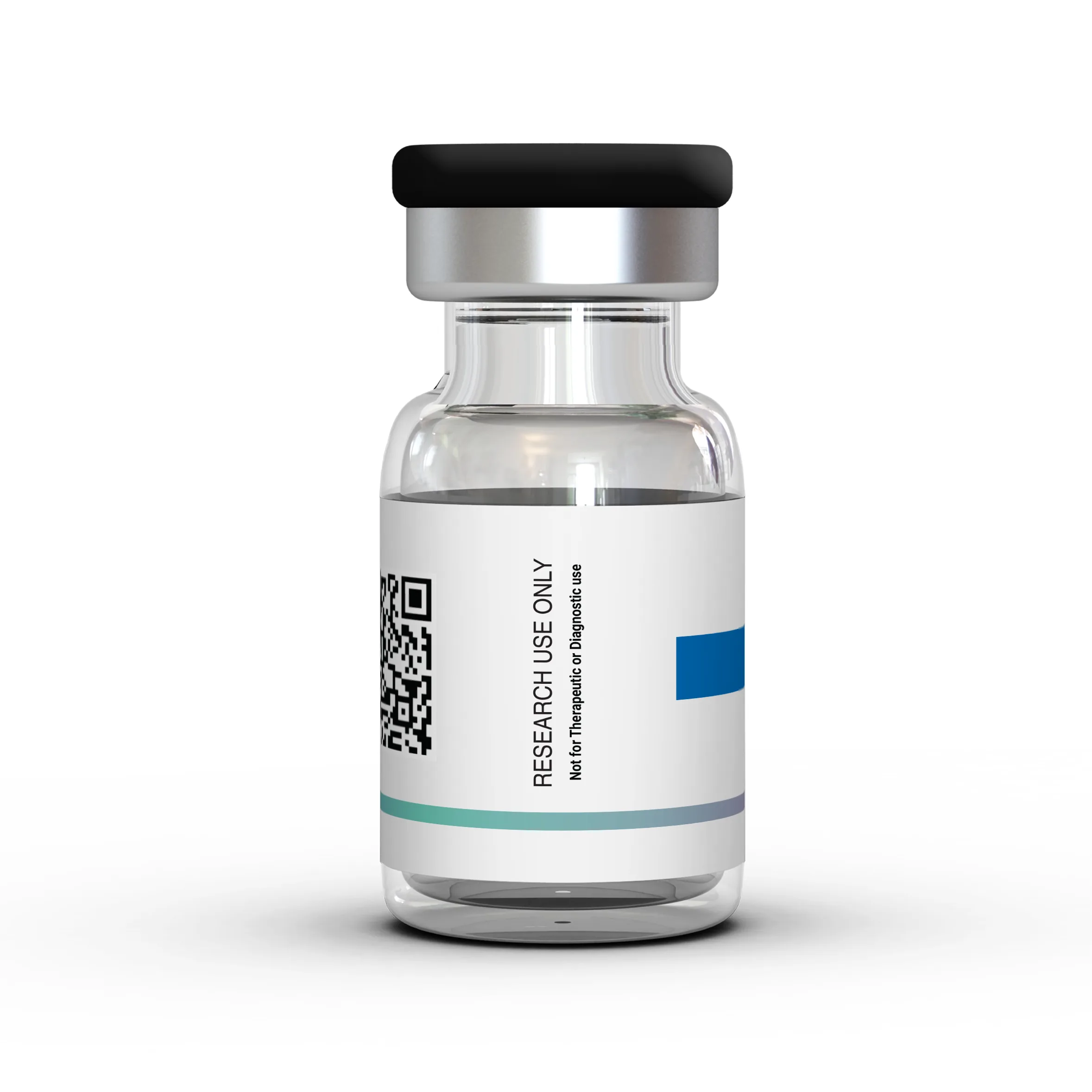
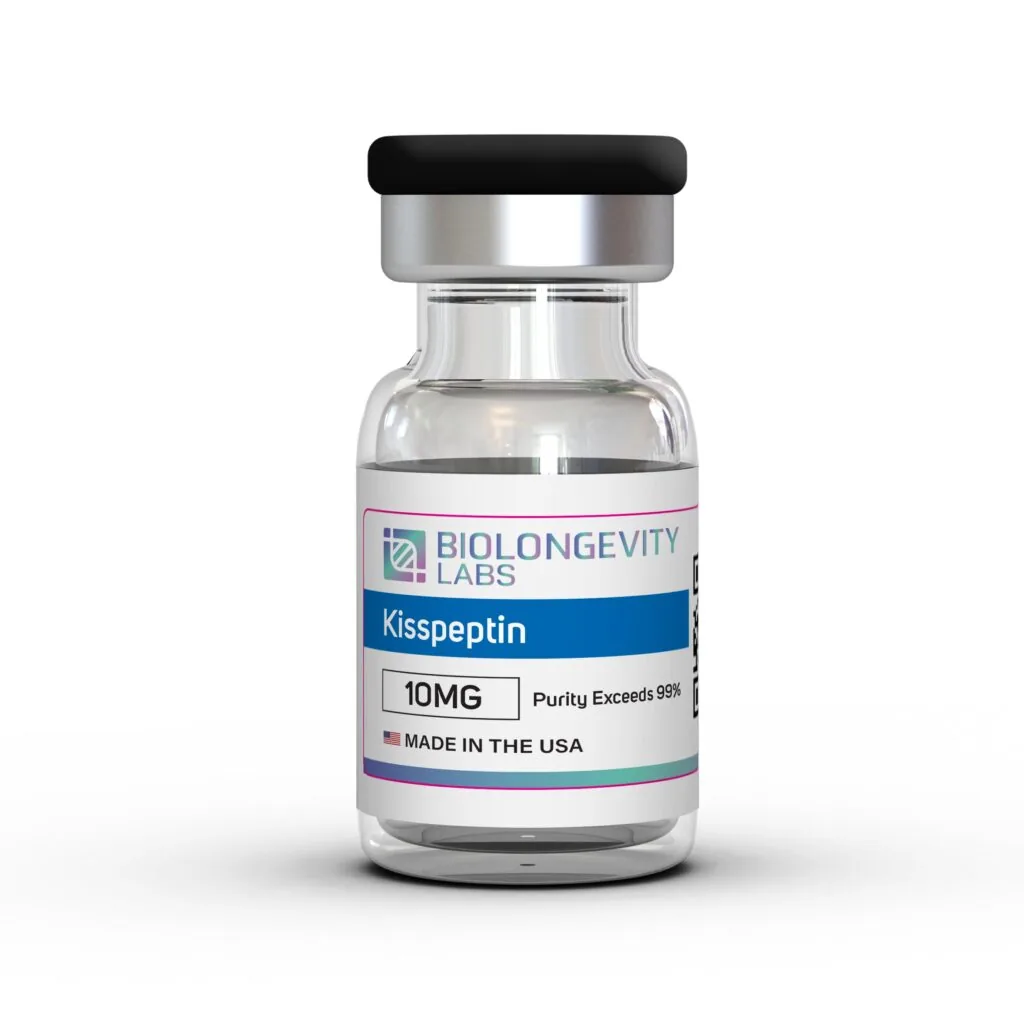
Kisspeptin-10 is a synthetic decapeptide (YNWNSFGLRF-NH₂) that matches the C-terminal 45–54 region of the KISS1 gene product, produced through controlled peptide synthesis. BioLongevity Labs supplies it as a lyophilized white powder in a 10mg vial, with no fillers added. Also known as KP-10 or metastin (45-54), the compound is characterized in laboratory research on GPR54 (KISS1R) receptor signaling, cell migration assays, and GnRH neuron research models.
≥99% Purity
Third-Party Tested
COA Available
U.S. Manufactured
Quantity
In stock
Third-Party Verified Quality
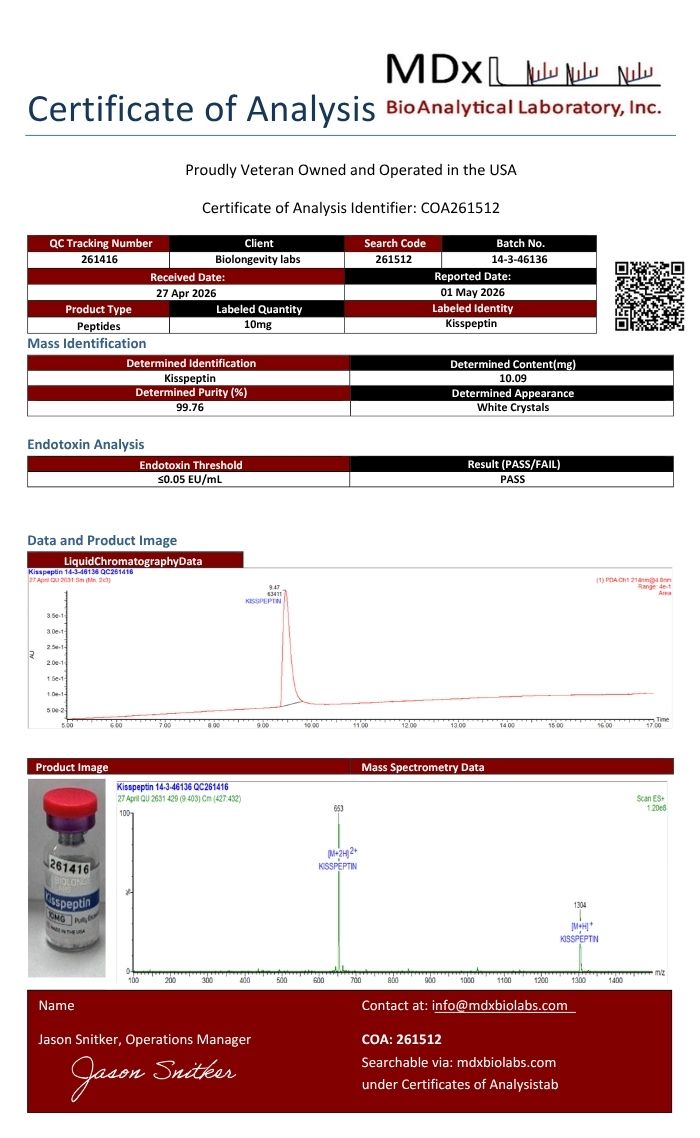
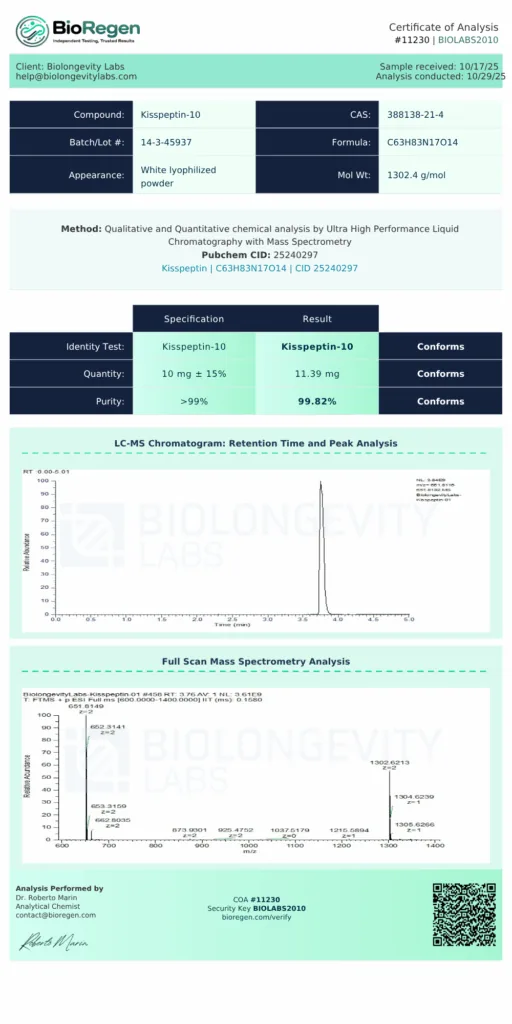
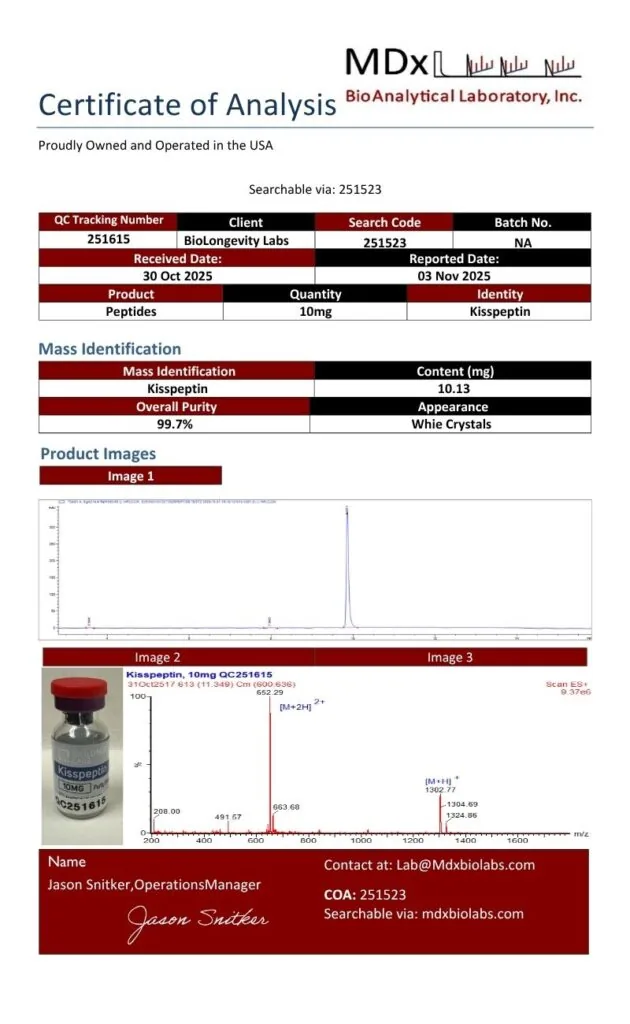
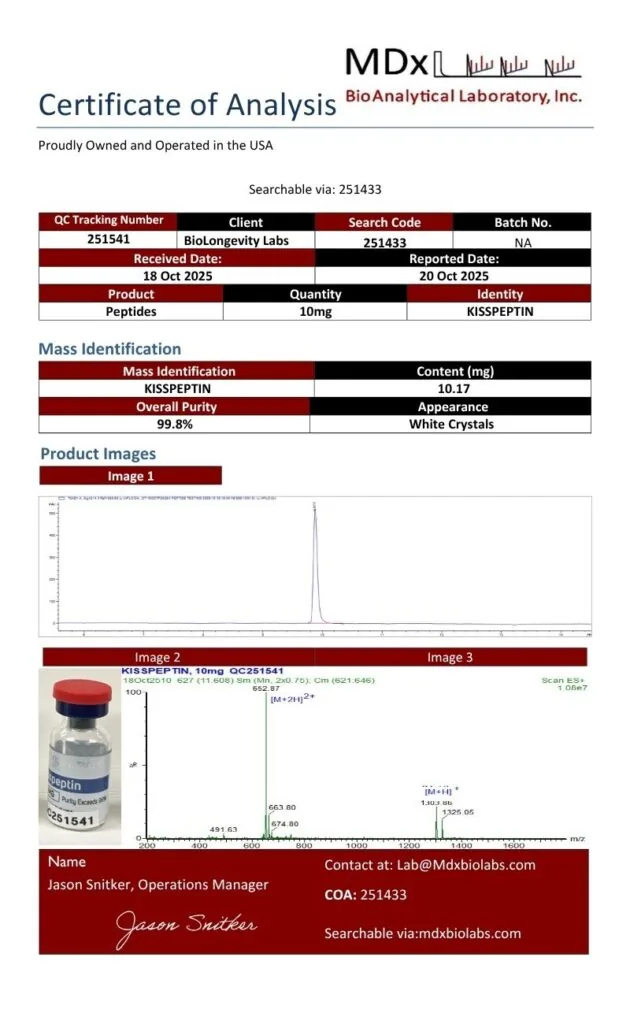
≥99% purity verified through independent UHPLC-MS testing. Certificates of Analysis are available before purchase.
COAs available before purchase
U.S.-manufactured research-grade
Same-business-day U.S. dispatch for in-stock orders placed before 12 PM PT
Secure Checkout · Free shipping on orders over $400
Kisspeptin-10 belongs to the kisspeptin family, a group of RF-amide peptides cleaved from a 145-residue precursor encoded by the KISS1 gene. The longer forms, kisspeptin-54, -14 and -13, all end in the same ten residues.
That shared C-terminal sequence carries the receptor activity. As the shortest active fragment, the KP-10 peptide is widely used in receptor pharmacology, where its small size keeps synthesis, LC-MS identity checks and concentration-response work simple.
The sequence ends in an amidated phenylalanine, part of the RF-amide motif. This amide is reflected in the molecular formula C₆₃H₈₃N₁₇O₁₄ and a molecular weight of 1302.4 g/mol.
Store the lyophilized compound at -20°C, protected from light and moisture.
After reconstitution, store at 2–8°C and use promptly.
Maintain aseptic handling to preserve compound integrity.
Lyophilized Format
This compound ships in lyophilized (freeze-dried) form. Freeze-drying supports long-term storage stability and preserves compound integrity. No fillers are added.
Research Use Disclaimer
Kisspeptin-10 is supplied for research use only. It is not a drug, food, cosmetic, or dietary supplement and has not been evaluated by the FDA. By purchasing, the buyer confirms the compound will be used solely for in vitro research.
Frequently Asked Questions
What Is Kisspeptin-10?
Kisspeptin-10 is a synthetic ten-residue peptide that matches the C-terminal end of the kisspeptin family. It is studied in laboratory research as an agonist of the GPR54 receptor, also called KISS1R.
What Is the Amino Acid Sequence of Kisspeptin-10?
The Kisspeptin-10 sequence is Tyr-Asn-Trp-Asn-Ser-Phe-Gly-Leu-Arg-Phe-NH₂, written YNWNSFGLRF-NH₂ in one-letter code. The C-terminal phenylalanine is amidated.
What Is the CAS Number and Molecular Weight of Kisspeptin-10?
Kisspeptin-10 has the CAS number 374675-21-5 and PubChem CID 25240297. Its molecular formula is C₆₃H₈₃N₁₇O₁₄, with a molecular weight of 1302.4 g/mol.
How Should Kisspeptin-10 Be Stored?
Lyophilized Kisspeptin-10 is stored at -20°C and protected from light. Once reconstituted, it is kept at 2–8°C and used promptly.
How Is Kisspeptin-10 Purity Verified?
Kisspeptin-10 from BioLongevity Labs is tested by an independent third-party laboratory to a ≥99% purity specification. The Certificates of Analysis are published online so researchers can review them before ordering.
Research Overview
Kisspeptin-10 corresponds to residues 45–54 of the 54-residue kisspeptin peptide. In 2001, three independent groups identified kisspeptins as the natural ligands of the orphan G protein-coupled receptor GPR54, also catalogued as hOT7T175 and AXOR12 [1][2][3].
In CHO cells expressing GPR54, kisspeptins bound with low nanomolar affinity and stimulated PIP₂ hydrolysis, calcium mobilization, arachidonic acid release, and ERK1/2 and p38 MAP kinase phosphorylation [1]. The truncated fragment metastin (45-54) reduced the migration of receptor-transfected CHO cells to the same degree as the full-length peptide [4].
In mouse brain-slice preparations, kisspeptin at 10–100 nM produced a long-lasting depolarization in more than 90% of adult GnRH neurons. A smaller share of GnRH neurons responded in juvenile animals [5].
Later work moved from receptor identification to the downstream pathways that Kisspeptin-10 engages in specific cell types.
Cell Migration and Kinase Signaling
In the HTR8SVneo trophoblast-derived cell line, Kisspeptin-10 reduced cell migration, with maximal inhibition at 100 nM. The response ran through an ERK1/2, p90rsk, GSK3β and FAK feedback loop involving EGF receptor transactivation [6].
In primary first-trimester trophoblast cultures, KP-10 raised intracellular calcium and reduced migration without changing proliferation [7].
Fibroblast and Neuronal Cell Models
In cardiac fibroblast cultures, Kisspeptin-10 increased intracellular collagen and FAK phosphorylation, lowered MMP release, and raised TIMP secretion. Blocking FAK removed the collagen response [8].
In cholinergic SH-SY5Y cells, low KP-10 concentrations (0.01–1 µM) reduced α-synuclein-associated toxicity, while 10 µM lowered cell viability [9].
Research Area
In Vitro Application
Receptor pharmacology
GPR54 (KISS1R) binding and calcium mobilization assays in transfected cell lines
Cell motility
Chemotaxis and transwell migration assays
Kinase signaling
ERK1/2, p38 MAPK, GSK3β and FAK phosphorylation profiling
Neuroendocrine electrophysiology
GnRH neuron excitability recordings in brain-slice preparations
Extracellular matrix
Collagen and MMP/TIMP measurement in fibroblast cultures
Analytical reference
LC-MS identity confirmation against a monoisotopic mass of 1301.63 Da
References
Kotani M, et al. (2001). The metastasis suppressor gene KiSS-1 encodes kisspeptins, the natural ligands of the orphan G protein-coupled receptor GPR54. Journal of Biological Chemistry. https://doi.org/10.1074/jbc.M104847200
Ohtaki T, et al. (2001). Metastasis suppressor gene KiSS-1 encodes peptide ligand of a G-protein-coupled receptor. Nature. https://doi.org/10.1038/35079135
Muir AI, et al. (2001). AXOR12, a novel human G protein-coupled receptor, activated by the peptide KiSS-1. Journal of Biological Chemistry. https://doi.org/10.1074/jbc.M102743200
Hori A, et al. (2001). Metastin suppresses the motility and growth of CHO cells transfected with its receptor. Biochemical and Biophysical Research Communications. https://doi.org/10.1006/bbrc.2001.5470
Han SK, et al. (2005). Activation of gonadotropin-releasing hormone neurons by kisspeptin as a neuroendocrine switch for the onset of puberty. Journal of Neuroscience. https://pmc.ncbi.nlm.nih.gov/articles/PMC6725899/
Roseweir AK, Katz AA, Millar RP (2012). Kisspeptin-10 inhibits cell migration in vitro via a receptor-GSK3 beta-FAK feedback loop in HTR8SVneo cells. Placenta. https://doi.org/10.1016/j.placenta.2012.02.001
Bilban M, et al. (2004). Kisspeptin-10, a KiSS-1/metastin-derived decapeptide, is a physiological invasion inhibitor of primary human trophoblasts. Journal of Cell Science. https://doi.org/10.1242/jcs.00971
Simon C, et al. (2022). Kisspeptin-10 Rescues Cholinergic Differentiated SHSY-5Y Cells from α-Synuclein-Induced Toxicity In Vitro. International Journal of Molecular Sciences. https://pmc.ncbi.nlm.nih.gov/articles/PMC9105316/
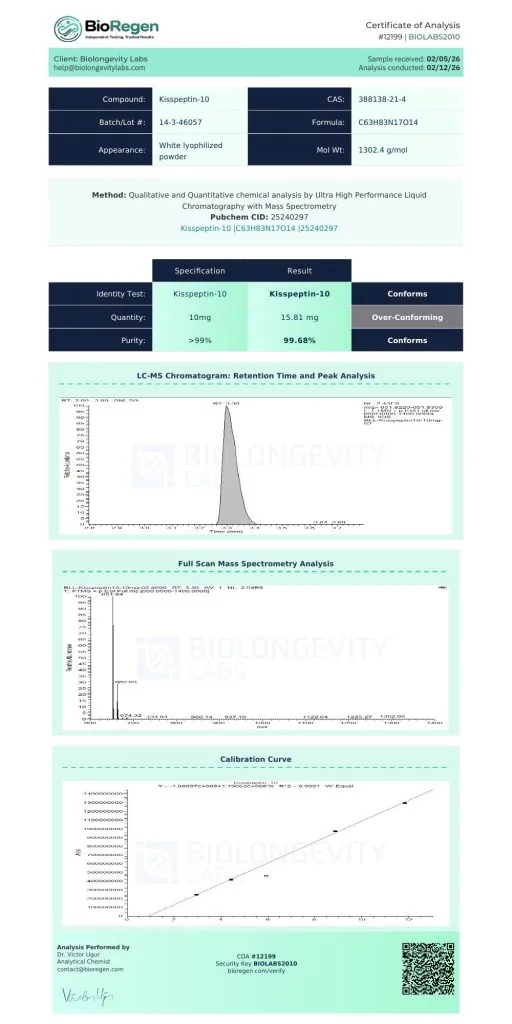
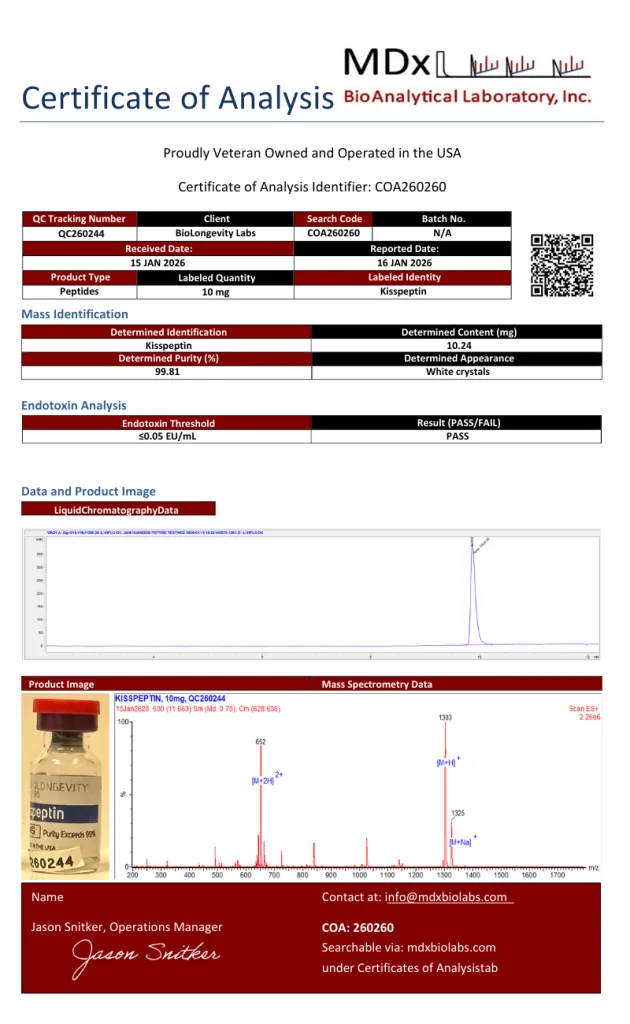
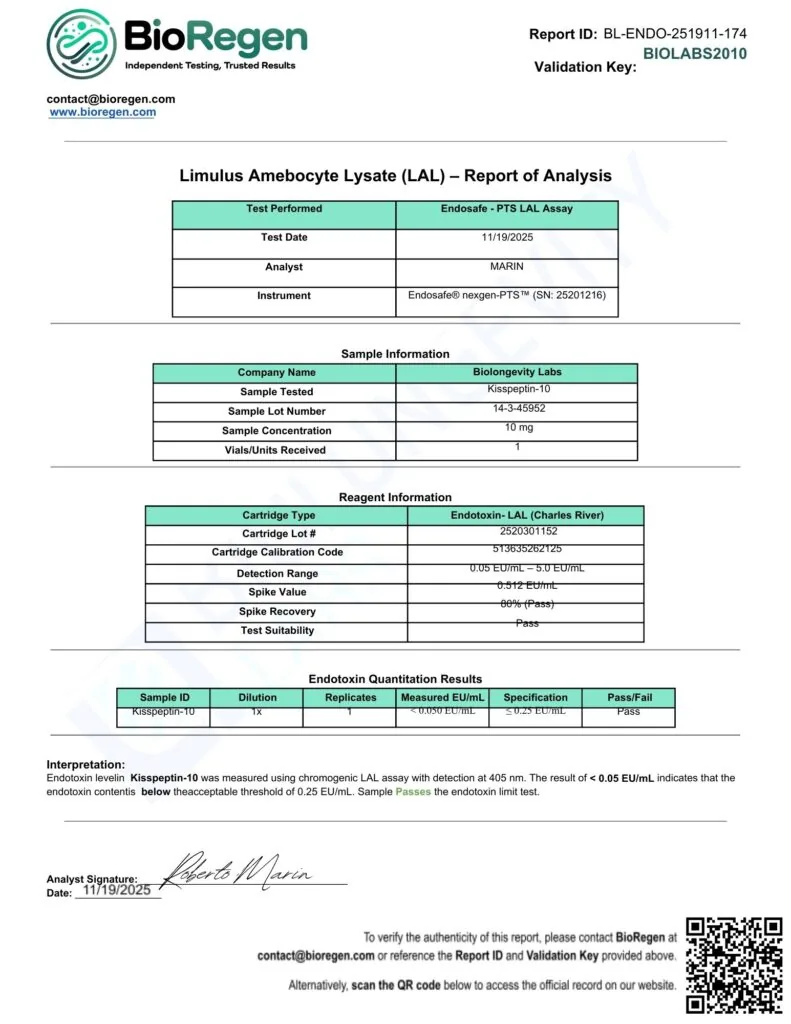
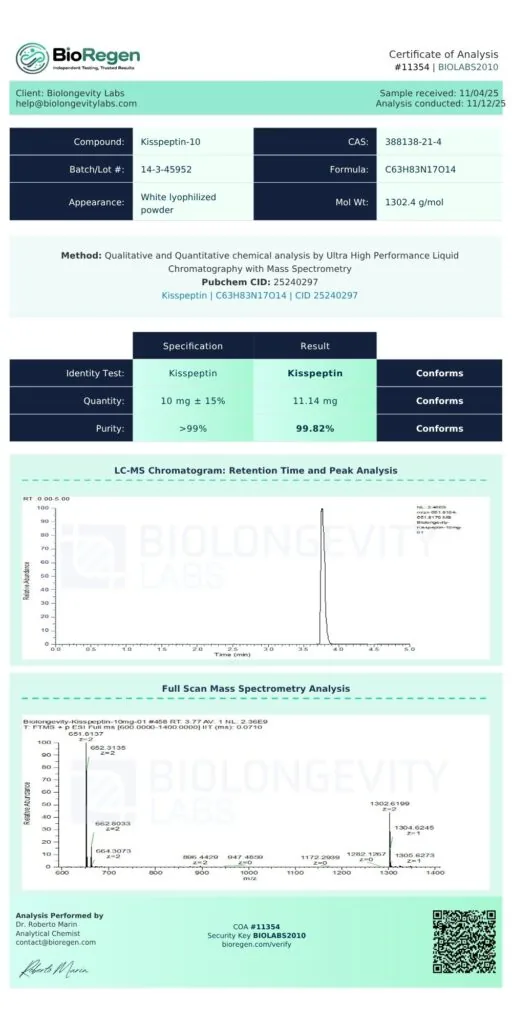
A Certificate of Analysis (COA) is a document that verifies a compound’s identity, purity and quality through independent laboratory testing. Every compound from BioLongevity Labs is third-party tested, and its COA is published here, so researchers can review the testing record before a compound enters a protocol.
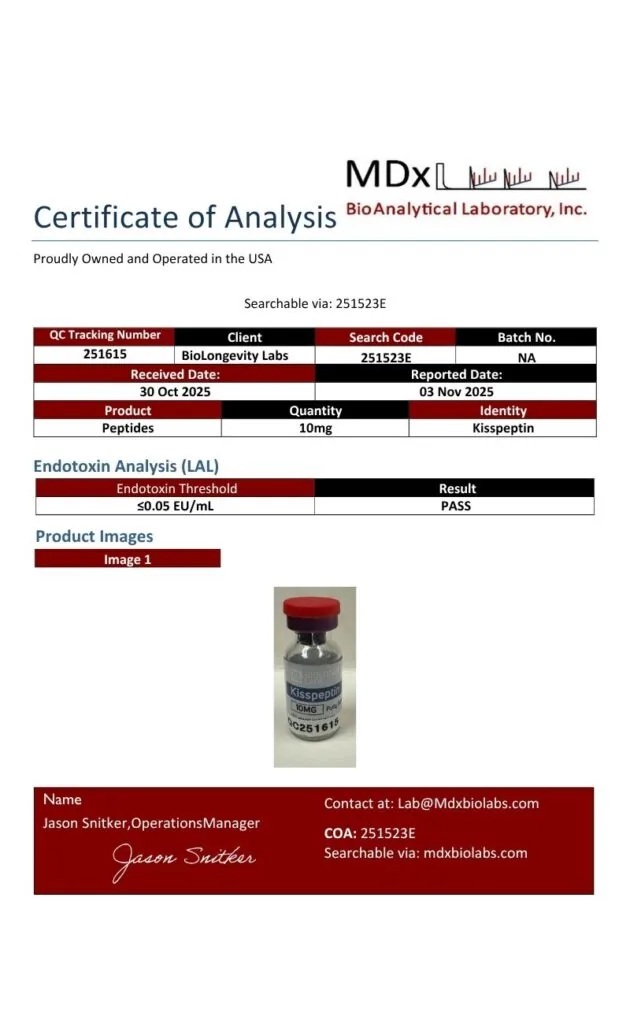
Each COA reports results from third-party laboratory analysis, including:
Ultra-high-performance liquid chromatography with mass spectrometry (UHPLC-MS) for purity, measured against a 98% or 99% specification depending on the compound
Mass identification for molecular confirmation and content quantitation
Endotoxin testing by Limulus amebocyte lysate (LAL) or recombinant Factor C (rFC) assay, depending on the laboratory
Visual and physical characterization of the finished material
How to Verify a COA Independently
You can check every certificate against the issuing laboratory’s own records, not just the copy hosted here. Verification does not depend on BioLongevity Labs.
AV Analytics certificates carry a search code. Scan the QR code on the certificate to open the laboratory’s verification page, or enter the search code at avanalytical.com/coa-search to pull the official record.
BioRegen reports of analysis carry a Report ID and a Validation Key. Scan the QR code on the certificate to open the official record, or quote both identifiers when you contact the laboratory at the address printed on the report.
SafeCert Labs issued a number of earlier certificates. Each one carries a COA number and the signature of the reporting chemist. Quote that number when you ask the laboratory to confirm it.
Older certificates from other laboratories list their own verification details on the document.
When a batch is sent to more than one laboratory, each certificate resolves at its own issuing laboratory. A researcher can then check the results against two unrelated sources.
These COAs come from independent certified laboratories, not in-house testing. That gives researchers a verifiable record of molecular integrity for each compound. All compounds are supplied for research use only.
Scientifically reviewed by Dr. Ky H. Le, MD. Dr. Le is a board-certified family medicine physician with over 20 years of clinical experience. Dr. Le validates the scientific accuracy of all technical content and research citations.
Disclaimer: For Research Purposes Only
This content is provided strictly for research purposes and does not constitute an endorsement or recommendation for the non-laboratory application or improper handling of peptides designed for research. The information, including discussions about specific peptides and their researched benefits, is presented for informational purposes only and must not be construed as health, clinical, or legal guidance, nor an encouragement for non-research use. Peptides described here are solely for use in structured scientific study by authorized individuals. We advise consulting with research experts, medical practitioners, or legal counsel prior to any decisions about obtaining or utilizing these peptides. The expectation of responsible, ethical utilization of this information for legitimate investigative and scholarly objectives is paramount. This notice is dynamic and governs all provided content on research peptides.