Original price was: $79.97.$79.97Current price is: $79.97.$47.98
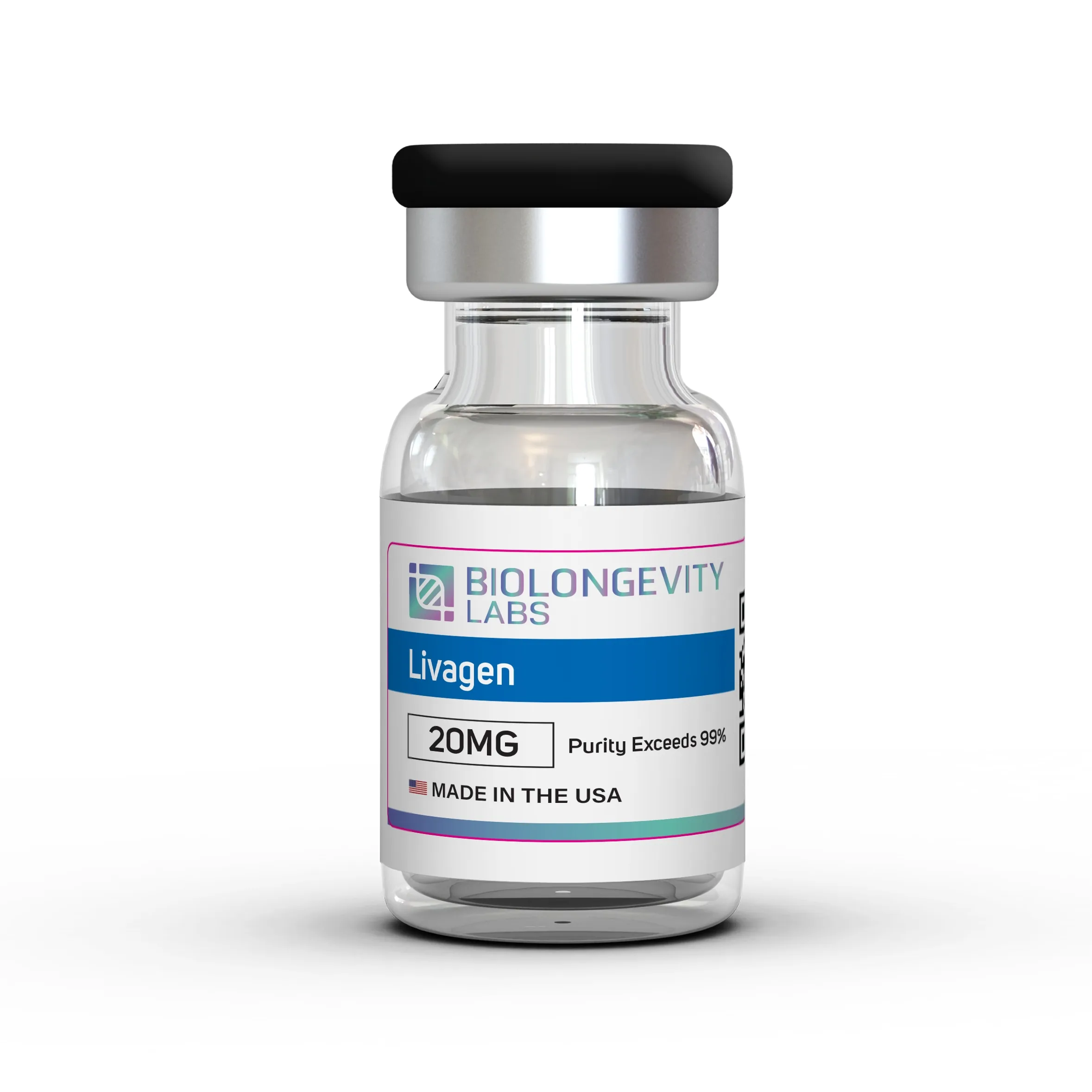
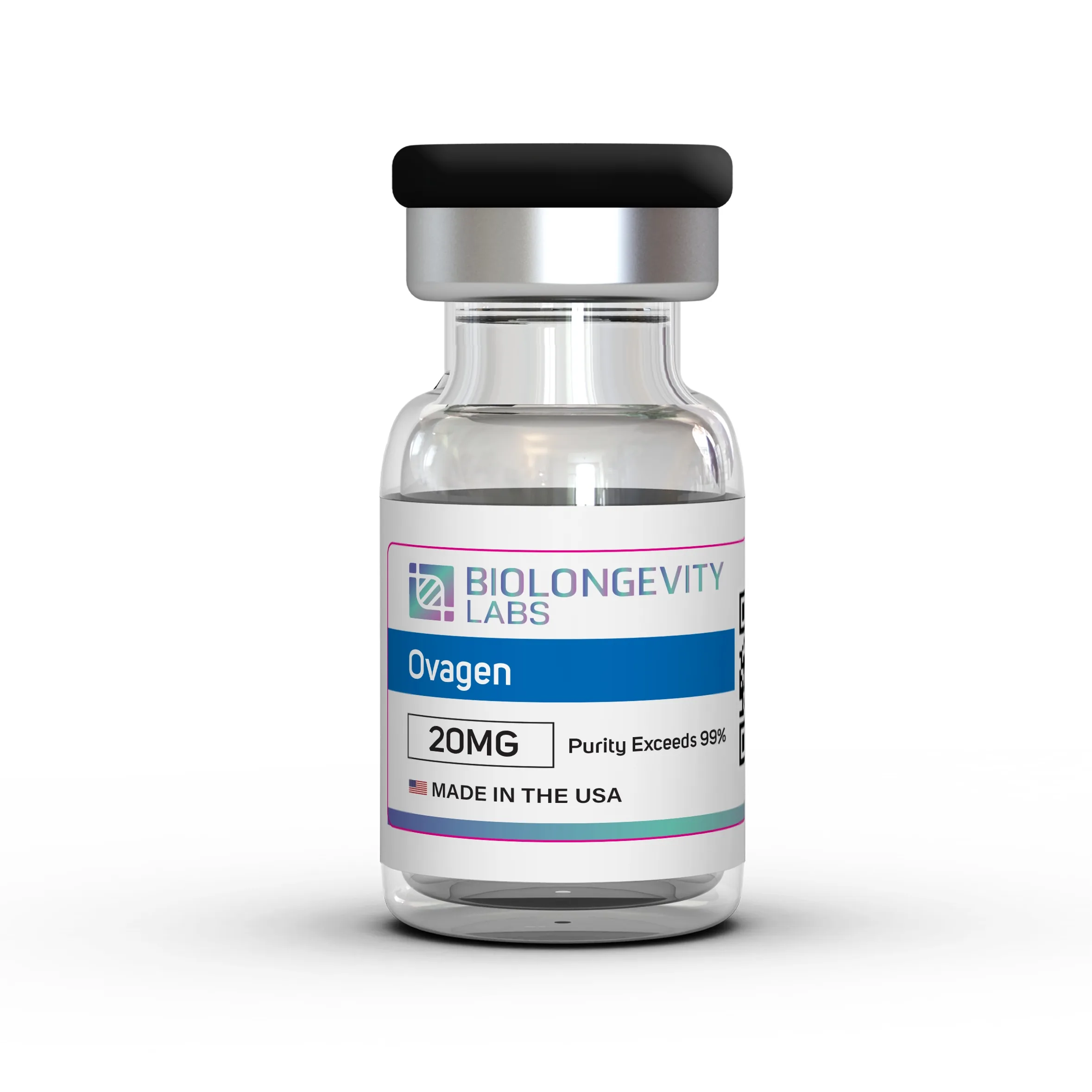
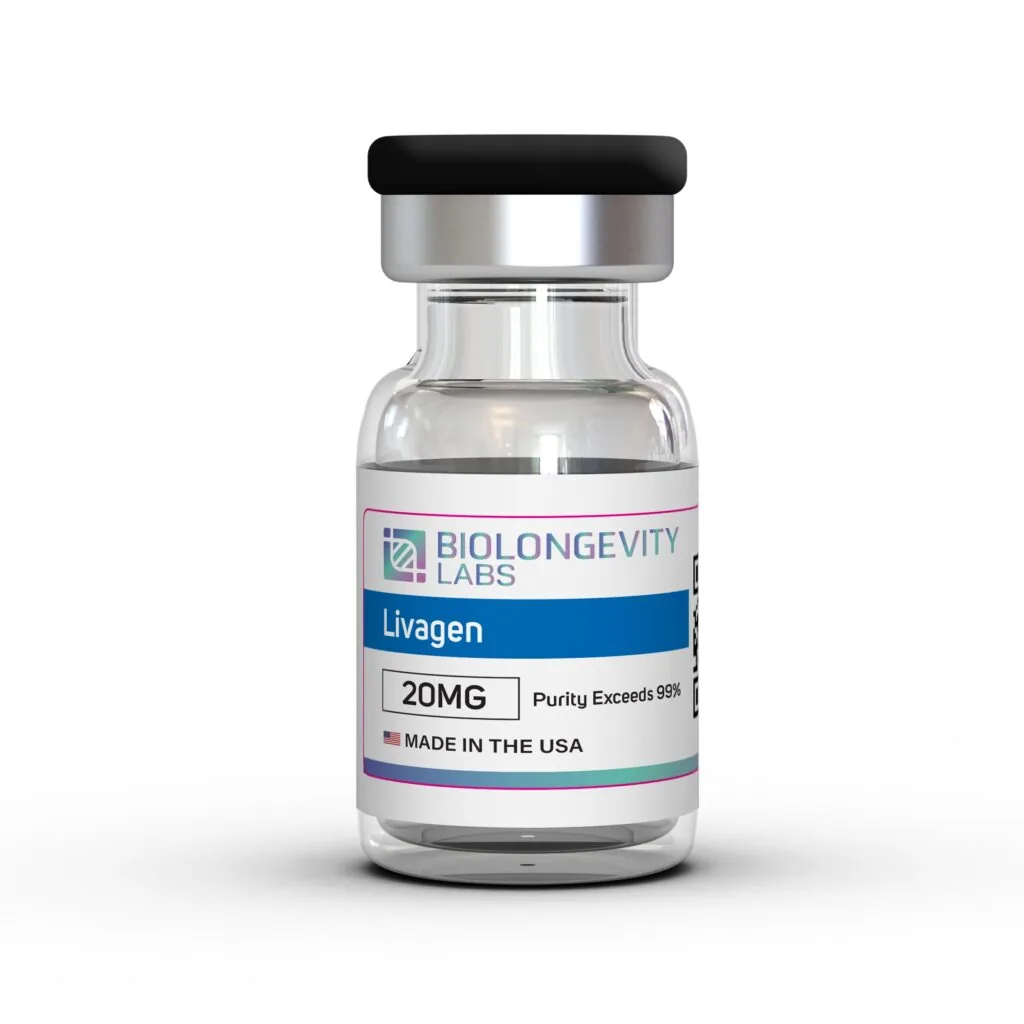
Livagen peptide is a synthetic tetrapeptide bioregulator with the sequence Lys-Glu-Asp-Ala (KEDA), produced through controlled peptide synthesis. BioLongevity Labs supplies it as a 20mg lyophilized powder in a sealed vial for stable storage and handling. Its sequence was designed from amino acid analysis of liver polypeptide preparations. Livagen is characterized in laboratory research on chromatin structure, ribosomal gene activity and protein synthesis in hepatocyte cultures.
≥99% Purity
Third-Party Tested
COA Available
U.S. Manufactured
Quantity
In stock
Third-Party Verified Quality
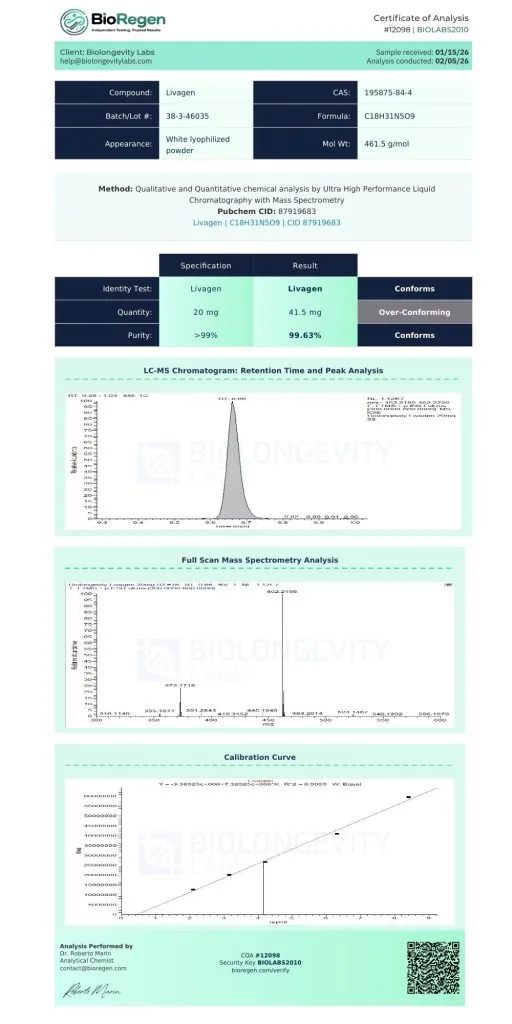
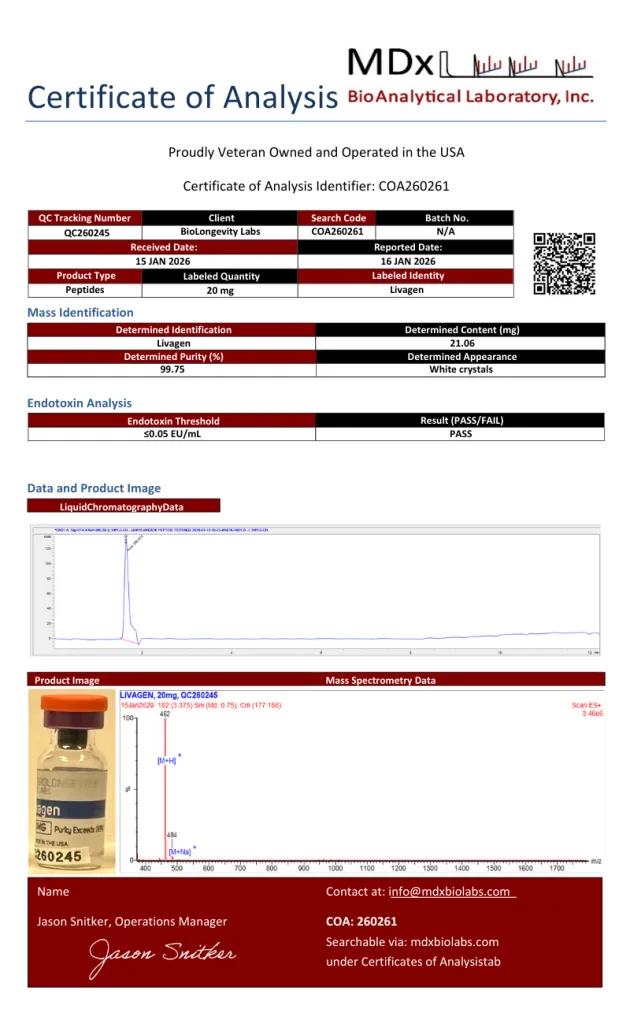
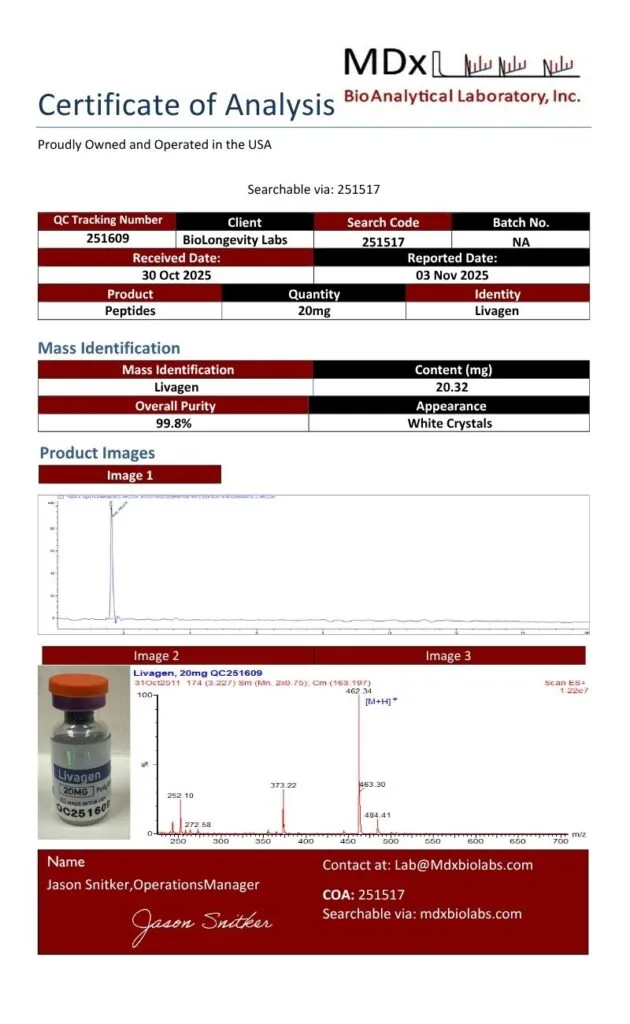
≥99% purity verified through independent UHPLC-MS testing. Certificates of Analysis are available before purchase.
COAs available before purchase
U.S.-manufactured research-grade
Same-business-day U.S. dispatch for in-stock orders placed before 12 PM PT
Secure Checkout · Free shipping on orders over $400
Livagen belongs to the family of short peptide bioregulators developed by Vladimir Khavinson’s group at the St. Petersburg Institute of Bioregulation and Gerontology. Its four residues combine a basic lysine, two acidic residues (glutamic and aspartic acid) and a C-terminal alanine.
The KEDA bioregulator shares its Glu-Asp core with Epitalon (Ala-Glu-Asp-Gly). Research groups have often run the two peptides side by side in chromatin and enzyme studies.
Livagen is studied in cultured lymphocytes, hepatocyte cultures and organotypic liver explants. Its resistance to intestinal peptidases in vitro also makes it a practical model compound for short peptide stability work.
Compound Specifications
Property
Value
CAS Number
433257-50-2
PubChem CID
87919683
Molecular Formula
C₁₈H₃₁N₅O₉
Molecular Weight
461.5 g/mol
Monoisotopic Mass
461.2122 Da
Synonyms
Livagen, KEDA, Lys-Glu-Asp-Ala, H-Lys-Glu-Asp-Ala-OH, tetrapeptide KEDA
Store the lyophilized compound at -20°C, protected from light.
After reconstitution, store at 2–8°C and use promptly.
Maintain aseptic handling to preserve compound integrity.
Lyophilized Format
This compound ships in lyophilized (freeze-dried) form. Freeze-drying supports long-term storage stability and preserves compound integrity. No fillers are added.
Research Use Disclaimer
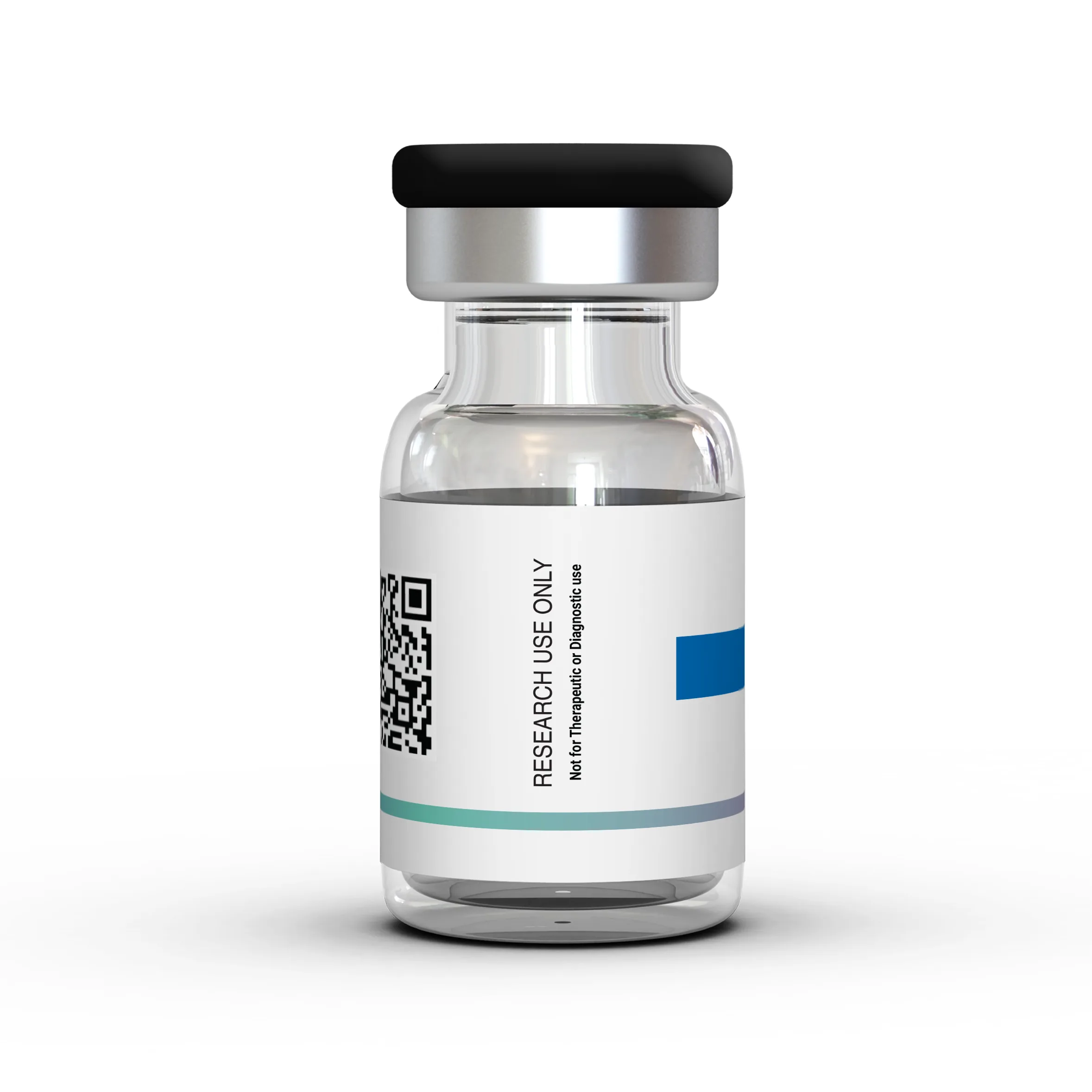
Livagen is supplied for research use only. It is not a drug, food, cosmetic, or dietary supplement and has not been evaluated by the FDA. By purchasing, the buyer confirms the compound will be used solely for in vitro research.
Frequently Asked Questions
What Is Livagen Peptide?
Livagen is a synthetic tetrapeptide bioregulator with the sequence Lys-Glu-Asp-Ala, also written KEDA. It belongs to the Khavinson family of short peptides and is supplied by BioLongevity Labs for research use only.
What Is the CAS Number and Molecular Weight of Livagen?
Livagen is listed under CAS 433257-50-2 and PubChem CID 87919683. Its molecular formula is C18H31N5O9, with a molecular weight of 461.5 g/mol.
What Research Areas Is Livagen Studied In?
Livagen is studied in laboratory research on chromatin condensation, ribosomal gene activity, hepatocyte protein synthesis and enkephalin-degrading enzyme activity. Most published work uses cultured lymphocytes, hepatocyte cultures and rodent tissue explants.
How Should Livagen Be Stored?
Store Livagen lyophilized powder at -20°C, protected from light. After reconstitution, keep the solution at 2–8°C and use it promptly.
How Is Livagen Purity Verified?
Livagen is tested by an independent third-party laboratory against a ≥99% purity specification by HPLC. The Certificate of Analysis is published online, so researchers can review it before ordering.
Research Overview
Most Livagen research centers on chromatin. In lymphocyte cultures from aged donors, Livagen was associated with activation of ribosomal genes, decondensation of pericentromeric structural heterochromatin and release of genes repressed by age-related condensation of euchromatic regions [1].
A comparison of five short peptides found that Livagen and Epitalon both decondensed pericentromeric heterochromatin on chromosomes 1 and 9 [2]. Later culture work combined Livagen with cobalt ions and recorded a shift in sister chromatid exchanges toward telomeric heterochromatin [3].
Beyond chromatin, research groups have examined how Livagen behaves in liver tissue models and enzyme assays.
Hepatocyte and Liver Tissue Models
In monolayer hepatocyte cultures from rats of different ages, Livagen raised the level of protein synthesis, with the largest change in cells from older animals [4].
In organotypic culture, Livagen stimulated the growth of liver explants, part of a tissue-specific pattern seen across several short peptides [5].
Enzyme Interaction Studies
In vitro, Livagen inhibited enkephalin-degrading enzymes from serum with an IC50 of about 20 µM, and it showed no binding to mu- or delta-opioid receptors in rat brain membrane fractions [6].
Small intestine peptide hydrolases did not cleave Livagen, and the peptide reduced glycyl-L-leucine dipeptidase activity by about half in vitro [7]. A 2020 review summarizes experimental work on the KEDA tetrapeptide in liver research models [8].
Research Area
In Vitro Application
Chromatin Biology
Heterochromatin decondensation and ribosomal gene (NOR) activity in cultured lymphocytes
Hepatocyte Biology
Protein synthesis rhythm in primary hepatocyte cultures
Tissue Culture
Organotypic liver explant growth assays
Enzymology
Enkephalinase inhibition assays and peptide stability against intestinal peptidases
Genome Stability
Sister chromatid exchange and chromosomal aberration assays in metal-ion exposure models
References
Khavinson VKh, Lezhava TA, Monaselidze JG, et al. (2002). Effects of Livagen peptide on chromatin activation in lymphocytes from old people. Bulletin of Experimental Biology and Medicine. https://doi.org/10.1023/a:1021924702103
Khavinson VKh, Lezhava TA, Malinin VV. (2004). Effects of short peptides on lymphocyte chromatin in senile subjects. Bulletin of Experimental Biology and Medicine. https://doi.org/10.1023/b:bebm.0000024393.40560.05
Lezhava T, Jokhadze T. (2007). Activation of pericentromeric and telomeric heterochromatin in cultured lymphocytes from old individuals. Annals of the New York Academy of Sciences. https://doi.org/10.1196/annals.1395.043
Brodskiĭ VIa, Khavinson VKh, Zolotarev IuA, et al. (2001). [Rhythm of protein synthesis in cultures of hepatocytes from rats of different ages. Norm and effect of the peptide livagen]. Izvestiia Akademii nauk. Seriia biologicheskaia. https://pubmed.ncbi.nlm.nih.gov/15926314/
Kost NV, Sokolov OIu, Gabaeva MV, et al. (2003). [Effect of new peptide bioregulators livagen and epitalon on enkephalin-degrading enzymes in human serum]. Izvestiia Akademii nauk. Seriia biologicheskaia. https://pubmed.ncbi.nlm.nih.gov/12942748/
Timofeeva NM, Khavinson VKh, Malinin VV, et al. (2005). [Effect of peptide Livagen on activity of digestive enzymes in gastrointestinal tract and non-digestive organs in rats of different ages]. Advances in Gerontology (Uspekhi Gerontologii). https://pubmed.ncbi.nlm.nih.gov/16075683/
Kuznik BI, Khasanova NB, Ryzhak GA, et al. (2020). [The influence of polypeptide liver complex and tetrapeptide KEDA on organism physiological function in norm and age-related pathology.]. Advances in Gerontology (Uspekhi Gerontologii). https://pubmed.ncbi.nlm.nih.gov/32362099/
A Certificate of Analysis (COA) is a document that verifies a compound’s identity, purity and quality through independent laboratory testing. Every compound from BioLongevity Labs is third-party tested, and its COA is published here, so researchers can review the testing record before a compound enters a protocol.
Each COA reports results from third-party laboratory analysis, including:
Ultra-high-performance liquid chromatography with mass spectrometry (UHPLC-MS) for purity, measured against a 98% or 99% specification depending on the compound
Mass identification for molecular confirmation and content quantitation
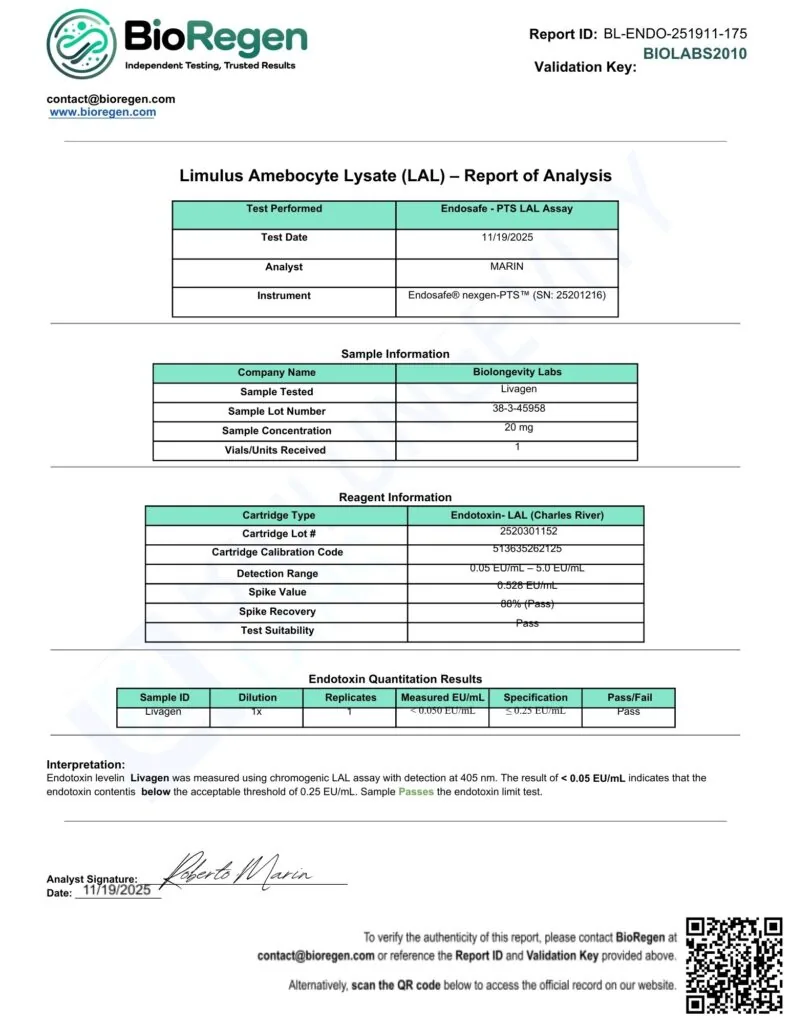
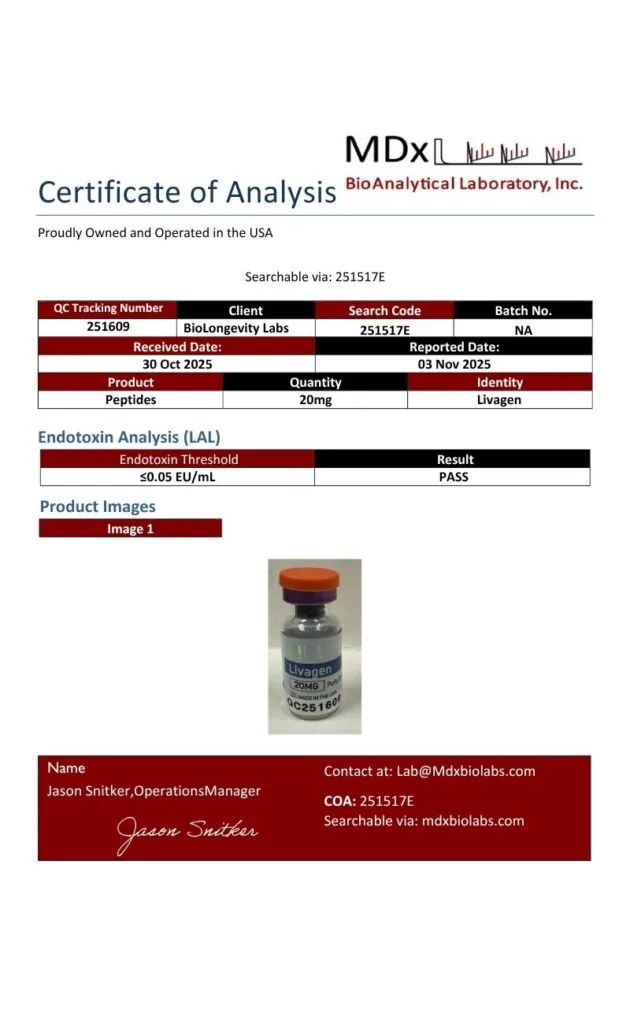
Endotoxin testing by Limulus amebocyte lysate (LAL) or recombinant Factor C (rFC) assay, depending on the laboratory
Visual and physical characterization of the finished material
How to Verify a COA Independently
You can check every certificate against the issuing laboratory’s own records, not just the copy hosted here. Verification does not depend on BioLongevity Labs.
AV Analytics certificates carry a search code. Scan the QR code on the certificate to open the laboratory’s verification page, or enter the search code at avanalytical.com/coa-search to pull the official record.
BioRegen reports of analysis carry a Report ID and a Validation Key. Scan the QR code on the certificate to open the official record, or quote both identifiers when you contact the laboratory at the address printed on the report.
SafeCert Labs issued a number of earlier certificates. Each one carries a COA number and the signature of the reporting chemist. Quote that number when you ask the laboratory to confirm it.
Older certificates from other laboratories list their own verification details on the document.
When a batch is sent to more than one laboratory, each certificate resolves at its own issuing laboratory. A researcher can then check the results against two unrelated sources.
These COAs come from independent certified laboratories, not in-house testing. That gives researchers a verifiable record of molecular integrity for each compound. All compounds are supplied for research use only.
Scientifically reviewed by Dr. Ky H. Le, MD. Dr. Le is a board-certified family medicine physician with over 20 years of clinical experience. Dr. Le validates the scientific accuracy of all technical content and research citations.
Disclaimer: For Research Purposes Only
This content is provided strictly for research purposes and does not constitute an endorsement or recommendation for the non-laboratory application or improper handling of peptides designed for research. The information, including discussions about specific peptides and their researched benefits, is presented for informational purposes only and must not be construed as health, clinical, or legal guidance, nor an encouragement for non-research use. Peptides described here are solely for use in structured scientific study by authorized individuals. We advise consulting with research experts, medical practitioners, or legal counsel prior to any decisions about obtaining or utilizing these peptides. The expectation of responsible, ethical utilization of this information for legitimate investigative and scholarly objectives is paramount. This notice is dynamic and governs all provided content on research peptides.
Livagen Peptide (20mg)
Please select a variation
Original price was: $79.97.$79.97Current price is: $79.97.$47.98