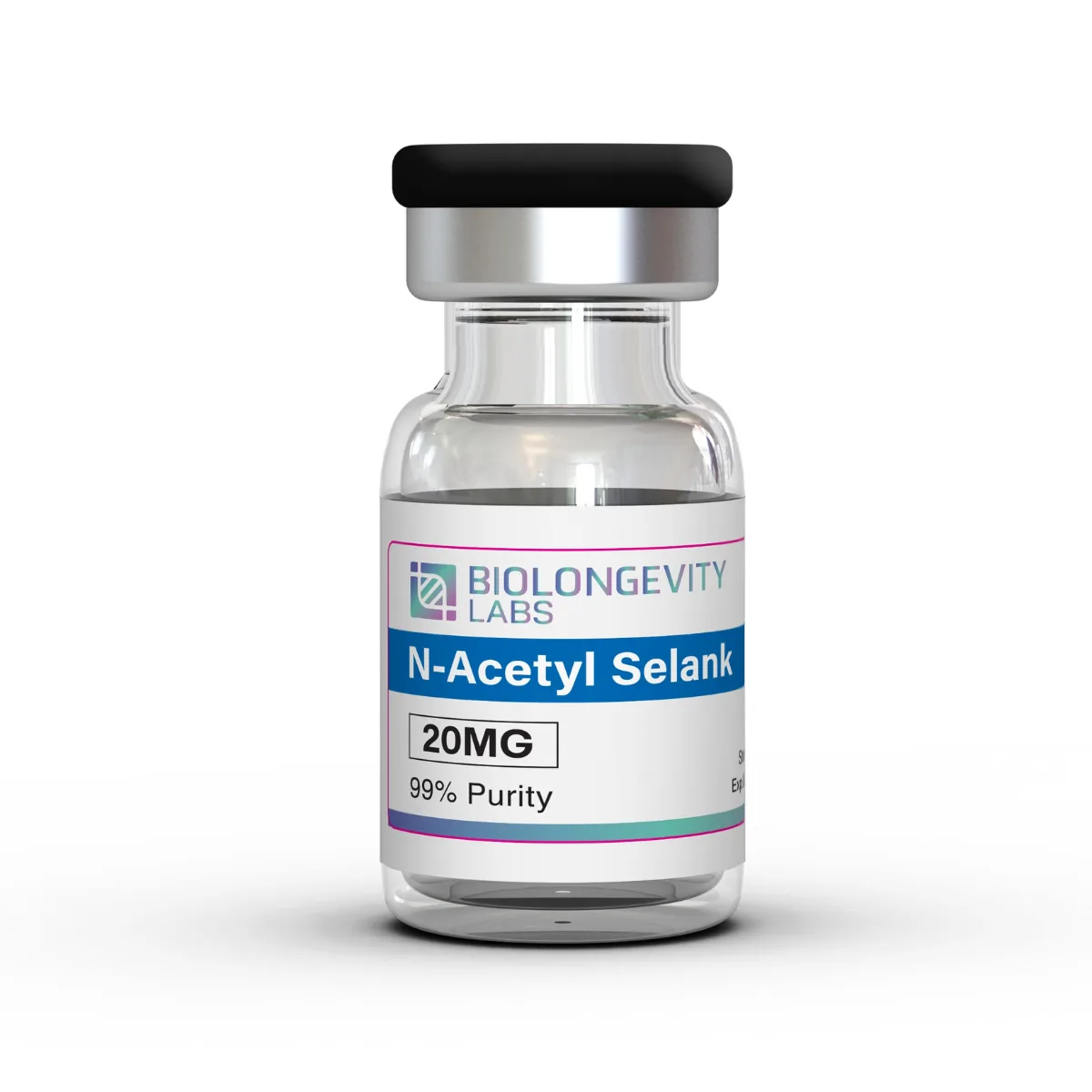
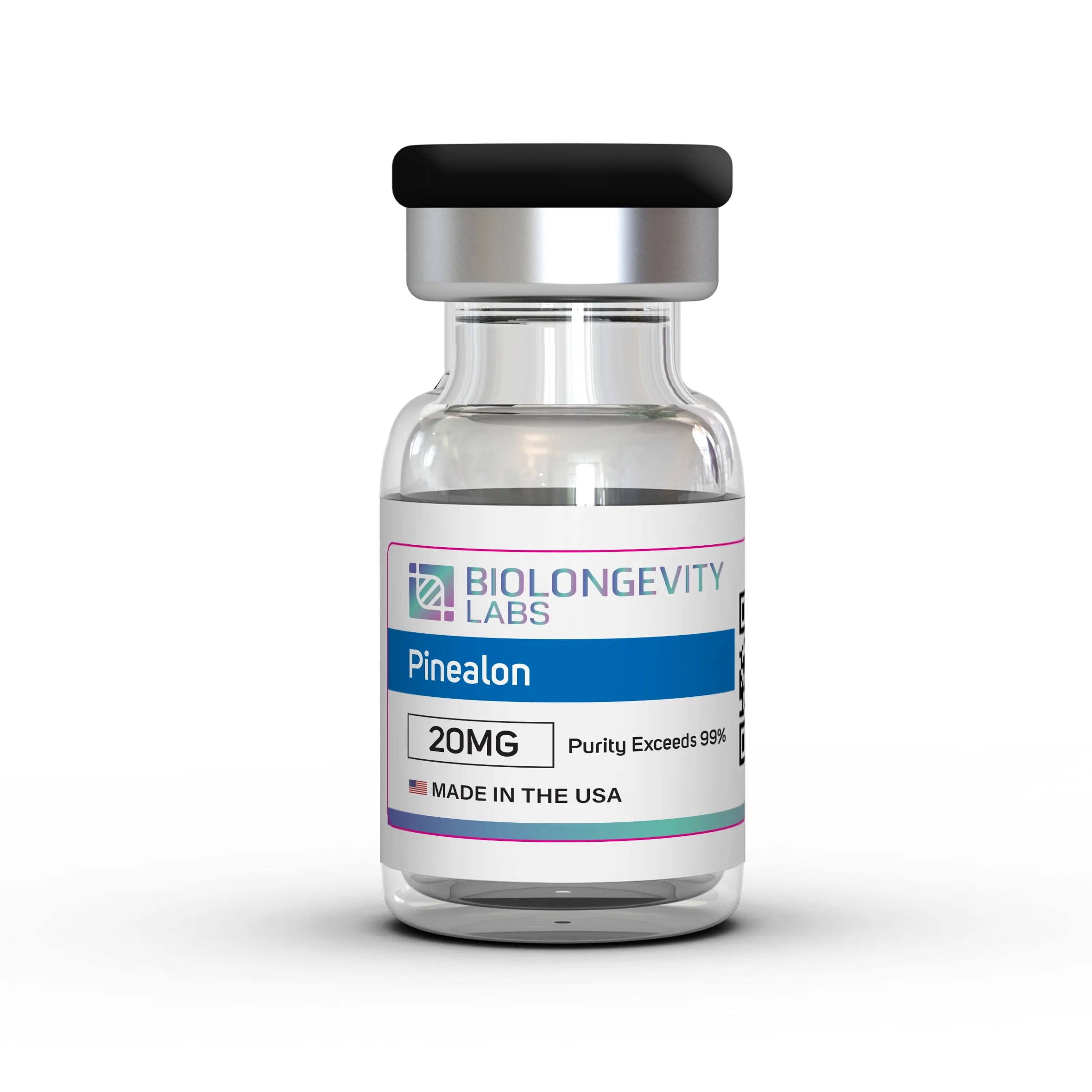
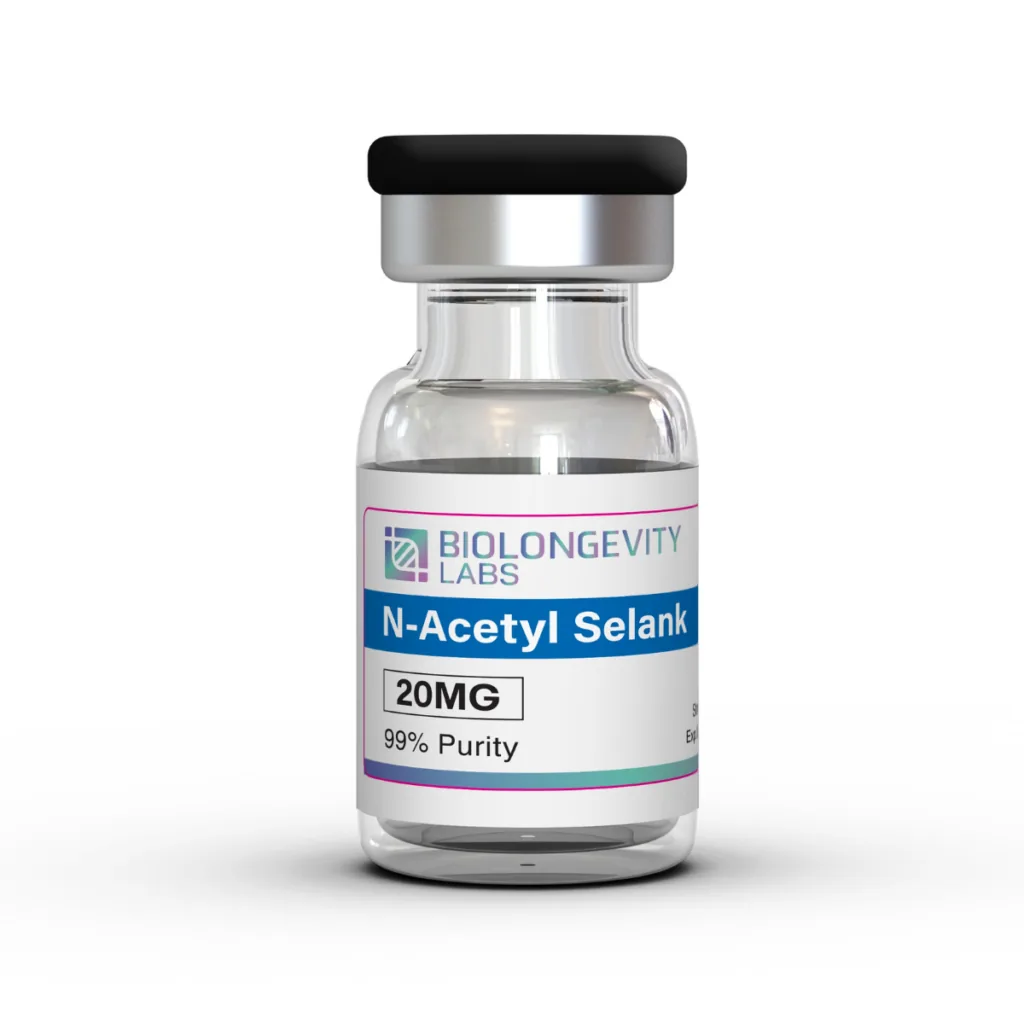
N-Acetyl Selank Amidate is a synthetic heptapeptide built on the Selank sequence Thr-Lys-Pro-Arg-Pro-Gly-Pro, with an acetyl cap on the N-terminus and an amide on the C-terminus. It is produced through controlled peptide synthesis and supplied as a 20mg lyophilized powder in a sealed vial.
≥99% Purity
Third-Party Tested
COA Available
U.S. Manufactured
Quantity
Out of stock
Notify me when in stock
Third-Party Verified Quality
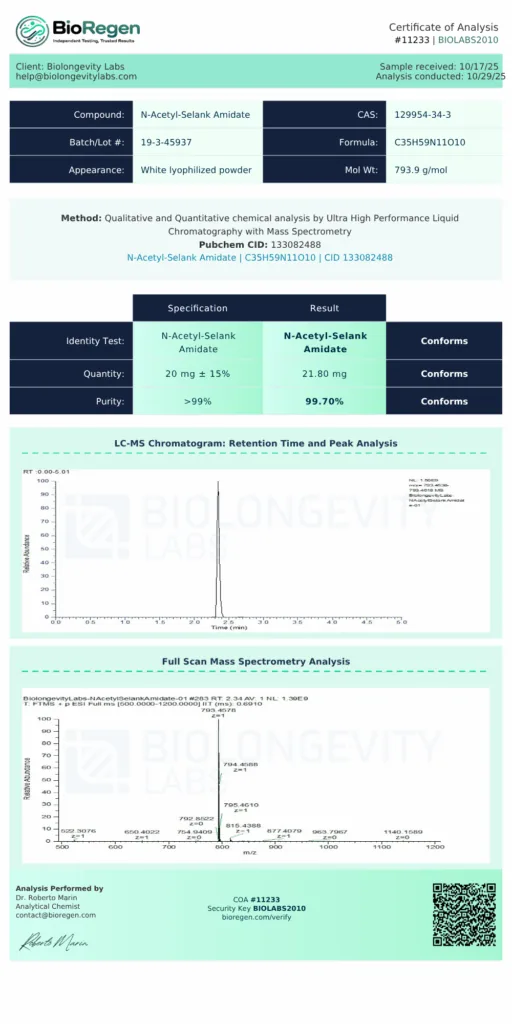
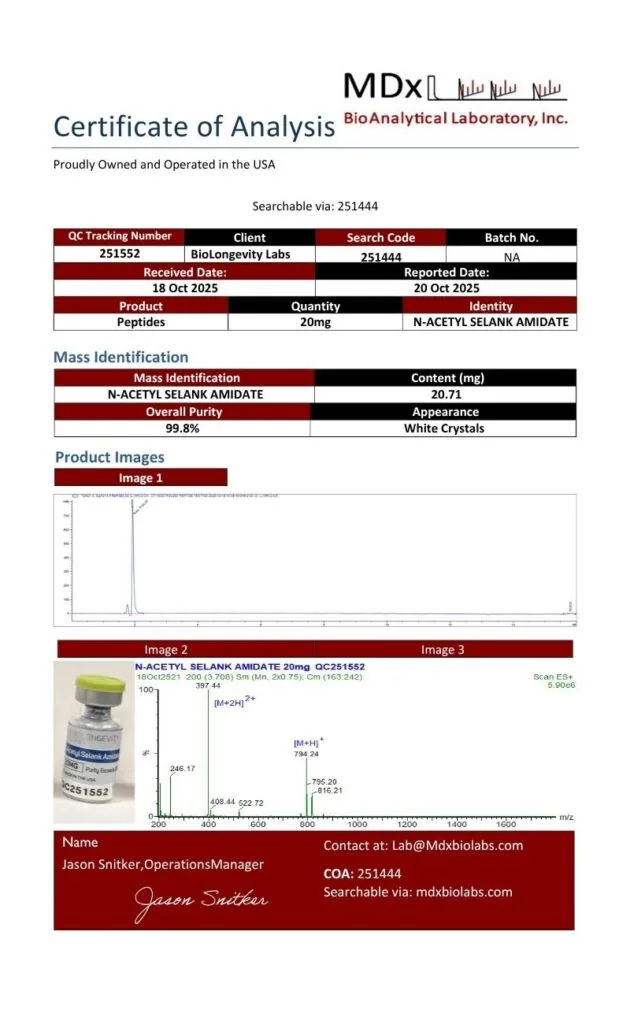
≥99% purity verified through independent UHPLC-MS testing. Certificates of Analysis are available before purchase.
COAs available before purchase
U.S.-manufactured research-grade
Same-business-day U.S. dispatch for in-stock orders placed before 12 PM PT
Secure Checkout · Free shipping on orders over $400
Selank is a synthetic analog of tuftsin (Thr-Lys-Pro-Arg), extended at the C-terminus with the Pro-Gly-Pro motif. N-Acetyl Selank Amidate keeps that seven-residue backbone and adds two end-group changes: an N-acetyl group in place of the free amine, and a carboxamide in place of the free carboxylic acid.
These modifications remove both terminal charges found on the unmodified peptide. Researchers use capped analogs like this one to compare protease susceptibility, chromatographic behavior, and mass spectrometry profiles against the parent sequence.
Published peer-reviewed work to date characterizes the parent Selank sequence. The capped analog itself has little dedicated literature, so the research summary below is framed as parent-peptide research.
Store the lyophilized compound at -20°C, sealed and protected from light.
After reconstitution, store at 2–8°C and use promptly.
Let the vial reach room temperature before opening to limit moisture uptake.
Maintain aseptic handling to preserve compound integrity.
Lyophilized Format
This compound ships in lyophilized (freeze-dried) form. Freeze-drying supports long-term storage stability and preserves compound integrity. No fillers are added.
Research Use Disclaimer
N-Acetyl Selank Amidate is supplied for research use only. It is not a drug, food, cosmetic, or dietary supplement and has not been evaluated by the FDA. By purchasing, the buyer confirms the compound will be used solely for in vitro research.
Frequently Asked Questions
What Is N-Acetyl Selank Amidate?
N-Acetyl Selank Amidate is a synthetic heptapeptide with the sequence Ac-Thr-Lys-Pro-Arg-Pro-Gly-Pro-NH₂. It is the Selank sequence with an acetyl cap on the N-terminus and an amide on the C-terminus.
How Is N-Acetyl Selank Amidate Different From Selank?
N-Acetyl Selank Amidate carries the same seven amino acids as Selank but replaces the free N-terminal amine with an acetyl group and the free C-terminal acid with an amide. These caps raise the calculated molecular weight from 751.9 to 792.9 g/mol and remove both terminal charges.
What Is the Molecular Weight of N-Acetyl Selank Amidate?
The calculated molecular weight of N-Acetyl Selank Amidate is 792.9 g/mol, with a molecular formula of C₃₅H₆₀N₁₂O₉ and a monoisotopic mass of 792.4606 Da.
How Is N-Acetyl Selank Amidate Supplied and Stored?
N-Acetyl Selank Amidate ships as a 20mg lyophilized powder with ≥99% purity by third-party HPLC testing and a Certificate of Analysis available. Store the sealed vial at -20°C, protected from light.
N-Acetyl Selank Research
Selank is a multifaceted peptide with significant potential in treating anxiety, cognitive impairments, and stress-related physiological changes. Its ability to modulate the GABAergic system, enhance cognitive function, and exert immunomodulatory effects positions it as a versatile therapeutic agent.
Anxiolytic and Cognitive Effects
Selank has demonstrated significant anxiolytic properties, comparable to classical benzodiazepines, without the associated side effects such as dependence and memory impairment1. It has been shown to reduce anxiety in conditions of chronic stress and improve cognitive functions, such as memory and attention, particularly in the context of ethanol-induced impairments. The peptide’s ability to regulate brain-derived neurotrophic factor (BDNF) content in the hippocampus and prefrontal cortex is thought to contribute to its cognitive-enhancing effects2.
Immunomodulatory and Antiviral Properties
Beyond its neurological effects, Selank also exhibits immunomodulatory and antiviral properties. It can significantly alter the expression of genes related to chemokines, cytokines, and their receptors, suggesting a role in immune response modulation3. These properties make Selank a promising candidate for therapeutic applications beyond anxiety and cognitive disorders.
Stress Mitigation and Physiological Effects
Selank has been shown to mitigate stress-induced physiological changes. In animal models, it reduces stress-related morphological changes in organs such as the liver and colon, indicating its potential to alleviate stress-induced damage. These effects are likely due to its multifunctional biological activity, which includes reducing corticosterone levels and promoting adaptation to stress4.
References
Vyunova, T., Andreeva, L., Shevchenko, K., & Myasoedov, N. (2018). Peptide-based Anxiolytics: The Molecular Aspects of Heptapeptide Selank Biological Activity.. Protein and peptide letters, 25 10, 914-923 . https://doi.org/10.2174/0929866525666180925144642.
Kolik, L., Nadorova, A., Antipova, T., Kruglov, S., Kudrin, V., & Durnev, A. (2019). Selank, Peptide Analogue of Tuftsin, Protects Against Ethanol-Induced Memory Impairment by Regulating of BDNF Content in the Hippocampus and Prefrontal Cortex in Rats. Bulletin of Experimental Biology and Medicine, 167, 641 – 644. https://doi.org/10.1007/s10517-019-04588-9.
Kolomin, T., Mikhalskaia, P., & Sedelnikova, A. (2023). Changes in Expression of Chemokines, Cytokines and their Receptors under the Action of Selank and its Fragments. Journal of Clinical Physiology and Pathology. https://doi.org/10.59315/jiscpp.2023-2-2.16-18.
Mukhina, A., Mishina, E., Bobyntsev, I., Medvedeva, O., Svishcheva, M., Kalutskiĭ, P., Andreeva, L., & Myasoedov, N. (2020). Morphological Changes in the Large Intestine of Rats Subjected to Chronic Restraint Stress and Treated with Selank. Bulletin of Experimental Biology and Medicine, 169, 281 – 285. https://doi.org/10.1007/s10517-020-04868-9.
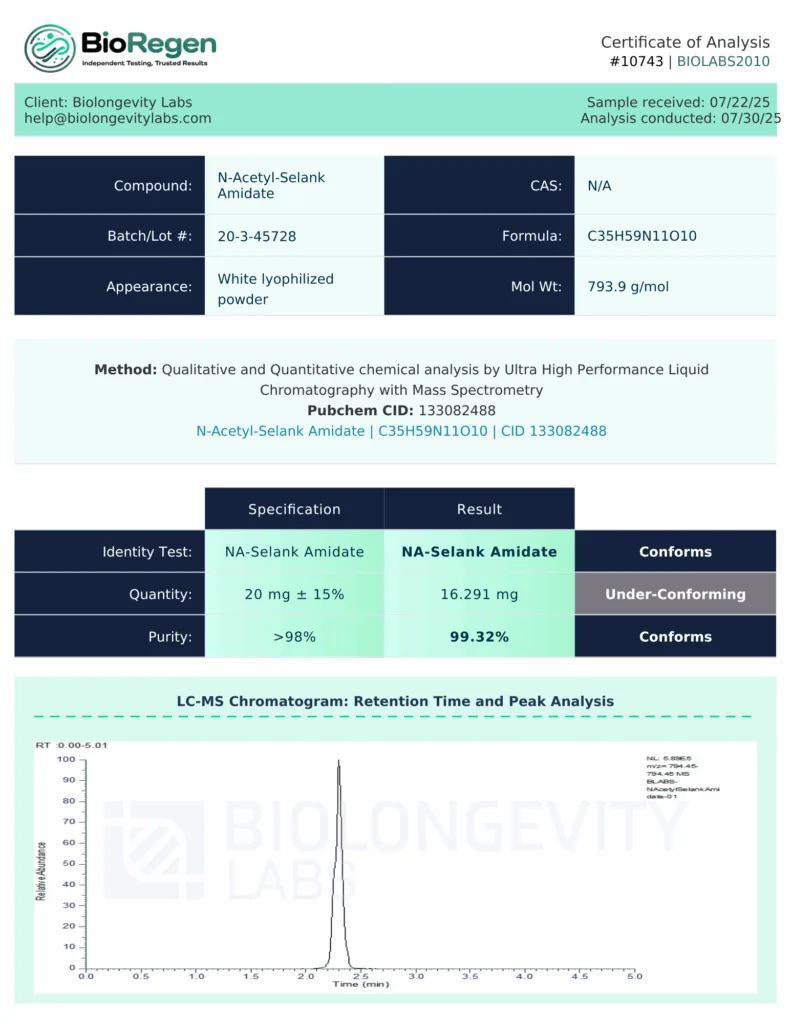
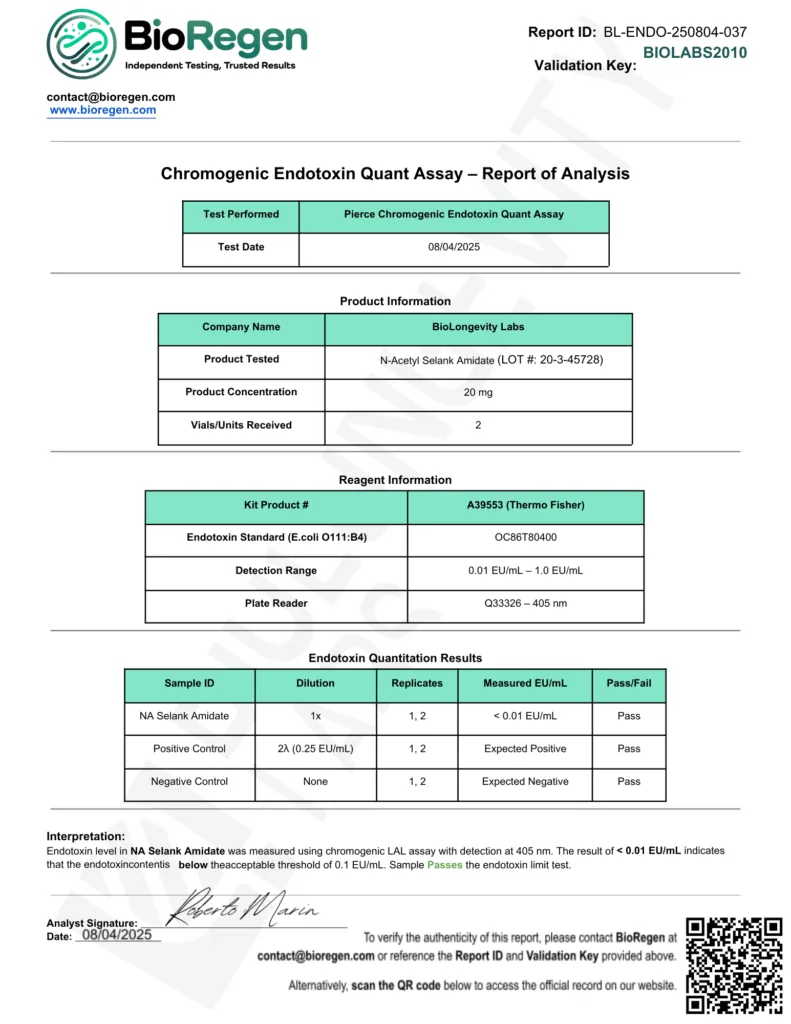
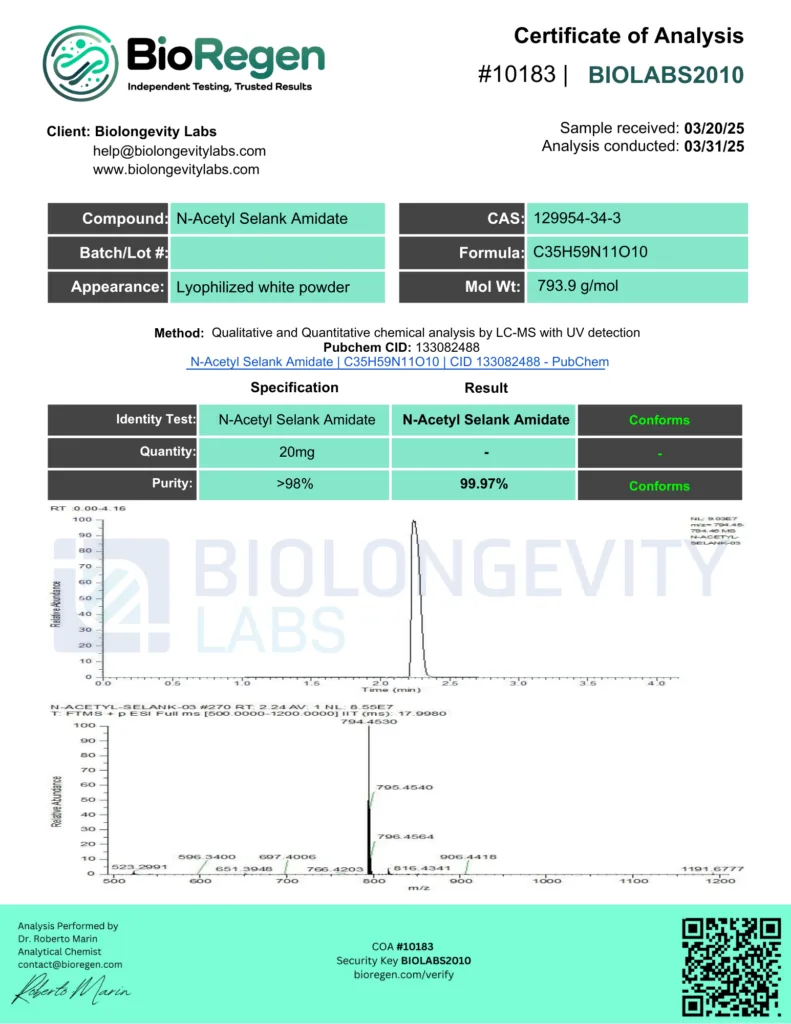
A Certificate of Analysis (COA) is a document that verifies a compound’s identity, purity and quality through independent laboratory testing. Every compound from BioLongevity Labs is third-party tested, and its COA is published here, so researchers can review the testing record before a compound enters a protocol.
Each COA reports results from third-party laboratory analysis, including:
Ultra-high-performance liquid chromatography with mass spectrometry (UHPLC-MS) for purity, measured against a 98% or 99% specification depending on the compound
Mass identification for molecular confirmation and content quantitation
Endotoxin testing by Limulus amebocyte lysate (LAL) or recombinant Factor C (rFC) assay, depending on the laboratory
Visual and physical characterization of the finished material
How to Verify a COA Independently
You can check every certificate against the issuing laboratory’s own records, not just the copy hosted here. Verification does not depend on BioLongevity Labs.
AV Analytics certificates carry a search code. Scan the QR code on the certificate to open the laboratory’s verification page, or enter the search code at avanalytical.com/coa-search to pull the official record.
BioRegen reports of analysis carry a Report ID and a Validation Key. Scan the QR code on the certificate to open the official record, or quote both identifiers when you contact the laboratory at the address printed on the report.
SafeCert Labs issued a number of earlier certificates. Each one carries a COA number and the signature of the reporting chemist. Quote that number when you ask the laboratory to confirm it.
Older certificates from other laboratories list their own verification details on the document.
When a batch is sent to more than one laboratory, each certificate resolves at its own issuing laboratory. A researcher can then check the results against two unrelated sources.
These COAs come from independent certified laboratories, not in-house testing. That gives researchers a verifiable record of molecular integrity for each compound. All compounds are supplied for research use only.
Scientifically reviewed by Dr. Ky H. Le, MD. Dr. Le is a board-certified family medicine physician with over 20 years of clinical experience. Dr. Le validates the scientific accuracy of all technical content and research citations.
Disclaimer: For Research Purposes Only
This content is provided strictly for research purposes and does not constitute an endorsement or recommendation for the non-laboratory application or improper handling of peptides designed for research. The information, including discussions about specific peptides and their researched benefits, is presented for informational purposes only and must not be construed as health, clinical, or legal guidance, nor an encouragement for non-research use. Peptides described here are solely for use in structured scientific study by authorized individuals. We advise consulting with research experts, medical practitioners, or legal counsel prior to any decisions about obtaining or utilizing these peptides. The expectation of responsible, ethical utilization of this information for legitimate investigative and scholarly objectives is paramount. This notice is dynamic and governs all provided content on research peptides.