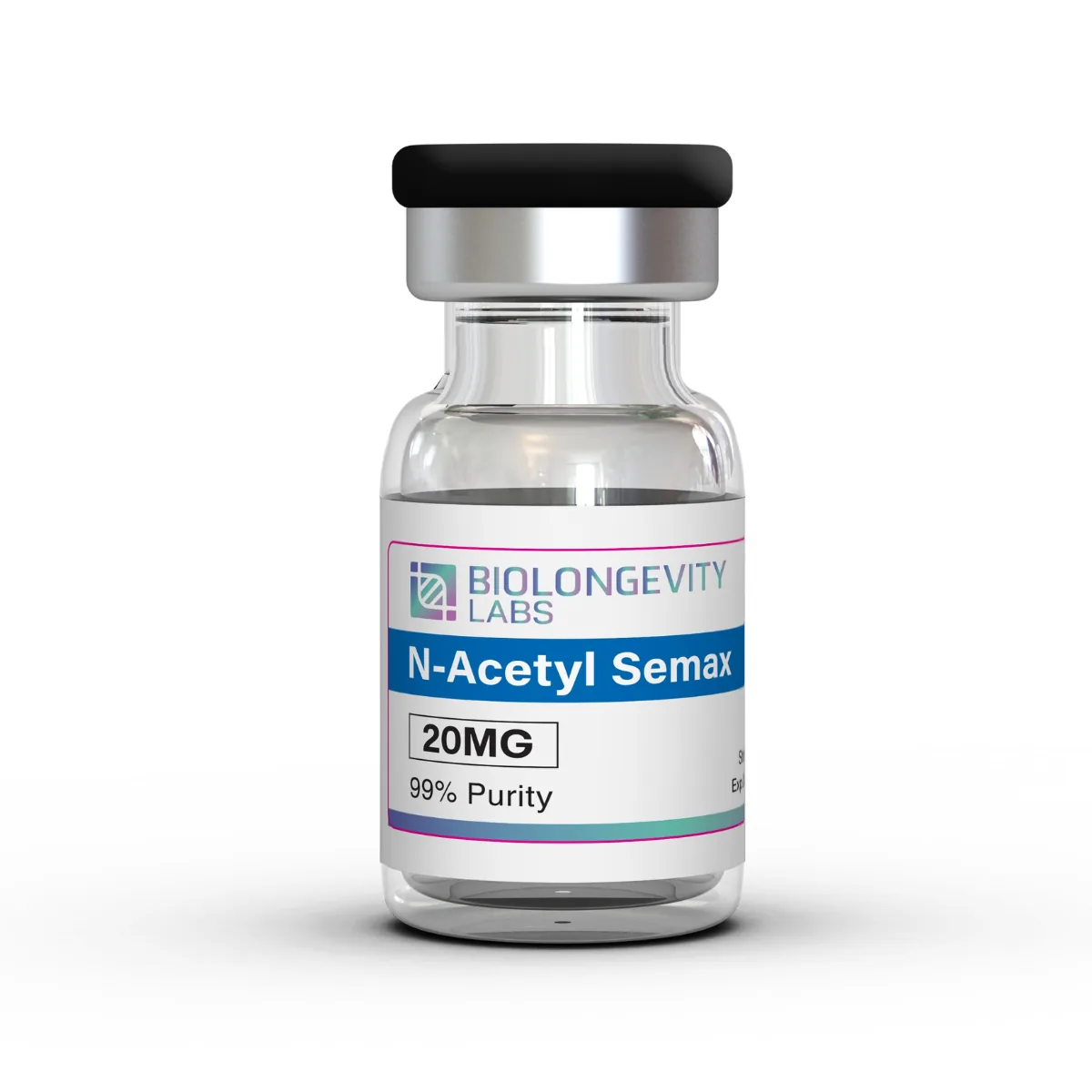
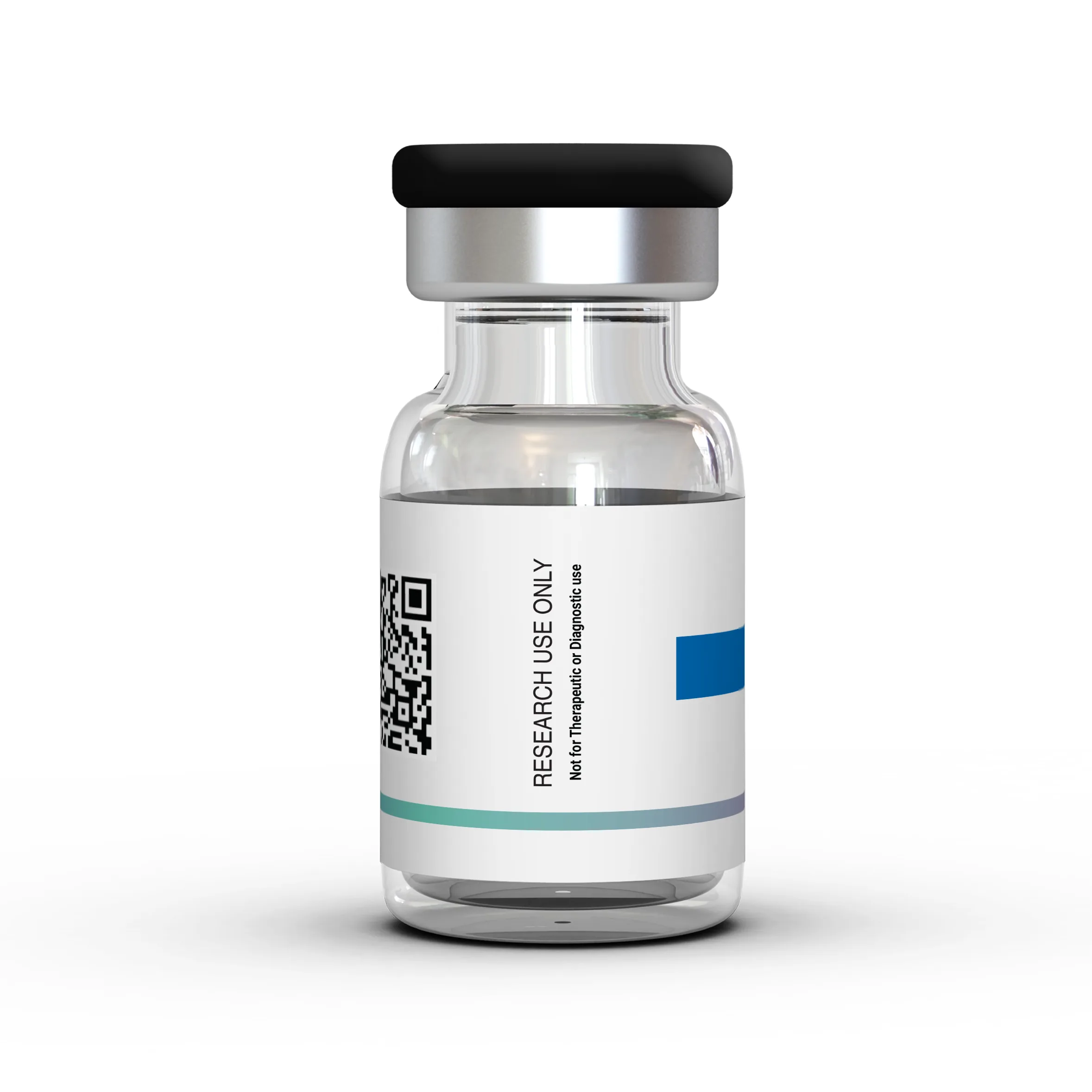
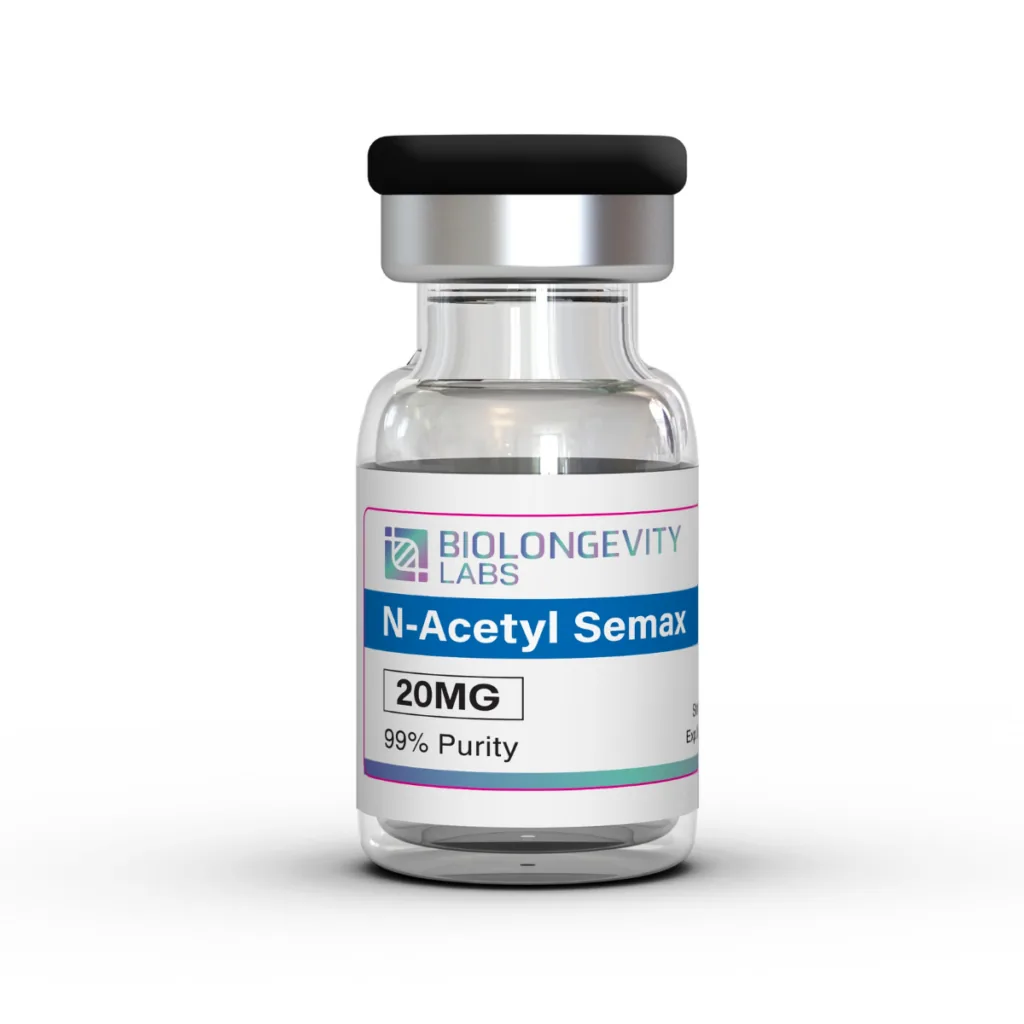
N-Acetyl Semax Amidate is a synthetic heptapeptide (Ac-Met-Glu-His-Phe-Pro-Gly-Pro-NH2) built on the Semax sequence, with an acetyl cap on the N-terminus and an amide cap on the C-terminus. It is produced by controlled peptide synthesis. Each vial holds 20mg of lyophilized white powder, sealed for stable storage and simple reconstitution in the lab. The compound is characterized for analytical work and laboratory research on peptide stability, peptidase interactions and neurotrophin signaling pathways.
≥99% Purity
Third-Party Tested
COA Available
U.S. Manufactured
Quantity
In stock
Third-Party Verified Quality
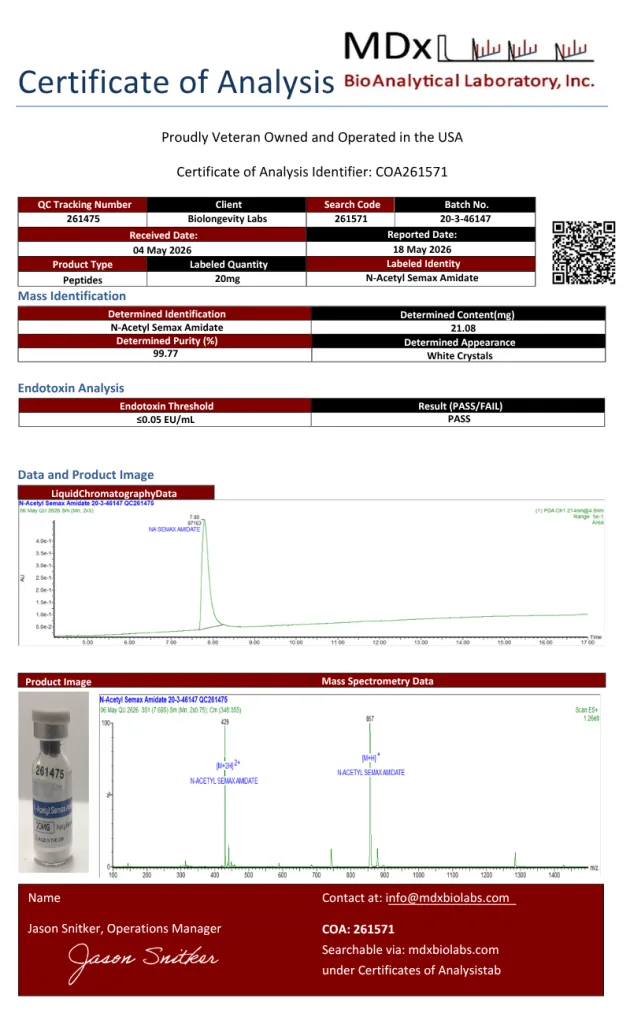
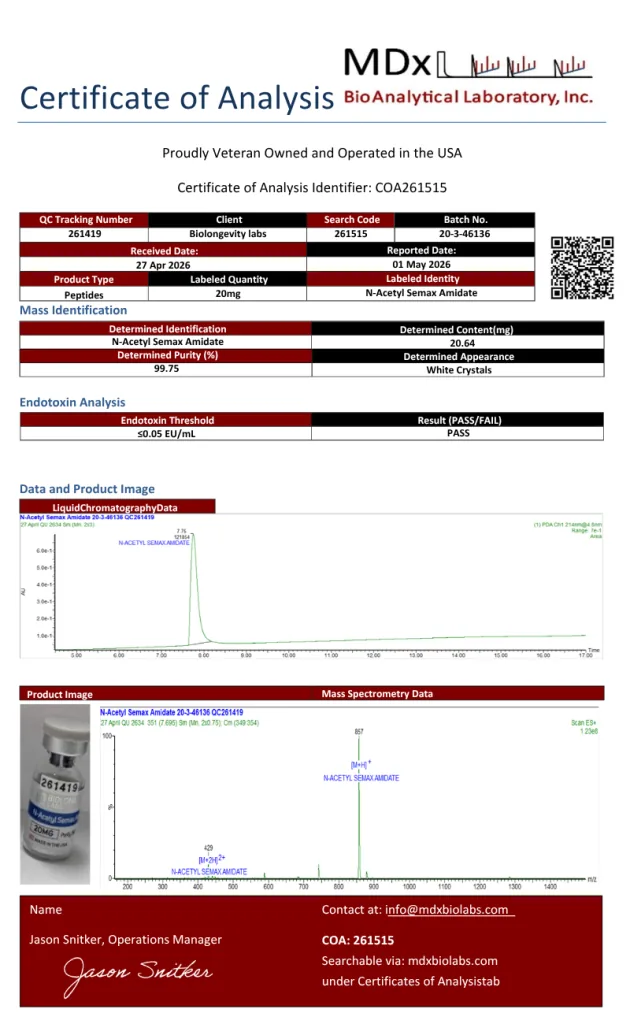
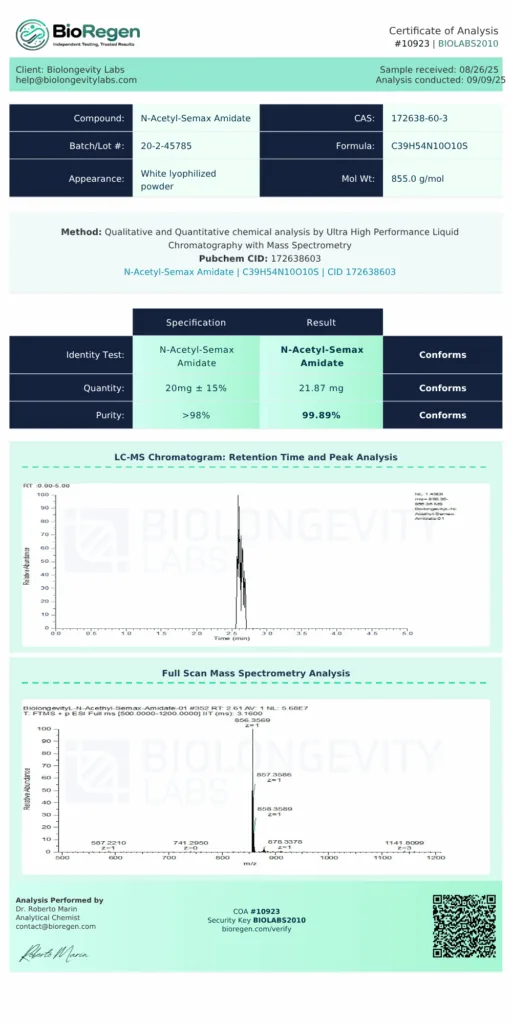
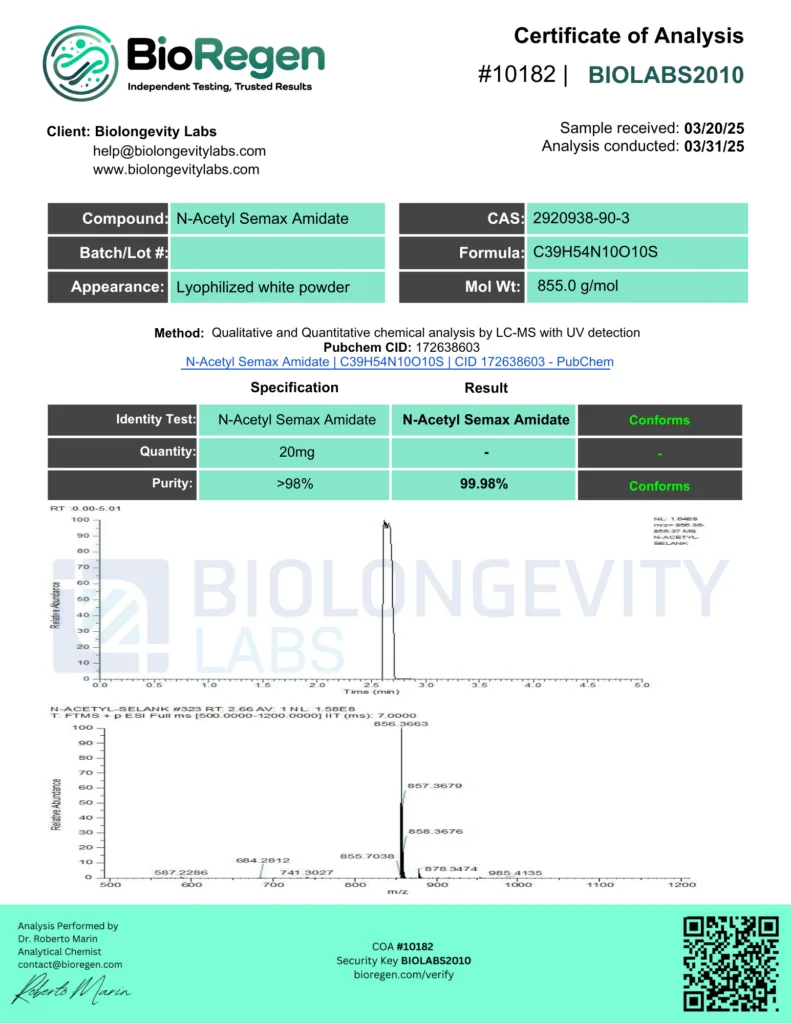
≥99% purity verified through independent UHPLC-MS testing. Certificates of Analysis are available before purchase.
COAs available before purchase
U.S.-manufactured research-grade
Same-business-day U.S. dispatch for in-stock orders placed before 12 PM PT
Secure Checkout · Free shipping on orders over $400
The N-acetyl semax amidate peptide shares its seven-residue core with Semax, an analogue of the ACTH(4-7) fragment (Met-Glu-His-Phe) joined to a C-terminal Pro-Gly-Pro tripeptide. The two terminal caps are the only structural change.
N-terminal acetylation replaces the free amino group with an acetyl group. C-terminal amidation replaces the terminal carboxylic acid (-COOH) with a carboxamide (-CONH2). Together, the two caps add a net C2H3N to the structure, taking the formula from C37H51N9O10S to C39H54N10O10S and the molecular weight from 813.9 to 855.0 g/mol.
Terminal capping is a common approach in peptide research for studying how exopeptidases act on a sequence. For anyone comparing N-acetyl semax amidate vs Semax, the capped form carries its own CAS number and PubChem record, listed below.
Store the lyophilized compound at -20°C in a sealed vial, away from moisture and light.
After reconstitution, divide into aliquots, store at -20°C or colder and use promptly. Avoid repeated freeze-thaw cycles.
Maintain aseptic handling to preserve compound integrity.
Lyophilized Format
This compound ships in lyophilized (freeze-dried) form. Freeze-drying supports long-term storage stability and preserves compound integrity. No fillers are added.
Research Use Disclaimer
N-Acetyl Semax Amidate is supplied for research use only. It is not a drug, food, cosmetic, or dietary supplement and has not been evaluated by the FDA. By purchasing, the buyer confirms the compound will be used solely for in vitro research.
Frequently Asked Questions
What Is N-Acetyl Semax Amidate?
N-Acetyl Semax Amidate is a synthetic heptapeptide with the sequence Ac-Met-Glu-His-Phe-Pro-Gly-Pro-NH2. It is the Semax sequence with an acetyl group on the N-terminus and an amide group on the C-terminus.
How Is N-Acetyl Semax Amidate Different From Semax?
N-Acetyl Semax Amidate carries two terminal caps that Semax does not, which changes its formula to C39H54N10O10S and its molecular weight to 855.0 g/mol. It also has its own identifiers (CAS 2920938-90-3, PubChem CID 172638603), separate from those of Semax.
What Is the CAS Number of N-Acetyl Semax Amidate?
The CAS number of N-Acetyl Semax Amidate is 2920938-90-3, and its PubChem CID is 172638603. The parent peptide, Semax, is listed separately under CAS 80714-61-0.
How Should N-Acetyl Semax Amidate 20mg Be Stored?
N-Acetyl Semax Amidate 20mg should be stored lyophilized at -20°C in a sealed vial, away from moisture and light. Once reconstituted, it is best kept in aliquots at -20°C or colder to avoid repeated freeze-thaw cycles.
How Is the Purity of N-Acetyl Semax Amidate Verified?
N-Acetyl Semax Amidate is supplied at ≥99% purity, verified through independent third-party testing. The latest Certificate of Analysis is published on this product page.
Research Overview
Published work on the N-acetylated, C-amidated form is limited. Unless a study is noted as using the acetylated peptide, the research below was performed on the parent peptide, Semax, and is summarized as background for laboratory work with the capped analogue.
The studies fall into four threads: terminal chemistry and stability, neurotrophin signaling, expression profiling in ischemia research models, and peptidase inhibition.
Terminal Modifications and Peptide Stability
A 2016 study compared Semax with its N-acetylated form and found that acetylation changed how the peptide binds copper(II), while zinc(II) binding strength stayed comparable [1]. In SH-SY5Y cell line assays, lower copper-induced toxicity was tied to the free N-terminus of Semax, and the acetylated form did not show the same effect [1].
A separate study examined the stability of acetylated Semax to proteolysis in several biological media, including rat brain preparations [2]. For unmodified Semax, tracer work with nerve cell cultures identified the pentapeptide HFPGP and the tripeptide PGP as the main breakdown products [3].
Neurotrophin Signaling in Rodent Tissue Models
In rat hippocampal tissue, Semax was associated with higher BDNF protein levels, increased TrkB tyrosine phosphorylation and higher BDNF exon III and TrkB mRNA levels [4]. In a rat focal ischemia model, Semax was associated with increased transcription of Bdnf, Ngf, Nt-3 and Trk receptor genes in cortical tissue at defined time points [5].
Gene and Protein Expression in Ischemia Research Models
RNA-Seq analysis of rat brain tissue in an ischemia-reperfusion model identified 394 genes expressed differently with Semax compared with saline at 24 hours [6]. Genes linked to inflammatory processes were lower and genes linked to neurotransmission were higher [6].
Follow-up protein profiling in the same model, which describes Semax as a synthetic melanocortin derivative, recorded higher active CREB and lower MMP-9, c-Fos and active JNK in the studied brain regions [7].
Peptidase Inhibition Assays
In serum enzyme preparations, Semax inhibited enkephalin-degrading enzymes with an IC50 of about 10 µM, and its pentapeptide fragments showed the same type of activity [8]. Tracer studies traced this inhibitory activity mainly to aminopeptidases [3].
Research Area
In Vitro Application
Peptide stability
Proteolysis assays comparing capped and uncapped Semax sequences in tissue or plasma preparations
Metal-ion coordination
Copper(II) and zinc(II) complex characterization by spectroscopy and voltammetry
Peptidase activity
Enkephalin-degrading enzyme and aminopeptidase inhibition assays
Neurotrophin signaling
BDNF and TrkB expression readouts in cultured cell and tissue samples
Analytical reference
HPLC and mass spectrometry method development for capped heptapeptides
References
Magrì A, Tabbì G, Giuffrida A, et al. (2016). Influence of the N-terminus acetylation of Semax, a synthetic analog of ACTH(4-10), on copper(II) and zinc(II) coordination and biological properties. Journal of Inorganic Biochemistry. https://doi.org/10.1016/j.jinorgbio.2016.08.013
Shevchenko KV, Nagaev IYu, Andreeva LA, Shevchenko VP, Myasoedov NF. (2013). Stability of Semax acetyl to proteolysis in various biological media. Doklady Biological Sciences. https://doi.org/10.1134/S0012496613020166
Zolotarev IuA, Dadaian AK, Dolotov OV, et al. (2006). Evenly tritium-labeled peptides and their in vivo and in vitro biodegradation. Bioorganicheskaia Khimiia. https://pubmed.ncbi.nlm.nih.gov/16637290/
Dolotov OV, Karpenko EA, Inozemtseva LS, et al. (2006). Semax, an analog of ACTH(4-10) with cognitive effects, regulates BDNF and trkB expression in the rat hippocampus. Brain Research. https://doi.org/10.1016/j.brainres.2006.07.108
Dmitrieva VG, Povarova OV, Skvortsova VI, et al. (2009). Semax and Pro-Gly-Pro activate the transcription of neurotrophins and their receptor genes after cerebral ischemia. Cellular and Molecular Neurobiology. https://doi.org/10.1007/s10571-009-9432-0
Filippenkov IB, Stavchansky VV, Denisova AE, et al. (2020). Novel Insights into the Protective Properties of ACTH(4-7)PGP (Semax) Peptide at the Transcriptome Level Following Cerebral Ischaemia-Reperfusion in Rats. Genes. https://doi.org/10.3390/genes11060681
Sudarkina OYu, Filippenkov IB, Stavchansky VV, et al. (2021). Brain Protein Expression Profile Confirms the Protective Effect of the ACTH(4-7)PGP Peptide (Semax) in a Rat Model of Cerebral Ischemia-Reperfusion. International Journal of Molecular Sciences. https://doi.org/10.3390/ijms22126179
Kost NV, Sokolov OIu, Gabaeva MV, et al. (2001). Semax and selank inhibit the enkephalin-degrading enzymes from human serum. Bioorganicheskaia Khimiia. https://pubmed.ncbi.nlm.nih.gov/11443939/
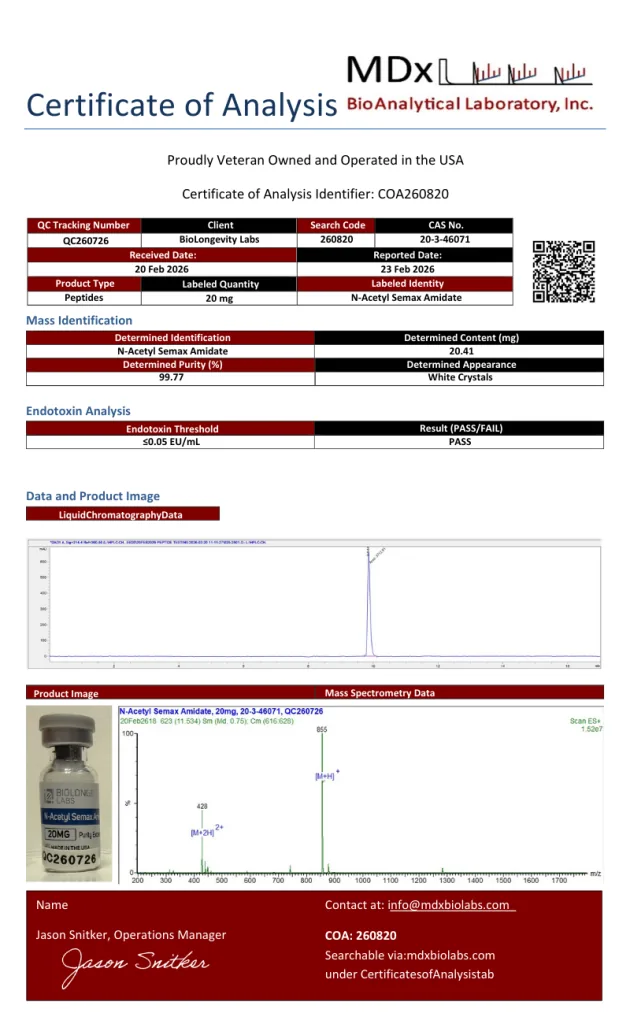
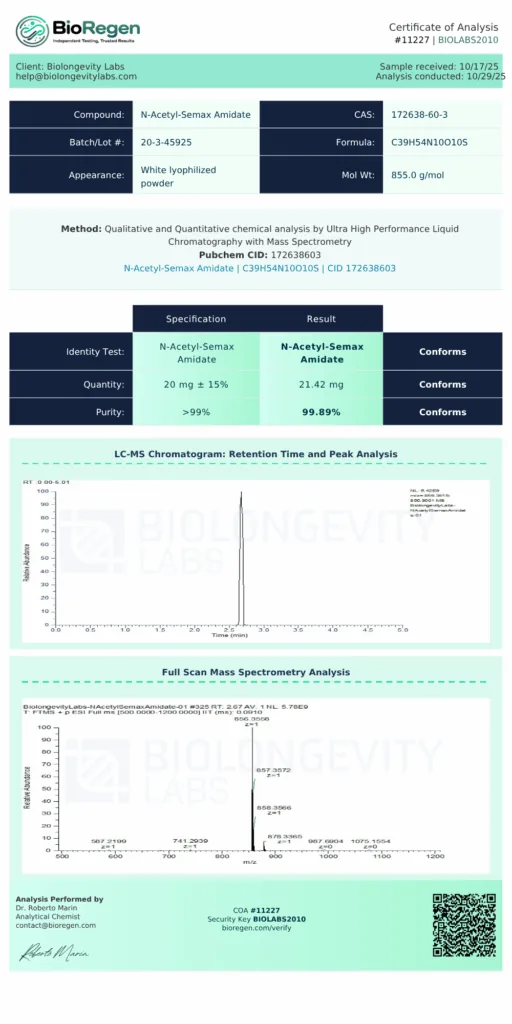
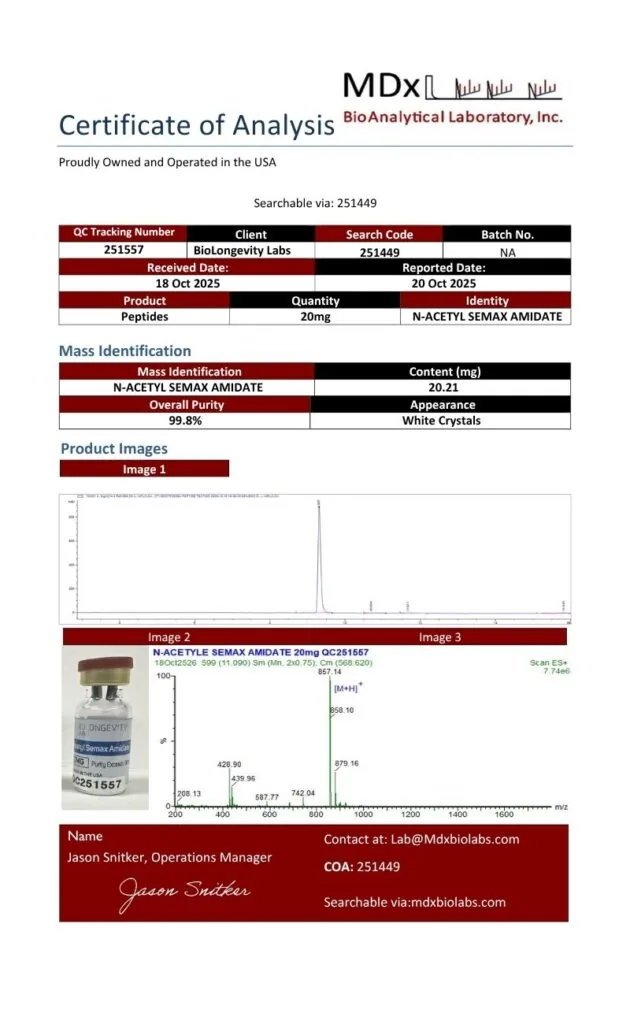
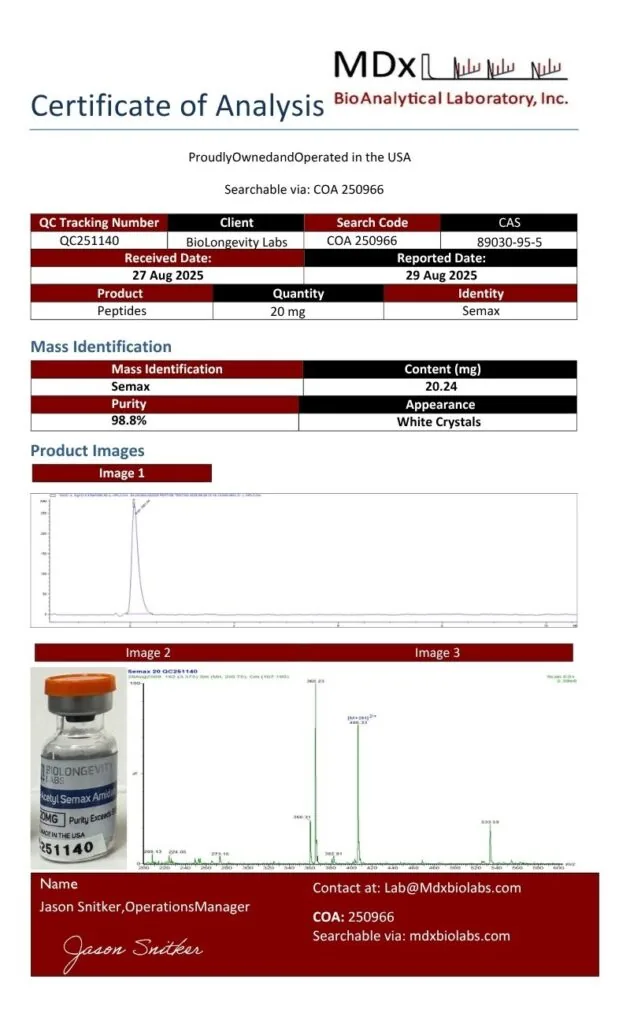
A Certificate of Analysis (COA) is a document that verifies a compound’s identity, purity and quality through independent laboratory testing. Every compound from BioLongevity Labs is third-party tested, and its COA is published here, so researchers can review the testing record before a compound enters a protocol.
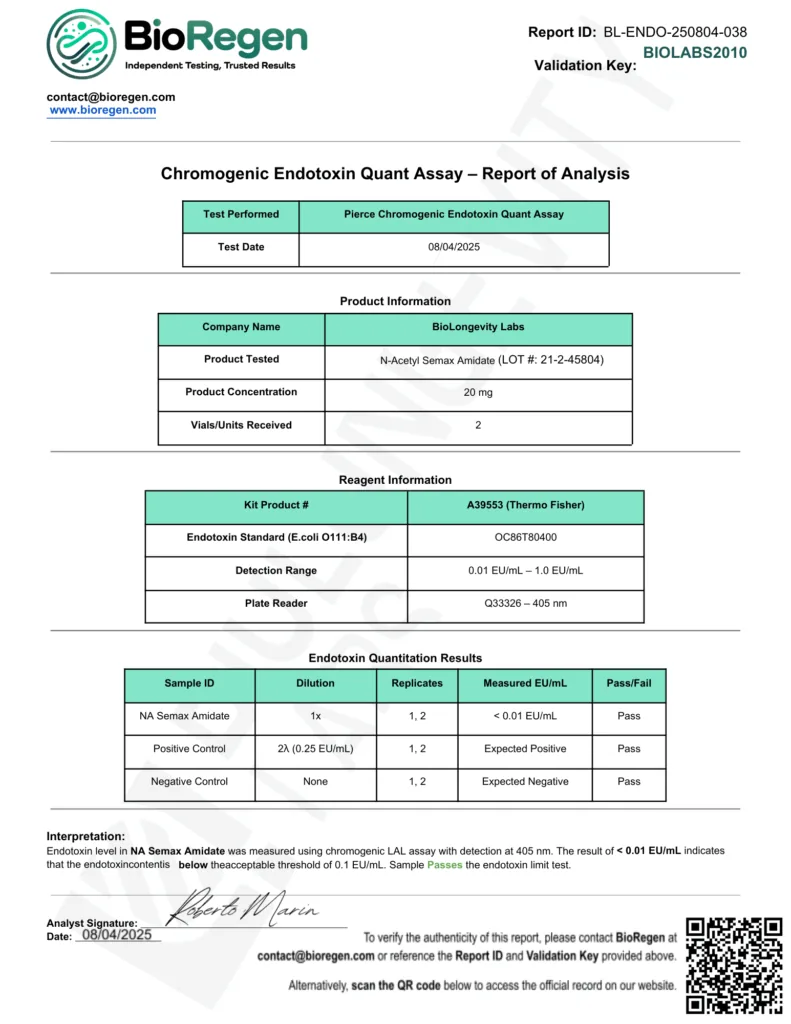
Each COA reports results from third-party laboratory analysis, including:
Ultra-high-performance liquid chromatography with mass spectrometry (UHPLC-MS) for purity, measured against a 98% or 99% specification depending on the compound
Mass identification for molecular confirmation and content quantitation
Endotoxin testing by Limulus amebocyte lysate (LAL) or recombinant Factor C (rFC) assay, depending on the laboratory
Visual and physical characterization of the finished material
How to Verify a COA Independently
You can check every certificate against the issuing laboratory’s own records, not just the copy hosted here. Verification does not depend on BioLongevity Labs.
AV Analytics certificates carry a search code. Scan the QR code on the certificate to open the laboratory’s verification page, or enter the search code at avanalytical.com/coa-search to pull the official record.
BioRegen reports of analysis carry a Report ID and a Validation Key. Scan the QR code on the certificate to open the official record, or quote both identifiers when you contact the laboratory at the address printed on the report.
SafeCert Labs issued a number of earlier certificates. Each one carries a COA number and the signature of the reporting chemist. Quote that number when you ask the laboratory to confirm it.
Older certificates from other laboratories list their own verification details on the document.
When a batch is sent to more than one laboratory, each certificate resolves at its own issuing laboratory. A researcher can then check the results against two unrelated sources.
These COAs come from independent certified laboratories, not in-house testing. That gives researchers a verifiable record of molecular integrity for each compound. All compounds are supplied for research use only.
Scientifically reviewed by Dr. Ky H. Le, MD. Dr. Le is a board-certified family medicine physician with over 20 years of clinical experience. Dr. Le validates the scientific accuracy of all technical content and research citations.
Disclaimer: For Research Purposes Only
This content is provided strictly for research purposes and does not constitute an endorsement or recommendation for the non-laboratory application or improper handling of peptides designed for research. The information, including discussions about specific peptides and their researched benefits, is presented for informational purposes only and must not be construed as health, clinical, or legal guidance, nor an encouragement for non-research use. Peptides described here are solely for use in structured scientific study by authorized individuals. We advise consulting with research experts, medical practitioners, or legal counsel prior to any decisions about obtaining or utilizing these peptides. The expectation of responsible, ethical utilization of this information for legitimate investigative and scholarly objectives is paramount. This notice is dynamic and governs all provided content on research peptides.