Production Information
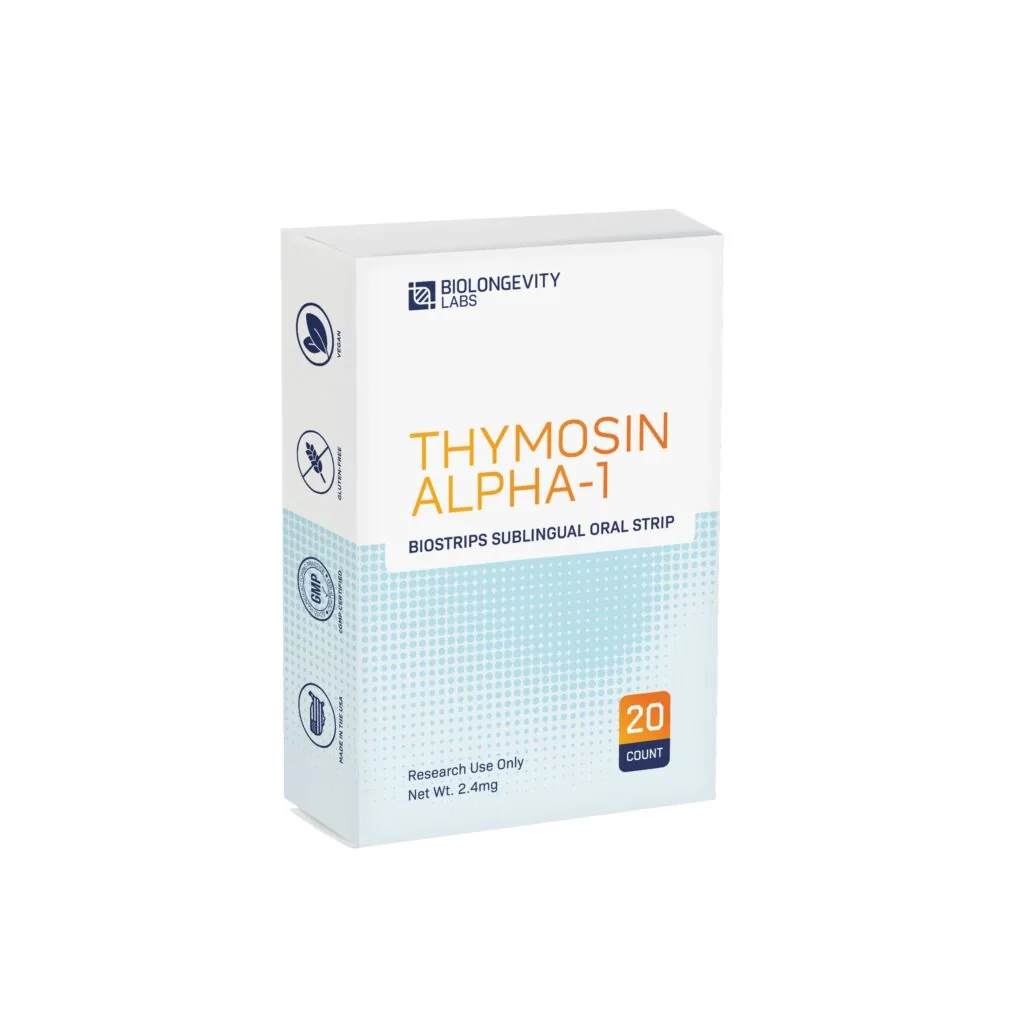
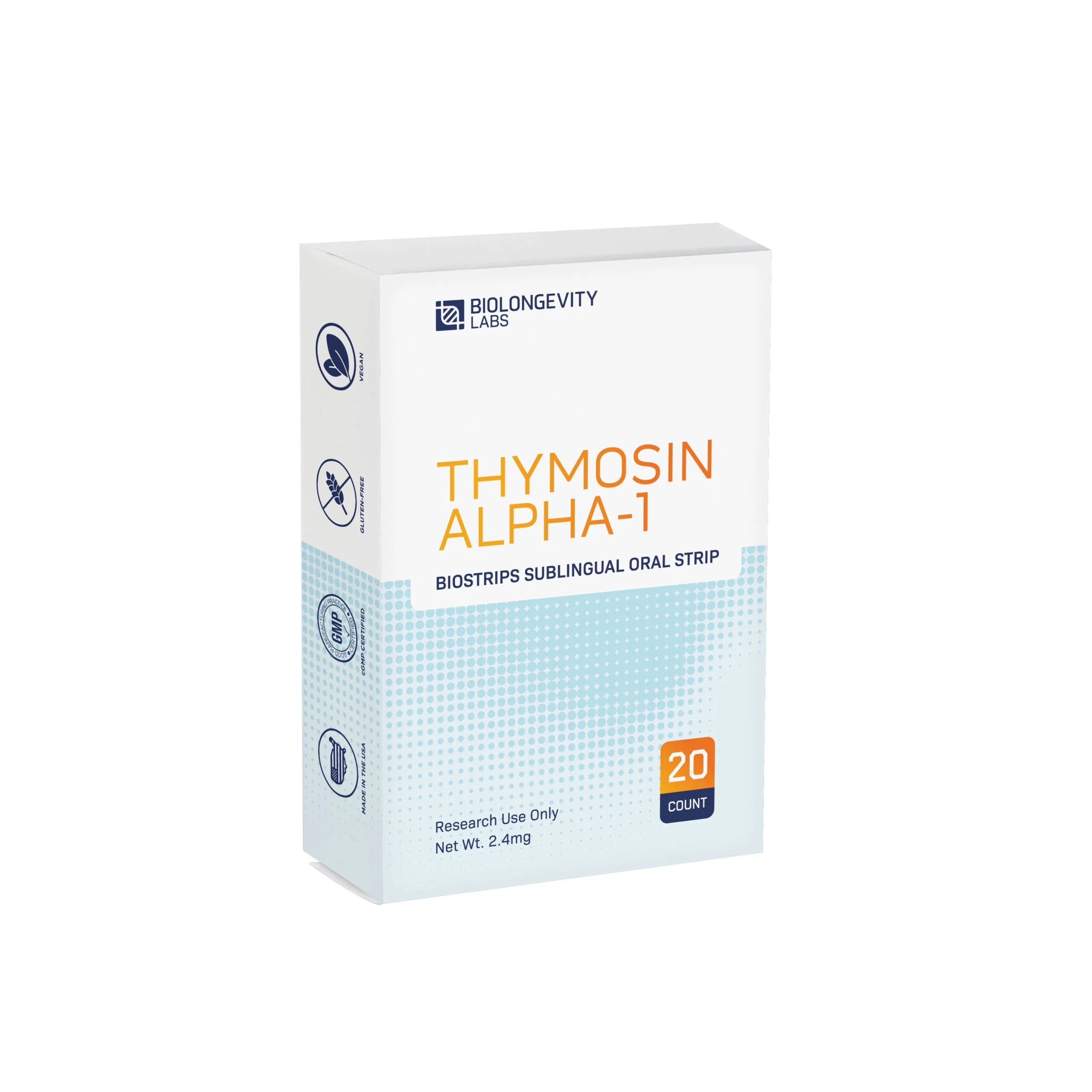
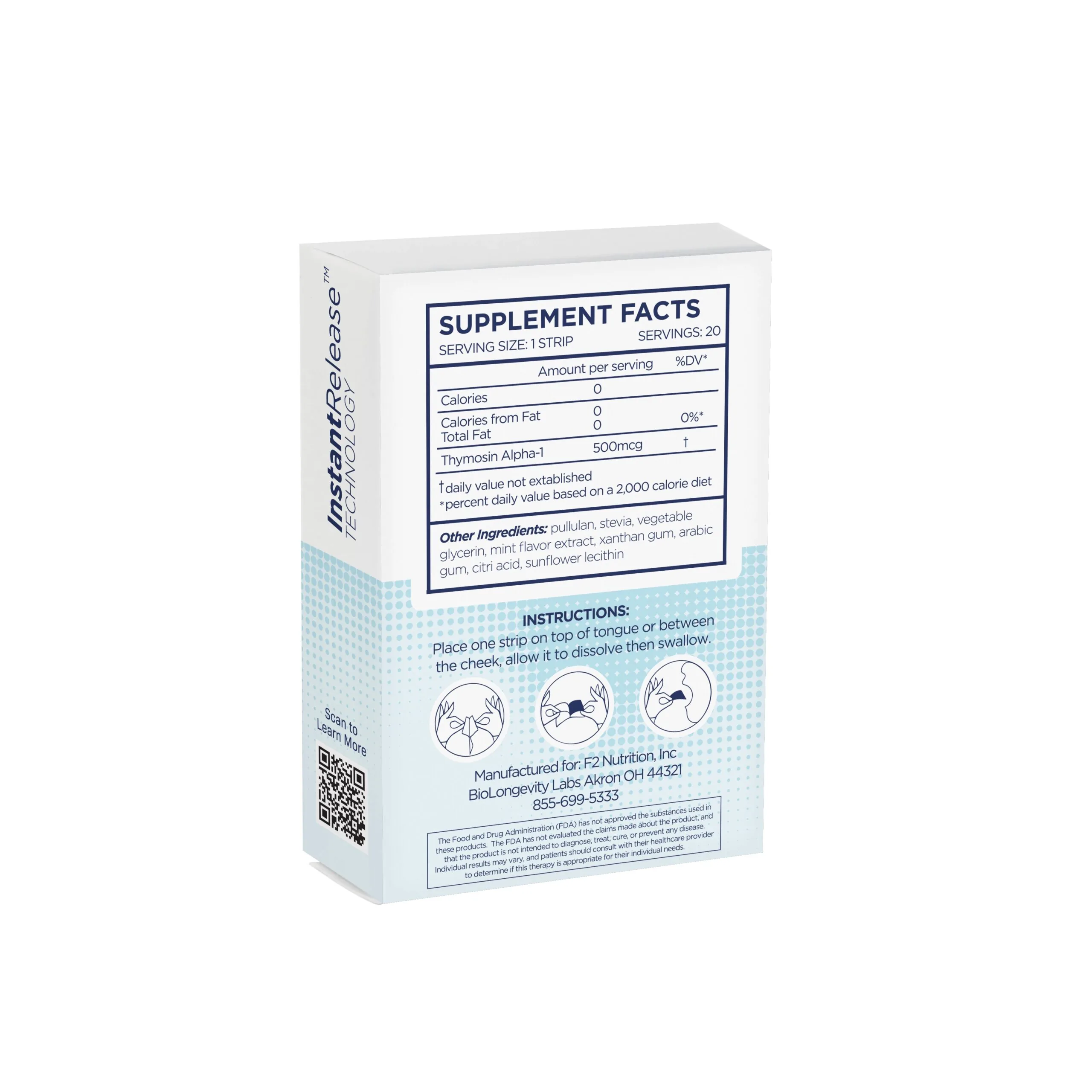
Package contains 20 peptide buccal strips for in vitro research applications, each strip containing Thymosin Alpha 1 (500 mcg).
Thymosin Alpha-1 (Tα1) is a naturally occurring polypeptide consisting of 28 amino acids that was originally isolated from thymus gland tissue. It is classified as a thymic hormone and has been researched extensively for immune system regulation and modulation.
Structurally, Tα1 is derived from a larger precursor protein called prothymosin alpha through enzymatic cleavage. The peptide has a molecular weight of approximately 3,108 daltons and contains an acetylated N-terminus, which is important for its activity.
Peptide Specifications
| Property | Value |
|---|---|
| Peptide Sequence |
Ac-Ser-Asp-Ala-Ala-Val-Asp-Thr-Ser-Ser-Glu-Ile-Thr-Thr-Lys-Asp-Leu-Lys-Glu-Lys-Lys-Glu-Val-Val-Glu-Glu-Ala-Glu-Asn-OH
|
| Molecular Formula | C129H215N33O55 |
| Molecular Weight |
3108.3 g/mol
|
| CAS Number | 62304-98-7 |
| PubChem CID |
16130571
|
Thymosin Alpha 1 Research
Tα1 acts as a biological response modifier, influencing both innate and adaptive immunity by modulating the activity of T cells, dendritic cells, macrophages, and natural killer cells, primarily through Toll-like receptor (TLR) signaling pathways. Recent research has expanded its potential applications to neuroprotection, wound healing, cystic fibrosis, and even psychiatric conditions.
Tα1 and Immune Function
Tα1 enhances both innate and adaptive immunity by activating dendritic cells, T cells, B cells, macrophages, and natural killer cells, primarily through Toll-like receptor (TLR) signaling pathways. It promotes immune homeostasis, modulates cytokine production, and can induce immune tolerance via tryptophan catabolism, making it valuable in conditions of immune dysregulation and chronic inflammation[1].
Tα1 has demonstrated the ability to restore lymphocyte populations and immune balance in settings such as sepsis and post-viral syndromes[2].
Anti-Viral Properties
Tα1 has been studied for its immune-enhancing properties in viral infections, including hepatitis B, hepatitis C, HIV/AIDS, and COVID-19. It activates TLR3/4/9 and downstream IRF3/NF-κB pathways, boosting both innate and adaptive antiviral responses. Studies have observed reduced hospitalization and mortality in severe viral infections associated with Tα1 through restored T cell counts and mitigated cytokine storms[3]. It also enhances vaccine responses in immunocompromised populations[4].
Cancer
Tα1 has a synergistic effect with chemotherapy and immune checkpoint inhibitors, enhancing anti-tumor immunity and reducing immune-related adverse events. It increases tumor antigen expression, promotes Th1 responses, and boosts CD8+ T cell infiltration into tumors. Tα1 also protects against immune checkpoint inhibitor-induced colitis without compromising anti-tumor efficacy, supporting its use in cancer research[5].
Neuroprotection
Recent studies indicate Tα1 provides direct neuroprotection in acute ischemic stroke (AIS) models, reducing infarct size, neuronal loss, and neuroinflammation. Its mechanism involves enhancing mitophagy and mitochondrial renewal, supporting neuronal survival beyond its immunomodulatory effects[6].
Cystic Fibrosis
Tα1 shows promise as a single-molecule therapy for cystic fibrosis (CF), reducing lung inflammation and promoting CFTR protein maturation and function. Preclinical studies demonstrate Tα1’s dual action in correcting the underlying defect and alleviating hyperinflammatory pathology, suggesting potential research applications in CF[7].
Psychiatric Conditions
Emerging evidence links Tα1 to improvement in psychiatric symptoms associated with post-acute sequelae of SARS-CoV-2 infection (PASC). Research indicates Tα1 may influence immune homeostasis in subjects with neuropsychiatric symptoms following COVID-19, particularly in those with severe or persistent immune dysregulation[2].
References
- Romani, L., Bistoni, F., Montagnoli, C., Gaziano, R., Bozza, S., Bonifazi, P., Zelante, T., Moretti, S., Rasi, G., Garaci, E., & Puccetti, P. Thymosin α1. Annals of the New York Academy of Sciences.2007; 1112. https://doi.org/10.1196/annals.1415.002.
- Minutolo, A., Petrone, V., Fanelli, M., Maracchioni, C., Giudice, M., Teti, E., Coppola, L., Sorace, C., Iannetta, M., Miele, M., Bernardini, S., Mastino, A., Vallebona, P., Balestrieri, E., Andreoni, M., Sarmati, L., Grelli, S., Garaci, E., & Matteucci, C. Thymosin alpha 1 restores the immune homeostasis in lymphocytes during Post-Acute sequelae of SARS-CoV-2 infection. International Immunopharmacology.2023; 118. https://doi.org/10.1016/j.intimp.2023.110055.
- Tao, N., Xu, X., Ying, Y., Hu, S., Sun, Q., Lv, G., & Gao, J. Thymosin α1 and Its Role in Viral Infectious Diseases: The Mechanism and Clinical Application. 2023; 28. https://doi.org/10.3390/molecules28083539.
- Mao, L. Thymosin alpha 1 – Reimagine its broader applications in the immuno-oncology era. International Immunopharmacology.2023; 117. https://doi.org/10.1016/j.intimp.2023.109952.
- Wei, Y., Zhang, Y., Li, P., Yan, C., & Wang, L. Thymosin α-1 in cancer therapy: Immunoregulation and potential applications.. International immunopharmacology.2023; 117. https://doi.org/10.1016/j.intimp.2023.109744.
- Kang, X., Wang, S., Cai, W., & Lu, Z. Abstract TP6: Thymosin alpha 1 promotes neuron survival by enhancing mitophagy after AIS. 2025 https://doi.org/10.1161/str.56.suppl_1.tp6.
- Romani, L., Oikonomou, V., Moretti, S., Iannitti, R., D’Adamo, M., Villella, V., Pariano, M., Sforna, L., Borghi, M., Bellet, M., Fallarino, F., Pallotta, M., Servillo, G., Ferrari, E., Puccetti, P., Kroemer, G., Pessia, M., Maiuri, L., Goldstein, A., & Garaci, E. Thymosin α1 represents a potential potent single molecule-based therapy for cystic fibrosis. Nature medicine.2017; 23. https://doi.org/10.1038/nm.4305.