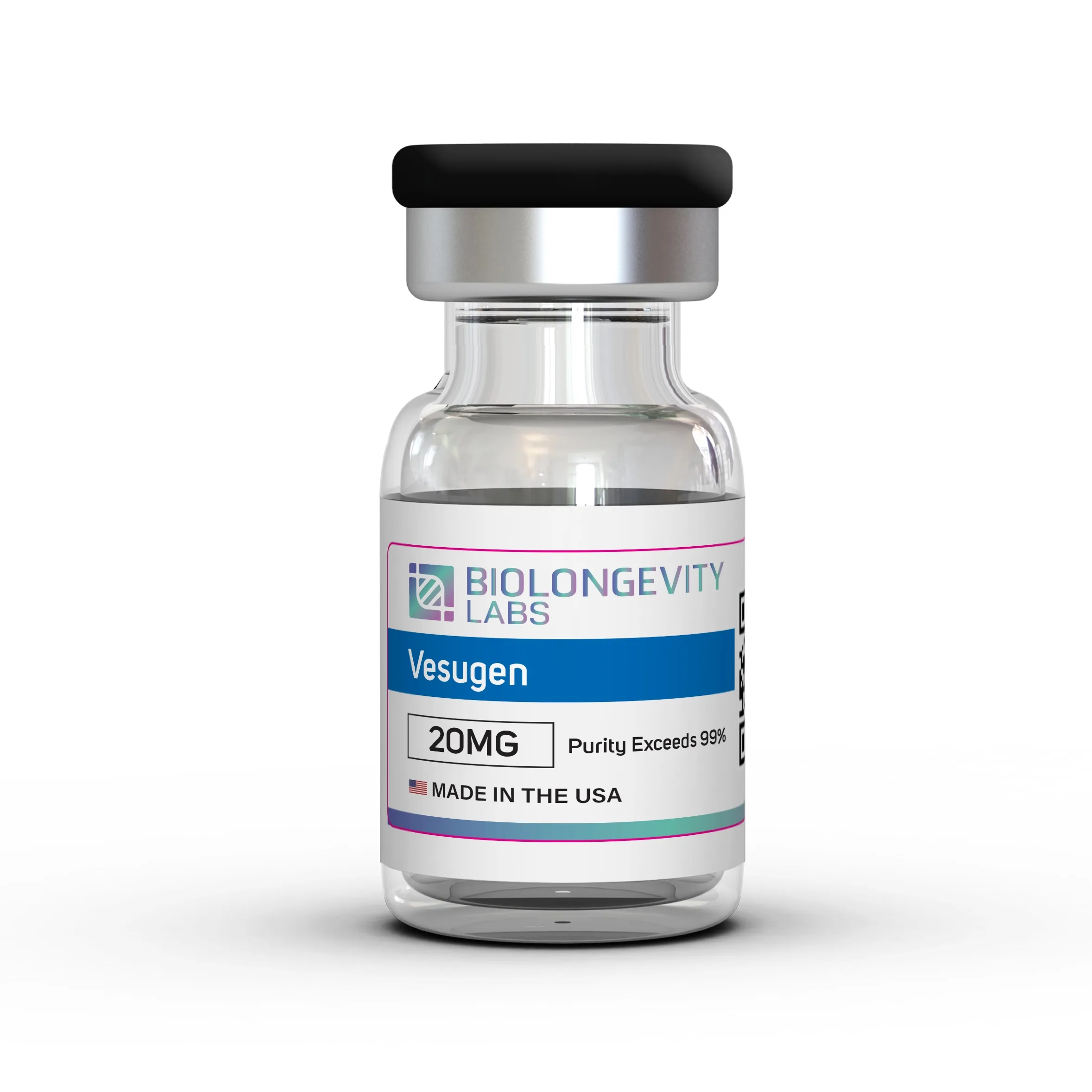
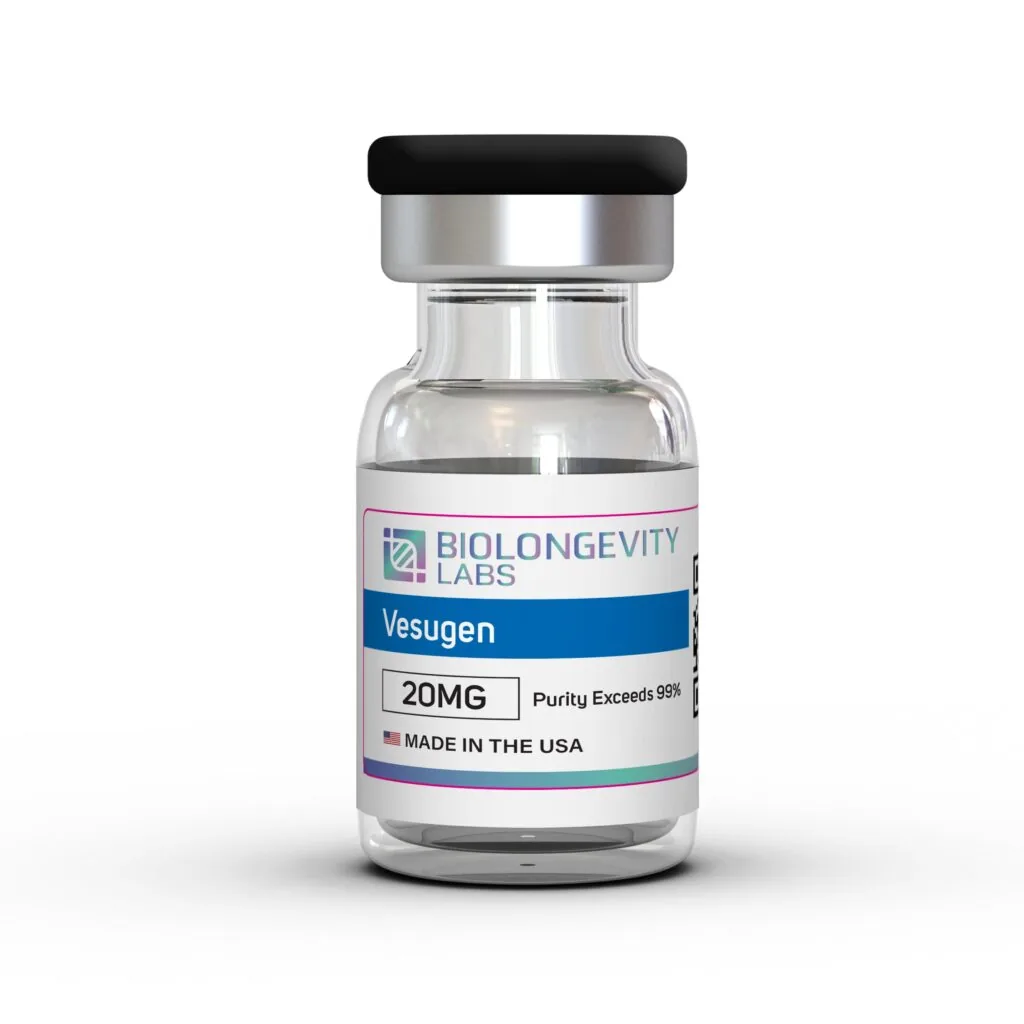
Vesugen is a synthetic tripeptide with the sequence Lys-Glu-Asp, written KED throughout the published literature, produced by controlled peptide synthesis. Supplied as a lyophilized white powder in a sealed 20 mg glass vial with no fillers added. The compound belongs to the short peptide bioregulator group described in the Khavinson series of papers. It is characterized in laboratory work examining vascular endothelial cell cultures, gene and protein expression profiling, and cell senescence markers.
≥99% Purity
Third-Party Tested
COA Available
U.S. Manufactured
Quantity
Out of stock
Notify me when in stock
Third-Party Verified Quality
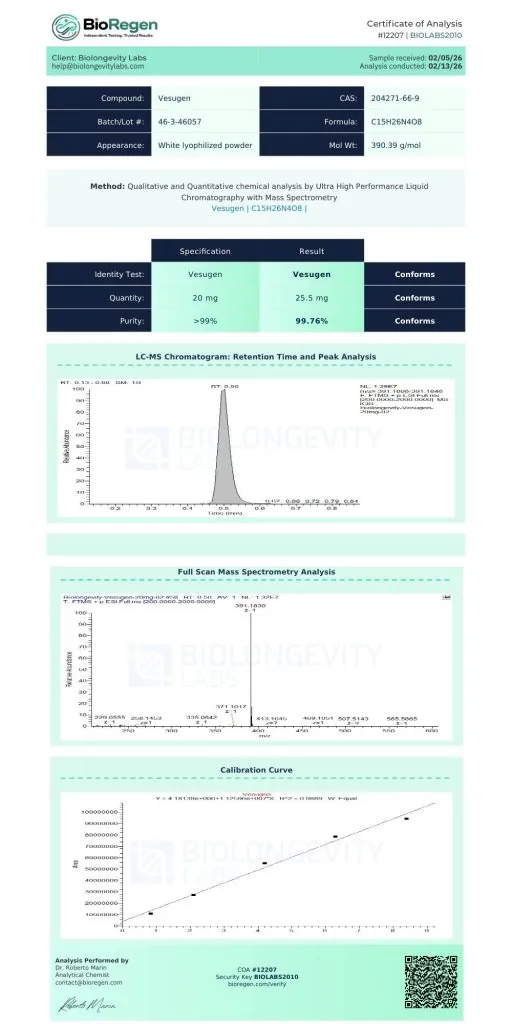
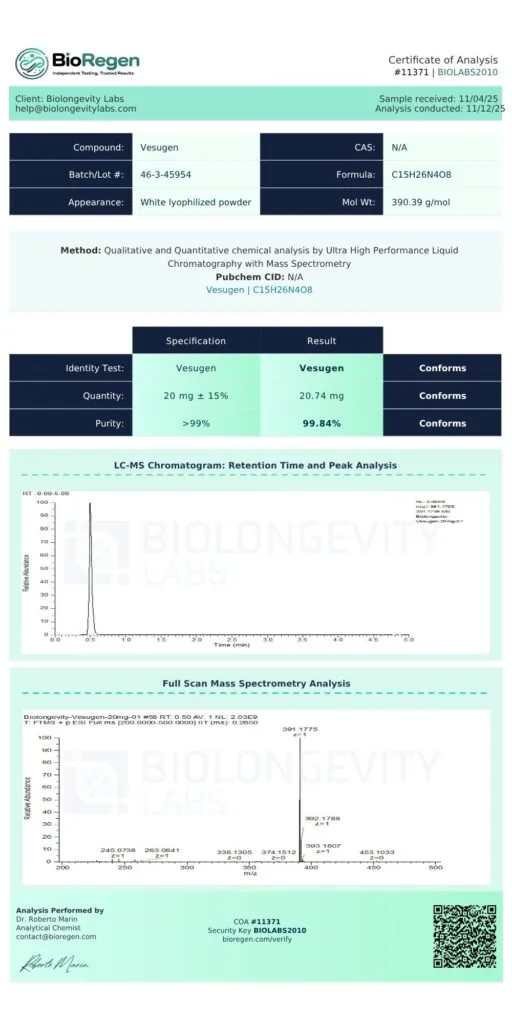
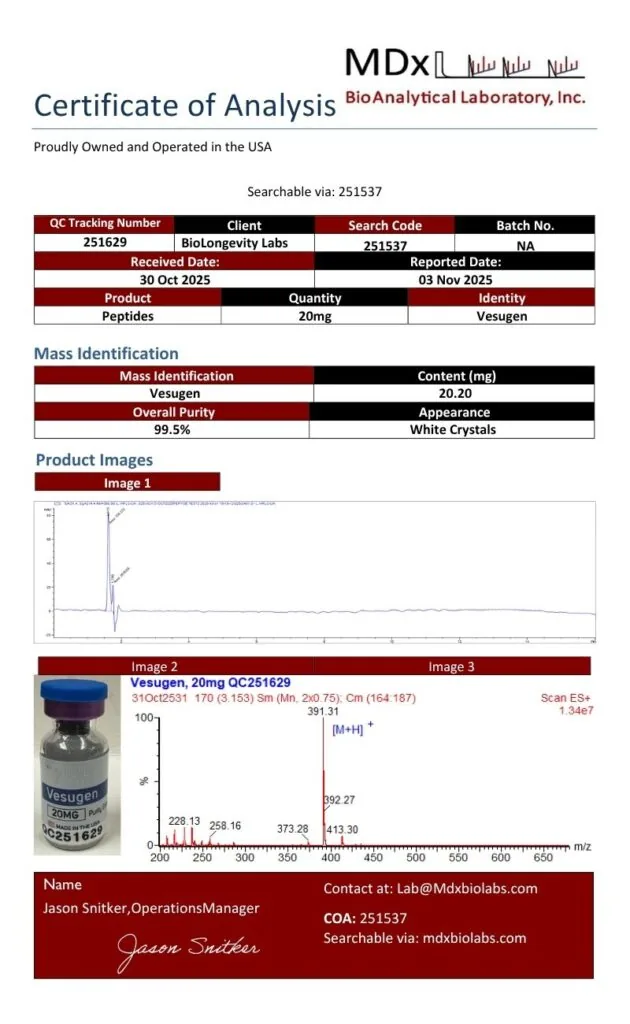
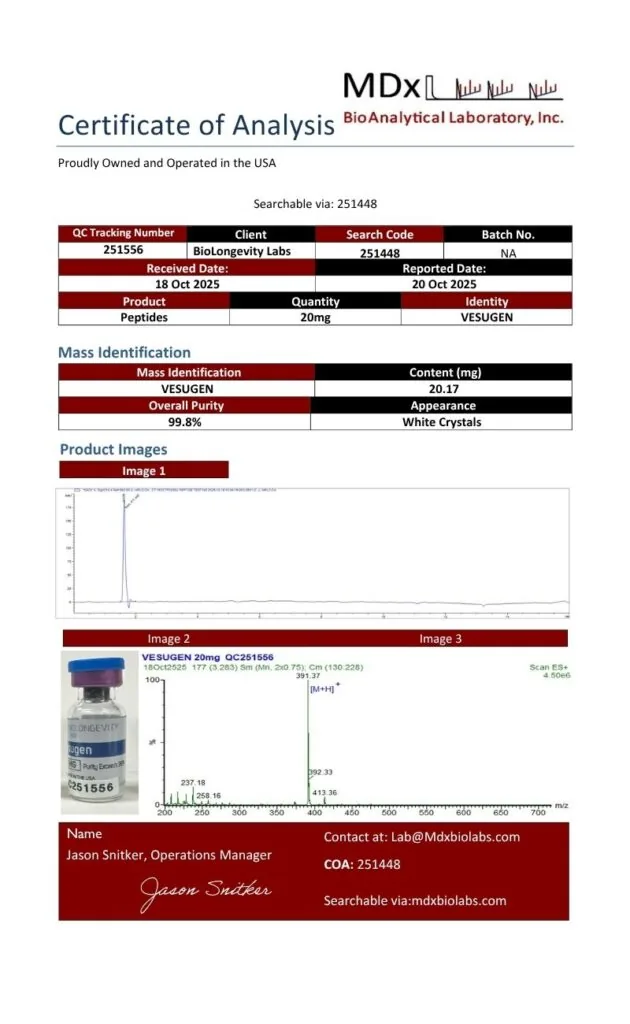
≥99% purity verified through independent UHPLC-MS testing. Certificates of Analysis are available before purchase.
COAs available before purchase
U.S.-manufactured research-grade
Same-business-day U.S. dispatch for in-stock orders placed before 12 PM PT
Secure Checkout · Free shipping on orders over $400
Vesugen is one of the shortest members of the Khavinson peptide bioregulator series, a family of two-residue to four-residue sequences assembled largely from lysine, glutamic acid, aspartic acid, alanine, and glycine. Its three residues carry one basic side chain and two acidic side chains, which gives the molecule a high charge density and ready water solubility.
Research associated with KED centers on vascular endothelial cell cultures, transcript and protein expression profiling, and cell culture models of aging. Laboratory reports place it alongside the AEDG and EDR short peptides as a sequence studied for modeled interactions with promoter-region DNA.
Store the lyophilized compound at -20°C, protected from light.
After reconstitution with bacteriostatic water, store at 2°C to 8°C and use promptly.
Avoid repeated freeze-thaw cycles, which degrade short peptides in solution.
Maintain aseptic handling to preserve compound integrity.
Lyophilized Format
This compound ships in lyophilized (freeze-dried) form. Freeze-drying supports long-term storage stability and preserves compound integrity. No fillers are added.
Research Use Disclaimer
Vesugen 20mg is supplied for research use only. It is not a drug, food, cosmetic, or dietary supplement and has not been evaluated by the FDA. By purchasing, the buyer confirms the compound will be used solely for in vitro research.
Frequently Asked Questions
What Is Vesugen?
Vesugen 20mg is a synthetic tripeptide with the sequence Lys-Glu-Asp, supplied as a lyophilized powder in a 20 mg glass vial for laboratory research. It is one of the short peptide bioregulators characterized in the Khavinson research literature, where it appears under the abbreviation KED.
What Is the Molecular Weight of Vesugen?
Vesugen has a molecular weight of 390.39 g/mol and the molecular formula C₁₅H₂₆N₄O₈. Its monoisotopic mass is 390.17506 Da, recorded under PubChem CID 87571363.
What Is the Amino Acid Sequence of Vesugen?
Vesugen has the three-residue sequence H-Lys-Glu-Asp-OH, written KED in one-letter notation. That sequence, not the product name, is the term indexed by PubMed and the chemical structure databases.
How Should Vesugen Be Stored?
Vesugen should be stored lyophilized at -20°C and protected from light. Once reconstituted, hold it at 2°C to 8°C, use it promptly, and avoid repeated freeze-thaw cycles.
How Is the Purity of Vesugen Verified?
Vesugen purity is verified at 99% or higher through independent third-party laboratory analysis using liquid chromatography with mass spectrometry. Every vial from BioLongevity Labs ships with a batch-specific certificate of analysis tied to that lot.
Vesugen (Lys-Glu-Asp) Research
Vesugen (Lys-Glu-Asp) has been extensively studied across multiple research domains, with laboratory investigations focusing on its bioregulatory mechanisms in vascular and neurological systems. The following research findings demonstrate the peptide’s documented effects in controlled laboratory environments.
Neurological Research
Laboratory studies show KED peptide promotes dendritic arborization in neuronal cell cultures[1]. Research indicates the peptide increases functional mushroom spines by 20-27% in both in vitro and in vivo neurological models[2].
The peptide works through targeted gene expression modulation rather than general cellular energetics. This precision allows researchers to study specific neuroprotective processes without affecting mitochondrial activity or lysosomal function[1].
Vascular System Research
Vesugen functions as a vasoprotective agent during atherosclerosis and restenosis conditions in laboratory models. The peptide maintains endothelial homeostasis and supports vascular wall integrity through bioregulatory pathways[3].
Research shows the compound regulates endothelial cell proliferation and differentiation in vascular tissue studies. These effects operate through specific peptide-protein interactions that preserve endothelial barrier function[3].
Gene Expression Research
KED peptide belongs to bioregulatory peptides that regulate targeted differentiation of pluripotent cells in laboratory settings[4]. The mechanism involves peptide-DNA interactions that influence gene expression patterns without altering genetic code[5].
Studies show the peptide regulates protein synthesis pathways while maintaining genomic stability. This regulation operates through specific binding interactions with chromatin proteins in controlled research environments[4].
Cellular Research
Research indicates KED peptide protects cells from age-related changes while stimulating regenerative processes in various tissue types. The peptide achieves these effects without altering basic mitochondrial function or cellular energy production[1].
The compound operates within tissue-specific bioregulation frameworks studied in gerontological research. This specificity allows researchers to examine effects primarily in vascular and neuronal tissues with minimal impact on other biological systems[5].
This peptide is intended for laboratory research use only.
References
N. Kraskovskaya et al., “Short Peptides Protect Fibroblast-Derived Induced Neurons from Age-Related Changes,” MDPI AG, Oct. 2024. doi: 10.3390/ijms252111363. Available: https://doi.org/10.3390/ijms252111363
G. A. Ryzhak and A. R. Ilina, “Prospects of using peptide drugs for the prevention and treatment of Alzheimer’s disease,” Autonomous non-profit organization-Society of Specialists in the Field Innovative Medical Technology, Feb. 2025. doi: 10.37586/2949-4745-4-2024-223-226. Available: https://doi.org/10.37586/2949-4745-4-2024-223-226
K. Kozlov et al., “[Molecular aspects of vasoprotective peptide KED activity during atherosclerosis and restenosis].,” Advances in gerontology = Uspekhi gerontologii, vol. 29 4, pp. 646–650, 2016.
A. V. Arutjunyan, I. G. Popovich, L. S. Kozina, and G. A. Ryzhak, “Peptide Regulation of Ageing: From Experiment to Practice,” Bentham Science Publishers Ltd., Feb. 2025. doi: 10.2174/0118746098346230250116065407. Available: https://doi.org/10.2174/0118746098346230250116065407
V. Kh. Khavinson, “Peptide medicines: past, present, future,” Medical Informational Agency Publishers, Jul. 2020. doi: 10.30629/0023-2149-2020-98-3-165-177. Available: https://doi.org/10.30629/0023-2149-2020-98-3-165-177
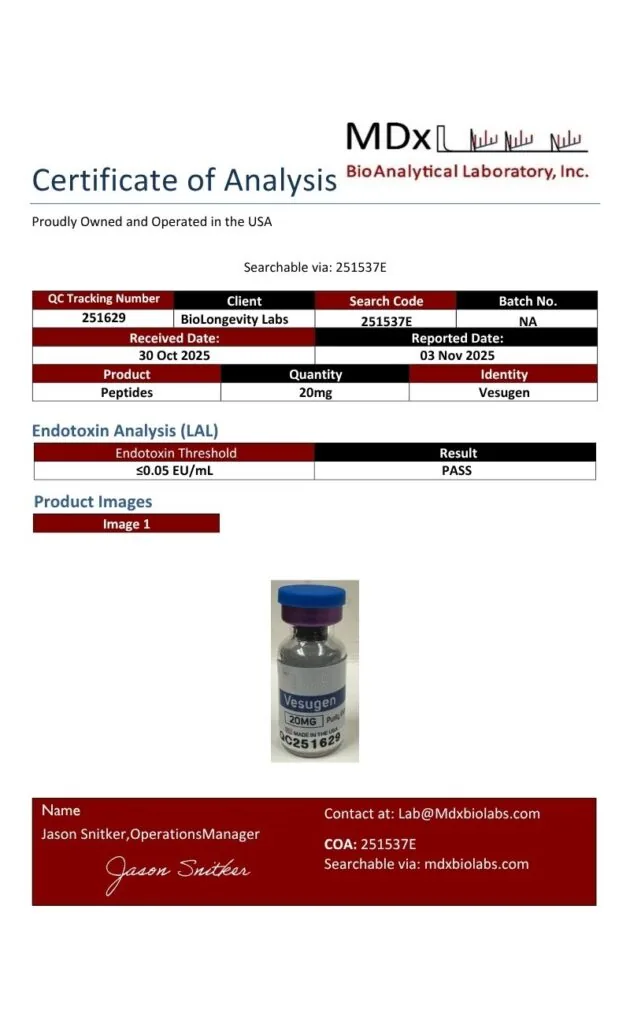
A Certificate of Analysis (COA) is a document that verifies a compound’s identity, purity and quality through independent laboratory testing. Every compound from BioLongevity Labs is third-party tested, and its COA is published here, so researchers can review the testing record before a compound enters a protocol.
Each COA reports results from third-party laboratory analysis, including:
Ultra-high-performance liquid chromatography with mass spectrometry (UHPLC-MS) for purity, measured against a 98% or 99% specification depending on the compound
Mass identification for molecular confirmation and content quantitation
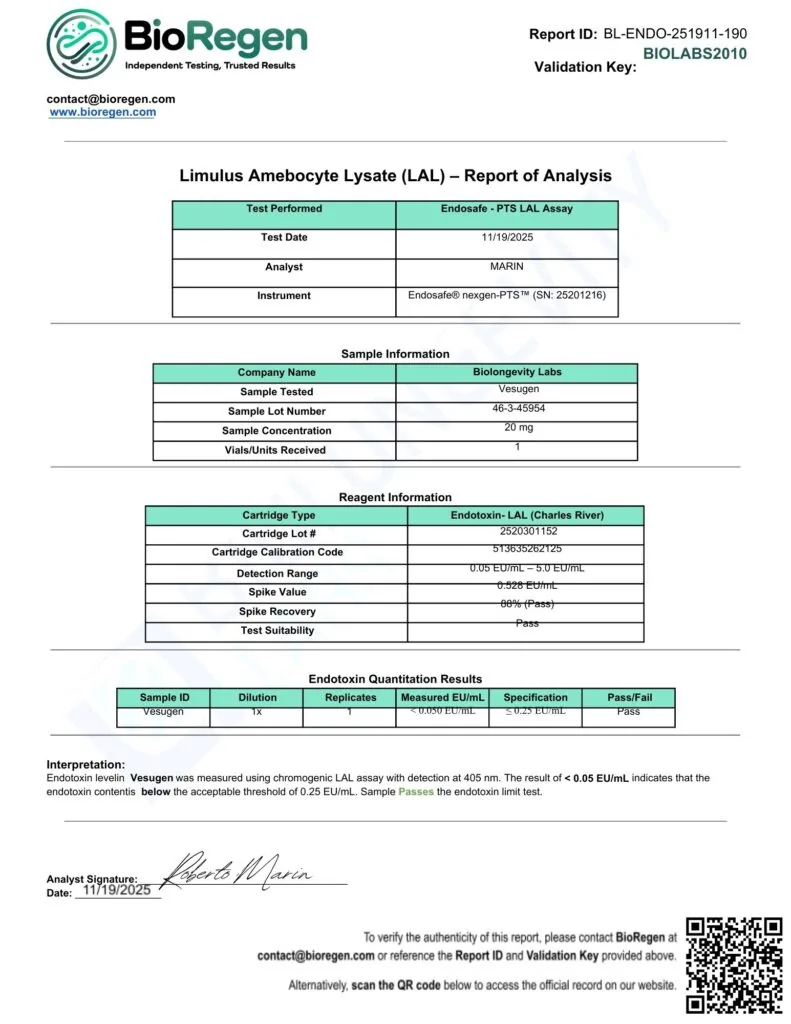
Endotoxin testing by Limulus amebocyte lysate (LAL) or recombinant Factor C (rFC) assay, depending on the laboratory
Visual and physical characterization of the finished material
How to Verify a COA Independently
You can check every certificate against the issuing laboratory’s own records, not just the copy hosted here. Verification does not depend on BioLongevity Labs.
AV Analytics certificates carry a search code. Scan the QR code on the certificate to open the laboratory’s verification page, or enter the search code at avanalytical.com/coa-search to pull the official record.
BioRegen reports of analysis carry a Report ID and a Validation Key. Scan the QR code on the certificate to open the official record, or quote both identifiers when you contact the laboratory at the address printed on the report.
SafeCert Labs issued a number of earlier certificates. Each one carries a COA number and the signature of the reporting chemist. Quote that number when you ask the laboratory to confirm it.
Older certificates from other laboratories list their own verification details on the document.
When a batch is sent to more than one laboratory, each certificate resolves at its own issuing laboratory. A researcher can then check the results against two unrelated sources.
These COAs come from independent certified laboratories, not in-house testing. That gives researchers a verifiable record of molecular integrity for each compound. All compounds are supplied for research use only.
Scientifically reviewed by Dr. Ky H. Le, MD. Dr. Le is a board-certified family medicine physician with over 20 years of clinical experience. Dr. Le validates the scientific accuracy of all technical content and research citations.
Disclaimer: For Research Purposes Only
This content is provided strictly for research purposes and does not constitute an endorsement or recommendation for the non-laboratory application or improper handling of peptides designed for research. The information, including discussions about specific peptides and their researched benefits, is presented for informational purposes only and must not be construed as health, clinical, or legal guidance, nor an encouragement for non-research use. Peptides described here are solely for use in structured scientific study by authorized individuals. We advise consulting with research experts, medical practitioners, or legal counsel prior to any decisions about obtaining or utilizing these peptides. The expectation of responsible, ethical utilization of this information for legitimate investigative and scholarly objectives is paramount. This notice is dynamic and governs all provided content on research peptides.