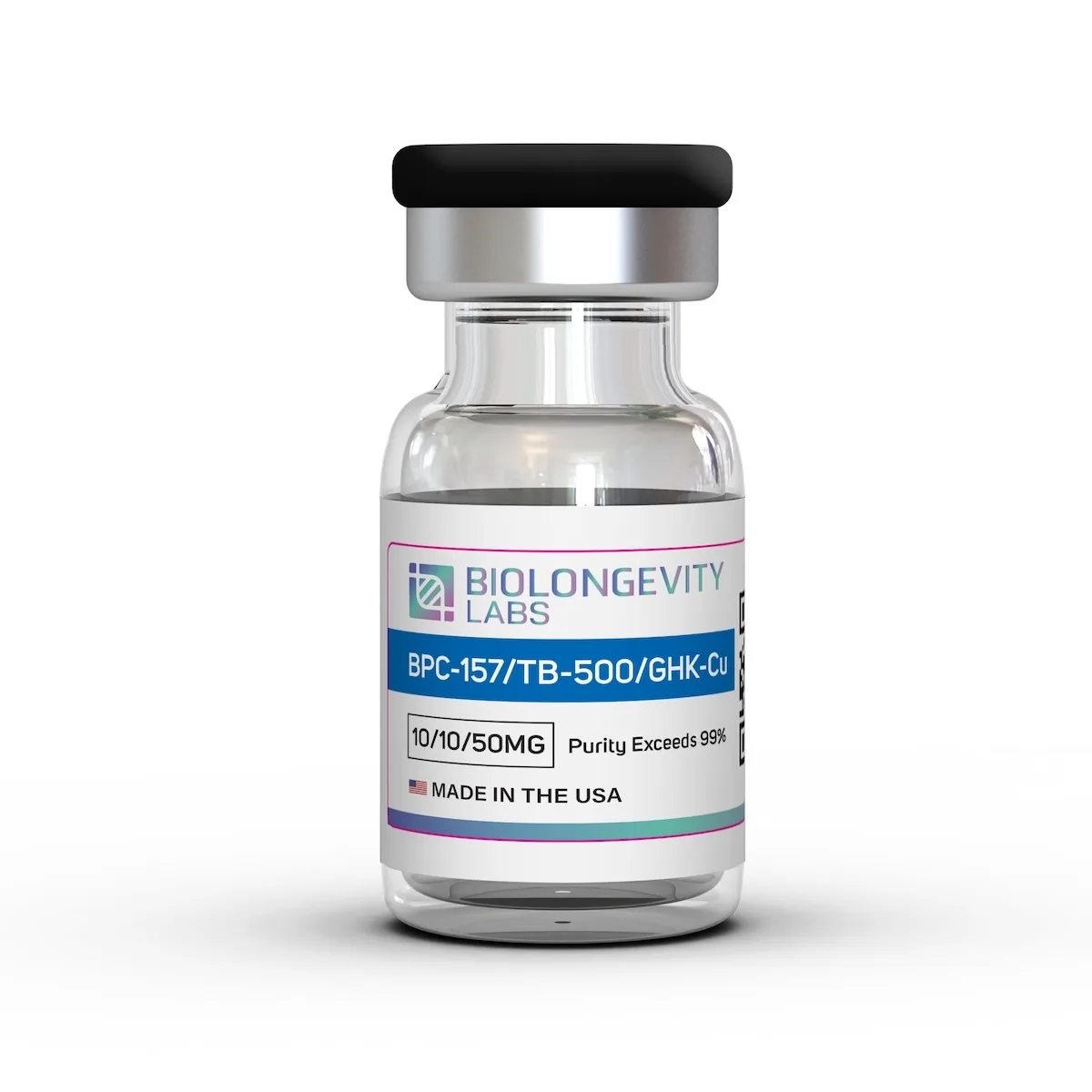
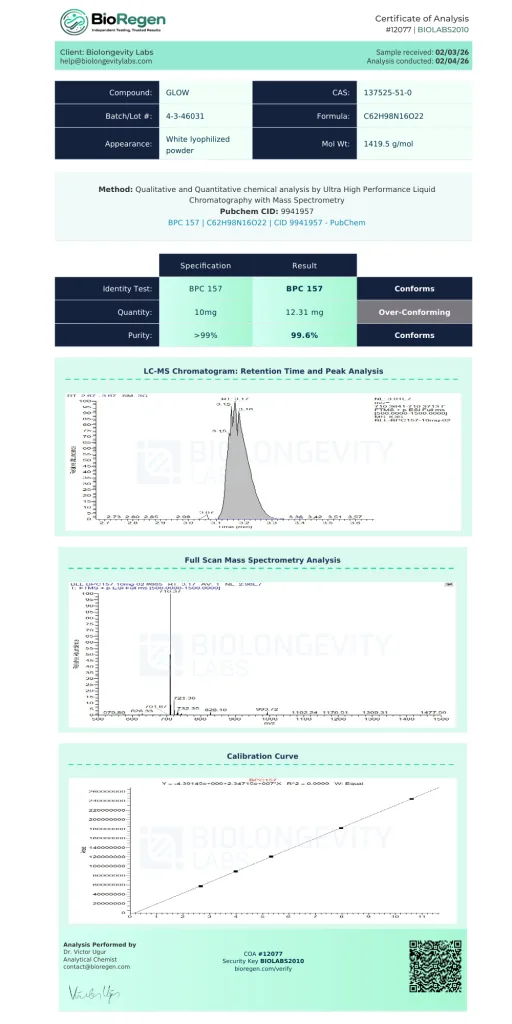
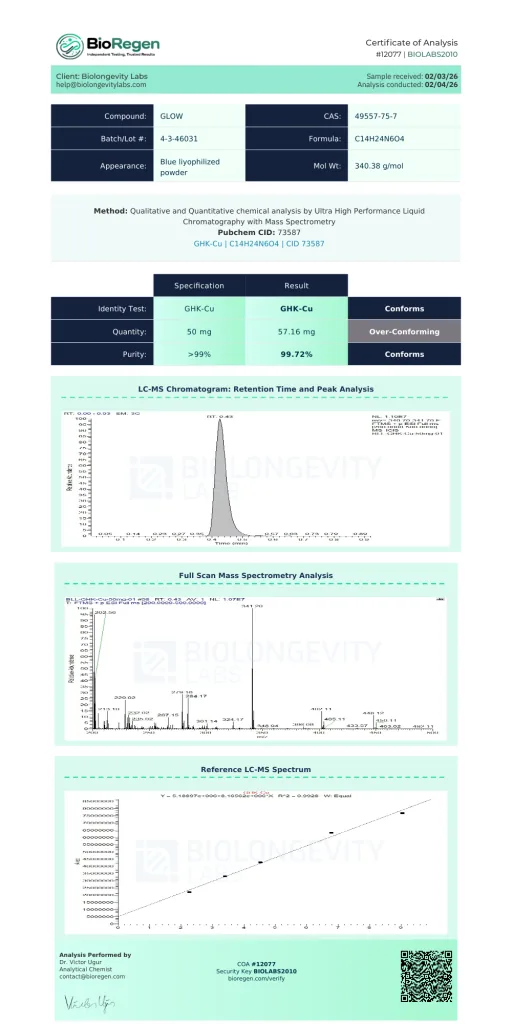
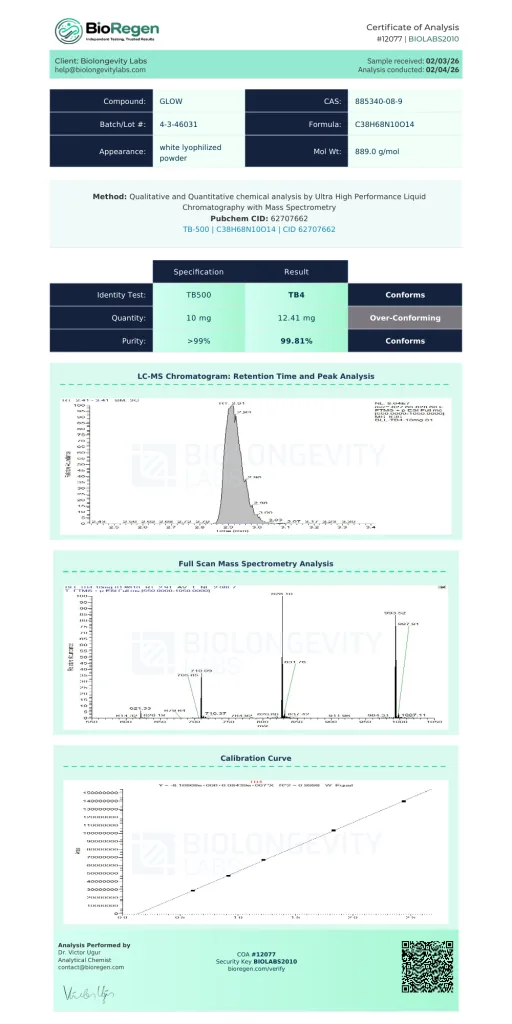
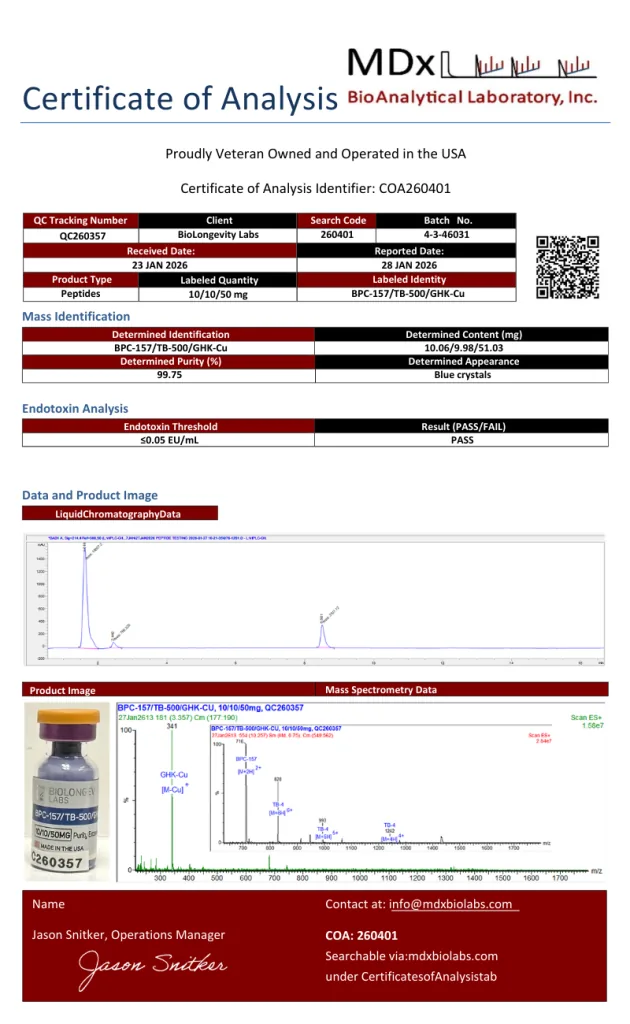
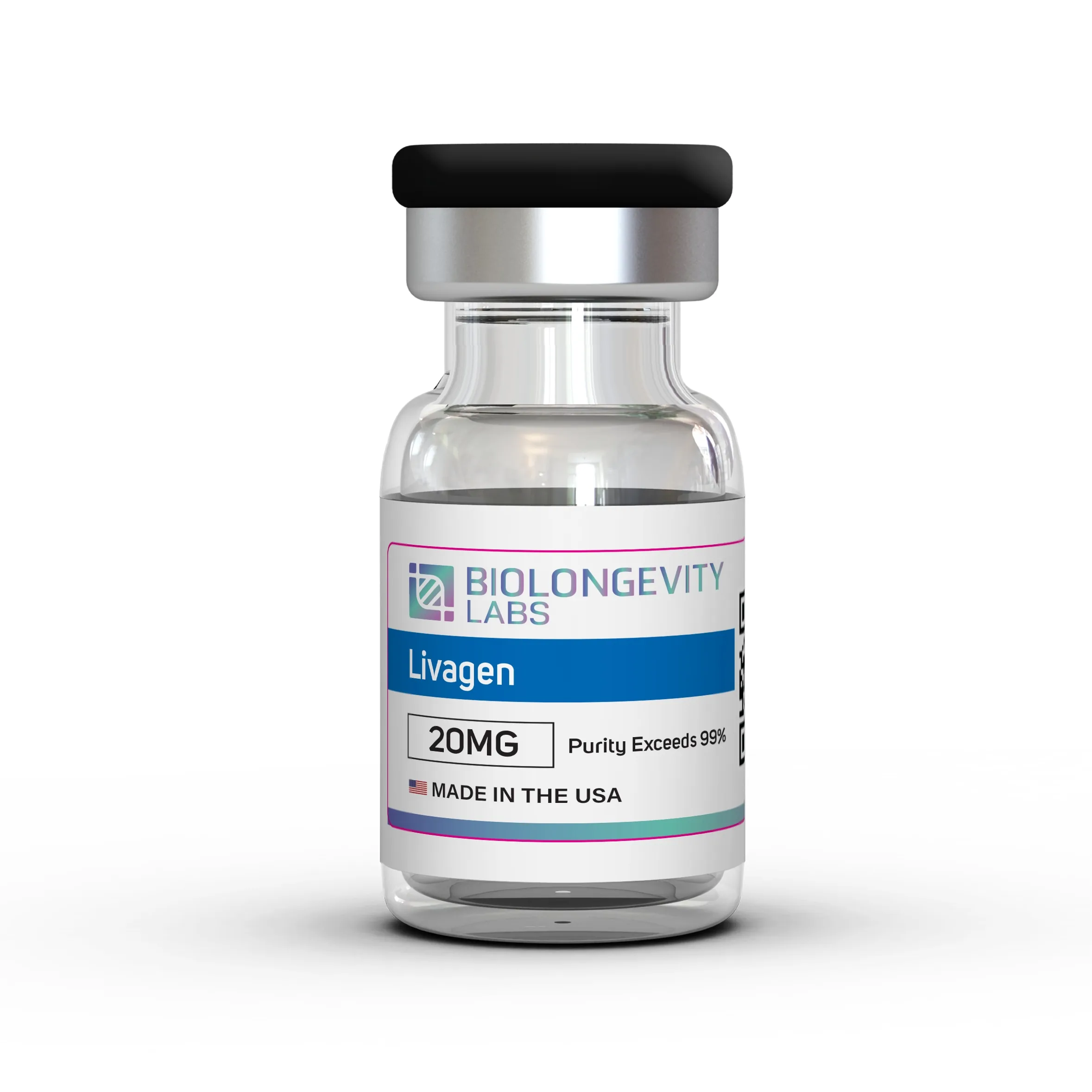
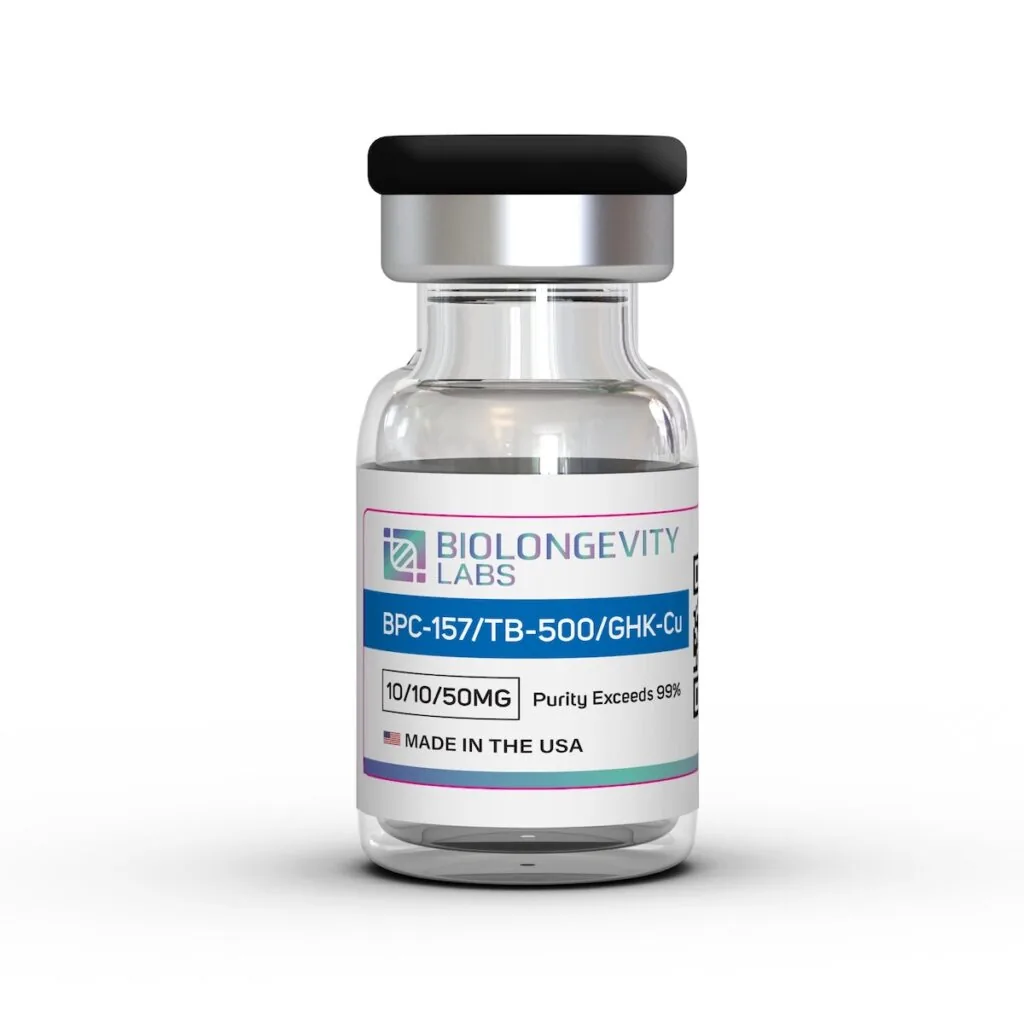
GLOW Blend is a peptide blend formulation that combines three synthetic research peptides, GHK-Cu, BPC-157 and TB-500, in a single vial. Each vial holds 50mg GHK-Cu, 10mg BPC-157 and 10mg TB-500, supplied together as a lyophilized powder for storage stability. The three components are each characterized in laboratory research on extracellular matrix signaling, fibroblast and endothelial cell migration, and actin-binding peptide activity. BioLongevity Labs supplies GLOW Blend for research use only.
≥99% Purity
Third-Party Tested
COA Available
U.S. Manufactured
Quantity
In stock
Third-Party Verified Quality
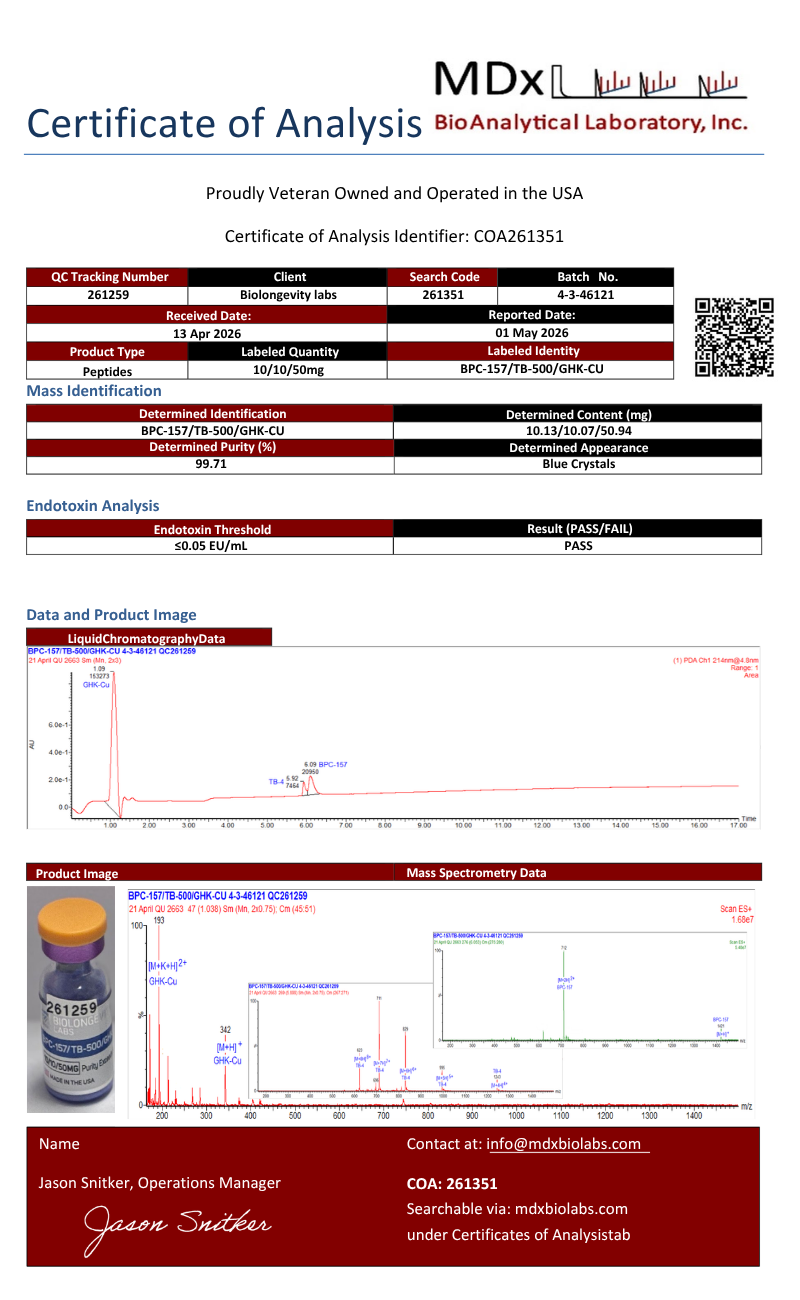
≥99% purity verified through independent UHPLC-MS testing. Certificates of Analysis are available before purchase.
COAs available before purchase
U.S.-manufactured research-grade
Same-business-day U.S. dispatch for in-stock orders placed before 12 PM PT
Secure Checkout · Free shipping on orders over $400
GLOW Blend is a fixed-ratio glow peptide blend of three peptides from different structural families. GHK-Cu is the copper(II) complex of the tripeptide glycyl-L-histidyl-L-lysine, BPC-157 is a fifteen-residue synthetic peptide, and TB-500 is the acetylated seven-residue fragment Ac-LKKTETQ taken from the actin-binding region of thymosin beta-4.
The components sit in a 5:1:1 mass ratio, 50mg GHK-Cu to 10mg each of BPC-157 and TB-500, for 70mg of peptide per vial. All three are produced through controlled peptide synthesis and lyophilized together.
Each peptide is studied along its own line of laboratory work. GHK-Cu appears in fibroblast and extracellular matrix research, BPC-157 in fibroblast migration and endothelial receptor signaling, and the TB-500 sequence in actin binding and endothelial cell migration. Combining them in one vial lets a research group run all three signaling threads in the same model and compare the blend against single-peptide controls.
Compound Specifications
The blend is described first as a single vial, followed by verified identifiers for each of the three component peptides.
Blend Specifications
Property
Value
Total Strength
70mg peptide per vial
Composition
50mg GHK-Cu, 10mg BPC-157, 10mg TB-500
Component Ratio
5:1:1 by mass (GHK-Cu, BPC-157, TB-500)
Format
Single-vial lyophilized blend
Source
Synthetic
Purity
≥99% (HPLC)
Appearance
Lyophilized powder; the copper complex in GHK-Cu can give a light blue tint
Solubility
Soluble in water
Storage
-20°C, protect from light and moisture
GHK-Cu Identifiers
Property
Value
Chemical Name
Glycyl-L-histidyl-L-lysine copper(II) complex
CAS Number
89030-95-5
PubChem CID
71587328 (copper complex; the free GHK peptide is CID 73587)
N-acetylated fragment of thymosin beta-4, residues 17 to 23 (actin-binding region)
CAS Number
885340-08-9
PubChem CID
62707662
Molecular Formula
C₃₈H₆₈N₁₀O₁₄
Molecular Weight
889.0 g/mol
Amino Acid Sequence
Ac-Leu-Lys-Lys-Thr-Glu-Thr-Gln-OH (Ac-LKKTETQ)
Sequence Length
7 residues
Synonyms
TB500, TB 500, N-acetyl-LKKTETQ, thymosin beta-4 fragment 17-23
InChIKey
ADKDNDYYIZUVCZ-ZQNQAVPYSA-N
UNII
QHK6Z47GTG
Amount per Vial
10mg
Storage and Handling
Store the lyophilized blend at -20°C, sealed and protected from light and moisture.
After reconstitution, store at 2–8°C and use promptly.
Divide reconstituted material into single-use aliquots to avoid repeated freeze-thaw cycles.
Maintain aseptic handling to preserve compound integrity.
Lyophilized Format
This compound ships in lyophilized (freeze-dried) form. Freeze-drying supports long-term storage stability and preserves compound integrity. No fillers are added.
Research Use Disclaimer
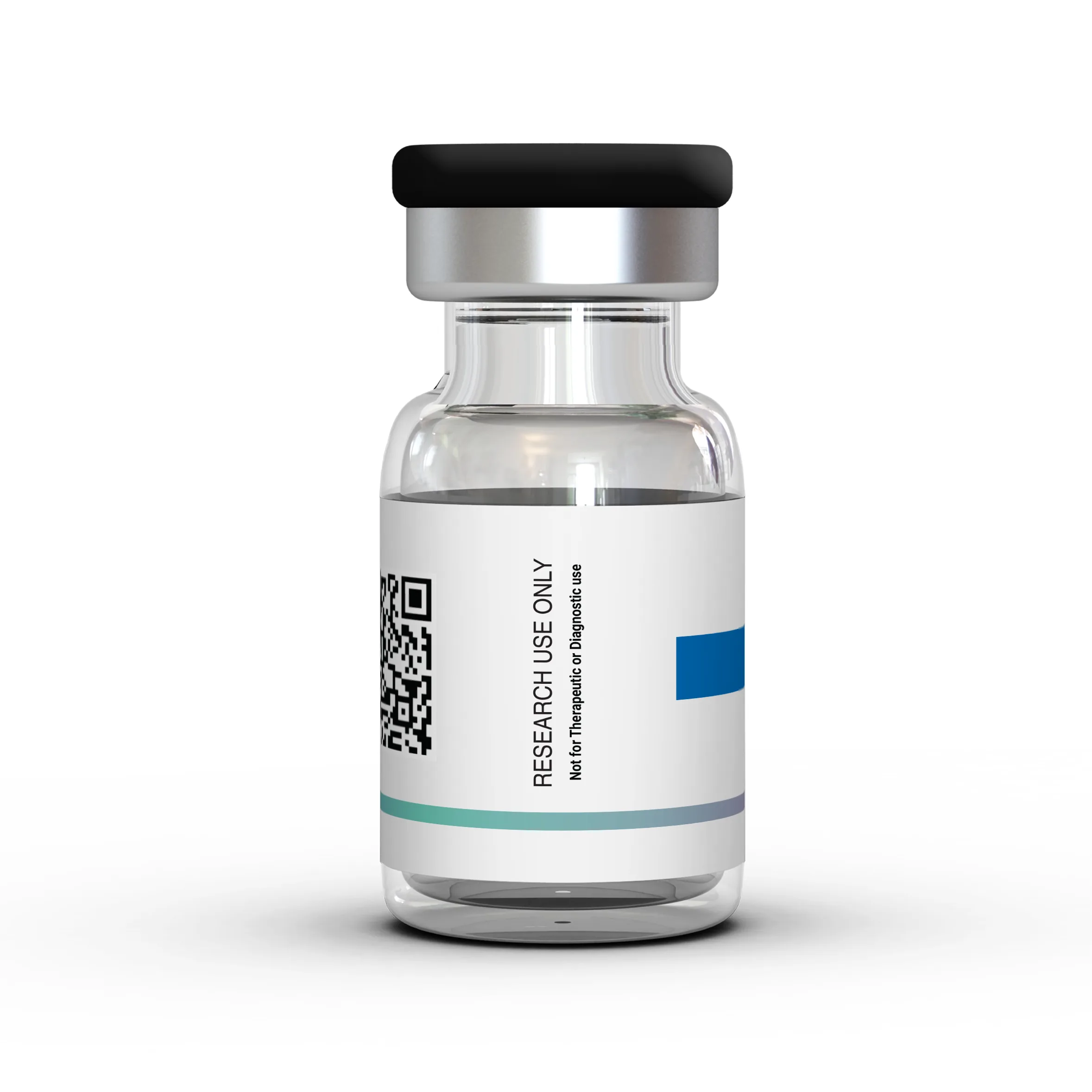
GLOW Blend is supplied for research use only. It is not a drug, food, cosmetic, or dietary supplement and has not been evaluated by the FDA. By purchasing, the buyer confirms the compound will be used solely for in vitro research.
Frequently Asked Questions
What Is in the GLOW Blend Peptide?
The GLOW Blend peptide combines 50mg GHK-Cu, 10mg BPC-157 and 10mg TB-500 in one 70mg lyophilized vial. BioLongevity Labs supplies it as a fixed 5:1:1 ratio for research use only.
Is TB-500 the Same as Thymosin Beta-4?
No. TB-500 is the acetylated seven-residue fragment Ac-LKKTETQ (PubChem CID 62707662, CAS 885340-08-9), which corresponds to residues 17 to 23 of the 43-residue thymosin beta-4 protein.
What Are the CAS Numbers for the GLOW Blend Components?
The GLOW Blend components are listed under CAS 89030-95-5 for GHK-Cu, CAS 137525-51-0 for BPC-157 and CAS 885340-08-9 for TB-500. The GHK-Cu copper complex is PubChem CID 71587328, which differs from the free GHK peptide at CID 73587.
How Should GLOW Blend 70mg Be Stored?
GLOW Blend 70mg should be kept sealed at -20°C in its lyophilized form, away from light and moisture. Once reconstituted, it should be held at 2–8°C, used promptly and split into aliquots to avoid repeated freeze-thaw cycles.
How Is GLOW Blend Purity Verified?
Each GLOW Blend batch is tested by an independent third-party laboratory to a ≥99% purity specification. The Certificate of Analysis for each batch is published online for review before purchase.
Research Overview
Published work on the GLOW Blend components examines each peptide on its own, in cell culture and research-model systems. Direct studies of the three-peptide combination have not been published, so the summary below follows each component in turn.
GHK-Cu in Fibroblast and Matrix Models
In fibroblast cultures, GHK-Cu increased collagen synthesis starting between 10⁻¹² and 10⁻¹¹ M, with the largest response at 10⁻⁹ M and no change in cell number [1].
In rat dermal fibroblast cultures, the complex raised decorin expression while biglycan expression stayed unchanged, and an experimental tissue chamber model showed higher type I collagen and glycosaminoglycan content [2]. Gene-profiling data reviewed in 2018 link GHK to a broad set of pathways involved in collagen, elastin and glycosaminoglycan synthesis [3].
BPC-157 in Fibroblast and Endothelial Models
In tendon explant and fibroblast cultures, BPC-157 increased explant outgrowth, cell survival under hydrogen peroxide stress and concentration-dependent fibroblast migration. Phosphorylation of FAK and paxillin rose while total protein levels held steady, pointing to the FAK-paxillin pathway [4].
In vascular endothelial cell cultures, BPC-157 raised VEGFR2 mRNA and protein levels without changing VEGF-A, promoted VEGFR2 internalization and activated VEGFR2-Akt-eNOS signaling. The same study reported increased tube formation and vessel density in chorioallantoic membrane assays [5].
TB-500 and the Thymosin Beta-4 Actin-Binding Motif
Thymosin beta-4 is regarded as the main G-actin-sequestering molecule in eukaryotic cells [6]. In Boyden chamber assays it acted as a chemoattractant for umbilical vein endothelial cells (HUVECs), raising migration four- to sixfold over medium alone and increasing matrix metalloproteinase production [7].
Work with proteolytic fragments and synthetic peptides traced this activity to the seven-residue actin-binding motif that TB-500 is built on. The motif matched full-length thymosin beta-4 in HUVEC migration and aortic ring sprouting assays at about 50 nM, while peptides missing any part of the motif were inactive [8].
The table below maps each component to the in vitro assays most often used to study it.
Research Area
In Vitro Application
Extracellular Matrix
Collagen, decorin and glycosaminoglycan assays in fibroblast cultures (GHK-Cu)
Cell Migration
Transwell, Boyden chamber and scratch assays in fibroblast and endothelial cultures (BPC-157, TB-500)
Angiogenic Signaling
Endothelial tube formation and VEGFR2-Akt-eNOS pathway analysis (BPC-157)
Cytoskeletal Dynamics
G-actin binding and actin-motif peptide comparisons (TB-500)
Gene Expression
Transcriptomic profiling of copper-peptide responsive pathways (GHK-Cu)
Combination Studies
Side-by-side comparison of the blend with single-peptide controls in the same model
References
Maquart FX, Pickart L, Laurent M, et al. (1988). Stimulation of collagen synthesis in fibroblast cultures by the tripeptide-copper complex glycyl-L-histidyl-L-lysine-Cu2+. FEBS Letters. https://doi.org/10.1016/0014-5793(88)80509-x
Siméon A, Wegrowski Y, Bontemps Y, Maquart FX. (2000). Expression of glycosaminoglycans and small proteoglycans in wounds: modulation by the tripeptide-copper complex glycyl-L-histidyl-L-lysine-Cu(2+). Journal of Investigative Dermatology. https://doi.org/10.1046/j.1523-1747.2000.00166.x
Pickart L, Margolina A. (2018). Regenerative and Protective Actions of the GHK-Cu Peptide in the Light of the New Gene Data. International Journal of Molecular Sciences. https://pmc.ncbi.nlm.nih.gov/articles/PMC6073405/
Chang CH, Tsai WC, Lin MS, Hsu YH, Pang JH. (2011). The promoting effect of pentadecapeptide BPC 157 on tendon healing involves tendon outgrowth, cell survival, and cell migration. Journal of Applied Physiology. https://doi.org/10.1152/japplphysiol.00945.2010
Hsieh MJ, Liu HT, Wang CN, et al. (2017). Therapeutic potential of pro-angiogenic BPC157 is associated with VEGFR2 activation and up-regulation. Journal of Molecular Medicine. https://doi.org/10.1007/s00109-016-1488-y
Goldstein AL, Hannappel E, Kleinman HK. (2005). Thymosin beta4: actin-sequestering protein moonlights to repair injured tissues. Trends in Molecular Medicine. https://doi.org/10.1016/j.molmed.2005.07.004
Malinda KM, Goldstein AL, Kleinman HK. (1997). Thymosin beta 4 stimulates directional migration of human umbilical vein endothelial cells. FASEB Journal. https://doi.org/10.1096/fasebj.11.6.9194528
Philp D, Huff T, Gho YS, Hannappel E, Kleinman HK. (2003). The actin binding site on thymosin beta4 promotes angiogenesis. FASEB Journal. https://doi.org/10.1096/fj.03-0121fje
A Certificate of Analysis (COA) is a document that verifies a compound’s identity, purity and quality through independent laboratory testing. Every compound from BioLongevity Labs is third-party tested, and its COA is published here, so researchers can review the testing record before a compound enters a protocol.
Each COA reports results from third-party laboratory analysis, including:
Ultra-high-performance liquid chromatography with mass spectrometry (UHPLC-MS) for purity, measured against a 98% or 99% specification depending on the compound
Mass identification for molecular confirmation and content quantitation
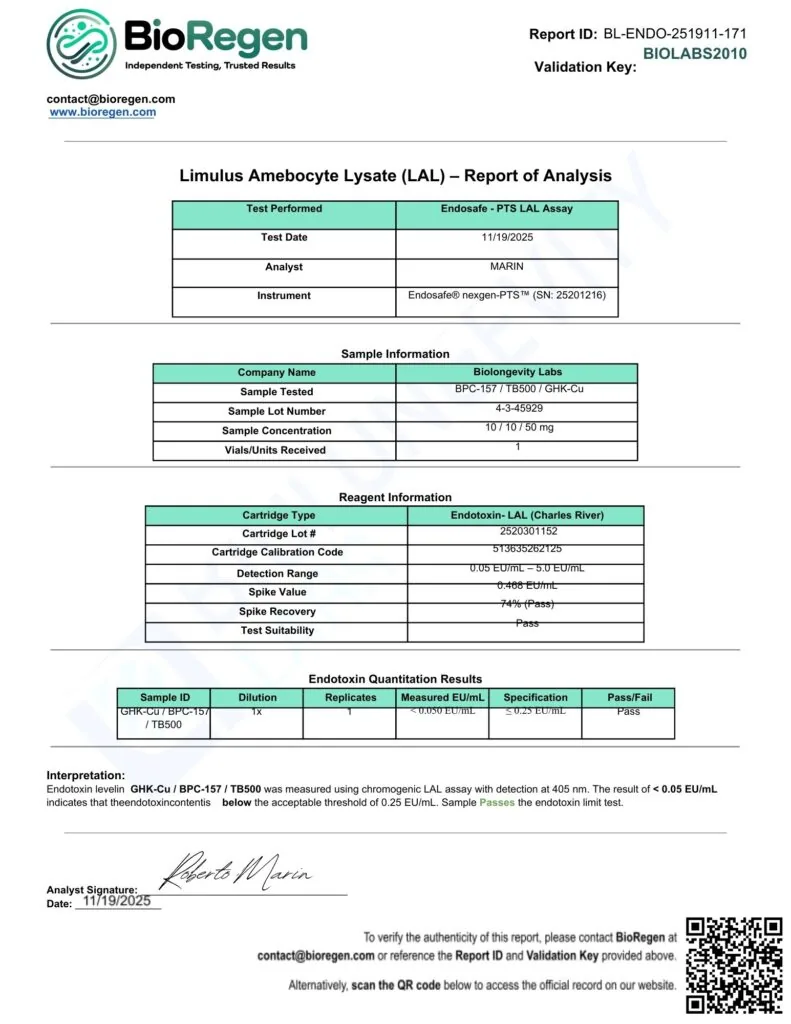
Endotoxin testing by Limulus amebocyte lysate (LAL) or recombinant Factor C (rFC) assay, depending on the laboratory
Visual and physical characterization of the finished material
How to Verify a COA Independently
You can check every certificate against the issuing laboratory’s own records, not just the copy hosted here. Verification does not depend on BioLongevity Labs.
AV Analytics certificates carry a search code. Scan the QR code on the certificate to open the laboratory’s verification page, or enter the search code at avanalytical.com/coa-search to pull the official record.
BioRegen reports of analysis carry a Report ID and a Validation Key. Scan the QR code on the certificate to open the official record, or quote both identifiers when you contact the laboratory at the address printed on the report.
SafeCert Labs issued a number of earlier certificates. Each one carries a COA number and the signature of the reporting chemist. Quote that number when you ask the laboratory to confirm it.
Older certificates from other laboratories list their own verification details on the document.
When a batch is sent to more than one laboratory, each certificate resolves at its own issuing laboratory. A researcher can then check the results against two unrelated sources.
These COAs come from independent certified laboratories, not in-house testing. That gives researchers a verifiable record of molecular integrity for each compound. All compounds are supplied for research use only.
Scientifically reviewed by Dr. Ky H. Le, MD. Dr. Le is a board-certified family medicine physician with over 20 years of clinical experience. Dr. Le validates the scientific accuracy of all technical content and research citations.
Disclaimer: For Research Purposes Only
This content is provided strictly for research purposes and does not constitute an endorsement or recommendation for the non-laboratory application or improper handling of peptides designed for research. The information, including discussions about specific peptides and their researched benefits, is presented for informational purposes only and must not be construed as health, clinical, or legal guidance, nor an encouragement for non-research use. Peptides described here are solely for use in structured scientific study by authorized individuals. We advise consulting with research experts, medical practitioners, or legal counsel prior to any decisions about obtaining or utilizing these peptides. The expectation of responsible, ethical utilization of this information for legitimate investigative and scholarly objectives is paramount. This notice is dynamic and governs all provided content on research peptides.