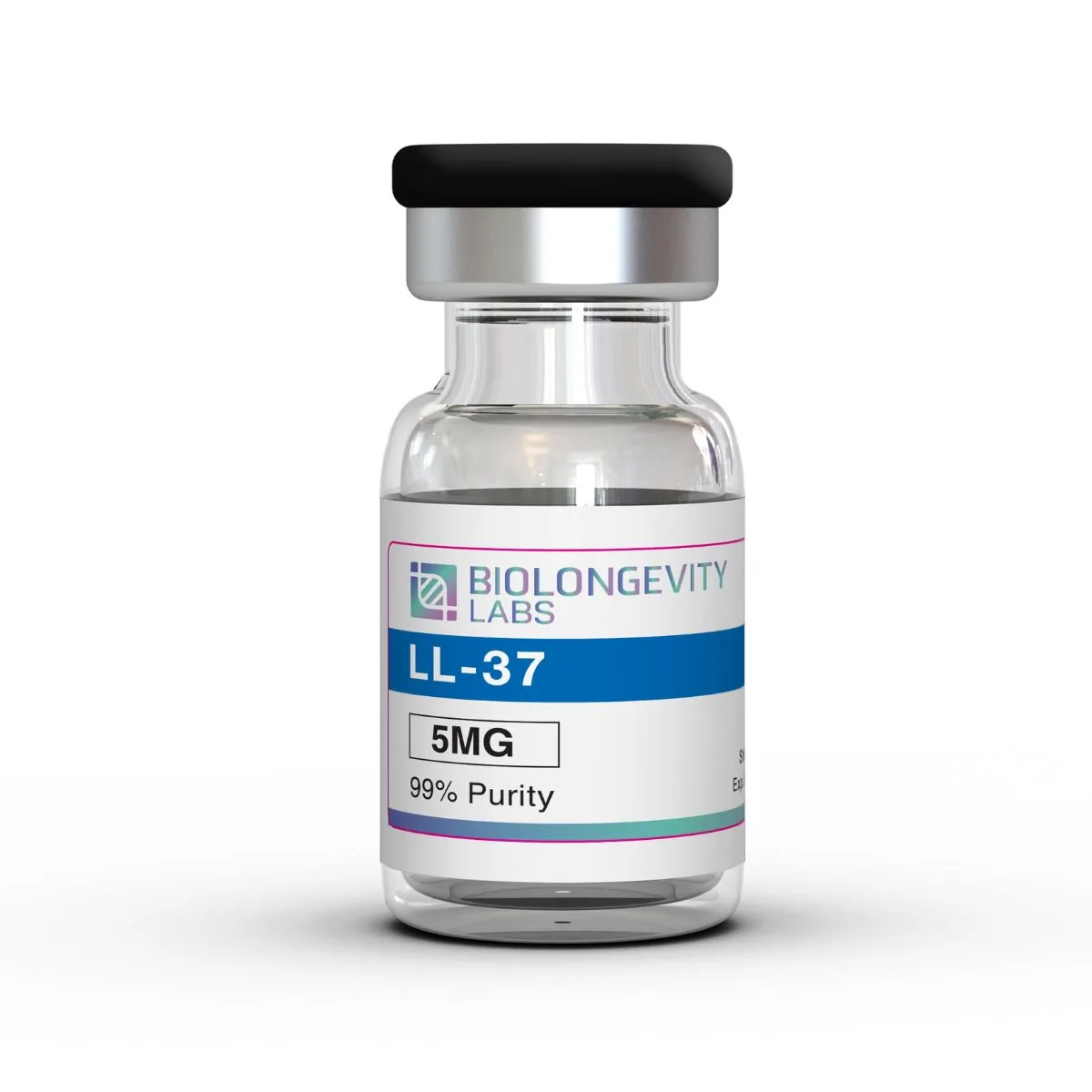
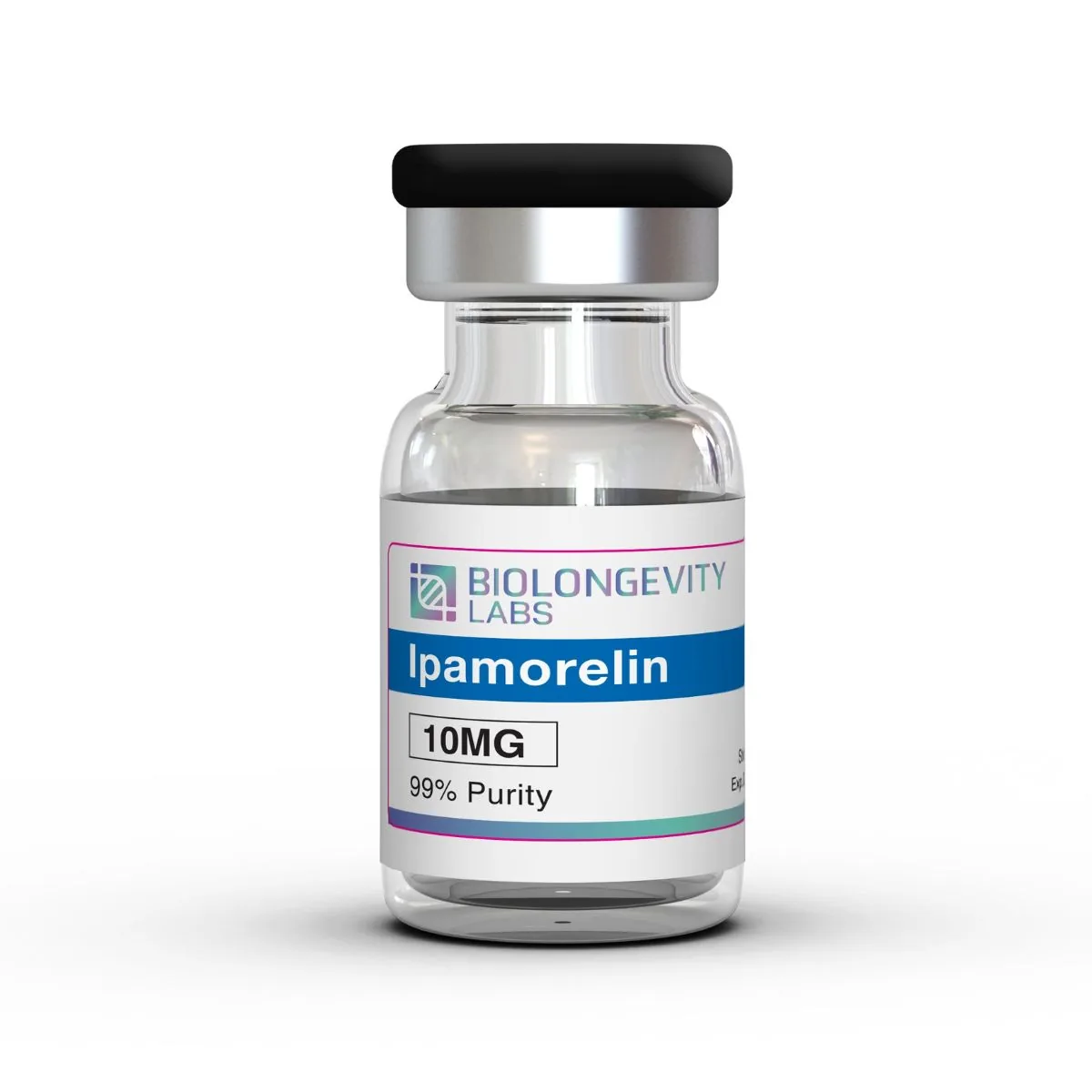
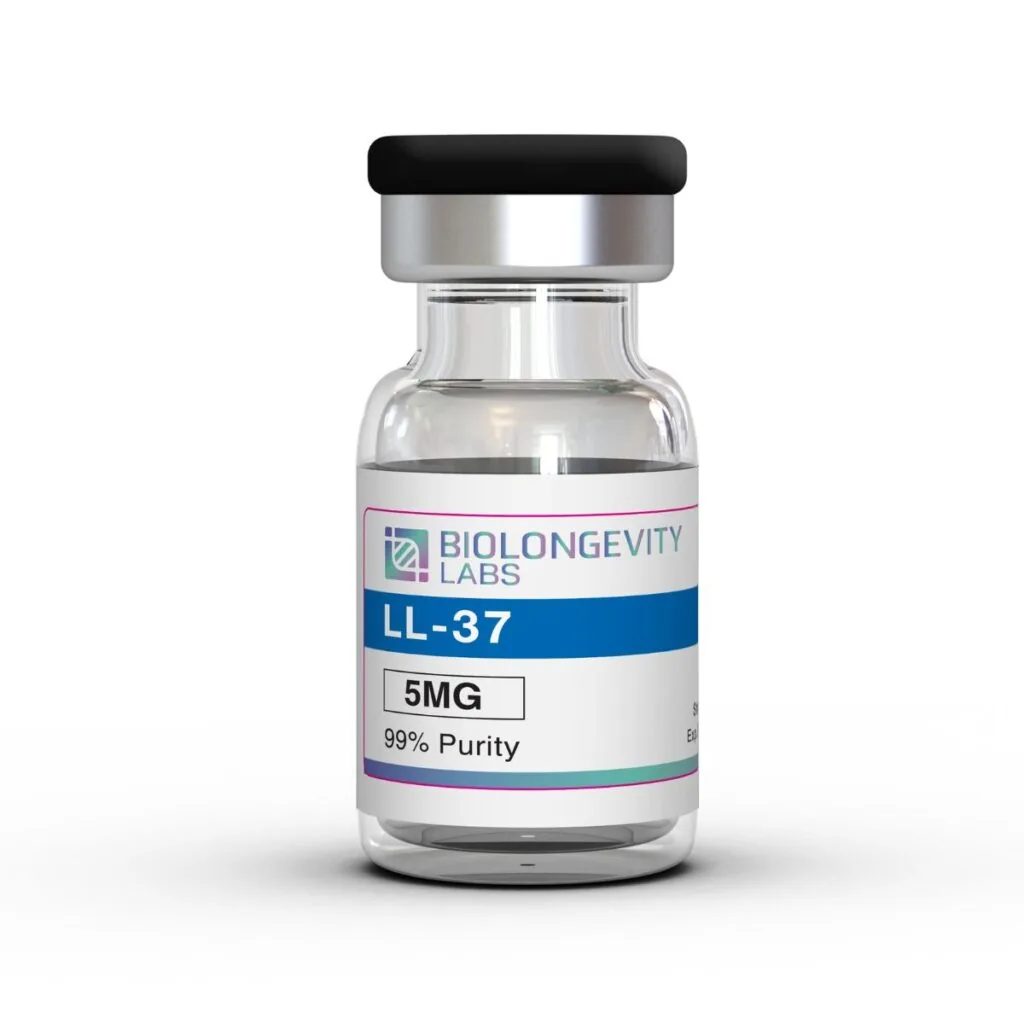
LL-37 peptide is a synthetic 37-residue cationic antimicrobial peptide that matches the C-terminal fragment of the cathelicidin precursor protein encoded by the CAMP gene. BioLongevity Labs supplies it as a 5mg lyophilized powder in a sealed vial, produced through controlled peptide synthesis and checked to ≥99% purity by HPLC. LL-37 is characterized in laboratory research on peptide and membrane interaction, antibacterial activity against reference bacterial strains in vitro, biofilm formation models, and immunomodulatory signalling in cultured cell lines.
≥99% Purity
Third-Party Tested
COA Available
U.S. Manufactured
Quantity
In stock
Third-Party Verified Quality
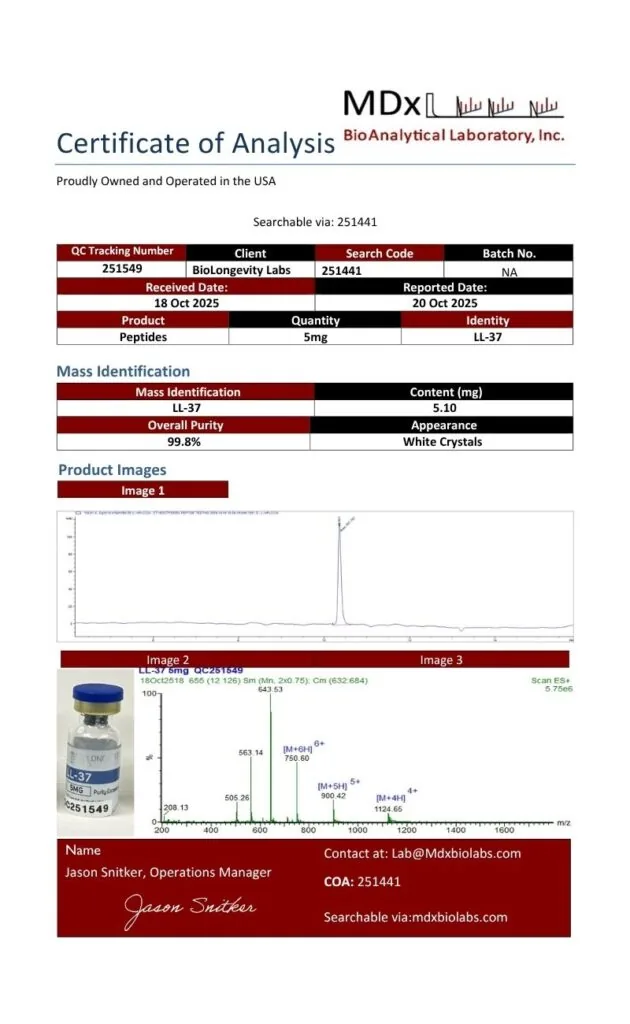
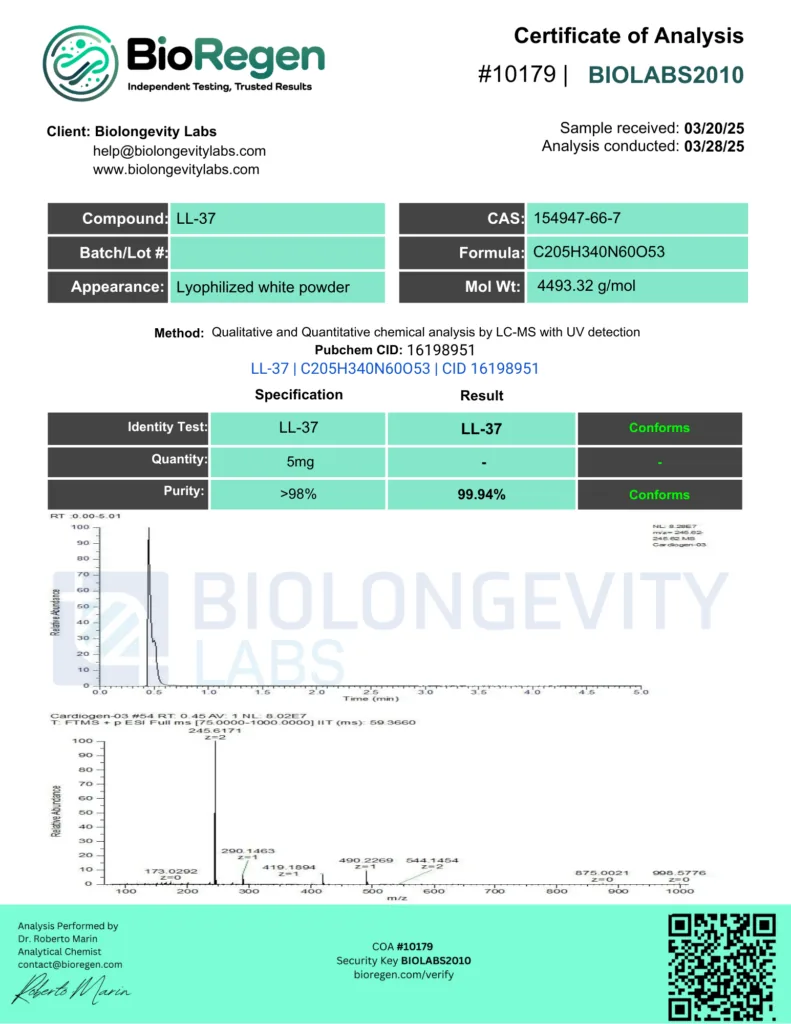
≥99% purity verified through independent UHPLC-MS testing. Certificates of Analysis are available before purchase.
COAs available before purchase
U.S.-manufactured research-grade
Same-business-day U.S. dispatch for in-stock orders placed before 12 PM PT
Secure Checkout · Free shipping on orders over $400
LL-37 takes its name from its two N-terminal leucine residues and its 37-residue length. It is the active C-terminal domain of an 18 kDa cathelicidin precursor, released when the cathelin-like pro-region is cleaved away.
Cathelicidin LL-37 is strongly cationic, carrying a net charge of +6 at neutral pH from eleven lysine and arginine residues set against five acidic residues. In membrane-mimetic environments it folds into an amphipathic alpha-helix, with charged and hydrophobic side chains arranged on opposite faces of the helix.
These features make LL-37 a common reference peptide in host defense peptide research. Laboratories use the 5mg vial to study peptide and lipid interaction, structure and activity relationships, bacterial biofilm models, and receptor signalling in cell culture.
Store the lyophilized compound at -20°C, sealed and protected from light and moisture.
After reconstitution, store at 2°C to 8°C and use promptly.
For longer storage, divide into single-use aliquots and freeze at -20°C, and avoid repeated freeze and thaw cycles.
Maintain aseptic handling to preserve compound integrity.
Lyophilized Format
This compound ships in lyophilized (freeze-dried) form. Freeze-drying supports long-term storage stability and preserves compound integrity. No fillers are added.
Research Use Disclaimer
LL-37 is supplied for research use only. It is not a drug, food, cosmetic, or dietary supplement and has not been evaluated by the FDA. By purchasing, the buyer confirms the compound will be used solely for in vitro research.
Frequently Asked Questions
What Is LL-37 Peptide?
LL-37 peptide is a 37-residue cationic antimicrobial peptide from the cathelicidin family, matching the C-terminal fragment of the cathelicidin precursor protein. BioLongevity Labs supplies it as a synthetic, lyophilized 5mg research peptide.
What Is LL-37 Studied For in Research?
LL-37 is studied in laboratory research on peptide and membrane interaction, antibacterial activity against bacterial strains in vitro, and biofilm formation models. It is also examined for immunomodulatory signalling in cultured monocytic, epithelial, and receptor-transfected cell lines.
What Is the Amino Acid Sequence of LL-37?
The LL-37 sequence is LLGDFFRKSKEKIGKEFKRIVQRIKDFLRNLVPRTES, a chain of 37 amino acids with a net charge of +6 at neutral pH. Its molecular formula is C205H340N60O53, with a molecular weight of 4493 g/mol.
How Should LL-37 5mg Be Stored?
Lyophilized LL-37 should be kept sealed at -20°C, protected from light and moisture. After reconstitution, store it at 2°C to 8°C, use it promptly, and avoid repeated freeze and thaw cycles.
How Is LL-37 Purity Verified?
Each LL-37 batch is tested by an independent third-party lab to confirm ≥99% purity by HPLC. The Certificate of Analysis is published on the product page so researchers can review it before ordering.
Research Overview
LL-37 is the sole cathelicidin antimicrobial peptide identified in the cathelicidin precursor protein hCAP-18. The precursor is stored in neutrophil granules, and after exocytosis it is cleaved outside the cell by the serine protease proteinase 3 to release the mature 37-residue peptide [1].
In solution LL-37 shifts between a disordered state and an alpha-helix depending on ion composition, pH, and concentration, and the degree of helicity tracks with its antibacterial activity against both Gram-positive and Gram-negative reference strains in vitro [2]. Biophysical work in phospholipid model membranes shows the peptide binds as an amphipathic helix oriented along the membrane surface, consistent with a detergent-like, carpet-type disruption of negatively charged bilayers rather than a defined transmembrane pore [3].
LL-37 is also a reference peptide in biofilm research. In an in vitro model it reduced bacterial biofilm formation at concentrations well below its minimum inhibitory concentration, acting on cell attachment, twitching motility, and two quorum sensing systems [4].
Separate laboratory work has characterized how LL-37 engages receptor and signalling pathways in cultured cells.
Immunomodulatory Signalling in Cell Lines
LL-37 has been identified as an agonist of formyl peptide receptor-like 1, triggering calcium mobilization in FPRL1-transfected HEK293 cells and acting as a chemoattractant for isolated monocytes, neutrophils, and T cells [5]. Gene expression profiling in cultured macrophages mapped sets of genes altered by the peptide, including up-regulation of chemokines such as IL-8 in A549 epithelial cells [6]. In monocytic cells, LL-37 modulated Toll-like-receptor signalling to NF-κB, reducing nuclear translocation of the p50 and p65 subunits after stimulation with bacterial components [7].
Research Area
In Vitro Application
Peptide and membrane interaction
Characterizing alpha-helix formation and lipid bilayer association
Antibacterial activity
Testing activity against Gram-positive and Gram-negative bacterial strains
Biofilm models
Studying inhibition of bacterial biofilm formation and quorum sensing
Immunomodulatory signalling
Examining receptor engagement and gene expression in cultured cell lines
References
Sørensen OE, Follin P, Johnsen AH, et al. (2001). Human cathelicidin, hCAP-18, is processed to the antimicrobial peptide LL-37 by extracellular cleavage with proteinase 3. Blood. https://doi.org/10.1182/blood.v97.12.3951
Johansson J, Gudmundsson GH, Rottenberg ME, et al. (1998). Conformation-dependent antibacterial activity of the naturally occurring human peptide LL-37. Journal of Biological Chemistry. https://doi.org/10.1074/jbc.273.6.3718
Oren Z, Lerman JC, Gudmundsson GH, et al. (1999). Structure and organization of the human antimicrobial peptide LL-37 in phospholipid membranes. Biochemical Journal. https://pmc.ncbi.nlm.nih.gov/articles/PMC1220385/
Overhage J, Campisano A, Bains M, et al. (2008). Human host defense peptide LL-37 prevents bacterial biofilm formation. Infection and Immunity. https://doi.org/10.1128/IAI.00318-08
De Yang, Chen Q, Schmidt AP, et al. (2000). LL-37, the neutrophil granule- and epithelial cell-derived cathelicidin, utilizes formyl peptide receptor-like 1 (FPRL1) as a receptor to chemoattract human peripheral blood neutrophils, monocytes, and T cells. Journal of Experimental Medicine. https://doi.org/10.1084/jem.192.7.1069
Scott MG, Davidson DJ, Gold MR, et al. (2002). The human antimicrobial peptide LL-37 is a multifunctional modulator of innate immune responses. Journal of Immunology. https://doi.org/10.4049/jimmunol.169.7.3883
Mookherjee N, Brown KL, Bowdish DME, et al. (2006). Modulation of the TLR-mediated inflammatory response by the endogenous human host defense peptide LL-37. Journal of Immunology. https://doi.org/10.4049/jimmunol.176.4.2455
A Certificate of Analysis (COA) is a document that verifies a compound’s identity, purity and quality through independent laboratory testing. Every compound from BioLongevity Labs is third-party tested, and its COA is published here, so researchers can review the testing record before a compound enters a protocol.
Each COA reports results from third-party laboratory analysis, including:
Ultra-high-performance liquid chromatography with mass spectrometry (UHPLC-MS) for purity, measured against a 98% or 99% specification depending on the compound
Mass identification for molecular confirmation and content quantitation
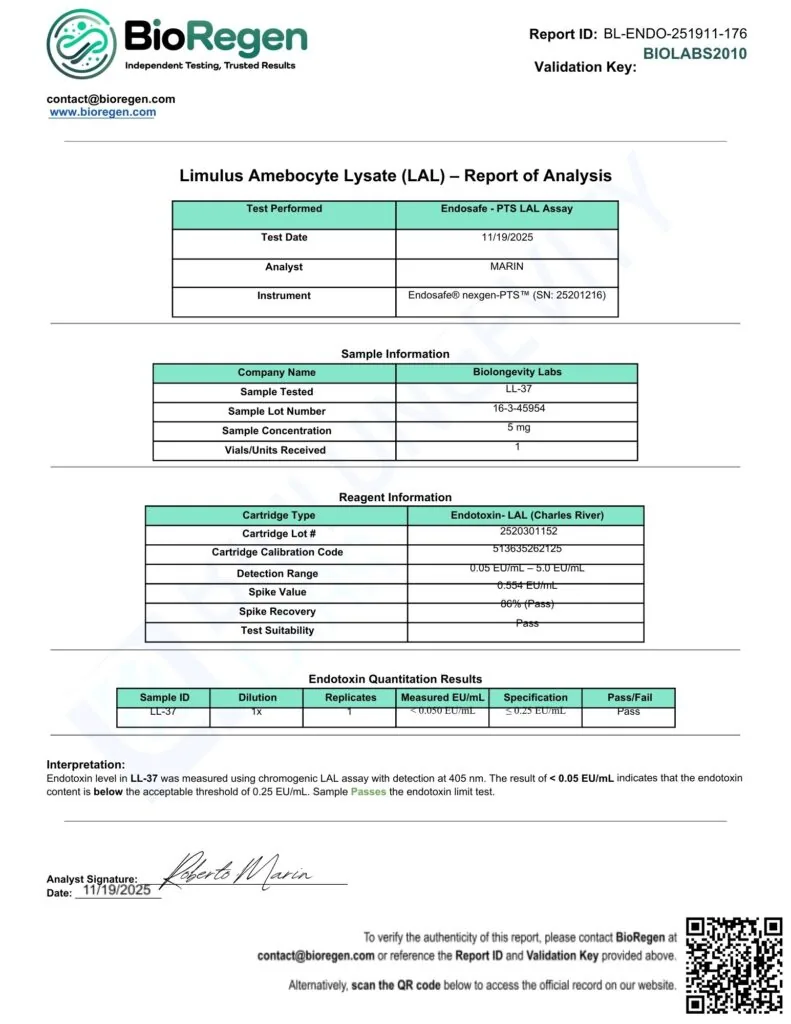
Endotoxin testing by Limulus amebocyte lysate (LAL) or recombinant Factor C (rFC) assay, depending on the laboratory
Visual and physical characterization of the finished material
How to Verify a COA Independently
You can check every certificate against the issuing laboratory’s own records, not just the copy hosted here. Verification does not depend on BioLongevity Labs.
AV Analytics certificates carry a search code. Scan the QR code on the certificate to open the laboratory’s verification page, or enter the search code at avanalytical.com/coa-search to pull the official record.
BioRegen reports of analysis carry a Report ID and a Validation Key. Scan the QR code on the certificate to open the official record, or quote both identifiers when you contact the laboratory at the address printed on the report.
SafeCert Labs issued a number of earlier certificates. Each one carries a COA number and the signature of the reporting chemist. Quote that number when you ask the laboratory to confirm it.
Older certificates from other laboratories list their own verification details on the document.
When a batch is sent to more than one laboratory, each certificate resolves at its own issuing laboratory. A researcher can then check the results against two unrelated sources.
These COAs come from independent certified laboratories, not in-house testing. That gives researchers a verifiable record of molecular integrity for each compound. All compounds are supplied for research use only.
Scientifically reviewed by Dr. Ky H. Le, MD. Dr. Le is a board-certified family medicine physician with over 20 years of clinical experience. Dr. Le validates the scientific accuracy of all technical content and research citations.
Disclaimer: For Research Purposes Only
This content is provided strictly for research purposes and does not constitute an endorsement or recommendation for the non-laboratory application or improper handling of peptides designed for research. The information, including discussions about specific peptides and their researched benefits, is presented for informational purposes only and must not be construed as health, clinical, or legal guidance, nor an encouragement for non-research use. Peptides described here are solely for use in structured scientific study by authorized individuals. We advise consulting with research experts, medical practitioners, or legal counsel prior to any decisions about obtaining or utilizing these peptides. The expectation of responsible, ethical utilization of this information for legitimate investigative and scholarly objectives is paramount. This notice is dynamic and governs all provided content on research peptides.