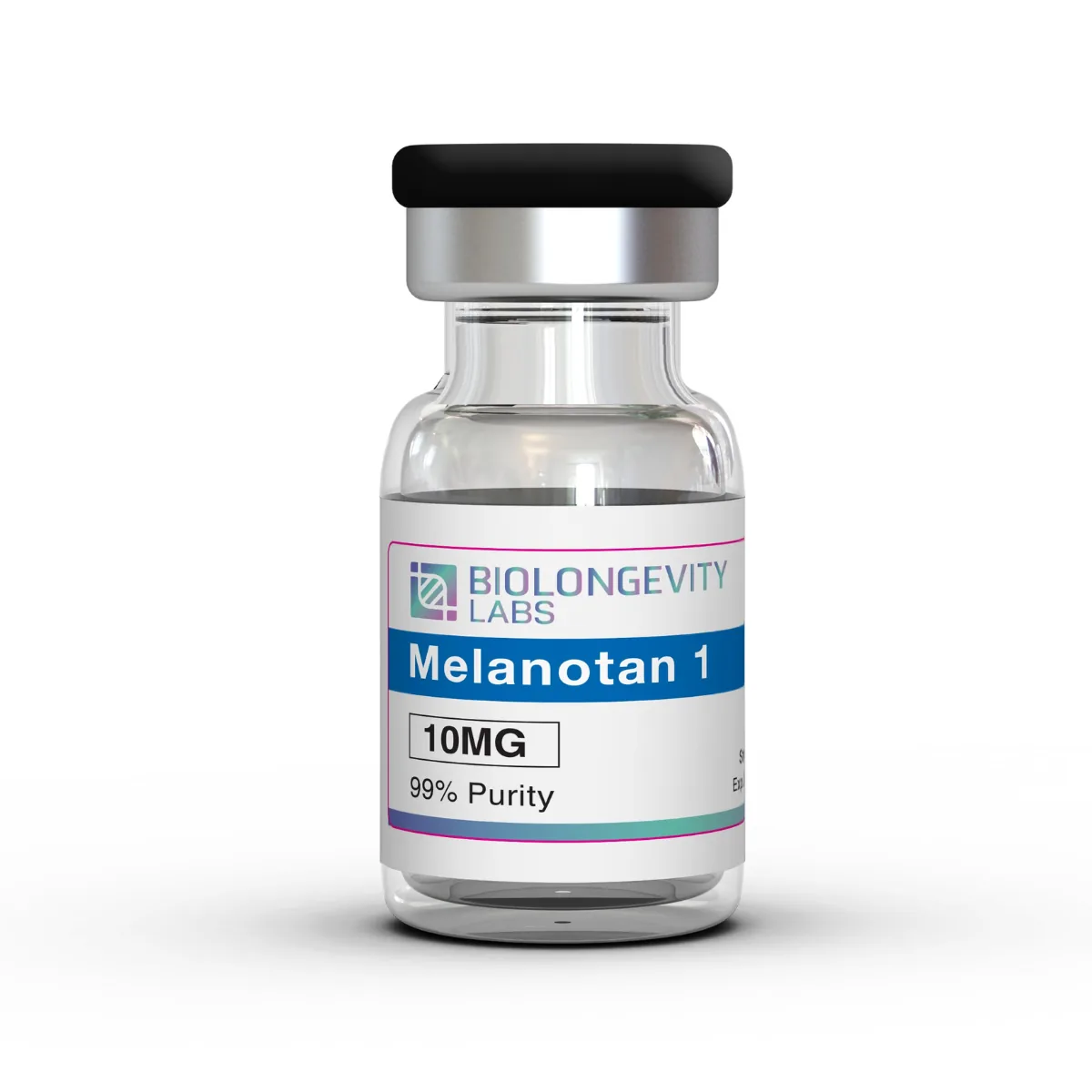
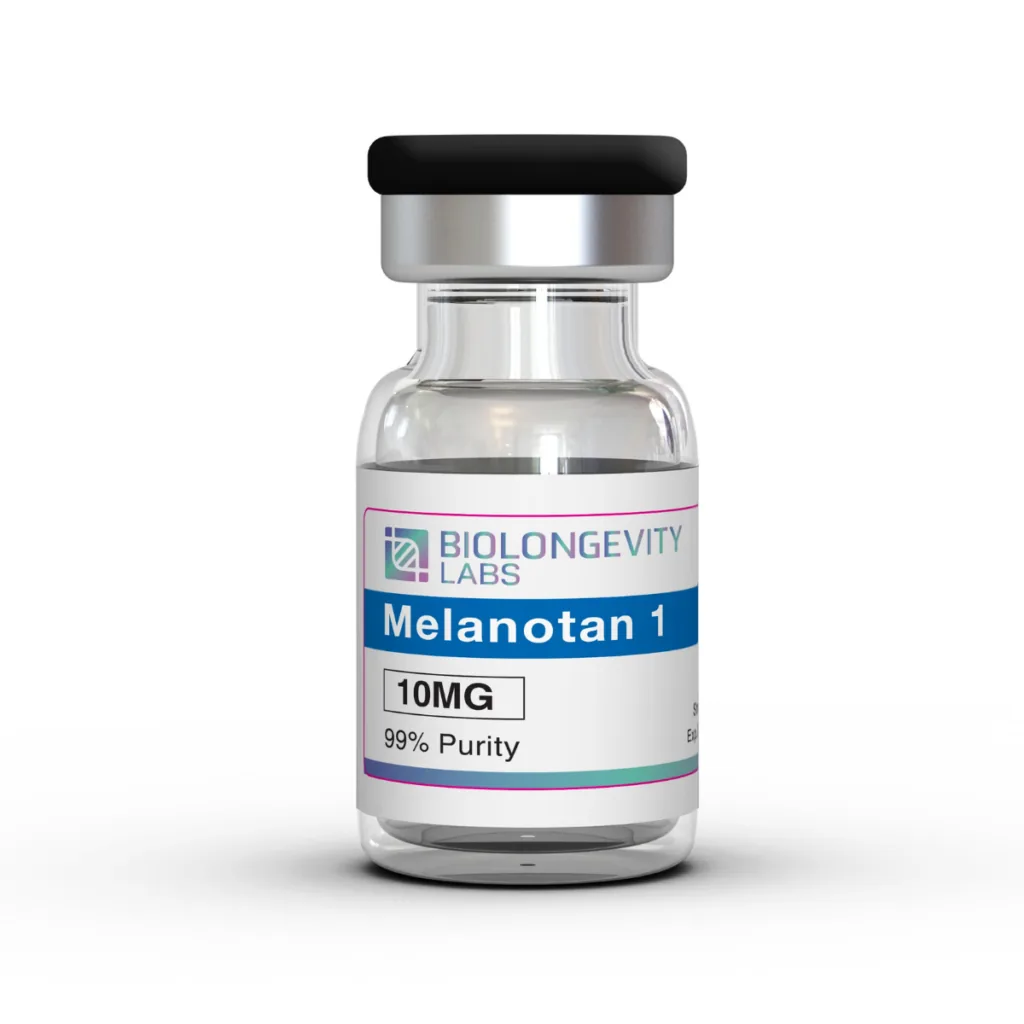
Melanotan 1 is a synthetic, linear 13-residue analogue of alpha-melanocyte-stimulating hormone (α-MSH), with norleucine at position 4 and D-phenylalanine at position 7. It is produced by controlled peptide synthesis and carries an acetylated N-terminus and an amidated C-terminus. BioLongevity Labs supplies it as a lyophilized powder in a 10mg vial for stable storage and handling. Melanotan 1 is characterized in laboratory research on melanocortin 1 receptor (MC1R) binding, cAMP signalling and melanogenesis in cultured melanocyte and melanoma cell lines.
≥99% Purity
Third-Party Tested
COA Available
U.S. Manufactured
Quantity
In stock
Third-Party Verified Quality
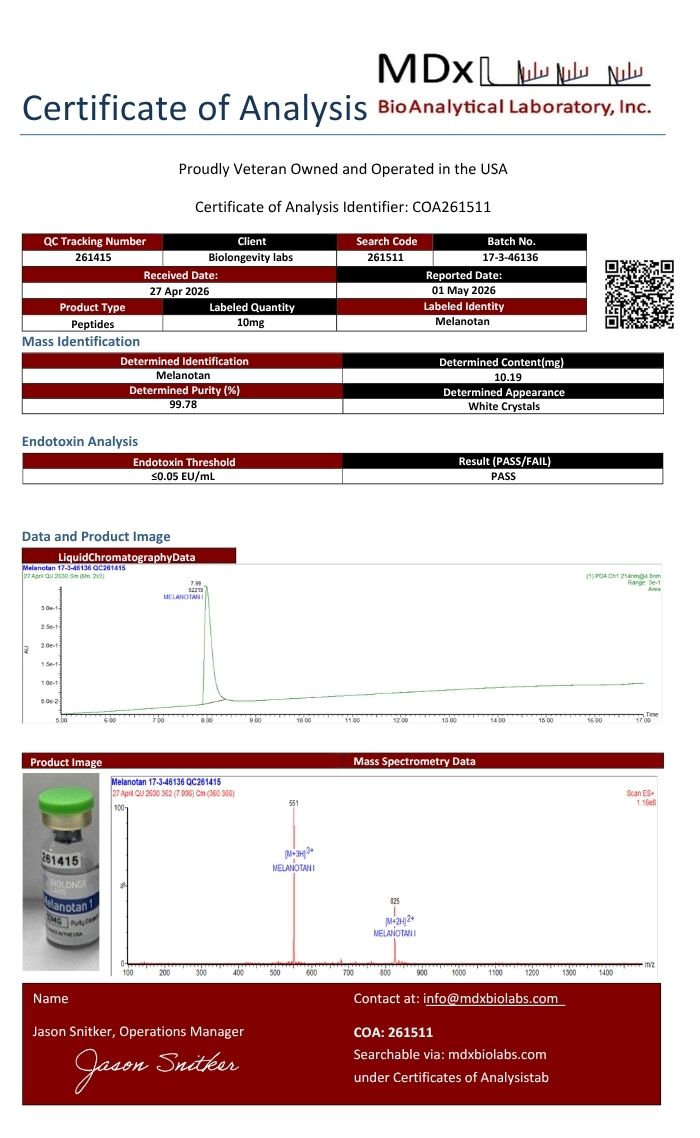
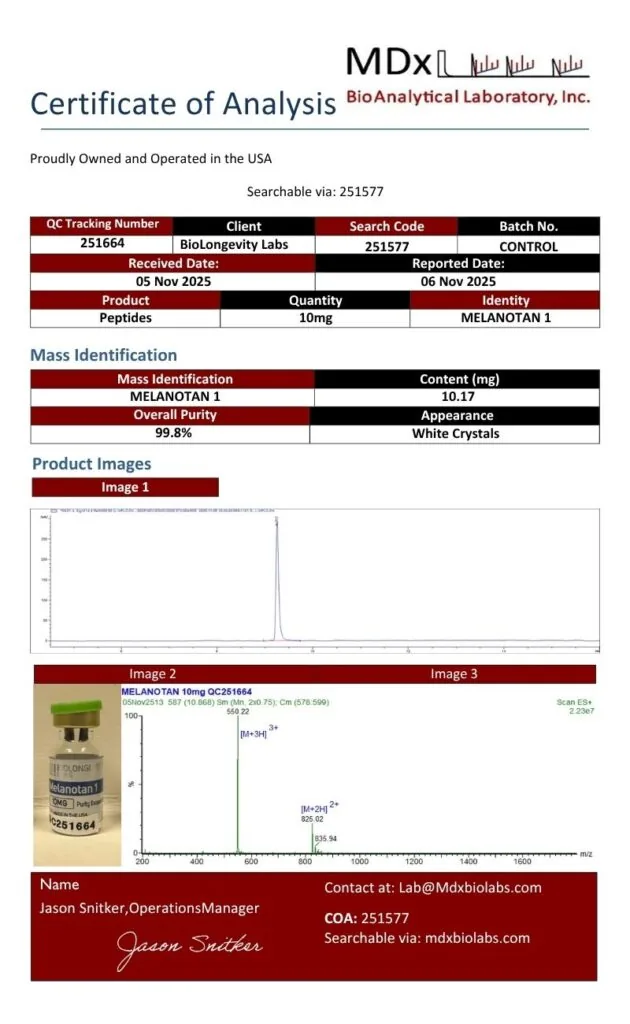
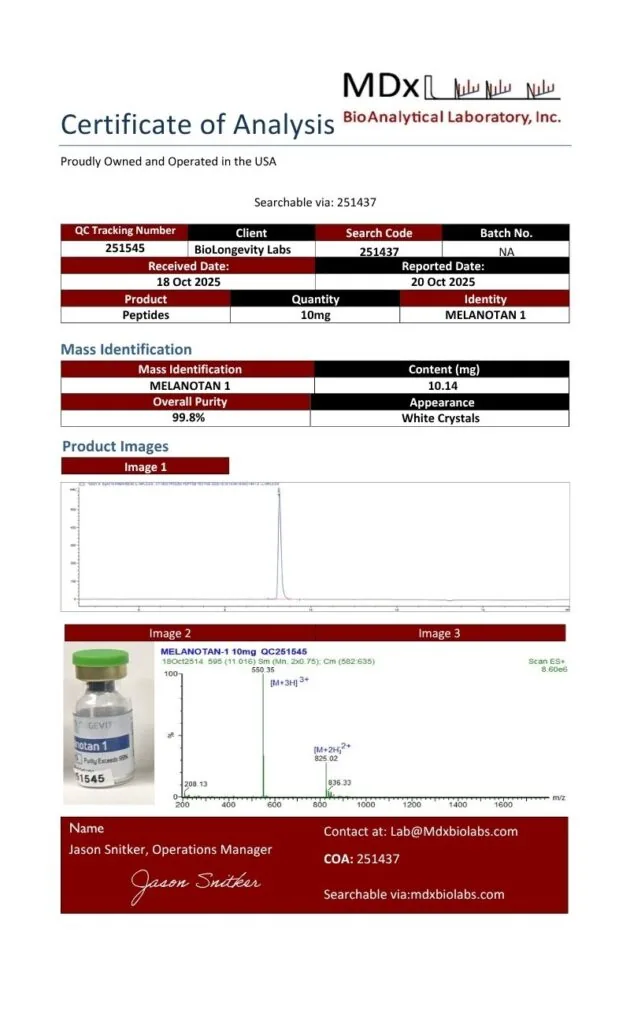
≥99% purity verified through independent UHPLC-MS testing. Certificates of Analysis are available before purchase.
COAs available before purchase
U.S.-manufactured research-grade
Same-business-day U.S. dispatch for in-stock orders placed before 12 PM PT
Secure Checkout · Free shipping on orders over $400
Melanotan 1, also catalogued as Melanotan I, MT-I and [Nle4, D-Phe7]-α-MSH, belongs to the melanocortin peptide family. The two substitutions replace an oxidation-prone methionine with norleucine and invert the stereochemistry at position 7, which made the analogue resistant to serum enzyme degradation in its original characterization [1].
In receptor studies, the peptide binds MC1R with picomolar affinity and acts as an agonist at every melanocortin receptor subtype except MC2R [3][5]. Its radioiodinated form is used as the labelled ligand in melanocortin receptor binding assays [3].
Researchers use Melanotan 1 as a reference MC1R agonist in cAMP accumulation, tyrosinase activity and eumelanin synthesis assays, most often in B16 and Cloudman S91 cell lines.
Melanotan I, Melanotan-1, MT-I, MT-1, afamelanotide, NDP-MSH, [Nle4, D-Phe7]-α-MSH
InChIKey
UAHFGYDRQSXQEB-LEBBXHLNSA-N
Source
Synthetic
Purity
≥99% (HPLC)
Appearance
Lyophilized white to off-white powder
Solubility
Soluble in water
Storage
-20°C, protect from light and moisture
Storage and Handling
Store the lyophilized compound at -20°C, sealed and protected from light and moisture.
After reconstitution, store at 2 to 8°C and use promptly.
Maintain aseptic handling to preserve compound integrity.
Lyophilized Format
This compound ships in lyophilized (freeze-dried) form. Freeze-drying supports long-term storage stability and preserves compound integrity. No fillers are added.
Research Use Disclaimer
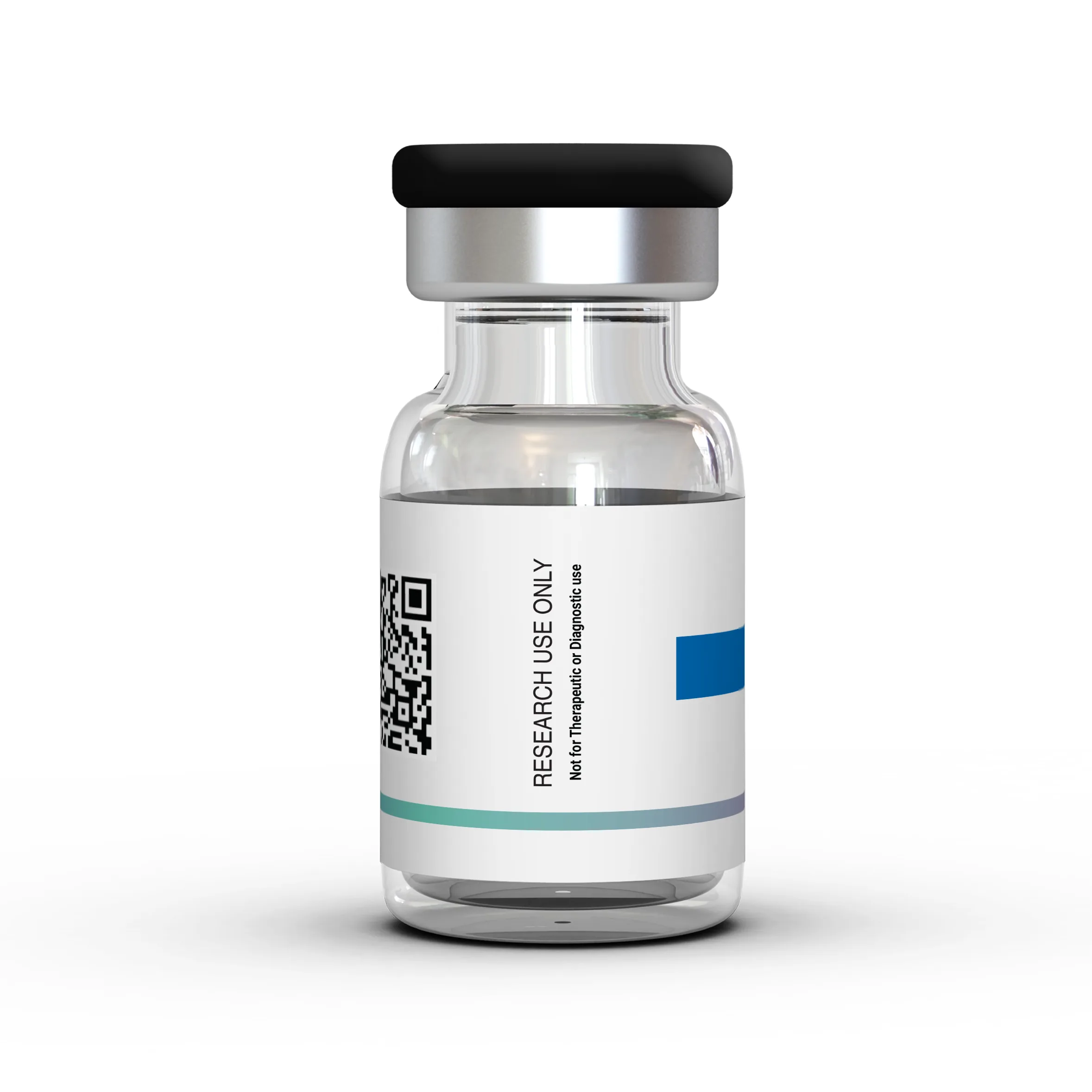
Melanotan 1 is supplied for research use only. It is not a drug, food, cosmetic, or dietary supplement and has not been evaluated by the FDA. By purchasing, the buyer confirms the compound will be used solely for in vitro research.
Frequently Asked Questions
What Is Melanotan 1?
Melanotan 1 is a synthetic 13-residue analogue of α-MSH, also known as [Nle4, D-Phe7]-α-MSH or NDP-MSH. It is studied as a melanocortin 1 receptor agonist in cAMP signalling and melanogenesis research using cultured cell lines.
What Is the CAS Number of Melanotan 1?
The CAS number of Melanotan 1 is 75921-69-6, and its PubChem CID is 16154396. Its molecular formula is C₇₈H₁₁₁N₂₁O₁₉ with a molecular weight of 1646.8 g/mol.
Is Melanotan 1 a Linear or Cyclic Peptide?
Melanotan 1 is a linear peptide of 13 amino acids with an acetylated N-terminus and an amidated C-terminus. It keeps the full α-MSH backbone and differs only at positions 4 (norleucine) and 7 (D-phenylalanine).
How Is Melanotan 1 10mg Supplied and Stored?
Melanotan 1 10mg ships as a lyophilized white to off-white powder in a sealed vial with no fillers. Store it at -20°C protected from light, and keep reconstituted material at 2 to 8°C for prompt use.
How Is the Purity of Melanotan 1 Verified?
Melanotan 1 from BioLongevity Labs is tested by an independent third-party lab to ≥99% purity by HPLC. The Certificate of Analysis is published on the product page.
Research Overview
Melanotan 1 was first synthesized to explain the prolonged activity seen after heat-alkali processing of α-MSH. The [Nle4, D-Phe7] analogue resisted serum enzyme degradation and was 26 times as active as α-MSH at stimulating adenylate cyclase in mouse melanoma cells, with raised tyrosinase activity in the same model [1].
In the Cloudman S91 melanoma cell line, the analogue raised tyrosinase activity at a minimum effective concentration of 10⁻¹¹ M, against 10⁻⁹ M for α-MSH. Tyrosinase activity stayed above baseline for up to six days after the peptide was washed out [2].
The studies below cover the receptor and signalling work the compound is used for.
MC1R Binding and Receptor Selectivity
Ligand binding studies in B16F1 cells found a single receptor class with a dissociation constant of 62 pM for [Nle4, D-Phe7]-α-MSH, and crosslinking with the iodinated peptide labelled a 50 to 55 kDa band [3]. The receptor itself was cloned in 1992 as part of the G protein-coupled melanocortin receptor family [4]. In cloned receptor panels, the peptide shows nanomolar activity at MC1R, MC3R, MC4R and MC5R but not MC2R [5].
cAMP Signalling and Melanogenesis In Vitro
In B16 cells, cAMP-elevating agents activate the MAP kinase p44 and the transcription factor AP-1, a pathway linked to tyrosinase expression [6]. In HEK cells expressing MC1R, NDP-MSH activates both cAMP and MAPK signalling and serves as the comparison agonist for other MC1R ligands. Agonist binding at MC1R is associated with eumelanin rather than pheomelanin synthesis [7].
Research Area
In Vitro Application
Receptor pharmacology
Radioligand and competitive binding assays at MC1R, MC3R, MC4R and MC5R
Second-messenger signalling
Reference agonist in cAMP accumulation assays
Melanogenesis
Tyrosinase activity and eumelanin synthesis in B16 and Cloudman S91 cell lines
Kinase signalling
MAPK (ERK) activation downstream of MC1R in transfected cell models
Peptide stability
Comparison of enzyme resistance against native α-MSH in serum incubation studies
References
Sawyer TK, Sanfilippo PJ, Hruby VJ, et al. (1980). 4-Norleucine, 7-D-phenylalanine-alpha-melanocyte-stimulating hormone: a highly potent alpha-melanotropin with ultralong biological activity. Proceedings of the National Academy of Sciences of the United States of America. https://doi.org/10.1073/pnas.77.10.5754
Hadley ME, Abdel Malek ZA, Marwan MM, et al. (1985). [Nle4, D-Phe7]-alpha-MSH: a superpotent melanotropin that “irreversibly” activates melanoma tyrosinase. Endocrine Research. https://doi.org/10.1080/07435808509032974
Lunec J, Pieron C, Thody AJ. (1992). MSH receptor expression and the relationship to melanogenesis and metastatic activity in B16 melanoma. Melanoma Research. https://doi.org/10.1097/00008390-199205000-00002
Mountjoy KG, Robbins LS, Mortrud MT, Cone RD. (1992). The cloning of a family of genes that encode the melanocortin receptors. Science. https://doi.org/10.1126/science.1325670
Haskell-Luevano C, Hendrata S, North C, et al. (1997). Discovery of prototype peptidomimetic agonists at the human melanocortin receptors MC1R and MC4R. Journal of Medicinal Chemistry. https://doi.org/10.1021/jm960840h
Englaro W, Rezzonico R, Durand-Clément M, et al. (1995). Mitogen-activated protein kinase pathway and AP-1 are activated during cAMP-induced melanogenesis in B-16 melanoma cells. The Journal of Biological Chemistry. https://doi.org/10.1074/jbc.270.41.24315
Beaumont KA, Smit DJ, Liu YY, et al. (2012). Melanocortin-1 receptor-mediated signalling pathways activated by NDP-MSH and HBD3 ligands. Pigment Cell & Melanoma Research. https://doi.org/10.1111/j.1755-148X.2012.00990.x
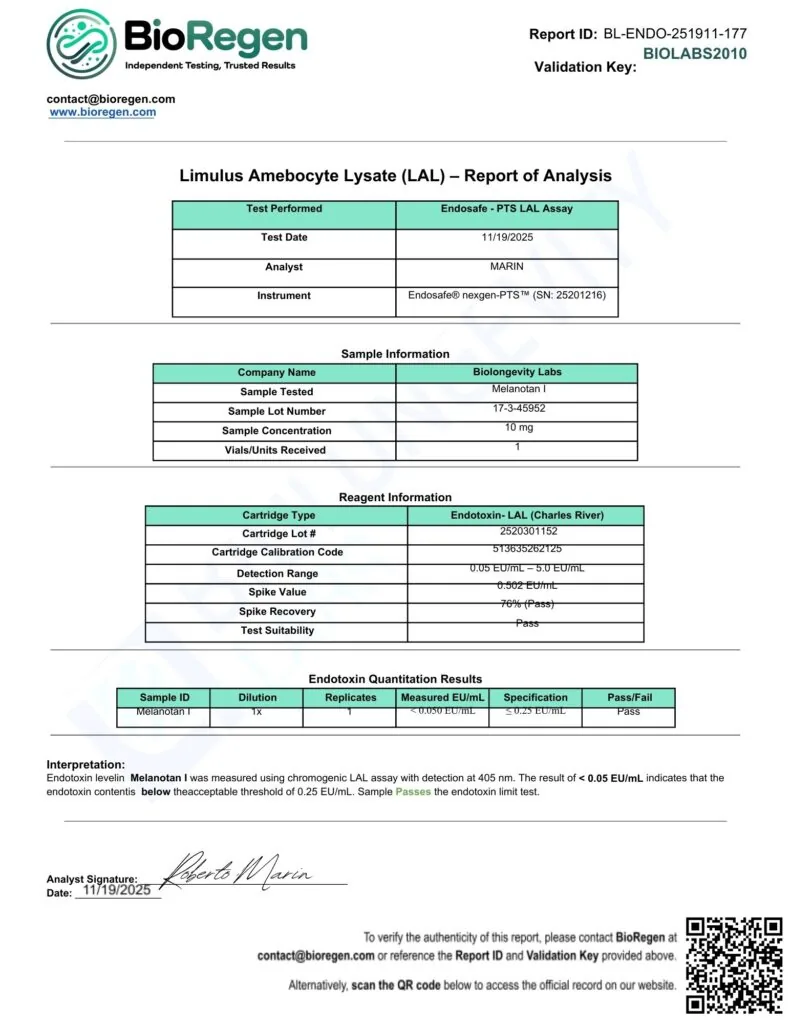
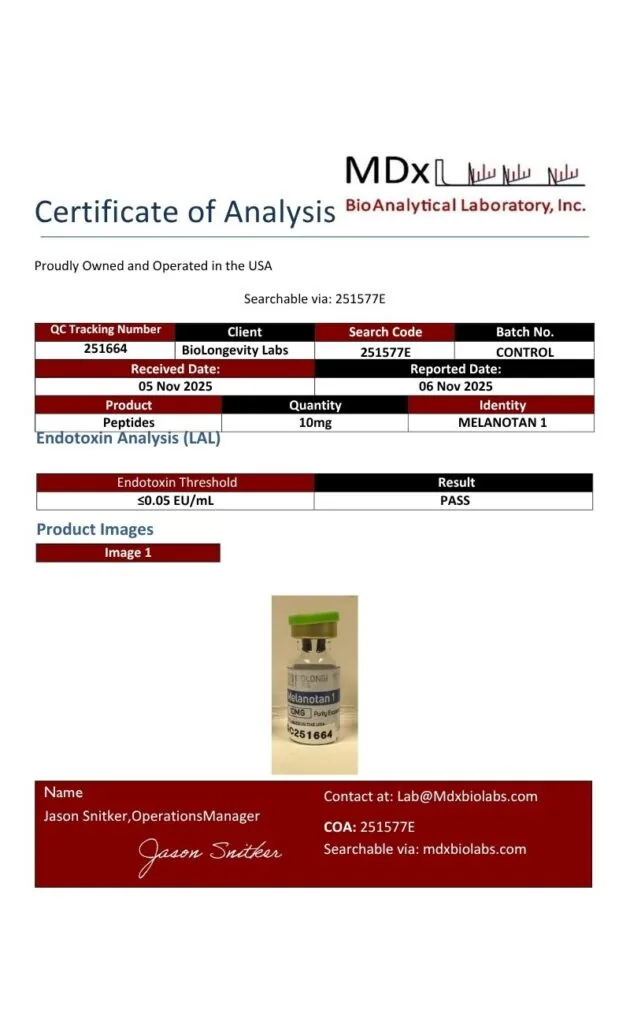
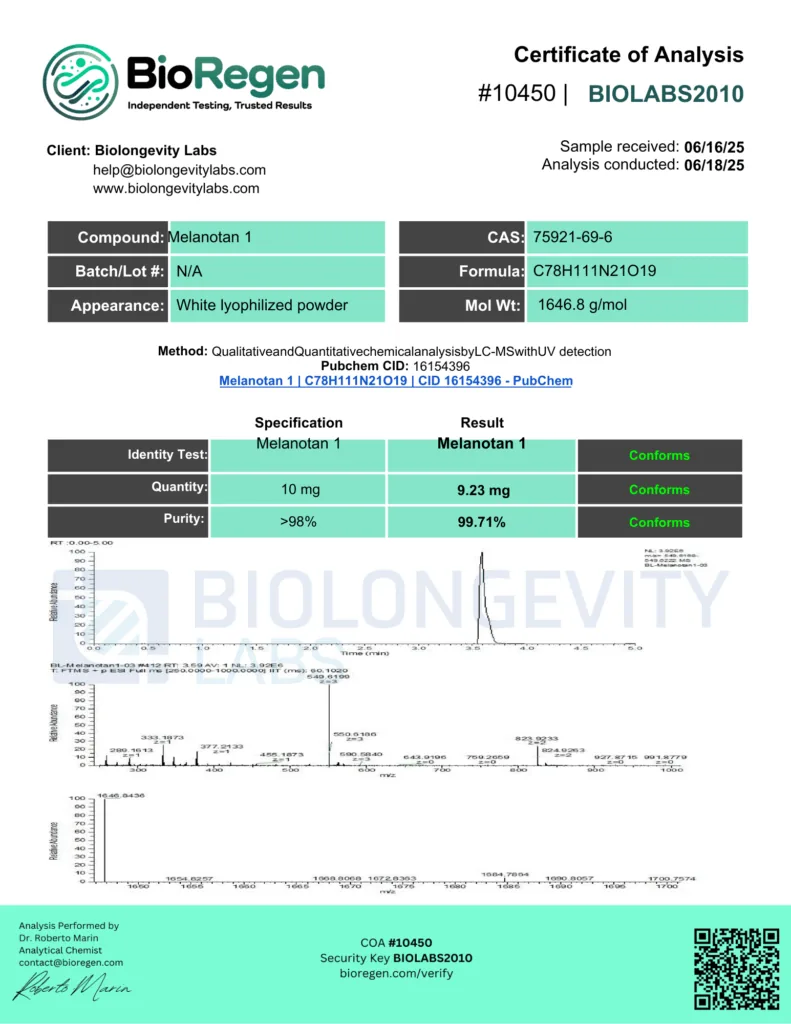
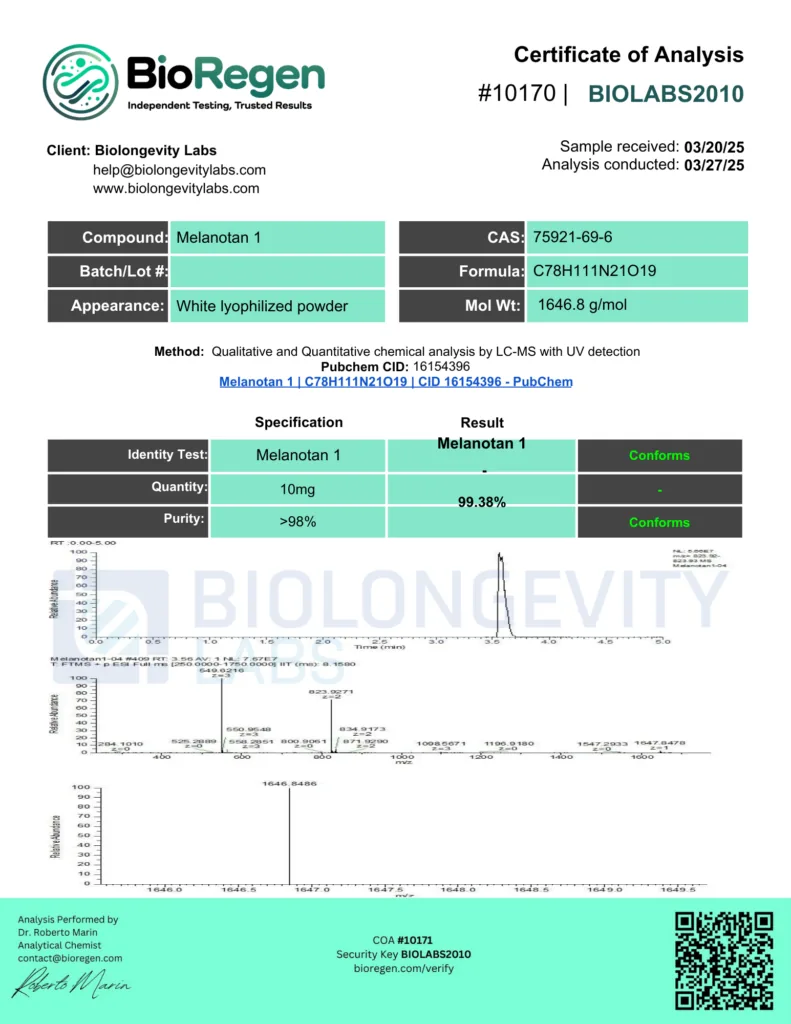
A Certificate of Analysis (COA) is a document that verifies a compound’s identity, purity and quality through independent laboratory testing. Every compound from BioLongevity Labs is third-party tested, and its COA is published here, so researchers can review the testing record before a compound enters a protocol.
Each COA reports results from third-party laboratory analysis, including:
Ultra-high-performance liquid chromatography with mass spectrometry (UHPLC-MS) for purity, measured against a 98% or 99% specification depending on the compound
Mass identification for molecular confirmation and content quantitation
Endotoxin testing by Limulus amebocyte lysate (LAL) or recombinant Factor C (rFC) assay, depending on the laboratory
Visual and physical characterization of the finished material
How to Verify a COA Independently
You can check every certificate against the issuing laboratory’s own records, not just the copy hosted here. Verification does not depend on BioLongevity Labs.
AV Analytics certificates carry a search code. Scan the QR code on the certificate to open the laboratory’s verification page, or enter the search code at avanalytical.com/coa-search to pull the official record.
BioRegen reports of analysis carry a Report ID and a Validation Key. Scan the QR code on the certificate to open the official record, or quote both identifiers when you contact the laboratory at the address printed on the report.
SafeCert Labs issued a number of earlier certificates. Each one carries a COA number and the signature of the reporting chemist. Quote that number when you ask the laboratory to confirm it.
Older certificates from other laboratories list their own verification details on the document.
When a batch is sent to more than one laboratory, each certificate resolves at its own issuing laboratory. A researcher can then check the results against two unrelated sources.
These COAs come from independent certified laboratories, not in-house testing. That gives researchers a verifiable record of molecular integrity for each compound. All compounds are supplied for research use only.
Scientifically reviewed by Dr. Ky H. Le, MD. Dr. Le is a board-certified family medicine physician with over 20 years of clinical experience. Dr. Le validates the scientific accuracy of all technical content and research citations.
Disclaimer: For Research Purposes Only
This content is provided strictly for research purposes and does not constitute an endorsement or recommendation for the non-laboratory application or improper handling of peptides designed for research. The information, including discussions about specific peptides and their researched benefits, is presented for informational purposes only and must not be construed as health, clinical, or legal guidance, nor an encouragement for non-research use. Peptides described here are solely for use in structured scientific study by authorized individuals. We advise consulting with research experts, medical practitioners, or legal counsel prior to any decisions about obtaining or utilizing these peptides. The expectation of responsible, ethical utilization of this information for legitimate investigative and scholarly objectives is paramount. This notice is dynamic and governs all provided content on research peptides.