Vesilute Technical Overview
Vesilute is the product designation for L-α-glutamyl-L-aspartic acid, written H-Glu-Asp-OH and abbreviated ED in one-letter notation. The molecule carries CAS number 3918-84-1 and PubChem CID 99716, with the formula C₉H₁₄N₂O₇ and a molecular weight of 262.22 g/mol.
Vesilute is a distinct entity from Vesugen, which is the tripeptide Lys-Glu-Asp. The two carry different sequences, formulas, and registry numbers, and they are not interchangeable in a research protocol. Supplier documentation for the Khavinson bioregulator line lists the Vesilut component as an L-aspartic acid and L-glutamic acid construct, which matches the Glu-Asp dipeptide catalogued above.
Ultrashort peptides of this size are studied for membrane and nuclear permeability, for sequence-selective contacts with DNA and histone proteins, and for transporter-mediated cell entry. Vesilute is supplied to laboratories working in those areas as a reference-grade research material.
Compound Specifications
| Property |
Value |
| CAS Number |
3918-84-1 |
| PubChem CID |
99716 |
| Molecular Formula |
C₉H₁₄N₂O₇ |
| Molecular Weight |
262.22 g/mol |
| Monoisotopic Mass |
262.0800 Da |
| Amino Acid Sequence |
H-Glu-Asp-OH (one-letter: ED) |
| Sequence Length |
2 residues |
| InChIKey |
FYYSIASRLDJUNP-WHFBIAKZSA-N |
| Isomeric SMILES |
C(CC(=O)O)C@@HN |
| Synonyms |
Vesilut, Glu-Asp, H-Glu-Asp-OH, L-α-Glutamyl-L-aspartic acid, ED peptide |
| Source |
Synthetic |
| Purity |
≥99% (HPLC) |
| Appearance |
Lyophilized white powder |
| Storage |
-20°C, protect from light |
| Vial Size |
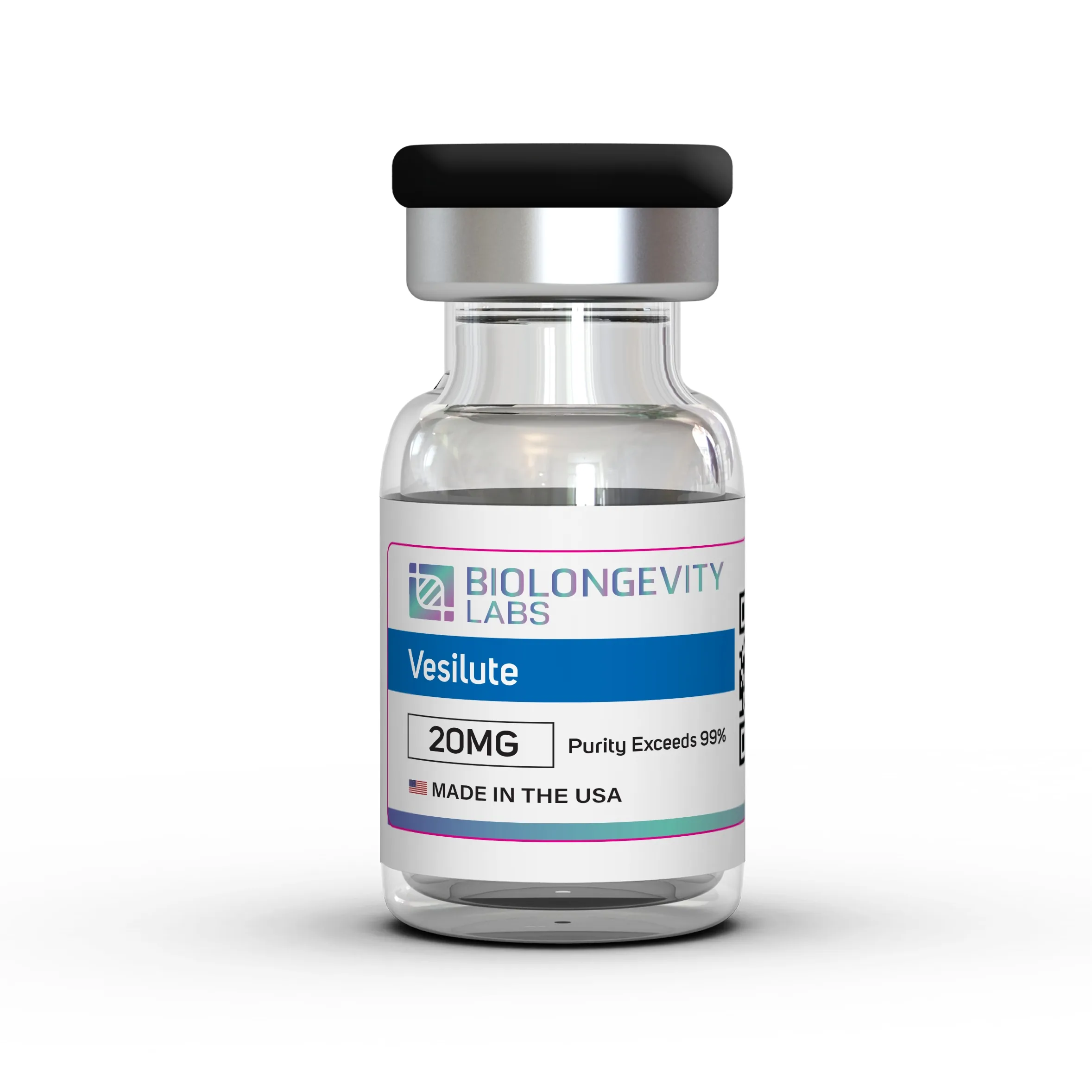
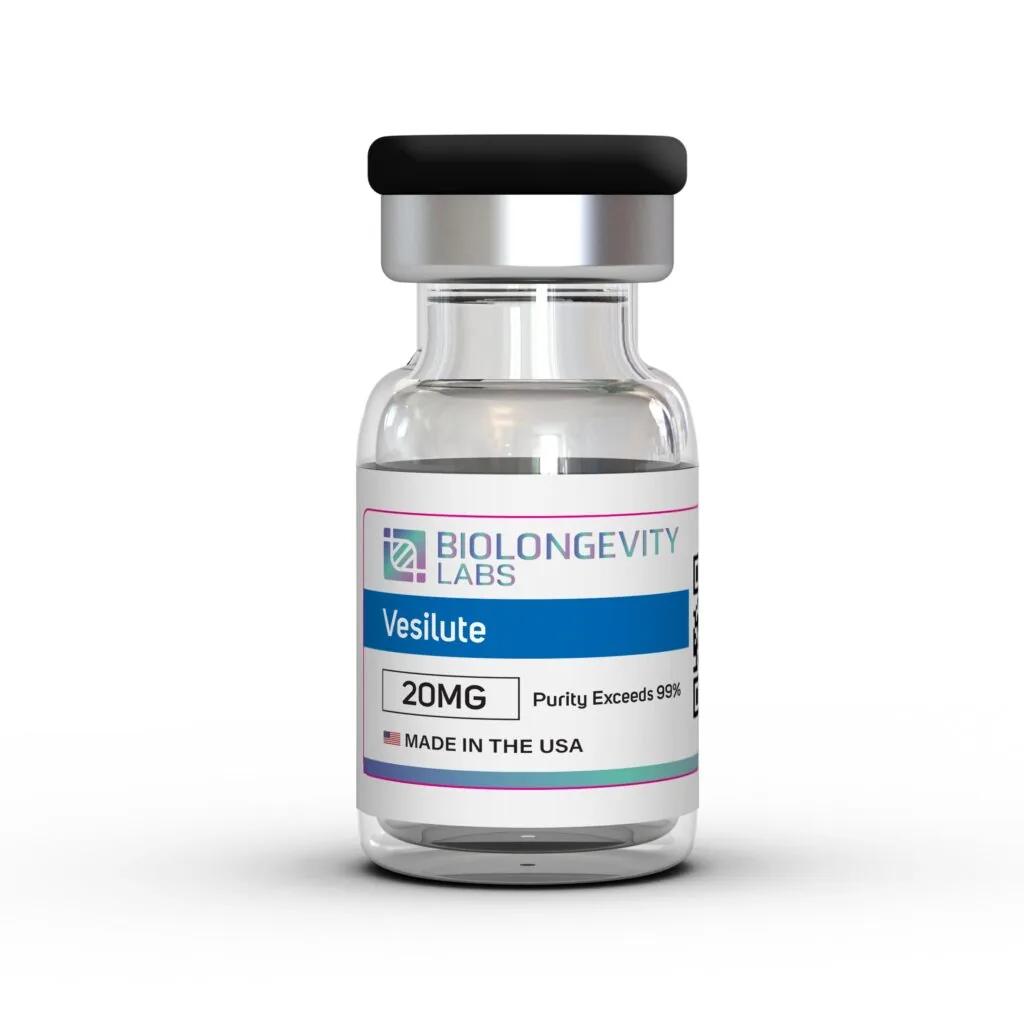
20mg |
Storage And Handling
- Store the sealed lyophilized vial at -20°C and protect it from light.
- After reconstitution, store at 2°C to 8°C and use promptly.
- Avoid repeated freeze-thaw cycles of reconstituted material.
- Maintain aseptic handling to preserve compound integrity.
Lyophilized Format
This compound ships in lyophilized (freeze-dried) form. Freeze-drying supports long-term storage stability and preserves compound integrity. No fillers are added.
Research Use Disclaimer
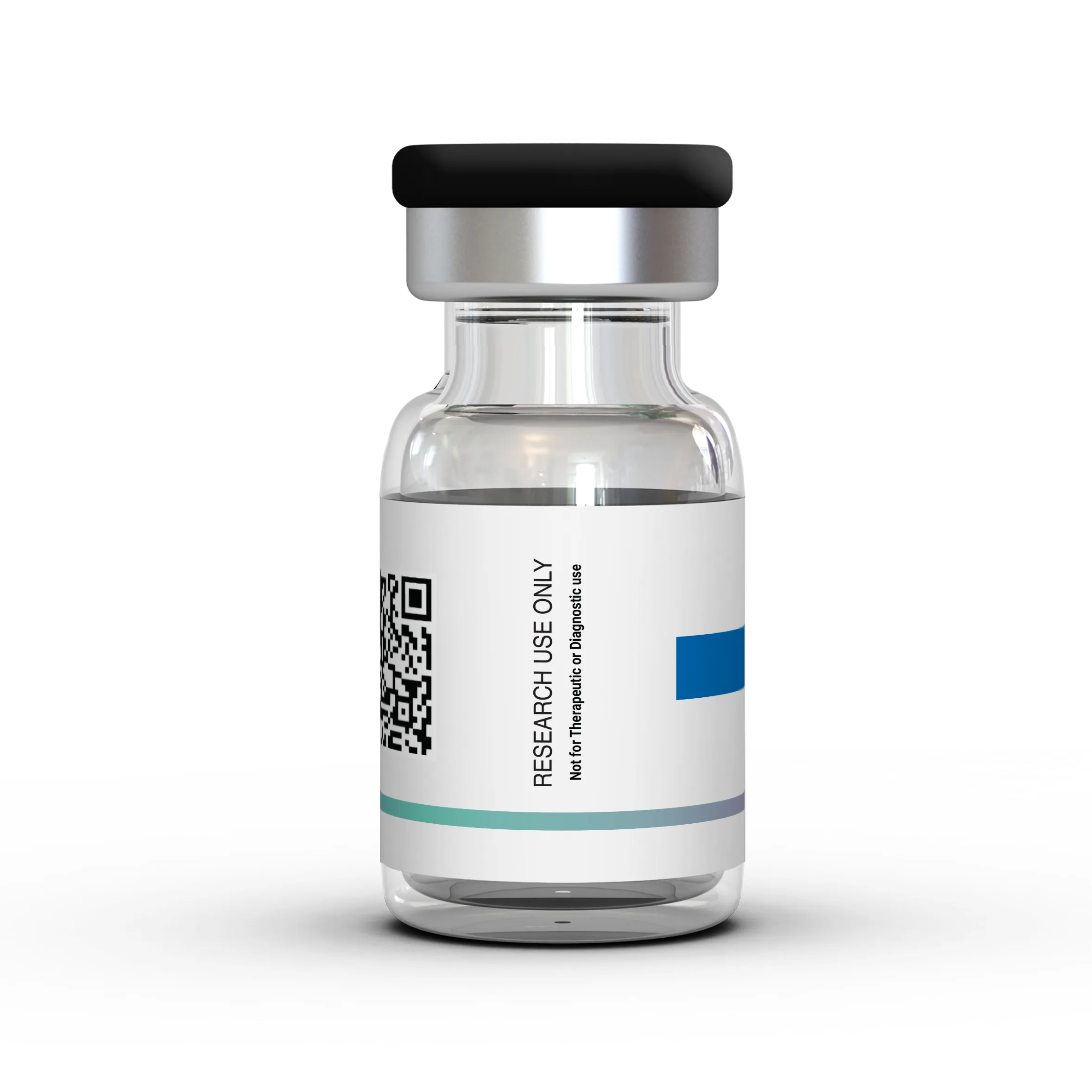
Vesilute is supplied for research use only. It is not a drug, food, cosmetic, or dietary supplement and has not been evaluated by the FDA. By purchasing, the buyer confirms the compound will be used solely for in vitro research.
Frequently Asked Questions
What Is Vesilute?
Vesilute is a synthetic dipeptide built from L-glutamic acid joined to L-aspartic acid, catalogued under CAS number 3918-84-1 and PubChem CID 99716. It belongs to the Khavinson family of ultrashort peptide bioregulators studied in cell-culture and molecular-modeling work.
What Is The Amino Acid Sequence Of Vesilute?
Vesilute has the sequence Glu-Asp, written H-Glu-Asp-OH and abbreviated ED, giving it two residues and a molecular weight of 262.22 g/mol.
Is Vesilute The Same As Vesugen?
No. Vesilute is the dipeptide Glu-Asp, while Vesugen is the tripeptide Lys-Glu-Asp, so the two differ in sequence, molecular formula, and CAS registry number.
How Is Vesilute Supplied And Stored?
Vesilute ships as 20mg of lyophilized white powder with no added fillers. Store the sealed vial at -20°C away from light and keep reconstituted material refrigerated for short-term laboratory work.
How Is The Purity Of Vesilute Verified?
Vesilute from BioLongevity Labs is assayed by HPLC to ≥99% purity, and third-party analytical documentation accompanies each production lot.
Vesilut (Glu-Asp) Research
Vesilut peptide is a Glu-Asp dipeptide bioregulator that has attracted research interest for its potential effects on urogenital tissue function. Studies have examined this Khavinson peptide’s mechanisms in laboratory models and clinical research settings focused on bladder and smooth muscle regulation.
Urogenital Function Mechanisms
Russian clinical studies have examined Vesilute’s effects on overactive bladder syndrome through neuromodulation of bladder function[1]. The proposed mechanism involves modulating neuromuscular signaling and acting as co-mediators released from nerve endings alongside classical neurotransmitters[2].
Bladder Smooth Muscle Research
Experimental animal studies demonstrated Vesilute’s ability to normalize detrusor contractility parameters in rat models with infravesical obstruction. The peptide influences bladder smooth muscle function and neural control mechanisms governing micturition[1].
Clinical Bladder Function Studies
Prospective research involving 20 women with overactive bladder syndrome showed statistically significant improvements following Vesilute treatment. Clinical research demonstrated increased maximum cystometric capacity from 267 mL to 320 mL, representing enhanced bladder storage capacity[1].
The study documented reduction in daytime urination frequency from 14 episodes to 11 episodes daily. Research showed decreased episodes of urgent incontinence and nocturia episodes dropping from 4 to 2 per night[1].
Bioregulatory Peptide Framework
Vesilute belongs to peptide bioregulators or cytamins, which are extracted from animal tissues and have tissue-specific regulatory effects. These peptides work through peptide signaling pathways that influence cellular function and tissue homeostasis[3].
The bioregulatory approach suggests these peptides may influence gene expression, protein synthesis, and cellular communication within target tissues. This potentially explains the observed effects on bladder function through molecular mechanisms.
Dipeptide Research Context
Research on dipeptides shows they can have significant biological activity and may serve as amino acid donors in physiological systems[4]. Studies demonstrate that dipeptides like Glu-Asp are present in biological fluids and may influence amino acid metabolism and cellular function.
The Glu-Asp dipeptide has been identified in various biological contexts, including exercise performance enhancement and metabolic regulation applications[3].
This peptide is intended for laboratory research use only.
References
- G. V. Kovalev, I. A. Labetov, R. R. Shakirova, and D. D. Shkarupa, “The peptide regulator Vezusten in the management of overactive bladder syndrome: an efficacy evaluation,” Rostov State Medical University, Sep. 2024. doi: 10.21886/2308-6424-2024-12-4-50-56. Available: https://doi.org/10.21886/2308-6424-2024-12-4-50-56
- O. V. Yamskova, M. S. Krasnov, E. V. Sidorsky, and V. I. Lozinsky, “Influence of protein-peptide bioregulator isolated from bovine sclera and incorporated into an albumin-based cryogel on the sclera in a model cultivation of a posterior eye segment,” V.I. Shimakov Federal Research Center of Transplantology and Artificial Organs, Jul. 2023. doi: 10.15825/1995-1191-2023-2-118-128. Available: https://doi.org/10.15825/1995-1191-2023-2-118-128
- K. Küper et al., “Dipeptides in CSF and plasma: diagnostic and therapeutic potential in neurological diseases,” Springer Science and Business Media LLC, Dec. 2024. doi: 10.1007/s00726-024-03434-1. Available: https://doi.org/10.1007/s00726-024-03434-1
- Y.-F. Kao et al., “Development of functional foods from grouper fish-bone residues to enhance muscle strength and exercise endurance in mice,” Frontiers Media SA, Dec. 2024. doi: 10.3389/fsufs.2024.1483028. Available: https://doi.org/10.3389/fsufs.2024.1483028
Certificate of Analysis (COA)
No COAs available for this product.
A Certificate of Analysis (COA) is a document that verifies a compound’s identity, purity and quality through independent laboratory testing. Every compound from BioLongevity Labs is third-party tested, and its COA is published here, so researchers can review the testing record before a compound enters a protocol.
Each COA reports results from third-party laboratory analysis, including:
- Ultra-high-performance liquid chromatography with mass spectrometry (UHPLC-MS) for purity, measured against a 98% or 99% specification depending on the compound
- Mass identification for molecular confirmation and content quantitation
- Endotoxin testing by Limulus amebocyte lysate (LAL) or recombinant Factor C (rFC) assay, depending on the laboratory
- Visual and physical characterization of the finished material
How to Verify a COA Independently
You can check every certificate against the issuing laboratory’s own records, not just the copy hosted here. Verification does not depend on BioLongevity Labs.
- AV Analytics certificates carry a search code. Scan the QR code on the certificate to open the laboratory’s verification page, or enter the search code at avanalytical.com/coa-search to pull the official record.
- BioRegen reports of analysis carry a Report ID and a Validation Key. Scan the QR code on the certificate to open the official record, or quote both identifiers when you contact the laboratory at the address printed on the report.
- SafeCert Labs issued a number of earlier certificates. Each one carries a COA number and the signature of the reporting chemist. Quote that number when you ask the laboratory to confirm it.
- Older certificates from other laboratories list their own verification details on the document.
When a batch is sent to more than one laboratory, each certificate resolves at its own issuing laboratory. A researcher can then check the results against two unrelated sources.
These COAs come from independent certified laboratories, not in-house testing. That gives researchers a verifiable record of molecular integrity for each compound. All compounds are supplied for research use only.
Review the latest COAs for this product below, or browse the full COA library.