Original price was: $79.97.$79.97Current price is: $79.97.$31.99
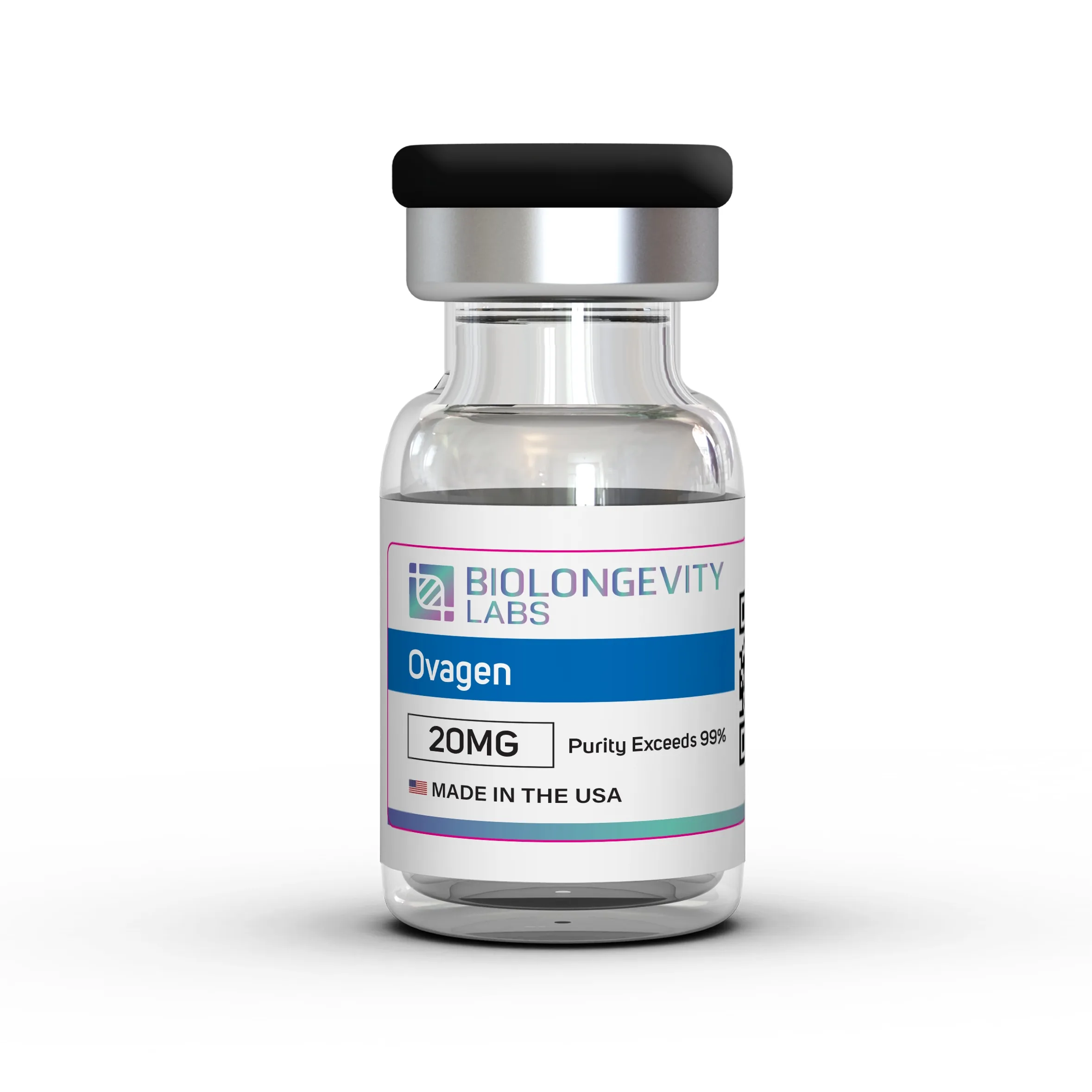
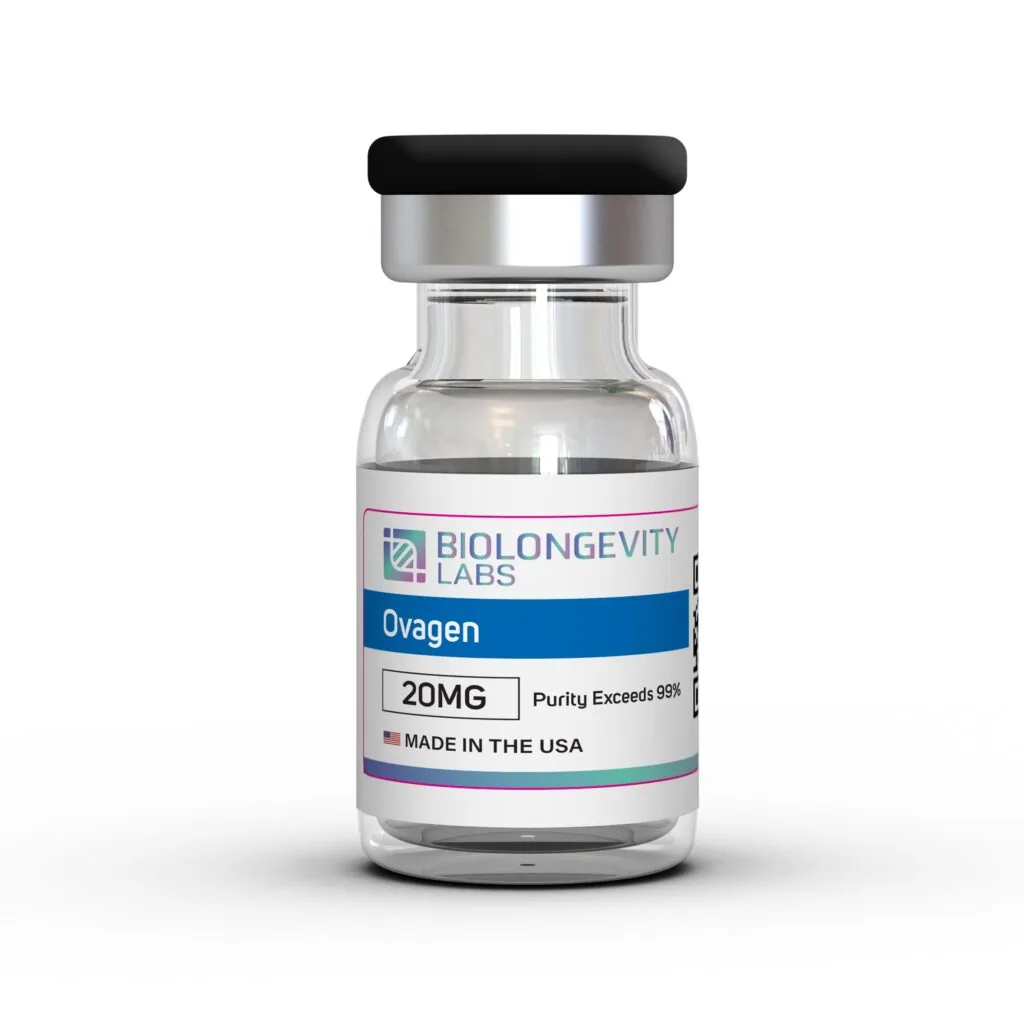
Ovagen peptide is a synthetic tripeptide bioregulator with the sequence Glu-Asp-Leu (EDL), produced through controlled peptide synthesis. Each vial holds 20mg of lyophilized powder at ≥99% purity, freeze-dried for stability during storage and handling. Ovagen belongs to the Khavinson series of short peptide bioregulators and is characterized in laboratory studies of gene expression, renal cell culture aging and peptide-DNA interactions. The compound is supplied for research use only.
≥99% Purity
Third-Party Tested
COA Available
U.S. Manufactured
Quantity
In stock
Third-Party Verified Quality
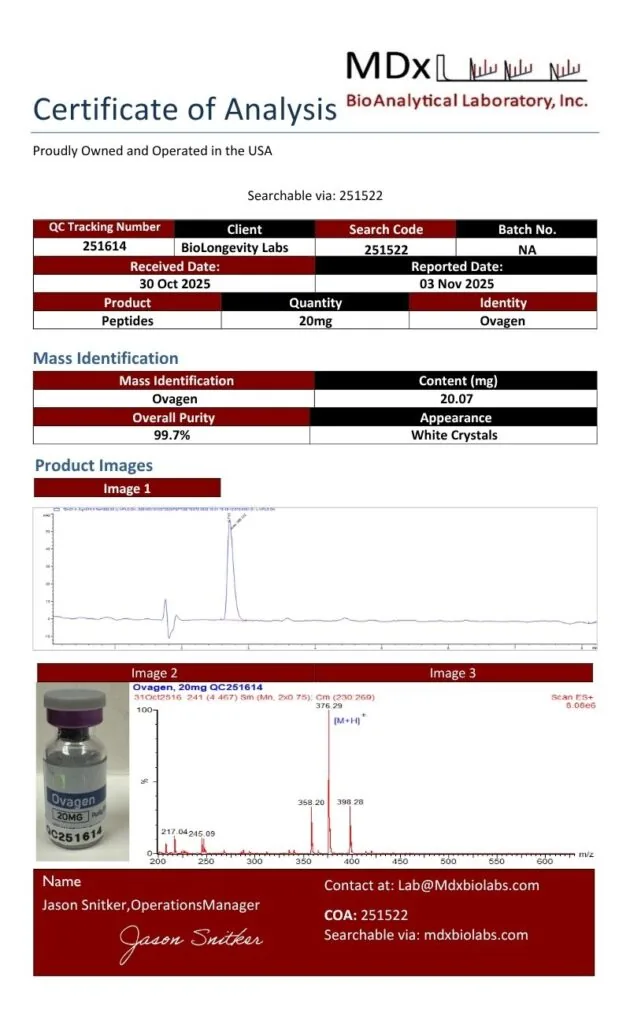
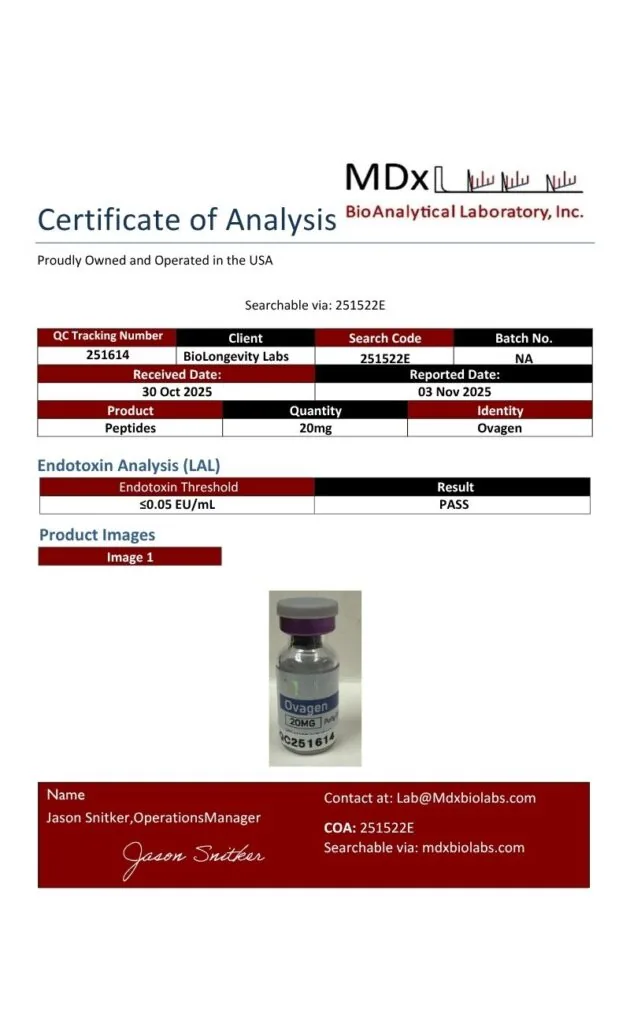
≥99% purity verified through independent UHPLC-MS testing. Certificates of Analysis are available before purchase.
COAs available before purchase
U.S.-manufactured research-grade
Same-business-day U.S. dispatch for in-stock orders placed before 12 PM PT
Secure Checkout · Free shipping on orders over $400
Ovagen is a short peptide bioregulator from the series developed at the St. Petersburg Institute of Bioregulation and Gerontology. In the research literature it appears as EDL, as L-glutamyl-L-aspartyl-L-leucine, or under the laboratory designation T-35.
The tripeptide carries two acidic residues, glutamic acid and aspartic acid, followed by a C-terminal leucine with free N- and C-termini. It dissolves readily in water, which keeps preparation in aqueous buffers simple for in vitro work.
As an Ovagen bioregulator, the compound is usually grouped with hepatic and gastrointestinal tissue research. Most indexed EDL studies so far examine renal cell cultures, DNA-binding models and enzyme kinetics.
Store the lyophilized compound at -20°C, protected from light and moisture.
After reconstitution, store at 2-8°C and use promptly.
Maintain aseptic handling to preserve compound integrity.
Lyophilized Format
This compound ships in lyophilized (freeze-dried) form. Freeze-drying supports long-term storage stability and preserves compound integrity. No fillers are added.
Research Use Disclaimer
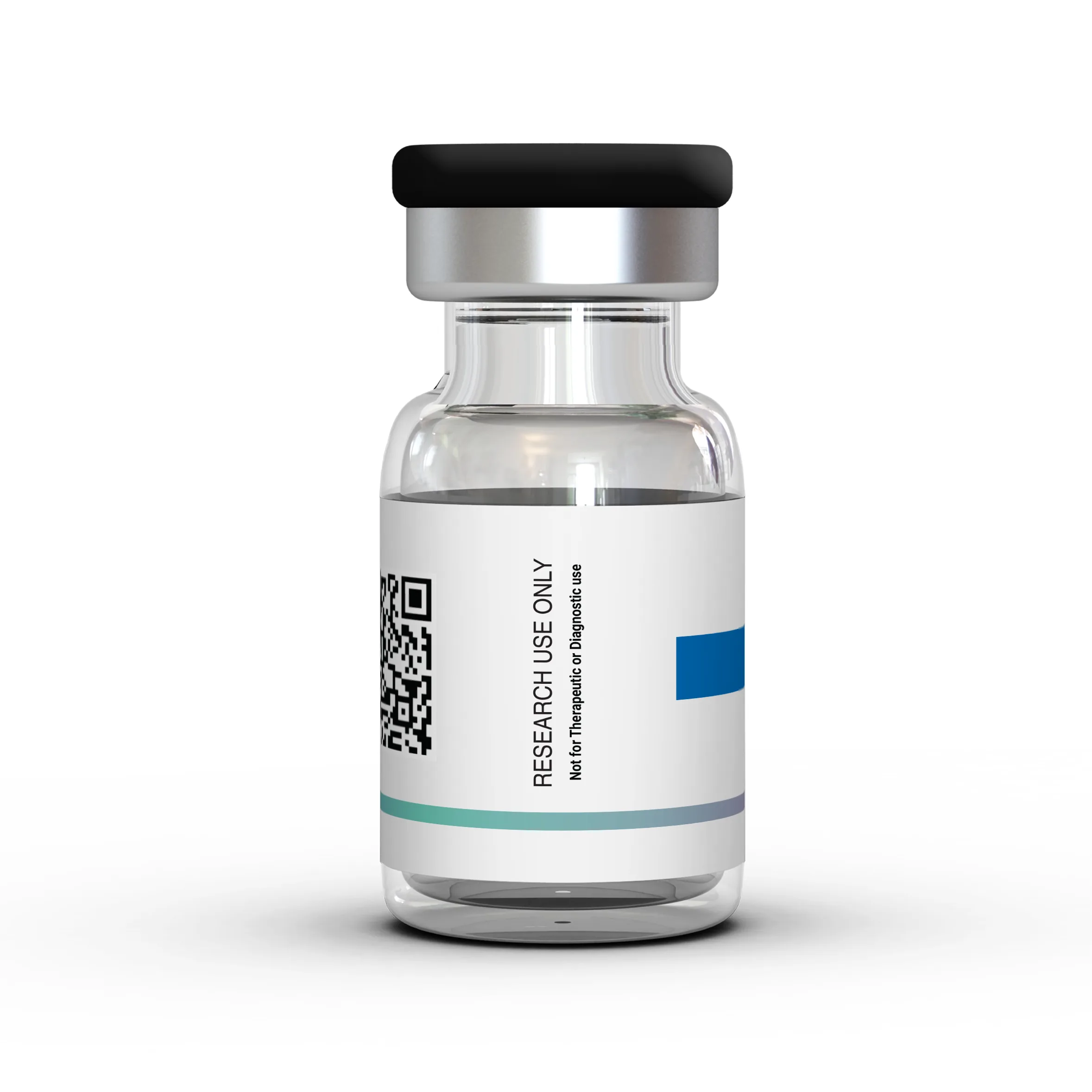
Ovagen is supplied for research use only. It is not a drug, food, cosmetic, or dietary supplement and has not been evaluated by the FDA. By purchasing, the buyer confirms the compound will be used solely for in vitro research.
Frequently Asked Questions
What Is Ovagen Peptide?
Ovagen peptide is a synthetic tripeptide bioregulator with the sequence Glu-Asp-Leu (EDL), also known as L-glutamyl-L-aspartyl-L-leucine. It belongs to the Khavinson series of short peptide bioregulators and is supplied for research use only.
What Is Ovagen Studied For in the Laboratory?
Published Ovagen (EDL) studies examine gene expression in renal cell cultures, peptide-DNA binding models and competitive inhibition of a retroviral aspartic protease. BioLongevity Labs supplies the compound for in vitro research of this kind.
What Is the Molecular Weight of Ovagen?
Ovagen has the molecular formula C₁₅H₂₅N₃O₈ and a molecular weight of 375.37 g/mol, with a monoisotopic mass of 375.1642 Da. Its PubChem CID is 444128.
How Should Ovagen Be Stored?
Lyophilized Ovagen should be stored at -20°C, protected from light and moisture. After reconstitution, the solution is kept at 2-8°C and used promptly.
How Is Ovagen Purity Verified?
Ovagen from BioLongevity Labs is third-party tested to ≥99% purity by HPLC. Certificates of Analysis are published online, so researchers can review the testing record before ordering.
Research Overview
Most indexed research on the EDL tripeptide comes from cell culture work by the Khavinson group. In primary kidney cell cultures during in vitro aging, the T-35 (EDL) peptide was associated with changes in expression of MMP-14, a gelatinase involved in extracellular matrix remodeling [1].
A follow-up study in young and aged renal cell cultures linked EDL to higher cell proliferation, lower expression of the aging markers p16, p21 and p53, and higher SIRT-6 expression [2]. The same work modeled EDL binding in the minor groove of DNA at d(ATATATATAT)₂ sequences [2].
Later docking models placed EDL and the related peptide AEDL at a shared ctcc binding site on DNA [3]. A 2021 systematic review describes short peptides of two to seven residues entering cell nuclei and interacting with histones and DNA, which frames the gene expression findings above [4].
Two further research threads extend the record beyond cell culture.
Renal Research Models
In rat models of cisplatin-induced renal injury, EDL was associated with changes in diuresis, creatinine excretion and glomerular filtration rate [5]. In gentamicin and ischemia-reperfusion models, EDL was associated with changes in proteinuria, sodium excretion and antioxidant enzyme activity [6].
Protease Inhibition Kinetics
Glu-Asp-Leu was characterized as a competitive inhibitor of HIV-1 protease, with a Ki of approximately 50 μM [7]. The same study reported a far weaker interaction with pepsin (Ki approximately 7.5 mM), high water solubility, and an X-ray crystal structure of the tripeptide bound in the enzyme active site [7].
Research Area
In Vitro Application
Renal cell aging
Expression of p16, p21, p53 and SIRT-6 in cultured renal cells
Extracellular matrix remodeling
MMP-14 expression in primary kidney cell cultures
Peptide-DNA interaction
Docking and binding-site modeling with defined DNA sequences
Enzyme kinetics
Competitive inhibition assays with retroviral aspartic protease
Analytical reference
HPLC and mass spectrometry characterization of a defined tripeptide
References
Khavinson VKh, Lin’kova NS, Polyakova VO, et al. (2014). Peptides regulate expression of signaling molecules in kidney cell cultures during in vitro aging. Bulletin of Experimental Biology and Medicine. https://doi.org/10.1007/s10517-014-2540-y
Khavinson VKh, Tarnovskaia SI, Lin’kova NS, et al. (2014). [Tripeptides slow down aging process in renal cell culture]. Advances in Gerontology. https://pubmed.ncbi.nlm.nih.gov/25946838/
Khavinson VKh, Lin’kova NS, Tarnovskaya SI (2016). Short Peptides Regulate Gene Expression. Bulletin of Experimental Biology and Medicine. https://doi.org/10.1007/s10517-016-3596-7
Khavinson VK, Popovich IG, Linkova NS, et al. (2021). Peptide Regulation of Gene Expression: A Systematic Review. Molecules. https://doi.org/10.3390/molecules26227053
Zamorskii II, Shchudrova TS, Lin’kova NS, et al. (2015). Peptides Restore Functional State of the Kidneys During Cisplatin-Induced Acute Renal Failure. Bulletin of Experimental Biology and Medicine. https://doi.org/10.1007/s10517-015-3062-y
Zamorskii II, Shchudrova TS, Lin’kova NS, et al. (2017). Nephroprotective Effect of EDL Peptide at Acute Injury of Kidneys of Different Genesis. Bulletin of Experimental Biology and Medicine. https://doi.org/10.1007/s10517-017-3811-1
Louis JM, Dyda F, Nashed NT, et al. (1998). Hydrophilic peptides derived from the transframe region of Gag-Pol inhibit the HIV-1 protease. Biochemistry. https://doi.org/10.1021/bi972059x
A Certificate of Analysis (COA) is a document that verifies a compound’s identity, purity and quality through independent laboratory testing. Every compound from BioLongevity Labs is third-party tested, and its COA is published here, so researchers can review the testing record before a compound enters a protocol.
Each COA reports results from third-party laboratory analysis, including:
Ultra-high-performance liquid chromatography with mass spectrometry (UHPLC-MS) for purity, measured against a 98% or 99% specification depending on the compound
Mass identification for molecular confirmation and content quantitation
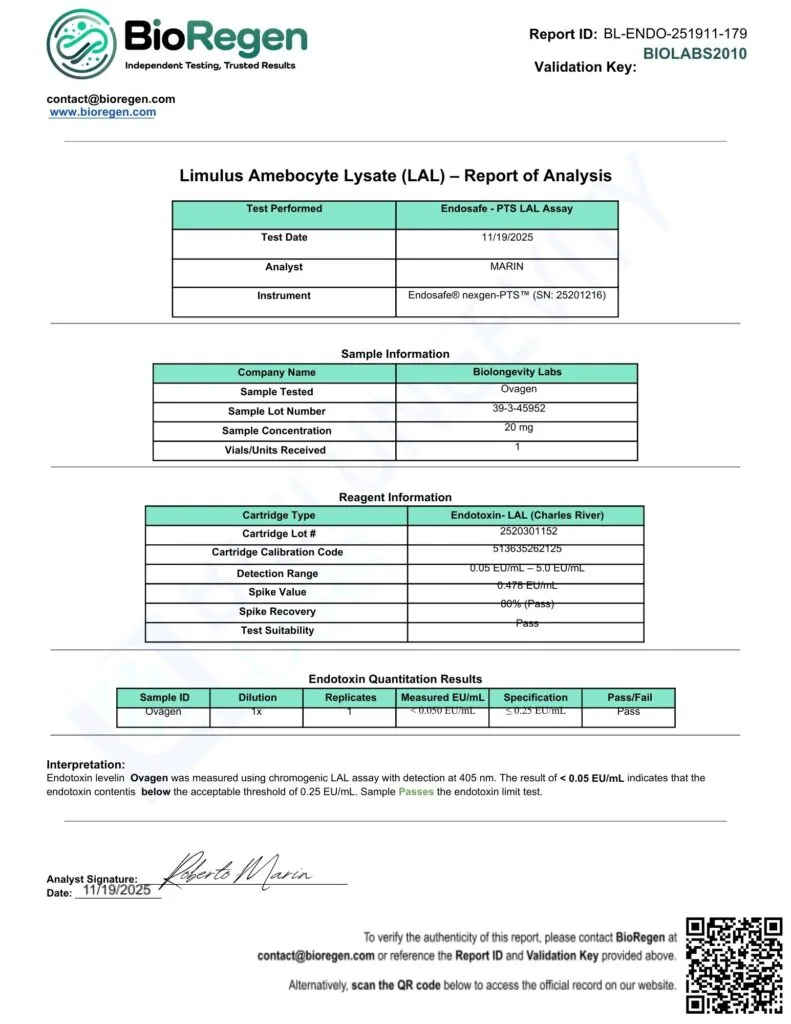
Endotoxin testing by Limulus amebocyte lysate (LAL) or recombinant Factor C (rFC) assay, depending on the laboratory
Visual and physical characterization of the finished material
How to Verify a COA Independently
You can check every certificate against the issuing laboratory’s own records, not just the copy hosted here. Verification does not depend on BioLongevity Labs.
AV Analytics certificates carry a search code. Scan the QR code on the certificate to open the laboratory’s verification page, or enter the search code at avanalytical.com/coa-search to pull the official record.
BioRegen reports of analysis carry a Report ID and a Validation Key. Scan the QR code on the certificate to open the official record, or quote both identifiers when you contact the laboratory at the address printed on the report.
SafeCert Labs issued a number of earlier certificates. Each one carries a COA number and the signature of the reporting chemist. Quote that number when you ask the laboratory to confirm it.
Older certificates from other laboratories list their own verification details on the document.
When a batch is sent to more than one laboratory, each certificate resolves at its own issuing laboratory. A researcher can then check the results against two unrelated sources.
These COAs come from independent certified laboratories, not in-house testing. That gives researchers a verifiable record of molecular integrity for each compound. All compounds are supplied for research use only.
Scientifically reviewed by Dr. Ky H. Le, MD. Dr. Le is a board-certified family medicine physician with over 20 years of clinical experience. Dr. Le validates the scientific accuracy of all technical content and research citations.
Disclaimer: For Research Purposes Only
This content is provided strictly for research purposes and does not constitute an endorsement or recommendation for the non-laboratory application or improper handling of peptides designed for research. The information, including discussions about specific peptides and their researched benefits, is presented for informational purposes only and must not be construed as health, clinical, or legal guidance, nor an encouragement for non-research use. Peptides described here are solely for use in structured scientific study by authorized individuals. We advise consulting with research experts, medical practitioners, or legal counsel prior to any decisions about obtaining or utilizing these peptides. The expectation of responsible, ethical utilization of this information for legitimate investigative and scholarly objectives is paramount. This notice is dynamic and governs all provided content on research peptides.
Ovagen (20mg)
Please select a variation
Original price was: $79.97.$79.97Current price is: $79.97.$31.99